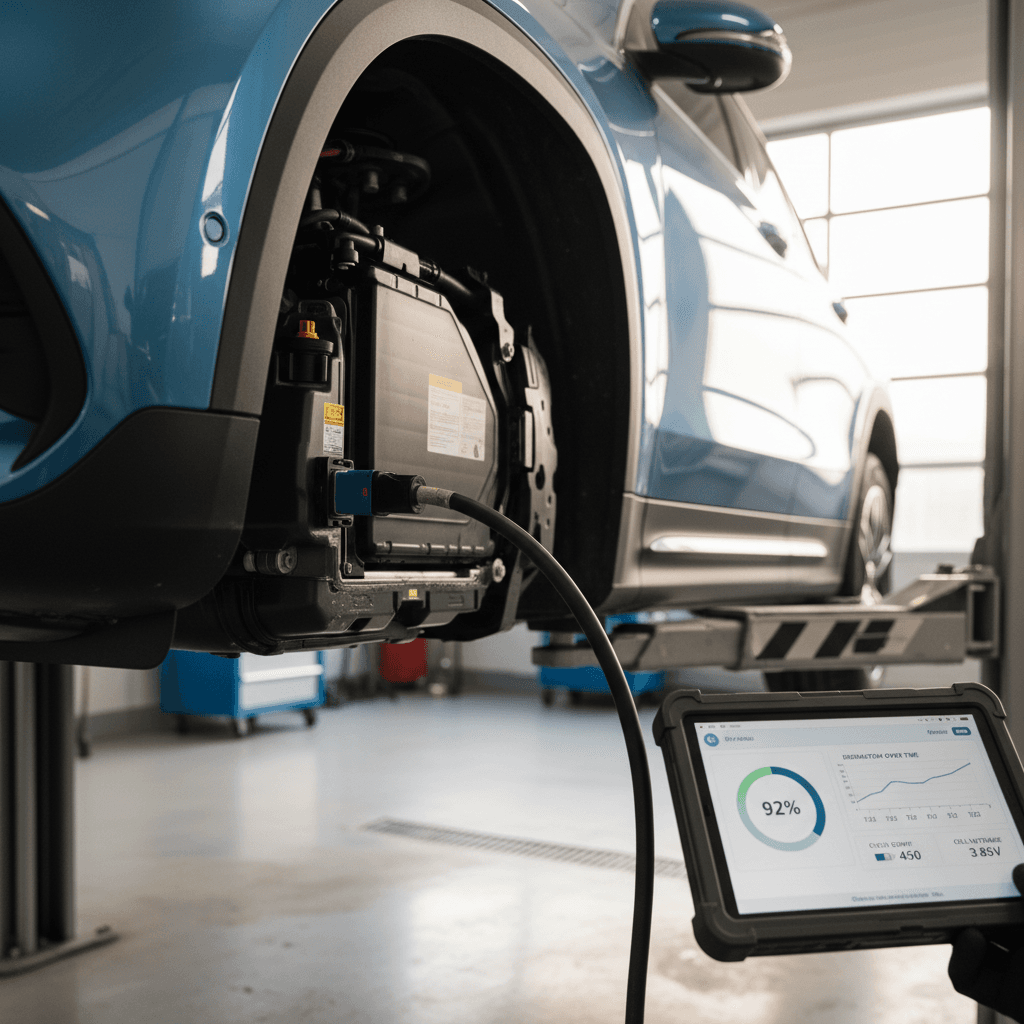
If you own, or are thinking about buying, a Mercedes EQB, battery health is the single most important factor in how far you can drive and what the SUV is really worth. This guide walks you through exactly how to check Mercedes EQB battery health, from quick dashboard checks to deeper diagnostics and professional reports.
Good news for EQB owners
Why Mercedes EQB battery health matters
Your EQB’s high-voltage battery is essentially the "engine" of the car. It drives three things that matter to you every day: range, performance, and resale value. A healthy pack means predictable range and stronger acceleration; a tired one means earlier charging stops and a lower price if you sell or trade.
- Range: Degradation reduces usable kWh, which shortens real-world driving distance between charges.
- Performance: As the pack ages, peak power delivery can be limited to protect the cells.
- Resale value: A used EQB with verified strong battery health is worth more than one with an unknown or weak pack.
Because the battery is the most expensive component in the vehicle, doing a clear, methodical EQB battery health check, especially on a used vehicle, isn’t optional. It’s part of protecting your investment.
How the EQB’s high-voltage battery works (in plain English)
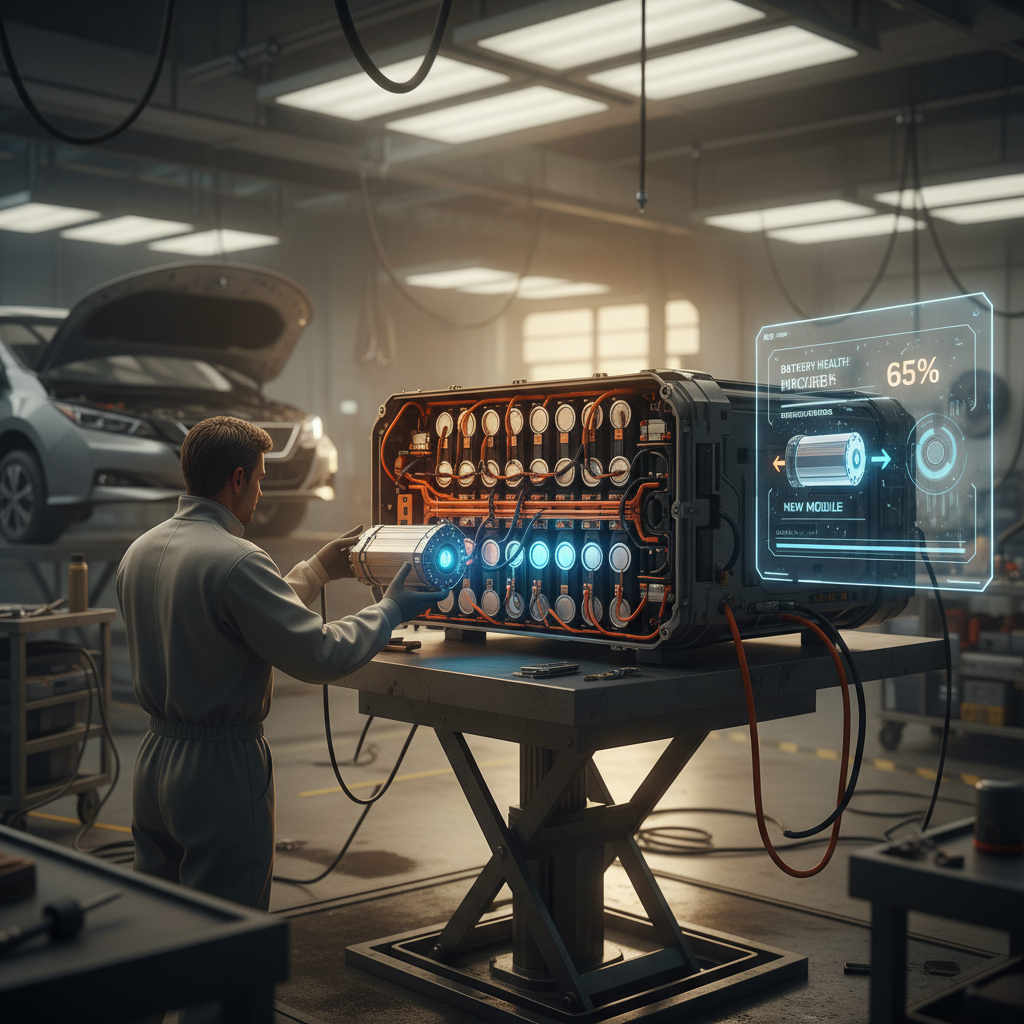
The Mercedes EQB uses a large lithium-ion battery pack mounted in the floor. It’s made up of hundreds of individual cells grouped into modules. The car’s Battery Management System (BMS) constantly monitors temperature, voltage, and current to keep those cells in a safe, efficient operating window.
Key EQB battery terms you’ll see in this guide
You don’t need to be an engineer, just know these basics
State of Charge (SoC)
The percentage you see on your dash, essentially the EQB’s "fuel gauge". 80% SoC is like having 4/5 of a tank.
State of Health (SoH)
An estimate (usually in %) of how the pack compares to when it was new. Not shown directly in the EQB UI, but you can approximate it.
Thermal Management
Liquid cooling and heating keep the pack in its comfort zone. Good thermal control is a big reason modern EV batteries last.
Important nuance
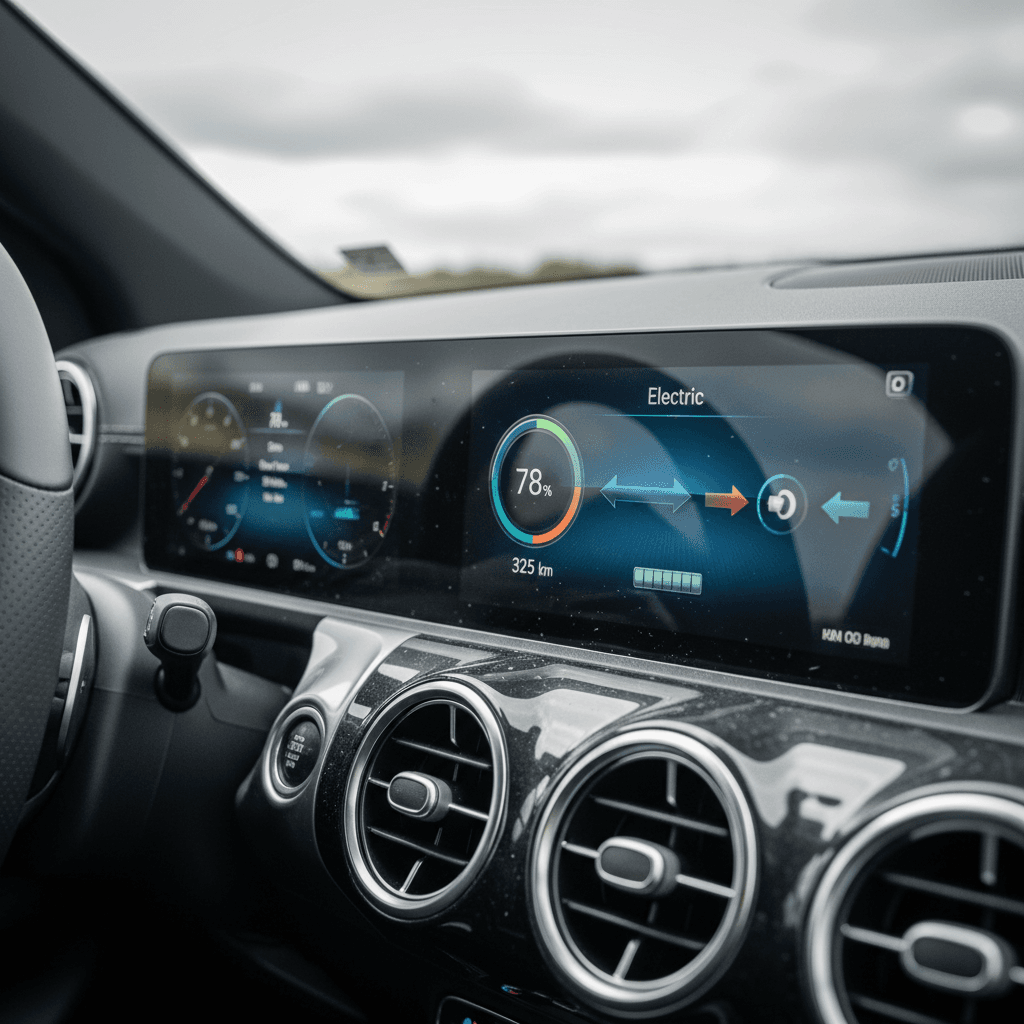
Quick Mercedes EQB battery health self-check in 5 minutes
If you just want a fast sense of how your EQB’s battery is doing, without extra tools, start with this simple walk-through. It won’t replace a professional report, but it can flag obvious issues.
5‑minute EQB battery health snapshot
1. Note odometer and model
Check mileage, trim (EQB 250+, 300, or 350), and model year. A 10% range drop at 15,000 miles tells a different story than the same loss at 120,000 miles.
2. Look at indicated range at high SoC
Charge to about 90–100%, then note the estimated range on the dash. Compare it to the EPA-rated range for your trim or to what you saw when the car was newer.
3. Check for warning lights or messages
Turn the EQB on and verify there are no persistent high-voltage, battery, or power-limited warnings. Any such message is a red flag that merits professional diagnosis.
4. Review recent charging behavior
Think about whether DC fast charges unusually slow, or if the charge curve seems to fall off at higher SoC. Sudden changes can indicate the BMS is protecting an aging pack.
5. Pay attention to cold-weather behavior
If you live in a cold climate, ask: has winter range dropped more than expected, or does the car frequently show limited power even when warmed up?
Capture a baseline
Step-by-step DIY Mercedes EQB battery health check
To go beyond a quick glance, you can perform a structured Mercedes EQB battery health check at home with nothing more than a notebook (or spreadsheet) and some patience. The goal is to estimate how much usable capacity you still have and whether it matches what you’d expect for the vehicle’s age and mileage.
- Pick a consistent test route: Ideally 20–40 miles of mixed driving you can repeat (or a longer highway loop).
- Start from a known SoC: For example, charge to an indicated 90% and reset a trip meter to zero.
- Drive normally: Use your usual driving style and climate control. Aggressive driving and high HVAC loads reduce range, so keep it realistic.
- End at a lower SoC: For example, stop around 20–30% SoC and note miles driven, remaining range, and total energy used (kWh) if your trip computer shows it.
- Compute implied full-range: Add miles driven to remaining estimated range. Compare that to your EQB’s original EPA ratings.
- Repeat in different conditions: One test in perfect weather only tells part of the story. Repeat in similar temperatures at least twice to see a pattern.
Example DIY EQB range-based health estimate
Hypothetical numbers to illustrate how you might interpret your test results.
| Scenario | Starting SoC | Ending SoC | Miles Driven | Remaining Range | Implied Full Range | What It Suggests |
|---|---|---|---|---|---|---|
| New-ish EQB 300 (EPA ~243 mi) | 90% | 25% | 120 mi | 75 mi | 195 mi | ~80% of EPA range, reasonable once you factor real-world conditions. |
| Older EQB 350 with 90,000 miles | 90% | 25% | 100 mi | 40 mi | 140 mi | Significant range loss, worth deeper diagnostics before buying or keeping long-term. |
Note that terrain, temperature, and speed all affect range, so look for trends over time, not a single "magic" number.
Don’t obsess over one test
Advanced methods: OBD apps and data logging
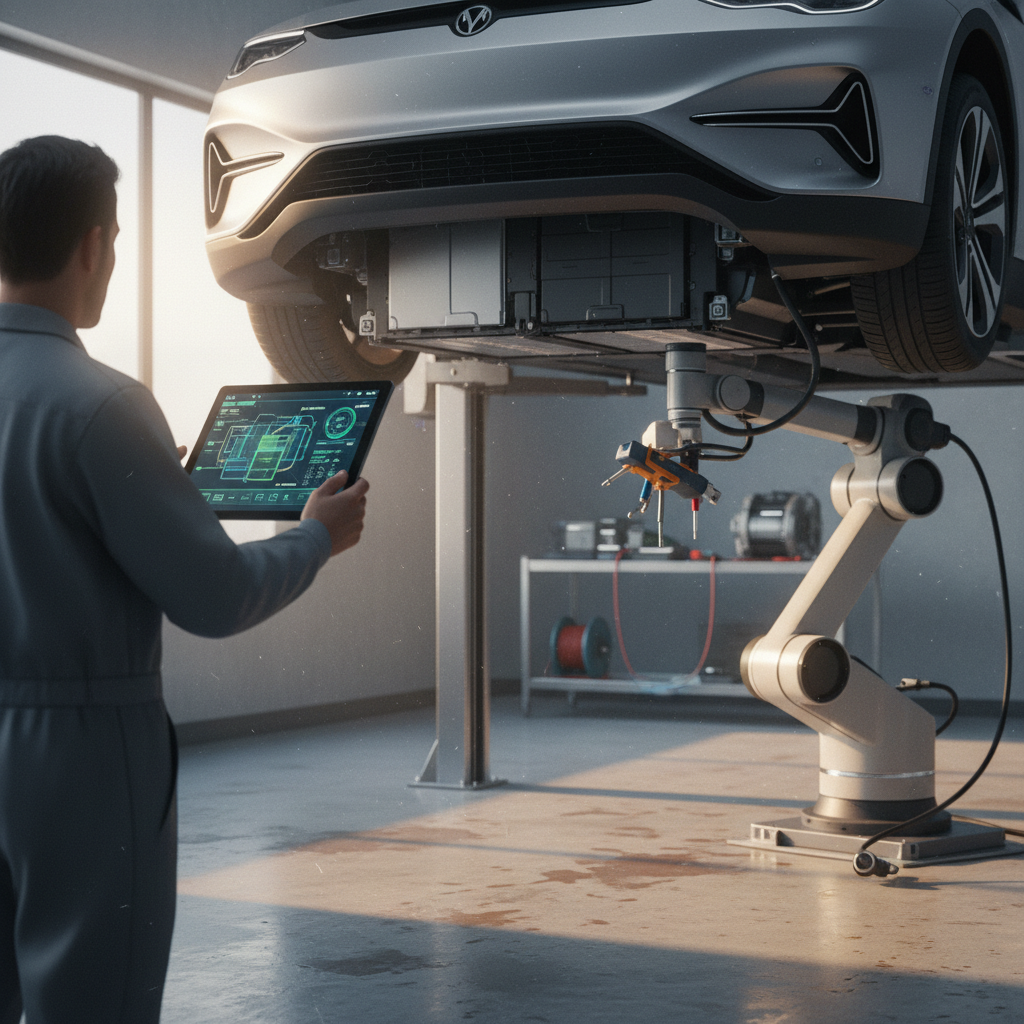
If you’re comfortable with basic car tech, you can go deeper by reading battery data directly from the EQB’s control units via an OBD-II dongle and smartphone app. This can expose metrics such as cell voltages, temperature spread, and the BMS’s own estimate of usable capacity, though access varies by app and region.
Tools for deeper EQB battery insights
Use with care, and always follow safety guidelines
OBD-II adapter
A Bluetooth or Wi‑Fi OBD-II dongle plugs into the EQB’s diagnostic port. Choose one that’s known to play well with EVs and has solid reviews.
EV‑aware apps
OBD apps with EV support may show pack voltage, current, cell balance, and sometimes an SoH estimate. Be sure the app explicitly supports Mercedes EVs.
Data logging
Recording data over time, especially during full charges and long drives, gives you a picture of how the BMS adjusts its capacity estimates.
Be careful with third‑party tools
Signs your Mercedes EQB battery may be aging
Lithium-ion batteries don’t typically fail overnight. They gradually lose capacity and, in some cases, develop weak cells that the BMS must work around. Here are practical signs that your EQB’s pack deserves closer attention.
- Noticeable range loss compared with when the car was newer, even in similar temperatures and with similar driving patterns.
- Frequent or persistent warning messages about reduced power, limited charging, or high-voltage system issues.
- DC fast charging that was previously quick but now tapers aggressively at lower SoC, even in warm weather.
- The car refuses to charge to 100% or drops a few percentage points soon after reaching full.
- Unusual fan noise or cooling behavior during moderate driving or charging sessions.
Remember the learning curve
How driving and charging habits affect EQB battery health
Habits that influence long‑term battery health
Driving habits
- Sustained high speeds (85+ mph) use far more energy per mile and heat the pack.
- Hard acceleration is fun, and the EQB can handle it, but constant full‑throttle launches mean more stress.
- Deep discharges, routinely running below 5–10%, give the BMS less buffer to protect the cells.
Charging habits
- Fast charging as your default road-trip tool is fine; using it as your daily fuel stop is harder on the battery.
- Always charging to 100% and letting the car sit that way is less ideal than staying in a 30–80% band.
- Charging in extreme heat (outdoor station in full summer sun) warms the pack; preconditioning and shaded locations help.
Protecting your EQB battery: best practices
You can’t stop time, but you can meaningfully slow down battery wear. Think of these as long-term best practices rather than strict rules, use them when they fit your life, and don’t panic when they don’t.
Simple habits that support EQB battery health
1. Use moderate SoC for daily driving
For commuting and errands, keeping the EQB between about 30% and 80% is gentler than constant 0–100% swings. Save 90–100% charges for road trips or occasional needs.
2. Favor Level 2 home charging
Whenever possible, charge at home or work on a Level 2 AC charger instead of relying on DC fast chargers for everyday use.
3. Avoid sitting full or empty for long
Don’t leave the EQB parked at near‑zero SoC or at 100% for days. If you’ll be away, park around 40–60% and enable any available battery protection or scheduled charging features.
4. Precondition in extreme weather
Use the EQB’s preconditioning to warm or cool the cabin and battery while plugged in. That reduces stress and improves efficiency once you start driving.
5. Keep software up to date
Software updates can tweak charge curves, thermal management, and range estimates. Keeping the car updated helps the BMS protect the pack effectively.
Think in years, not days
Checking battery health before buying a used Mercedes EQB
If you’re shopping used, the Mercedes EQB battery health check becomes even more critical. Two EQBs with the same mileage can have very different histories, one pampered on home Level 2, the other fast-charged daily and stored in the sun.
Used Mercedes EQB battery health checklist
Questions and checks to complete before you sign
Ask the seller
- How was the EQB usually charged, home Level 2, workplace, or public DC fast chargers?
- Did they typically charge to 80% or 100%?
- Is there documentation of any high-voltage or battery-related service?
Check what the car tells you
- Note indicated range at high SoC and compare to the original rating.
- Scan for stored warning messages or power limits.
- Test-drive: does performance feel consistent, or does power pull back early?
Review service history
Look for high-voltage component replacements, cooling system work, or repeated charging complaints. These don’t automatically mean "walk away," but they deserve questions.
Get an independent battery report
If you’re serious about a specific EQB, a professional battery health report can reveal far more than a quick test drive.
Don’t rely on a single range number in a listing
How Recharged checks battery health on used EVs
Because battery condition is so central to EV ownership, every vehicle sold through Recharged includes a Recharged Score Report. It’s a structured, EV-specific assessment designed to make used EV shopping, EQB included, far more transparent.
What’s inside a Recharged battery health report
Designed for buyers who don’t want to gamble on the most expensive part of the car
Verified battery health
Specialized diagnostics and data analysis to provide a clear picture of usable capacity and pack condition, not just a vague "seems fine" from a test drive.
Fair market pricing
Battery health is factored into pricing, so you’re not paying top dollar for an EV with a tired pack, or missing a great deal on one with a strong pack.
EV‑specialist guidance
Dedicated EV experts walk you through the report, explain what it means for your daily driving, and help you compare vehicles.
Ready to find your next EV?
Browse VehiclesRecharged also offers financing, trade‑in options, nationwide delivery, and a fully digital buying experience. If you’re comparing multiple used EQBs, or other EVs entirely, a standardized battery health report makes those decisions far easier and more confidence-inspiring.
FAQ: Mercedes EQB battery health checks
Common Mercedes EQB battery health questions
Bottom line on Mercedes EQB battery health checks
You don’t need a lab or a degree in battery chemistry to keep tabs on your Mercedes EQB’s battery health. By watching how range, charging behavior, and warning messages evolve over time, and by building a simple log of your own observations, you can spot issues early and protect your investment.
For a deeper look, especially when you’re considering a used EQB, pairing your own checks with a professional battery health report is the smartest move you can make. That’s exactly what the Recharged Score Report is designed to provide: transparent, data‑driven battery insights, fair pricing based on real condition, and EV‑specialist support from search to delivery. Whether you end up in an EQB or another electric SUV, taking battery health seriously today will pay dividends in range, reliability, and resale value tomorrow.