
If you own a Mazda MX-30 or you’re eyeing a used one, the good news is that its maintenance schedule is a lot lighter than a gas Mazda. There’s no engine oil to change, no spark plugs, and no transmission fluid in the traditional sense. But that doesn’t mean you can ignore maintenance altogether. Understanding the Mazda MX-30 maintenance schedule helps you avoid unnecessary upsells, stay in warranty, and protect the long-term health of the battery and braking system.
Quick note on model years
Why Mazda MX-30 maintenance still matters for an EV
Mazda built the MX-30 to be low-maintenance, but not maintenance-free. The official U.S. schedule calls for inspections or replacements based on mileage or time, and your car’s vehicle status monitor will turn on a wrench icon or display a message when service is due, capped at about 10,000 miles or 12 months between visits. Even though you’re not changing oil, you still need to stay on top of items like coolant, brake fluid, tires and the cabin air filter to keep the car safe, efficient and comfortable.
Let the car remind you
Mazda MX-30 maintenance schedule at a glance
Core Mazda MX-30 maintenance intervals
Different dealers present the Mazda MX-30 maintenance schedule in different ways, but they’re all drawing from the same owner’s manual and factory chart. At a high level, here’s what you can expect as an MX-30 owner in the U.S.:
High-level Mazda MX-30 maintenance schedule
Use this as a roadmap, then confirm details in your manual and with your service advisor.
Every month (owner checks)
- Check tire pressure and look for uneven wear.
- Verify windshield washer fluid level.
- Glance at coolant and brake fluid levels in the reservoir.
Every 7,500–10,000 miles
- Rotate tires.
- Inspect brakes, steering, suspension and chassis components.
- Check for fluid leaks and damaged boots or hoses.
- Top off washer fluid and inspect lights.
Longer-interval service items
These don’t happen at every visit, but they’re important over the life of the car.
Cabin air filter
Replace about every 30,000–36,000 miles or 2–3 years, sooner if you drive in dusty or urban areas.
Brake fluid
Flush and replace roughly every 3 years or ~30,000 miles to keep ABS and regenerative braking performing properly.
Coolant circuits
First coolant replacement often around 120,000 miles or 10 years, then every 60,000 miles or 5 years, unless your manual states otherwise.
Watch for dealer “universal” menus
MX-30 service intervals by mileage and time
Mazda’s U.S. maintenance table for the MX-30 uses a combination of distance (miles) and time (months). The car’s wrench indicator will usually illuminate a bit before the maximum 10,000-mile/12‑month interval to give you time to book service. Here’s how that translates into real-world visits.
Mazda MX-30 maintenance schedule by mileage
Typical U.S.-market MX-30 service items. Always adjust for your driving conditions and owner’s manual specifics.
| Mileage / Time | Key items | Type |
|---|---|---|
| Every month | Check tire pressure and wear; washer fluid; visible coolant and brake fluid levels | Owner check |
| 7,500–10,000 mi or 12 months | Tire rotation; inspect brakes, suspension, steering, driveshaft boots; check coolant level; inspect lights and wipers; top off washer fluid | I |
| 15,000–20,000 mi | Repeat 10,000‑mile inspection; replace wiper blades if streaking; clean brake components if needed | I / R |
| 30,000–36,000 mi (~3 years) | Replace cabin air filter; inspect brakes more closely; consider brake fluid flush based on time and mileage | R / I |
| 60,000–75,000 mi (~6 years) | Repeat cabin air filter service; replace brake fluid if not already done; inspect chassis bolts and suspension bushings | R / T / I |
| 120,000 mi or 10 years+ | Drain and fill coolant circuits as specified; inspect high-voltage cooling components; repeat earlier inspections | R / I |
I = Inspect/adjust as needed, R = Replace, T = Tighten
Severe vs. normal driving
EV-specific maintenance items on the MX-30
Most of the Mazda MX-30 maintenance schedule looks familiar if you’ve owned a gas Mazda. What’s different is the absence of engine service and the added importance of systems that support the battery and regenerative braking. These are the EV-specific items you should pay attention to.
- Battery coolant level and coolant replacement – The MX-30 uses coolant to manage battery and power electronics temperature. You (or your technician) should inspect coolant level at least at every service visit. Full coolant replacement typically isn’t due until high mileage, often around 120,000 miles or 10 years for modern Mazda coolant, then roughly every 60,000 miles or 5 years.
- Brake fluid – Because the MX-30 relies on both regenerative and friction braking, keeping brake fluid fresh helps ABS, stability control and pedal feel. Many Mazda schedules call for replacement around every 3 years or about 30,000 miles.
- High-voltage components – You won’t see a DIY schedule for this in the manual, but part of routine inspections is checking harnesses, connectors and shields for damage. That’s a dealer or EV‑qualified shop job.
- 12‑volt accessory battery – Like other EVs, the MX-30 still uses a conventional 12‑volt battery to power accessories and boot the high‑voltage system. Expect to replace it roughly every 4–6 years depending on climate and usage.
Protect the battery with simple habits
What you can do at home vs. the dealer
Mazda’s owner maintenance section spells out several checks you can safely perform yourself, and others that should be left to professionals. Splitting the workload this way can save you money without cutting corners on safety.
Good DIY tasks
- Tire pressure checks – Use a quality gauge and keep all four tires set to the door‑jamb spec. Check at least monthly and before long trips.
- Visual tire inspection – Look for uneven wear, embedded nails and sidewall bubbles.
- Washer fluid top‑off – Keep the reservoir full, especially in winter or dusty climates.
- Cabin air filter replacement – On many Mazdas this is a glovebox‑area job that takes a few minutes and a low‑cost filter.
- Wiper blade replacement – Swap blades as soon as they streak or chatter.
Leave these to the pros
- Brake fluid flushes – Requires proper bleeding sequence for ABS and stability systems.
- Coolant replacement – The MX-30’s thermal system is tied to high‑voltage components; incorrect servicing can be dangerous or costly.
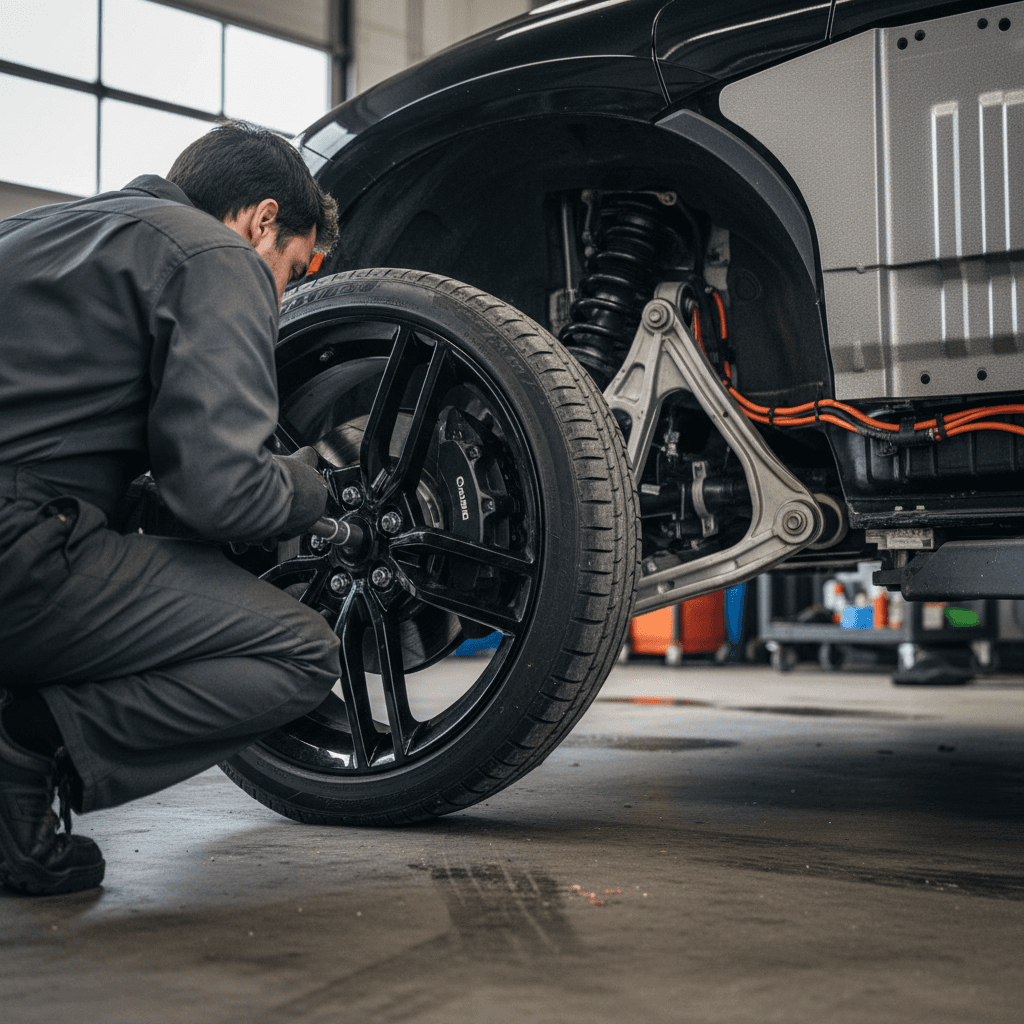
- High‑voltage system checks – Anything involving orange‑cabled components should be handled by an EV‑trained technician.
- Suspension and steering repairs – Alignment, ball joints and bushings are best checked on a lift with the right tools.
High-voltage safety first
Checklist for your next Mazda MX-30 service visit
1. Note mileage and months since last visit
Have your odometer reading and the date of your last service handy. This helps the advisor tie your visit to the correct interval.
2. Review the owner’s manual schedule
Skim the maintenance chart before you go so you know which items are due and which ones are just inspections.
3. Ask for an itemized estimate
Have the service department list every line item with price. Question anything that looks like a gas‑engine service (oil changes, engine air filters, spark plugs).
4. Confirm tire rotation and brake inspection
On a front‑heavy EV like the MX-30, even tire wear and healthy brakes are critical. Make sure rotation and a proper brake check are part of the visit.
5. Request fluid condition notes
Ask the technician to record observations on brake fluid, coolant level and any leaks so you can track trends over time.
6. Keep records
Store invoices in your glovebox or a digital folder. A well‑documented maintenance history helps with warranty claims and boosts resale value.
Maintenance costs and used Mazda MX-30 ownership
Because the MX-30 is an EV, its ongoing maintenance costs tend to be lower than a comparable gas Mazda. Most of your routine spending will be on inspections, tire rotations, wiper blades and the occasional fluid service. Over several years, those costs will usually be outweighed by reduced fuel spending, especially if you charge mostly at home.
What drives Mazda MX-30 maintenance costs?
Three factors matter more than the model year itself.
Driving style & mileage
Hard driving, high annual mileage and frequent fast‑charge road trips will wear tires and brakes faster and can stress thermal systems.
Climate
Extreme heat or cold can shorten the life of your 12‑volt battery and wiper blades, and may call for more frequent inspections.
Dealer vs. independent shop
Dealer labor rates are higher but they see MX-30s more often. A good independent EV‑trained shop can handle most post‑warranty work more affordably.
EV maintenance advantage
How Recharged helps with used MX-30s
If you’re shopping for a used Mazda MX-30, the maintenance schedule isn’t just a future to‑do list, it’s a window into how the previous owner treated the car. That’s why every EV sold through Recharged includes a Recharged Score Report, which digs into battery health, charging behavior and overall vehicle condition.
- Verified battery health – A detailed battery assessment helps you understand remaining capacity and whether the car has been fast‑charged aggressively.
- Service history review – When records are available, Recharged reviews past maintenance to see if major items like brake fluid and recalls have been handled on time.
- Fair market pricing – Because Recharged focuses on EVs, pricing reflects real‑world battery health, mileage and condition, not just age.
- Expert EV support – EV‑specialist advisors can explain what the Mazda MX-30 maintenance schedule means for you over the next 3–5 years, based on your driving habits.
Thinking about selling or trading your MX-30?
Mazda MX-30 maintenance FAQ
Common Mazda MX-30 maintenance questions
Final thoughts on keeping your Mazda MX-30 in shape
The Mazda MX-30’s maintenance schedule is simpler than most gas vehicles, but it still matters. If you follow the 7,500–10,000‑mile service cadence, keep up with tire rotations and brake checks, and don’t let long‑term items like brake fluid and coolant fall off your radar, you’ll likely enjoy years of low‑drama ownership. That’s especially true if you’re coming to the MX-30 used, good records and a clean bill of health on the battery go a long way toward predictable costs.
Whether you’re already driving an MX-30 or considering one as your first EV, use this maintenance schedule as a working checklist and pair it with professional advice from EV‑literate technicians. And if you’re browsing for a used Mazda MX-30, a Recharged Score Report, with its verified battery health diagnostics and transparent history, can help you choose a car that’s been serviced right from day one.