If you’re looking at a Mazda MX-30, especially on the used market, the battery warranty details matter more than almost anything else. The MX-30’s pack is relatively small, and because Mazda discontinued the model in the U.S., understanding exactly how long the high‑voltage battery is protected can make the difference between a confident buy and a nervous gamble.
Quick answer
Mazda MX-30 battery warranty overview
Mazda doesn’t reinvent the wheel with the MX-30’s warranty. In the U.S., the MX-30 largely follows the pattern most mainstream brands use for EVs: a standard new‑vehicle warranty plus a longer, federally regulated warranty for the big, expensive stuff, the high‑voltage battery pack and other electric-drive components.
Key Mazda MX-30 warranty figures (U.S.)
Think in dates, not just years
Core MX-30 warranty terms: years, miles, and components
Here’s how the MX‑30’s main warranty buckets break down in the U.S. market. These apply from the original in‑service date, and they’re generally fully transferable to subsequent owners, as long as the vehicle stays in the U.S. and follows Mazda’s maintenance requirements.
MX-30 warranty coverage at a glance (U.S.)
High-level look at the standard Mazda warranties that apply to the MX‑30, including the EV‑specific protections.
| Coverage type | Duration | Mileage limit | What it usually covers |
|---|---|---|---|
| New Vehicle Limited Warranty | 3 years | 36,000 miles | Most non‑wear components bumper‑to‑bumper; infotainment, climate control, interior electronics, etc. |
| Powertrain Limited Warranty | 5 years | 60,000 miles | Engine or motor, transmission, driveline; on MX‑30 this focuses on the electric drive unit and related hardware. |
| High‑Voltage EV System Warranty | 8 years | 100,000 miles | High‑voltage battery pack and major EV components (inverters, onboard charger, etc.), subject to conditions. |
| Roadside Assistance | 3 years | 36,000 miles | Towing, jump starts, flat‑tire help, lockout assistance during basic warranty period. |
| Corrosion Perforation Warranty | 5 years | Unlimited miles | Rust‑through of metal panels from the inside out, under specific conditions. |
Always confirm exact coverage in the Warranty Information booklet for your specific model year.
Check the fine print by region
High-voltage battery warranty and capacity coverage
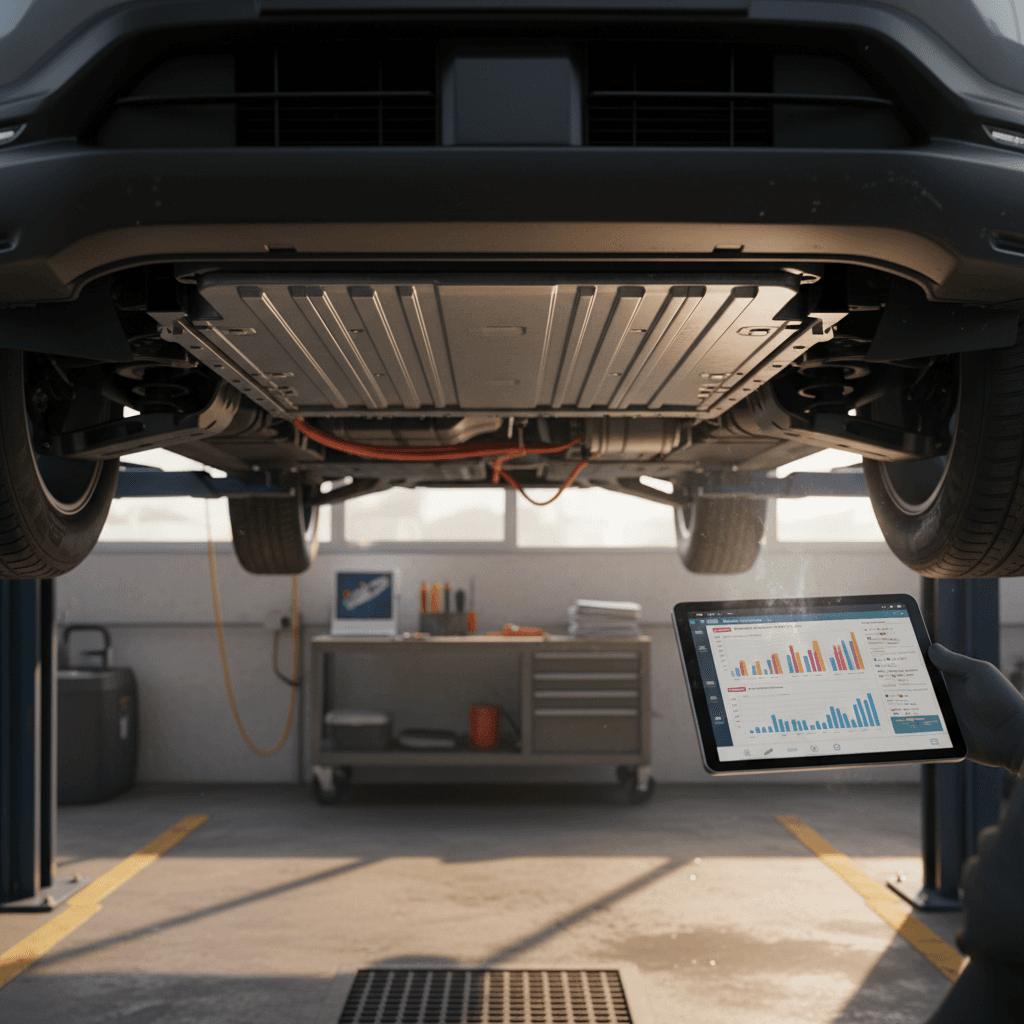
The star of this story is the MX‑30’s ~35.5 kWh lithium‑ion pack. Replacing it out of warranty would be a five‑figure event, so Mazda’s 8‑year / 100,000‑mile EV system warranty is your primary safety net. There are two layers to think about: protection against outright failure, and protection against excessive capacity loss.
- Defects in materials or workmanship in the high‑voltage battery pack itself.
- Defects in key EV components such as the inverter, DC–DC converter, onboard charger, and electric drive units.
- Battery control hardware and associated wiring, if failure is due to a covered manufacturing defect.
Capacity warranty: the 70% rule
In practice, that means normal, gradual degradation is expected and not warrantable. But if your MX‑30 suddenly loses a big chunk of range in a short period of time, or you’re clearly well below 70% capacity far in advance of 8 years/100,000 miles, Mazda dealers have diagnostic procedures to measure capacity and submit a warranty claim if you qualify.
Repair vs. replacement under the MX-30 battery warranty
The warranty doesn’t guarantee an all‑new pack if something goes wrong. Mazda, like other OEMs, reserves the right to choose the remedy that’s “appropriate” in its view. That can mean:
- Replacing one or more battery modules rather than the entire pack.
- Updating or replacing control electronics if the problem is software or BMS‑related, not physical cell damage.
- Installing a remanufactured or refurbished pack that meets Mazda’s specifications instead of brand‑new hardware.
Good news for used buyers
What the Mazda MX-30 battery warranty does NOT cover
Automaker warranties are written by lawyers who bill by the comma. The MX‑30’s booklet is no exception. While the headline sounds simple, 8 years, 100,000 miles, there’s a long list of ways to fall outside the safety net. These are some of the major categories that typically void or limit battery coverage.
Common MX-30 battery warranty exclusions
These themes show up again and again in Mazda’s fine print.
Accident & external damage
Damage from collisions, flooding, fire, or physical impact is almost always excluded. That’s an insurance claim, not a warranty claim.
Abuse & improper use
Repeated, extreme overheating, unauthorized modifications, or using the car outside its designed limits can void coverage.
Improper repairs or parts
Work done by unqualified shops, non‑Mazda parts spliced into the high‑voltage system, or DIY surgery on the pack are instant red flags.
Charging misuse
Using chargers that don’t meet standards, tampering with the charge port, or ignoring charging warnings can reduce Mazda’s responsibility.
Ignoring maintenance guidance
Skipping required inspections or software updates, especially ones related to the battery or charging system, can weaken a future claim.
Out-of-market vehicles
Cars imported from other regions or permanently registered outside the U.S. may lose some or all U.S. warranty protections.
Tinkering with high-voltage? Don’t.
Warranty vs real-world battery degradation
There’s a gap between what the warranty promises and what most MX‑30 drivers will actually experience. The good news: real‑world reports suggest that well‑cared‑for EV batteries usually stay safely above the 70% threshold during the warranty period. The MX‑30’s small pack and conservative tuning actually work in its favor here.
Why the MX‑30’s pack is relatively “unstressed”
- Modest power output: The MX‑30 isn’t a dragster. Lower peak demand is easier on cells.
- Conservative thermal management: Mazda limits extremes in temperature and charge to extend life.
- Low DC fast‑charging reliance: With its small battery and city‑car mission, many owners mostly use Level 2.
What can still accelerate degradation
- Leaving the car at 100% charge in hot weather for days at a time.
- Regularly running the pack down to near 0% and parking it that way.
- Living in very hot climates and parking outside without shade.
- Ignoring software updates that adjust charging or thermal behavior.
Easy habits that help your MX-30 battery
Buying a used Mazda MX-30? Warranty checklist
Because the MX‑30 was short‑lived in the U.S. and sold in relatively small numbers, almost every example you’ll see now is a used EV. That puts warranty status front and center. Here’s a concise checklist to run through before you sign anything.
Used MX-30 battery warranty checklist
1. Confirm in-service date and mileage
Ask for a copy of the original purchase paperwork or pull a history report. Subtract the in‑service date from today to see how much of the 8‑year/100,000‑mile EV warranty remains. A 2022 MX‑30 with 25,000 miles in early 2026 should still have years of coverage left.
2. Verify warranty transfer status
Mazda’s standard warranties are typically transferable in the U.S., but imported vehicles or cars put into commercial service can be treated differently. Confirm with a Mazda dealer using the VIN.
3. Get a recent battery health report
Ask the seller for any documentation of battery checks or range tests. Better yet, have a Mazda dealer or an EV‑specialist platform like Recharged run a battery health diagnostic so you’re not guessing at remaining capacity.
4. Check for accident or flood history
Severe accidents, especially on the side where the pack lives, or flood branding on the title can put you into the gray zone where Mazda may deny battery claims. Pull a vehicle history report and inspect underbody hardware for corrosion or impact scars.
5. Ask about charging habits
Previous owners who constantly rapid‑charged to 100% and immediately drove at highway speeds haven’t necessarily voided the warranty, but they may have accelerated degradation. Look for cars used more as city commuters than long‑haul road‑trippers.
6. Confirm software is up to date
Before buying, ask the seller to have any open service campaigns or software updates performed at Mazda. Some updates refine charging behavior or battery management and could be relevant to warranty coverage.
How Recharged can simplify this
Ready to find your next EV?
Browse VehiclesMazda MX-30 battery warranty FAQs
Frequently asked questions about Mazda MX-30 battery warranty
Bottom line: Is the MX-30 battery warranty strong enough?
For a low‑volume compliance‑car‑turned‑cult‑favorite, the Mazda MX‑30 quietly offers a perfectly mainstream EV battery warranty: 8 years or 100,000 miles on the high‑voltage pack and related components, plus a capacity guarantee that’s in line with rivals. It’s not unusually generous, but it’s not stingy either, and because most MX‑30s are still young with relatively low mileage, there’s meaningful coverage left on the table for used buyers.
If you’re considering an MX‑30, don’t just ask, “Is the battery warrantied?” Ask how long, under what conditions, and how healthy the pack is today. A clear warranty timeline, clean history, and solid battery‑health report can turn a quirky, short‑range crossover into a smart urban EV buy. And if you’d rather not decode the fine print yourself, Recharged can pair you with an MX‑30 that already comes with verified battery health, remaining warranty details, and expert support from first click to final delivery.