If you’re trying to understand the Maryland EV tax credit in 2026, you’re not alone. Federal rules changed in late 2025, state funding has come and gone in waves, and a lot of online information is now outdated. This guide cuts through the noise so you can see exactly what’s on the table in 2026, and how to structure a smart EV or used-EV purchase if you live in Maryland.
Quick snapshot for 2026
Overview: Maryland EV tax credit in 2026
Maryland has been one of the more generous EV states, offering a state excise tax credit on qualifying plug-in and fuel-cell vehicles plus rebates for home and commercial chargers. Going into 2026, though, the picture looks different:
- The state EV excise tax credit program is still authorized in statute through June 30, 2027, but recent funding rounds ran out before all applications could be paid.
- Maryland still promotes EV adoption through excise tax credits and EVSE (charger) rebates, but availability is now year‑ and budget‑dependent rather than guaranteed.
- At the federal level, the big purchase credits for new and used EVs were cut off for vehicles acquired after September 30, 2025, under the One Big Beautiful Bill Act, sharply changing the 2026 tax landscape for EV buyers.
- Used EV prices have come down from their 2022 peaks, and many shoppers are now leaning on market pricing, financing, and lower running costs rather than large tax credits to make the math work.
Why 2026 feels confusing
Is there a Maryland EV excise tax credit in 2026?
Maryland’s flagship benefit has been the Excise Tax Credit for Plug‑in Electric and Fuel Cell Vehicles, administered by the Motor Vehicle Administration (MVA). The underlying law, originally built out through the Clean Cars Act of 2022, authorizes credits for qualifying vehicles titled between July 1, 2023 and June 30, 2027, subject to annual funding caps.
Here’s what matters for 2026:
Maryland EV excise tax credit: 2026 reality check
Authorized through 2027, but funding is the choke point
Program still in law
Funding depleted
What this means in practice
Don’t count on money that isn’t appropriated
If the General Assembly restores or boosts funding later in FY 2026 or FY 2027, the MVA could reopen applications. Historically, though, funds have been limited and awarded on a first‑come, first‑served basis. For planning purposes, assume no state excise credit for a 2026 purchase unless and until Maryland explicitly announces new funding.
How the Maryland excise tax credit works when funding is available
Even if you can’t rely on it in 2026, it’s helpful to understand the structure of Maryland’s excise tax credit program in case funding returns, especially if you’re timing a purchase into late FY 2026 or FY 2027.
Key design features of Maryland’s EV excise tax credit
These rules are based on the current statutory/program structure and have applied in recent years when funding was available. Always verify details with the MVA before purchasing.
| Feature | Typical Rule (recent years) |
|---|---|
| Vehicle type | New zero‑emission battery electric or fuel cell vehicle; plug‑in hybrids received smaller or no credits depending on configuration. |
| Purchase/lease window | Must be purchased or leased and titled in Maryland during the program dates (e.g., July 1, 2023–June 30, 2027 in current law). |
| Credit amount | Up to $3,000 per vehicle for qualifying ZEVs, often capped by vehicle price and battery capacity thresholds. |
| Price caps | MSRP or base price cap (for example, in earlier iterations, around the mid‑$40,000s for cars and higher for light trucks/SUVs). |
| Income limits | Recent versions have included no income cap at the state level, but this can change via legislation. |
| Application process | Buyer applies through MVA with Form VR‑334 (or successor), proof of purchase, and the Monroney label; credits processed until annual funding is exhausted. |
| Funding model | First‑come, first‑served by fiscal year, with annual appropriations that have sometimes run out quickly. |
Maryland EV excise tax credit basics (subject to funding and change).
If funding comes back mid‑year
Maryland EV charger rebates you can still use in 2026
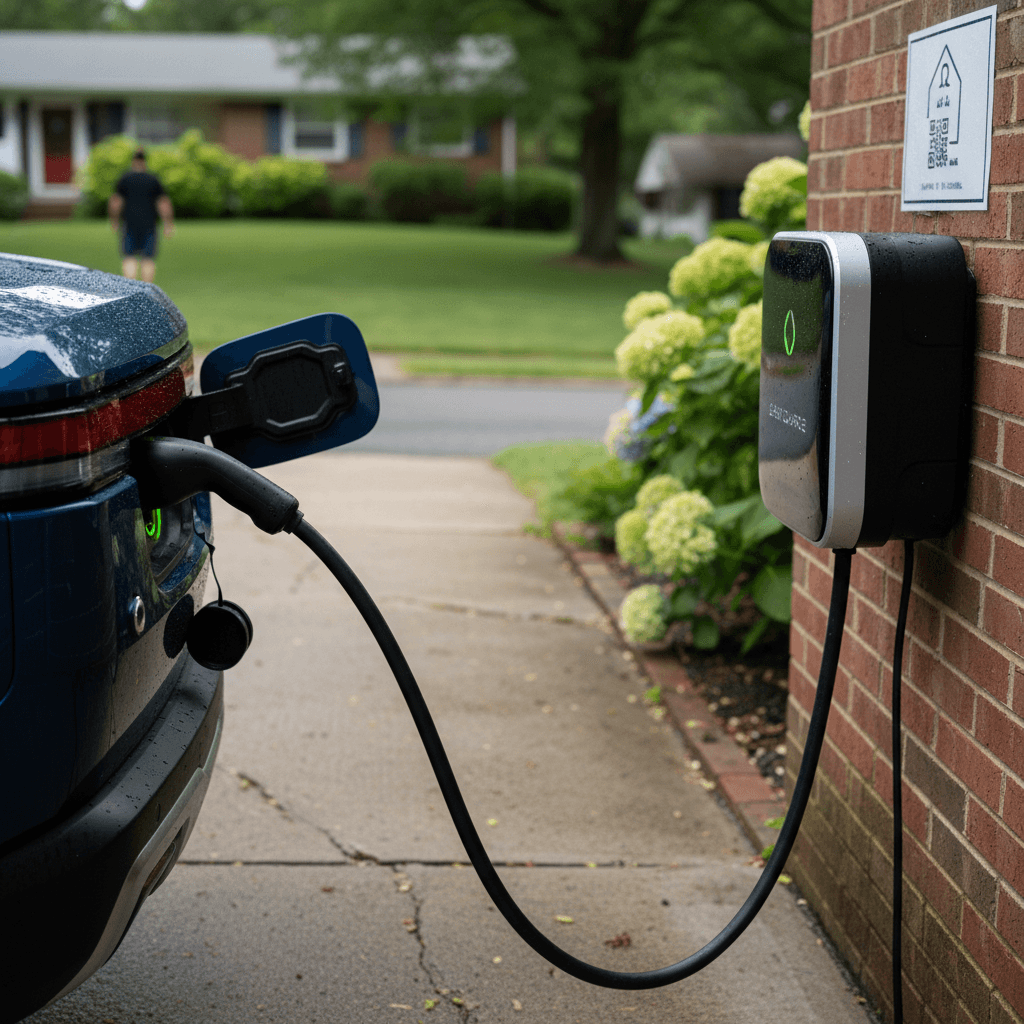
While the vehicle excise tax credit is in limbo, Maryland’s support for home and commercial charging equipment is more stable heading into 2026, and it’s one of the most dependable ways for residents to save money.
Key facts about Maryland EVSE rebates
Maryland’s statewide EVSE (Electric Vehicle Supply Equipment) rebate program has offered up to 50% of the purchase and installation cost of qualifying Level 2 chargers, with separate caps for residential and commercial properties. Program rules are updated each fiscal year, but as of the latest guidance, the structure looks roughly like this:
- Eligible equipment: Level 2 EVSE (hard‑wired or plug‑in). Some Level 1 equipment has been allowed in certain years; read the year‑specific FOA closely.
- Residential rebate: Up to $700 per charging port, not to exceed 50% of eligible project costs.
- Commercial rebate: Up to $5,000 per charging port, again capped at 50% of eligible costs.
- No double‑dipping: A single charger can’t claim multiple Maryland EVSE rebates, even if ownership changes.
- Annual budget: Funded annually by the Maryland Energy Administration (MEA); once money is exhausted for the year, new applications typically wait for the next cycle.
Why charger rebates matter in a post‑tax‑credit world
Federal EV tax credits in 2026: what changed
For years, the federal government offered two big purchase incentives: the New Clean Vehicle Credit (up to $7,500) and the Previously‑Owned Clean Vehicle Credit (up to $4,000). Those were reshaped by the Inflation Reduction Act and then cut off early by the One Big Beautiful Bill Act passed in mid‑2025.
Before September 30, 2025
- Up to $7,500 federal credit on qualifying new EVs (IRC §30D).
- Up to $4,000 federal credit on qualifying used EVs bought from dealers for $25,000 or less (IRC §25E).
- Many buyers could transfer the credit to the dealer at purchase, turning it into an instant discount.
- Complex rules on income caps, price caps, final assembly in North America, and battery sourcing.
After September 30, 2025
- No federal 30D or 25E purchase credits for vehicles acquired after September 30, 2025.
- Lease and commercial‑use pathways that leveraged the commercial clean vehicle credit have also tightened or shut down.
- If you bought an EV before the deadline, you can still claim or reconcile your credit on your tax return, but that doesn’t help with 2026 purchases.
Check your acquisition date
Can you stack Maryland and federal EV incentives in 2026?
In prior years, Maryland residents could often combine state excise tax credits, federal EV tax credits, and sometimes utility rebates into a very attractive overall package. In 2026, the stacking picture is more limited, but not dead.
How stacking works for a 2026 Maryland EV purchase
1. Federal purchase credits are effectively gone for new buys
If you acquire a new or used EV in 2026, you should assume there is <strong>no federal purchase credit</strong> available under §§30D or 25E. That removes one of the biggest stackable benefits buyers used to rely on.
2. Maryland excise tax credit depends on funding
Even though the state credit is still in law, in‑year funding has been exhausted in many recent cycles. Stacking a federal and state credit was possible in 2023–2025; in 2026 it’s more likely you’ll get neither unless the legislature restores money.
3. Charger rebates and utility programs are stackable
You can usually <strong>combine state EVSE rebates</strong> with local utility incentives (for example, smart‑charging rewards or additional rebates) and dealer discounts, even without vehicle tax credits in play.
4. Dealer and manufacturer cash is effectively a “discount credit”
With tax incentives fading, manufacturers have leaned harder on <strong>rebates, price cuts, and subsidized leases</strong>. Those aren’t tax credits, but they reduce your effective cost the same way, and you don’t have to wait for tax season.
Watch for double‑counting in dealer ads
Used EVs in Maryland: credits, pricing and strategy
For many Maryland shoppers in 2026, the most compelling play is a used EV. The federal used EV tax credit under §25E helped jump‑start this market, but it too was cut off for vehicles acquired after September 30, 2025. That changes the math, but not necessarily for the worse.
Used EVs in a post‑credit landscape
Why the absence of a tax credit doesn’t kill the value proposition
Lower upfront prices
Battery health transparency
Operating cost advantage
How Recharged helps Maryland used‑EV buyers
Key risks to manage
- Battery degradation: A heavily degraded pack can erase fuel savings. Prioritize vehicles with documented health metrics, not just odometer readings.
- Out-of-warranty repairs: Large battery or high-voltage component fixes can be expensive once factory coverage ends.
- Charging access: Without workplace or home Level 2 charging, you may depend on costlier public fast‑charging.
Upside for 2026 buyers
- Price normalization: Used EVs are much closer in price to comparable gas vehicles than they were a few years ago.
- More inventory: Off‑lease Teslas, Bolts, Mach‑Es, and Korean EVs give buyers a wider mix of range and price points.
- Better tools: Digital marketplaces like Recharged make it easier to compare battery health, range, and total cost of ownership vehicle‑to‑vehicle.
How to plan an EV purchase in Maryland in 2026
With tax credits less predictable, the 2026 EV‑shopping playbook in Maryland is about controlling the variables you can: purchase price, financing, charging costs, and long‑term reliability. Here’s a structured way to approach it.
Practical 2026 EV‑shopping checklist for Maryland drivers
1. Decide on new vs. used without assuming credits
Start by planning as if you’ll receive <strong>no tax credits at all</strong>. Compare a new EV, a used EV, and a comparable gas vehicle on total 5‑year cost: purchase price, insurance, fuel, maintenance, and expected resale.
2. Verify current Maryland incentives before you shop
Check the Maryland MVA site for the latest on the <strong>excise tax credit</strong> and the Maryland Energy Administration for <strong>EVSE rebates</strong>. If funding is exhausted, treat any future replenishment as upside, not a necessity.
3. Lock in your charging plan
If you own or control parking, price out a <strong>Level 2 home charger</strong> and see how much a state or utility rebate can offset. If you rely on public charging, factor those higher rates into your cost comparison.
4. Focus on battery health for used EVs
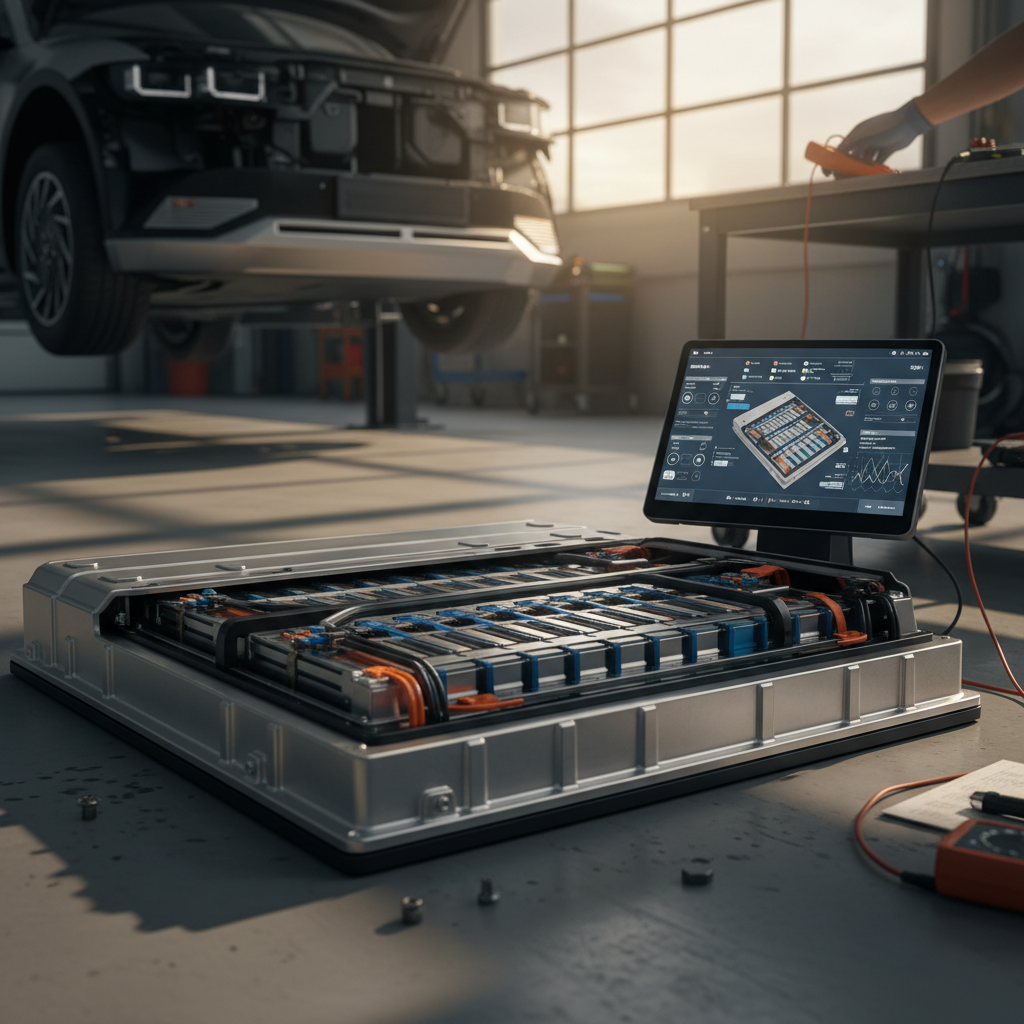
For used vehicles, insist on <strong>third‑party battery diagnostics</strong>, not just a dashboard range estimate. Recharged’s Score Report gives you objective data on battery health and estimated real‑world range.
5. Compare financing and ownership costs, not just monthly payments
Dealer and captive‑finance offers may dangle low monthly payments on new EVs. Compare those to a competitively‑priced used EV (from Recharged or elsewhere) on total interest paid, fuel savings, and expected depreciation.
6. Time your purchase, but don’t chase rumors
Maryland and federal rules can change again, but there’s no guarantee they’ll change in your favor. If a vehicle and price make sense today without credits, that’s a solid foundation. Treat any new incentive as a bonus, not a requirement.
Where Recharged fits into your 2026 strategy
Ready to find your next EV?
Browse VehiclesMaryland EV tax credit 2026: FAQ
Common questions about Maryland EV incentives in 2026
Bottom line for Maryland EV shoppers in 2026
In 2026, the phrase “Maryland EV tax credit” doesn’t mean what it did a few years ago. The state’s excise tax credit framework still exists, but FY 2026 funds have effectively been tapped out. Federally, the big new and used EV credits shut off for vehicles acquired after September 30, 2025. That leaves EV buyers relying more on market prices, charger rebates, and smart vehicle selection than on large tax refunds.
If you’re shopping in Maryland this year, focus first on the fundamentals: whether a new or used EV pencils out on total cost of ownership, what your charging setup will look like, and how comfortable you are with long‑term battery health. Use Maryland’s EVSE programs and any remaining local incentives to reduce your charging costs, and be skeptical of any sales pitch built on outdated or unfunded credits.
And if a used EV is on your radar, platforms like Recharged, with verified battery diagnostics, fair‑market pricing, financing support, and trade‑in options, can give you more clarity than any one‑time tax credit. In a post‑incentive landscape, transparency and data are the real subsidies.