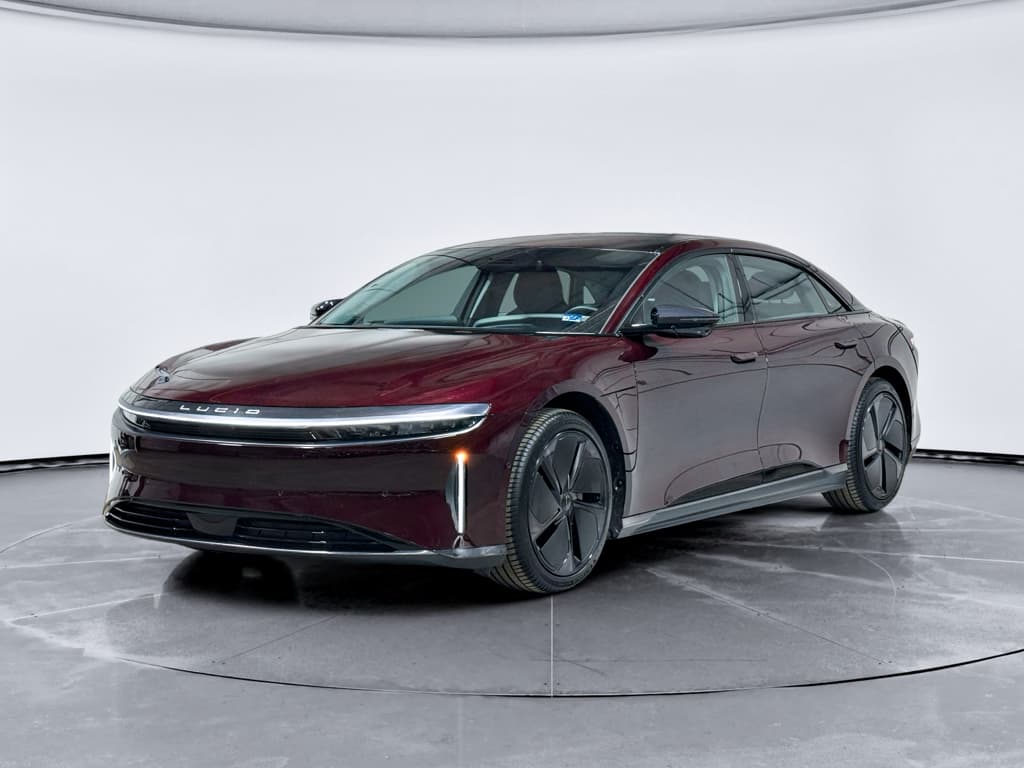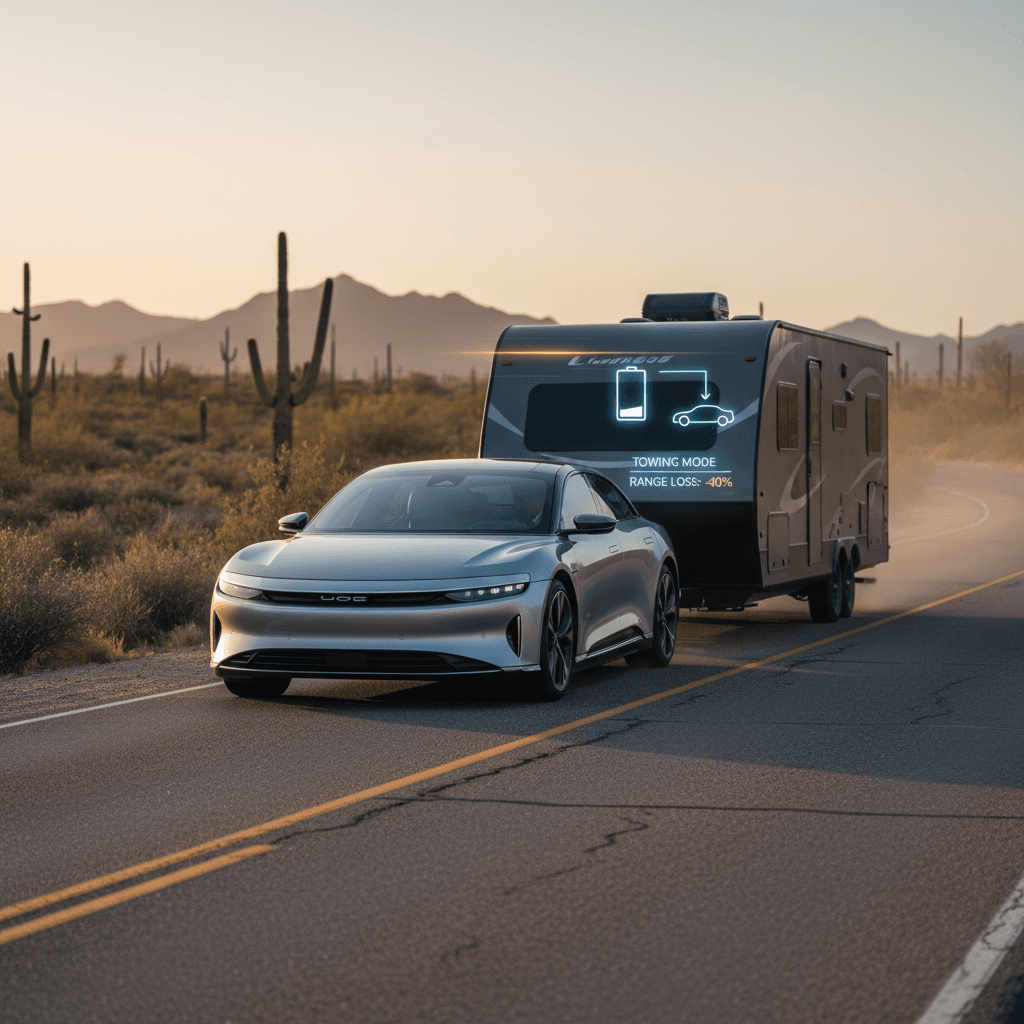
If you’re eyeing a Lucid Air, or already own one, it’s natural to wonder about towing capacity and range loss. This is one of the longest‑range EVs on the market, surely it can drag a teardrop camper into the sunset, right? Not so fast. The Air is a laser‑focused luxury sedan, not a Swiss Army knife pickup, and its towing story is more complicated than the brochure photos suggest.
Quick answer
Lucid Air towing overview: the uncomfortable truth
Let’s start with the bit most owners never hear from a salesperson: the Lucid Air is officially a non‑towing vehicle in the U.S. and Canada. On Lucid’s own spec sheets, the towing field for Air trims is simply blank or marked “N/A.” There’s no factory hitch, no wiring harness, no “tow mode” hidden in a submenu. If your mental picture of ownership involves an Air GT yanking an Airstream up I‑70, you’re mis‑casting the lead actor.
Lucid Air range vs real‑world towing penalties
Warranty and safety note
Can the Lucid Air tow at all? Factory specs vs reality
On paper, the answer is simple: no, the Lucid Air is not approved to tow. Lucid’s own comparison tools and owner information for the Air list no braked or unbraked trailer capacities. That’s unlike its sibling, the Lucid Gravity SUV, which ships with a clearly defined tow rating and a proper towing package.
- No OEM tow package for the Air (in North America).
- No listed braked / unbraked trailer capacity.
- No integrated 7‑pin or 4‑pin trailer wiring from the factory.
- No official “Tow Mode” or software support like you see on the Gravity.
Could the platform mechanically drag a small trailer down the road? Of course. With this much torque, you could pull down the neighbor’s fence in reverse. But manufacturers don’t just look at power, they test cooling, brakes, stability control logic, crash behavior, and lifetime durability with a trailer attached. Lucid engineered the Air around range and refinement, not tongue weights and boat ramps.
Why “unofficial towing” is risky
Hitches, accessories, and tongue weight on the Lucid Air
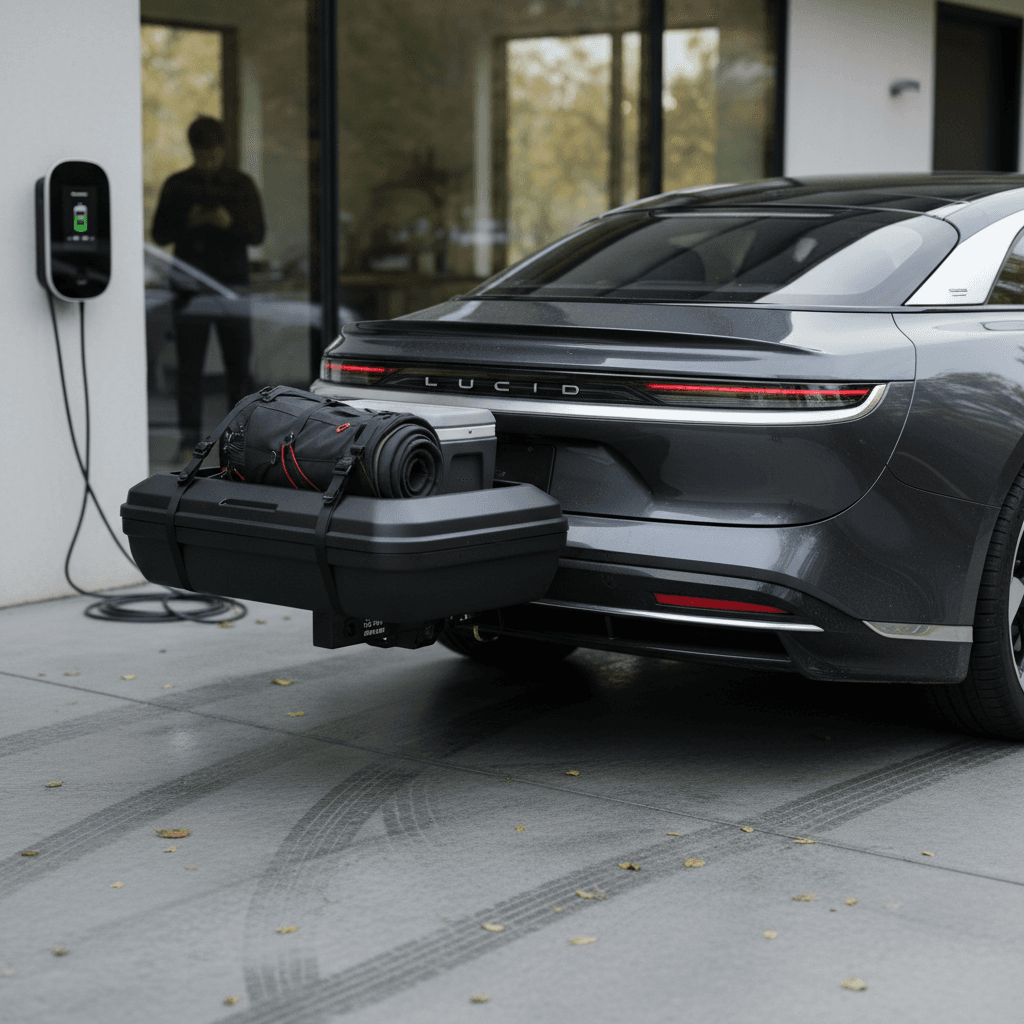
Because Lucid doesn’t sell a factory hitch for the Air, the aftermarket stepped in. Companies like EcoHitch and others now offer receiver hitches specifically engineered for the Lucid Air, typically hidden behind the bumper with a 2‑inch receiver opening. These are marketed primarily for bike racks and cargo carriers, not heavy trailers.
Typical Lucid Air hitch & accessory limits (aftermarket)
Approximate numbers for common aftermarket hitches on the Lucid Air; always verify the exact rating on your hardware and in your owner’s information.
| Item | Typical rating | What it really means |
|---|---|---|
| Receiver size | 2 in | Compatible with most bike racks and cargo carriers. |
| Tongue weight (hitch) | Up to ~400 lb | Maximum downward load at the receiver. Your rack + bikes + cargo must stay at or below this. |
| Trailer weight | "Not rated" for the car | The hitch hardware might have a gross trailer weight spec, but the Lucid Air itself does not. |
| Weight‑distributing hitch | Not recommended | Lucid‑style unibody EVs generally are not validated for weight‑distributing hitches. |
Hitch ratings never override the vehicle’s own (non‑existent) tow rating. You’re still in "use at your own risk" territory if you tow a trailer.
Mind the lever arm
For most Lucid Air owners, this is the sweet spot: bikes, coolers, camping gear, and small cargo boxes on a hitch‑mounted rack. Used this way, the hitch is just a convenient backpack, and the car still behaves like the long‑range luxury rocket you paid for.
How towing typically slashes EV range
Even if the Lucid Air were tow‑rated, physics would still get the last word. When you tow with any EV, you’re fighting two main enemies: extra weight and aerodynamic drag. The battery doesn’t care whether the kilowatts go toward pushing a big frontal area through the air or hauling 3,000 pounds of plywood, it just sees more demand.
Six big factors that determine EV towing range loss
Think in patterns, not a single number.
Aerodynamic drag
Trailer weight
Speed
Temperature
Elevation & grade
Road surface & wind
Across different brands, tests and owner reports all tend to land in the same rather ugly neighborhood: light, low trailers typically cost 20–35% of your range; big campers and heavy loads at highway speeds can eat 40–60% or more. That’s for EVs that are actually tow‑rated. If you stuffed a hitch on an Air and tried the same, the percentages wouldn’t magically become kinder just because the EPA sticker says 500 miles.
Lucid Air range loss scenarios if you tow anyway
Let’s talk in hypotheticals. Suppose you ignore Lucid’s silence on the subject, install an aftermarket hitch, wire up lights, and hook a small trailer to your Lucid Air Grand Touring. How ugly does the range picture get?
Baseline: solo Lucid Air range
- Light, low‑profile trailer (small utility, single dirt bike, compact cargo box): plan on 25–40% range loss at 60–70 mph.
- Mid‑size, reasonably aerodynamic camper or boat: 35–50% range loss is entirely plausible.
- Tall, boxy RV or near‑max load: 50–60%+ range loss at freeway speeds is a safe expectation, especially in bad weather or over mountains.
The Lucid Air’s party trick is brutal efficiency, which buys you a bigger buffer than most EVs. But efficiency doesn’t repeal drag. You’re still planning road trips off a drastically shrunken fuel tank when you hitch something substantial behind an EV.
Don’t plan with EPA range when towing
Trip‑planning math: Lucid Air towing range examples
Let’s run some back‑of‑the‑envelope math using a Lucid Air Grand Touring rated around 500 miles of EPA range. In the real world, solo on the highway, you might see 380–420 miles if you’re behaving yourself. Now add a trailer.
Scenario 1: Small utility trailer
Picture a modest, low‑sided utility trailer with 500–800 lb of total load: landscaping gear, a couple of dirt bikes, a stack of moving boxes.
- Baseline usable solo range: ~400 mi
- Estimated range loss: 25–35%
- Usable range with trailer: ~260–300 mi
Trip still doable, but you’re stopping more often and giving up some of the Air’s long‑legged magic.
Scenario 2: Compact camper or boat
Now imagine a small, aerodynamic camper or a moderate fishing boat on a decent trailer, coming in around 2,000–3,000 lb with a higher frontal area.
- Baseline usable solo range: ~400 mi
- Estimated range loss: 40–50%
- Usable range with trailer: ~200–240 mi
Your glamorous grand‑touring sedan just turned into a vehicle that needs to stop every 150–180 miles in less‑than‑ideal conditions.
These aren’t Lucid‑specific test numbers, they’re extrapolated from what we see across the EV segment. The point is not that the Air is bad; it’s that no EV shrugs off towing. When you start with exceptional solo range, you simply have a little more meat on the bone before the carving begins.
If you must tow briefly with any EV
When you should step up to a Lucid Gravity or other tow‑rated EV
If your life involves trailers in any recurring way, boats every weekend, a camper three states away, a race car in an enclosed hauler, the honest advice is simple: don’t force the Lucid Air to be something it isn’t. Look at a tow‑rated SUV or truck instead.
Lucid Air vs Lucid Gravity: which belongs at the hitch?
Same design language, very different job descriptions.
Lucid Air sedan
- Ultra‑long‑range luxury sedan
- No official tow rating or OEM hitch
- Optimized for efficiency, refinement, aero
- Brilliant for fast, long road trips with passengers and luggage
Lucid Gravity SUV
- Three‑row electric SUV with family + gear in mind
- Factory tow package and significant tow rating
- Built‑in Tow Mode, wiring, stability logic
- Engineered and warrantied to pull real trailers
Gravity is Lucid’s answer to the family that wants to bring the toys. It trades the Air’s low‑slung elegance for space, hatch versatility, and towing hardware. If your non‑negotiable is "I tow," then the Gravity, or another manufacturer’s tow‑rated EV SUV or pickup, is the right archetype. The Air remains a fantastic second car in that pairing: the distance‑eating arrow in your quiver.
How Recharged can help you choose
Ready to find your next EV?
Browse VehiclesTowing with a used Lucid Air: what buyers should ask
In the used market, you may find Lucid Airs with hitch receivers already installed. That doesn’t automatically mean the car has lived a hard life of clandestine trailering, but you should ask pointed questions.
Due‑diligence checklist for a used Lucid Air with a hitch
1. Ask how the hitch was used
Clarify whether it was <strong>only for bikes and cargo</strong> or if the owner towed actual trailers. Occasional e‑bike duty is far gentler than yanking a camper over the Rockies twice a year.
2. Look for wiring and brake controllers
Trailer wiring, a brake controller or extra holes and hardware under the rear can hint at serious towing. That’s not an automatic deal‑breaker, but it’s useful context.
3. Inspect underbody and rear structure
Check the rear subframe, mounting points and underbody panels for damage, deformation, or corrosion. A sloppy hitch install or impact can tell a whole story by itself.
4. Review service history
Frequent brake work, suspension components, or unexplained vibration complaints might correlate with over‑the‑limit towing or heavy loads.
5. Check battery health and range
Use the car’s own data and, ideally, a third‑party battery diagnostic like the <strong>Recharged Score</strong> to confirm the pack is still delivering strong capacity after whatever the previous owner asked of it.
6. Decide if towing use fits your risk tolerance
If the seller admits to heavy towing on a car never designed for it, you can either discount the price, walk away, or accept that you’re inheriting some unknowable stress history.
One of the quiet advantages of shopping a used Lucid Air on Recharged is that you’re not guessing blind. Our Recharged Score battery health diagnostics and inspection data make it much easier to separate “light‑duty bike‑rack owner” from “amateur overlander with a secret trailer habit.”
Checklist: safer ways to haul gear with a Lucid Air
Let’s assume you accept the Air for what it is and simply want to carry more stuff without savaging your range. Here’s a saner playbook that keeps you within the spirit of the car’s design.
Practical ways to carry more with minimal range penalty
Use a hitch for bikes and compact cargo only
Treat the hitch as a <strong>gear rack, not a tow point</strong>. Two e‑bikes, a cargo tray with camping gear, or a compact box are all fair game if you respect tongue‑weight limits.
Favor rear‑mounted carriers over roof boxes
Roof boxes brutalize aero on any car, and the Air especially. A clean rear‑mount carrier almost always costs less range than a tall box riding up in the wind.
Pack heavy items low and close
Keep the heaviest items low in the trunk or frunk, and keep hitch‑mounted loads as close to the bumper as possible. This reduces leverage on the hitch and helps stability.
Watch your speed on the highway
With extra drag out back, every mph over 70 is a tax. Cruising at 65 instead of 75 can feel glacial, but it’s often worth <strong>tens of miles of range</strong> on a long leg.
Pre‑plan DC fast‑charging stops
Use charging apps or the car’s planner to build in a bit more margin than you would solo. Slightly more frequent, shorter fast‑charge stops usually make trips smoother.
Test your setup on a short shakedown run
Before committing to a 500‑mile weekend, do a <strong>local loop with your full gear</strong> and see how the car behaves, consumption, handling, and braking. Adjust from there.
Good news on battery wear
FAQ: Lucid Air towing capacity and range loss
Frequently asked questions about Lucid Air towing and range
Bottom line: The Lucid Air is a road rocket, not a pack mule
Viewed honestly, the Lucid Air towing capacity and range loss story is less about numbers and more about identity. This car is a grand‑touring scalpel, aerodynamic, absurdly efficient, eerily quick, not a rolling Swiss Army knife. You can bolt a hitch to the back and hang bikes or cargo off it with minimal drama. You can even, at your own risk, dabble in unofficial towing and watch your real‑world range evaporate like snow in Phoenix.
But if your non‑negotiable is a camper, a boat, or a trailer full of race tires, the wiser move is to choose a tool that was born for that work: a tow‑rated EV SUV like the Gravity, or an electric pickup, backed by engineering and warranty support. Let the Air do what it does best, cover obscene distances with shocking efficiency and comfort, while something stouter shoulders the trailer.
And if you’re shopping used, especially across different EVs and use‑cases, Recharged can help you sort the thoroughbreds from the pack mules. Every vehicle on the platform comes with a Recharged Score Report with verified battery health, pricing transparency, and expert guidance, so your next road trip, towing or not, starts from a place of confidence rather than guesswork.