If you’re eyeing a Lucid Air but also need to haul bikes, skis, or a cargo box, the first thing you’ll want to know is the Lucid Air roof rack weight limit. Between the glass-heavy roof design and EV efficiency concerns, you can’t just bolt on any rack and pile gear on top. You need to stay inside Lucid’s load ratings and think about how that weight affects safety, range, and even resale value.
Short answer
Lucid Air roof rack weight limit: quick overview
Key Lucid Air roof load facts
Lucid sells its own Air Crossbars accessory for the Air. Those bars are engineered for the car’s mixed aluminum-and-glass roof structure and are load‑rated to 165 pounds total. That number has to cover everything up there, the bars themselves, any bike trays or box mounts, and the gear you load. Most third‑party racks that claim higher limits are still constrained by the Lucid roof rating, not just their hardware.
Factory rating always wins
What is the Lucid Air crossbars weight rating?
Lucid’s official wording for the Air Crossbars calls out a maximum load of up to 165 pounds. In roof‑rack language, that’s a dynamic rating, the maximum load you can carry while driving at normal road speeds in good conditions. It’s in the same ballpark as many luxury sedans and crossovers with panoramic roofs.
- The 165 lb rating includes the crossbars + any towers, feet, and mounts.
- You must subtract the weight of the rack hardware to find your remaining cargo allowance.
- Lucid expects that weight to be distributed between the two crossbars, not stacked forward or rearward.
On paper, that might sound modest compared with an SUV rated to 200–220 lb, but remember the Air’s roof carries a large glass panel and complex sealing and airbag structures. Lucid has to leave a safety margin for things like emergency maneuvers, potholes, and crosswinds.
Dynamic vs. static load: what the numbers really mean
Dynamic load (what Lucid publishes)
Dynamic load is the weight allowed while you’re driving. The 165 lb Lucid Air figure is a dynamic limit.
- Covers highway speeds, bumps, braking, and cornering.
- Applies in normal conditions with the rack installed correctly.
- Should never be exceeded on the road.
Static load (when parked)
Static load is what the roof can tolerate while the car is standing still. Most manufacturers don’t publish a static rating for sedans like the Lucid Air.
- Some SUVs allow much higher static loads for roof‑top tents.
- Do not assume a higher static rating exists for the Air.
- It’s safest to treat 165 lb as your practical ceiling at all times.
Don’t plan on a rooftop tent
How much can you really put on a Lucid Air roof?
Let’s translate the numbers into real‑world cargo. We’ll assume the factory Lucid Air crossbars and common Yakima/Thule‑style accessories, which is exactly how Lucid positions its bars.
Typical Lucid Air roof rack setups
Approximate weights to help you stay within the 165 lb limit. Always check your specific accessories.
| Setup | Rack hardware (approx.) | Cargo (approx.) | Total roof load | OK under 165 lb? |
|---|---|---|---|---|
| Two bikes on upright trays | 35 lb (bars + 2 trays) | 2 x 30 lb = 60 lb | ~95 lb | Comfortably within limit |
| Three bikes on trays | 40 lb (bars + 3 trays) | 3 x 30 lb = 90 lb | ~130 lb | Within limit for many setups |
| Medium roof box + luggage | 40 lb (bars + box) | 60–80 lb gear | ~100–120 lb | Within limit if you pack light |
| Large roof box stuffed full | 40 lb (bars + box) | 120+ lb gear | 160+ lb | Risk of exceeding limit |
| Ski/snowboard rack + 4–6 pairs | 35 lb (bars + ski rack) | 40–60 lb gear | ~75–95 lb | Comfortably within limit |
Use these examples as guidelines, your actual rack and gear weights may differ.
Weigh once, know forever
Common Lucid Air roof setups: bikes, boxes, and skis
How common roof setups fit within the Lucid Air limit
Where a 165 lb rating works well, and where it doesn’t.
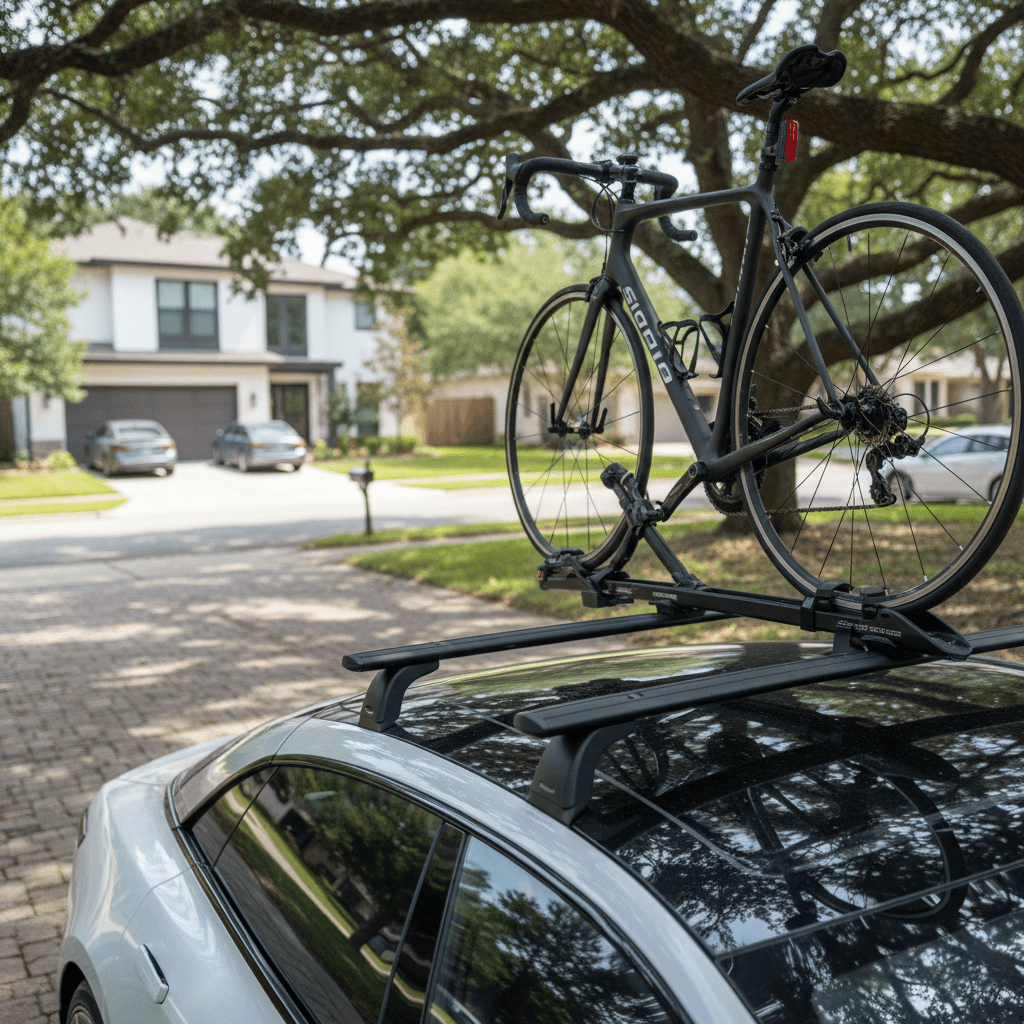
Bikes on upright trays
For most owners, this is the sweet spot.
- 2–3 modern road or mountain bikes is realistic.
- Mind the height if you have a garage or low tree limbs.
- Check fork‑mount trays if your bikes are heavier e‑bikes.
Cargo box for road trips
A slim or medium‑size roof box paired with Lucid’s bars is a practical match.
- Pack lighter, bulkier items (jackets, sleeping bags, pillows).
- Keep dense items (tools, water, batteries) in the trunk.
- Expect a small range hit at highway speeds.
Skis and snowboards
Skis and snowboards are long but relatively light.
- 4–6 pairs of skis or several boards are usually fine.
- Secure straps so they don’t flap and whistle.
- Give yourself a bit more braking distance in snow.
Glass roof, fitment, and ownership issues to watch for
The Lucid Air’s cabin‑wide glass canopy is a big part of its appeal, but it also means you need to be picky about how you attach a roof system. Factory crossbars bolt into engineered mounting points that spread the load, while many universal clamp‑on racks were never tested on this specific roof profile.
- Stick with Lucid’s own Air crossbars or a reputable system explicitly listed as compatible with the Lucid Air.
- Avoid improvising with generic door‑jamb clamp racks that could concentrate force on the glass or trim.
- Inspect after installation for any trim distortion, wind noise, or leaks, and re‑torque hardware after the first 50–100 miles with a load on the roof.
Why some owners are wary of the OEM bars
If you’re shopping the used Lucid Air market, it’s worth asking the seller whether they’ve run a roof rack and, if so, how often and for what. A clean inspection of the roof rails, paint, and glass, plus a test drive at highway speeds to listen for wind noise or whistles, can tell you a lot about how the car was used.
How Recharged can help with used Lucid Airs
Roof rack vs. hitch rack on a Lucid Air
A roof rack isn’t the only way to move gear with a Lucid Air. Many owners end up comparing roof systems with hitch‑mounted bike racks or cargo platforms, especially if they’re concerned about glass‑roof stress or efficiency.
When a roof rack makes sense
- You mainly haul light, bulky items like skis or luggage.
- You don’t want to add a hitch receiver to a sedan that wasn’t factory tow‑rated.
- You prefer to keep your rear camera and parking sensors unobstructed.
Here, the 165 lb roof rating is more than enough, and you keep all of your rear cargo access.
When a hitch rack is smarter
- You regularly carry heavier e‑bikes that push roof limits.
- You want loading at waist height instead of lifting above your head.
- You’d like to preserve every mile of range you can on the highway.
Even with a light aerodynamic roof box, drag hurts efficiency more than a low, rear‑mounted rack.
Think about long‑term ownership
Tips for loading your Lucid Air roof rack safely
Lucid Air roof loading checklist
1. Start with the math
Add the weight of your crossbars, mounting hardware, and accessories, then add your bikes, skis, or cargo. Stay below <strong>165 lb total</strong>, and give yourself a 10–15% buffer instead of pushing the absolute limit.
2. Keep heavy stuff low
Reserve the roof for light but bulky items. Put water jugs, tools, spare parts, and dense camping gear in the trunk or rear footwell instead of in a roof box.
3. Balance the left and right sides
If you’re carrying two bikes, space them evenly between the bars instead of hugging one side. Uneven loading is harder on the rack mounts and can create handling quirks in emergency maneuvers.
4. Mind your speed and weather
A fully loaded rack adds frontal area and can catch crosswinds. In strong crosswinds or heavy rain, consider slowing down a bit below your usual highway cruising speed to keep things stable and reduce noise.
5. Re‑check hardware periodically
Before each long trip, confirm the crossbar torque values and make sure mounts haven’t crept over time. Heat, cold, and vibration will loosen hardware faster than you think.
6. Remove the rack when not in use
Running bare crossbars all year adds wind noise and chips away at efficiency. If you only carry gear a few times a year, remove the bars when you’re done, it’s kinder to your range and your roof.
Roof rack safety and resale value
FAQ: Lucid Air roof rack weight limit & accessories
Frequently asked questions about Lucid Air roof racks
Should a roof rack affect your Lucid Air purchase decision?
If your idea of adventure is a couple of bikes, some skis, or a medium roof box for family road trips, the Lucid Air roof rack weight limit of 165 lb is more than workable, as long as you plan your loads and respect the numbers. Where things get dicey is with very heavy cargo, rooftop tents, or frequent overloading, all of which are better suited to a tow‑rated SUV or crossover with higher roof and hitch specs.
When you’re weighing a Lucid Air against other EVs, treat the roof rating like any other spec: put it next to battery size, range, and charging speed and ask whether it fits your real life. If you decide the Air is right for you, Recharged can help you find a used example with documented history, verified battery health, and clear notes about how the car has been used, roof rack and all. That way, you can enjoy the space, speed, and serenity of a Lucid Air without wondering what’s been riding on top of it.