If you’re trying to understand the Lucid Air depreciation curve over 5 years, you’re really asking two questions: how much value this car actually loses, and whether that’s a problem or an opportunity. With an ultra‑high original MSRP, aggressive price cuts, and a relatively young brand, the Air is a textbook case of steep luxury EV depreciation, especially in its first five years.
Quick take
Lucid Air depreciation curve basics (and why it’s so steep)
Depreciation is simply the gap between what a car cost new and what it’s worth later. For the Lucid Air, that gap is widened by three structural forces: high initial pricing, rapid price cuts on new cars, and the general tendency of luxury EV sedans to fall faster than crossovers and trucks. Third‑party data indicates the Air loses about 62–63% of its value by year five, leaving only a bit more than a third of its original MSRP on the table.
Lucid Air depreciation at a glance
Luxury EV reality check
Lucid Air depreciation after 5 years: the headline numbers
Let’s start with the numbers people care about most: where does a Lucid Air typically end up after five years?
Lucid Air 5‑year depreciation snapshot
Approximate average depreciation and resale values based on current market and pricing data, normalized across trims.
| Metric | Value |
|---|---|
| Original MSRP (reference example) | $70,900 |
| Estimated value loss after 3 years | ≈51% (−$36,400) |
| Estimated value after 3 years | ≈$34,500 |
| Estimated value loss after 5 years | ≈63% (−$44,500) |
| Estimated value after 5 years | ≈$26,500 |
| Share of value retained after 5 years | ≈37% |
These are directional estimates, not guaranteed trade‑in offers. Real‑world values vary by trim, mileage, condition, region, and incentives at time of sale.
Those percentage drops line up with broader luxury‑EV data: the typical Lucid Air keeps around 37% of its value at year five. That’s weaker than the average luxury‑EV sedan and far weaker than the overall passenger‑vehicle market, where many models still retain around 60% of their value after five years.
Think in dollars, not just percentages
Year‑by‑year depreciation curve: first 5 years
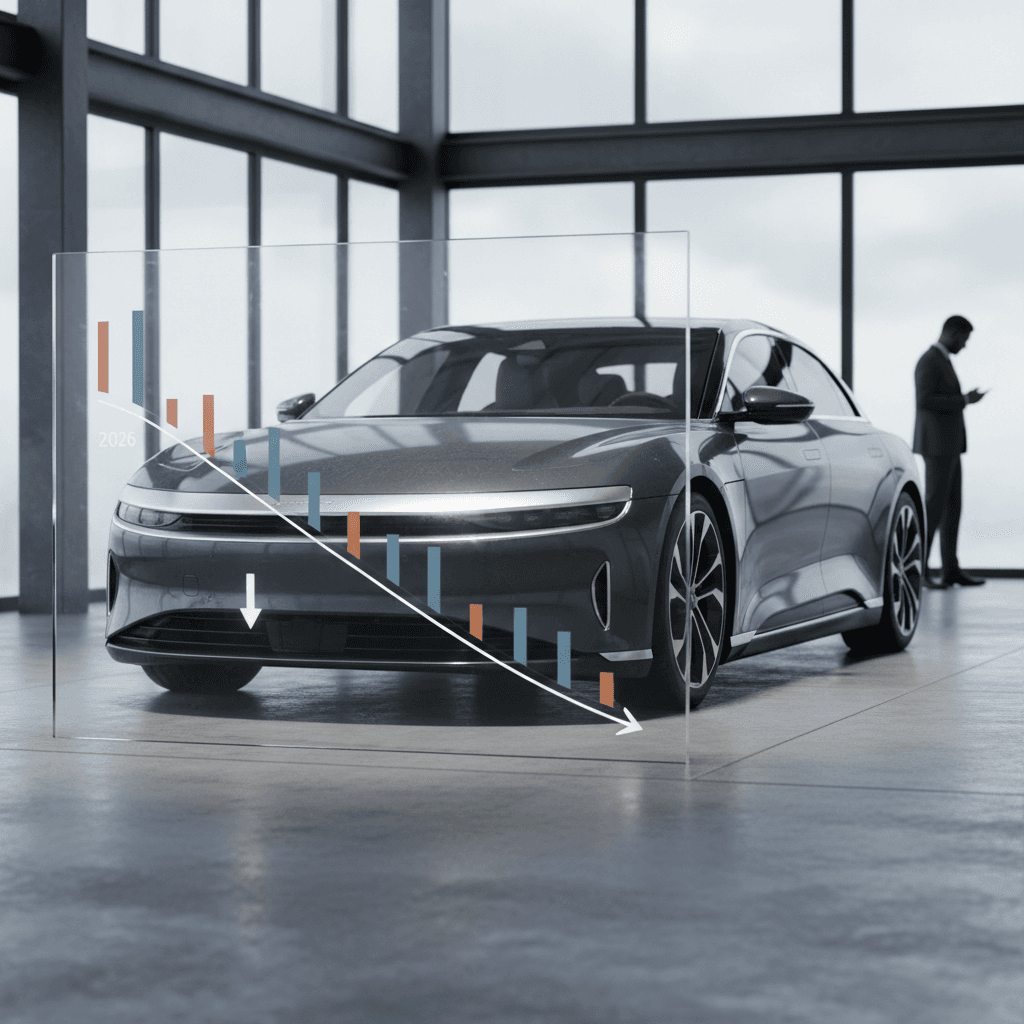
To make the Lucid Air 5‑year depreciation curve more concrete, it’s useful to think in rough year‑by‑year bands. Exact values depend heavily on trim, original transaction price, and incentives, but the shape of the curve is fairly consistent.

- Year 0 → 1: The worst of the drop happens immediately. Lucid’s frequent new‑car price cuts mean some buyers see effective depreciation of 20–30% within the first 12–18 months, even with low miles.
- Year 1 → 3: The curve stays steep. Market data points to total 3‑year depreciation a bit above 50%, meaning by the end of year three many Airs are trading for roughly half of their original MSRP.
- Year 3 → 5: The curve starts to bend but remains aggressive. Total depreciation climbs into the low‑60% range by year five. The good news is that much of the “shock” has already been absorbed by this point, so secondary buyers see slower percentage declines from here.
- After Year 5: The curve gradually flattens as the market values the car more on its underlying utility (range, comfort, features, battery health) than on being the latest thing. Battery condition and brand stability dominate from this point on.
Leasing residuals tell the same story
How Lucid’s curve compares to Tesla and other luxury EVs
A depreciation curve is only meaningful in context. If we put the Lucid Air next to the broader market, a few patterns show up quickly.
5‑year depreciation: Lucid Air vs. key benchmarks
Approximate 5‑year depreciation comparisons using current market and research data for similar segments.
| Vehicle / Segment | Typical 5‑Year Depreciation | 5‑Year Value Retained |
|---|---|---|
| Lucid Air (all trims) | ≈63% | ≈37% |
| Luxury electric midsize sedans (segment avg.) | ≈59% | ≈41% |
| Tesla Model S | ≈55–60% | ≈40–45% |
| All sedans (gas + EV) | ≈39% | ≈61% |
| All vehicles (US market) | ≈41% | ≈59% |
Numbers are rounded directional estimates to illustrate relative positioning, not exact quotes for any individual vehicle.
In plain English, the Lucid Air depreciates faster than the average luxury EV sedan and far faster than the typical car. It’s in the same neighborhood as other high‑MSRP luxury EVs that have chased demand with discounts and rapid tech cycles, but it sits on the steeper side of that already‑steep group.
The silver lining for used buyers
Why the Lucid Air depreciates so fast
Steep depreciation isn’t random. With the Lucid Air, several structural factors push the curve down early and hard:
The main forces behind Lucid Air depreciation
Most of these are common to luxury EVs, but they hit especially hard here.
High starting prices & discounts
Rapid tech & range arms race
Young brand, uncertain future
Sedan body style in an SUV world
Brand‑risk discount is real
How trims, options, and incentives change the curve
Not every Lucid Air follows the exact same 5‑year depreciation curve. Trim level, original transaction price, and factory incentives all matter just as much as the published MSRP.
Factors that bend your personal depreciation curve
1. High‑MSRP early cars drop furthest in dollars
Launch Dream Editions and heavily optioned early Grand Tourings started with massive stickers, often well into six figures. Even if they retain a similar percentage of value, the <strong>dollar loss over 5 years</strong> can easily exceed $70,000.
2. Pures and lower‑MSRP builds are cushioned
Later Pure and base Touring models with transaction prices in the $60k–$80k range suffer the same percentage losses but smaller absolute hits. For value‑oriented buyers, these trims are often the sweet spot in the used market.
3. Incentives quietly lower your true basis
If you bought with big factory discounts, dealer cash, or federal tax credits, your <strong>real depreciation</strong> is smaller than it looks on paper. A car that “lost” 60% of MSRP may only have cost you 50% of MSRP to begin with.
4. Options that help resale vs. those that don’t
Highly visible options, wheels, paint, glass canopy, major driver‑assist suites, tend to carry some value. Niche interior colors, extremely large wheels, or odd configurations often don’t return anything close to what they cost new.
Spec with the second owner in mind
Battery health: the wild card in Lucid Air depreciation
On paper, most Lucid Airs still have very healthy packs after a few years, and Lucid’s big‑pack, efficient‑motor strategy helps. But buyers can’t see chemistry; they see range readouts and third‑party battery reports. That’s where the next phase of depreciation battles will be fought.
Why battery health matters so much
- Range is the Lucid Air’s headline feature; if an example has clearly lost range, its core value proposition is damaged.
- EV shoppers have become more sophisticated: they now ask about state of health (SoH), DC fast‑charging history, and battery warranties.
- A car with documented, strong battery health can justify a higher price than a cosmetically similar car with unknown history.
How to de‑risk battery worries
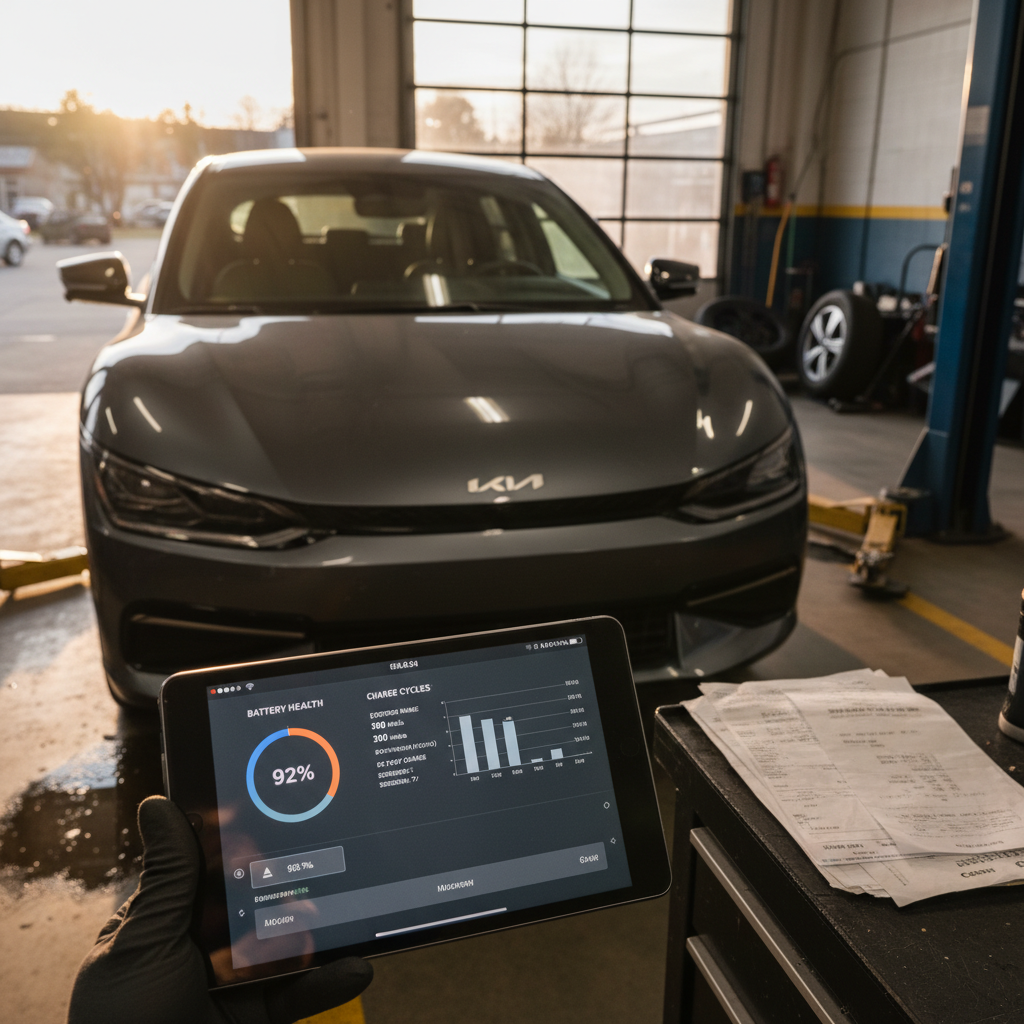
- Use independent diagnostics, like the Recharged Score battery health test, to document cell health and usable capacity.
- Highlight remaining factory battery warranty and any relevant software updates that improved efficiency or charging behavior.
- For buyers, compare battery reports across multiple cars to see which examples truly earn a premium.
Where Recharged fits in
Ready to find your next EV?
Browse VehiclesIs buying a used Lucid Air a smart move?
If you’re coming in as the second owner, the Lucid Air’s 5‑year depreciation curve can suddenly look like a huge opportunity. The first owner absorbed the harshest part of the curve; you get the long‑range, high‑tech sedan at a mid‑market price.
Pros and cons of buying a depreciated Lucid Air
What you gain, and what you’re betting on, as a second owner.
Upsides for used buyers
- Exotic new, attainable used: You’re getting a flagship‑level EV in the same price band as new mid‑tier crossovers and gas sedans.
- Range and performance still compete: Even 3–5 years on, the Air’s efficiency and power remain near the front of the pack.
- Steepest depreciation is behind you: Buy after the 3‑year mark and the curve typically flattens, meaning more predictable ownership costs.
Risks to weigh carefully
- Brand and support risk: Long‑term health of a young automaker is never a sure thing.
- Software and feature lag: Older hardware may miss later driver‑assist or infotainment improvements.
- Financing and insurance: Lenders and insurers sometimes price in extra risk for low‑volume luxury EVs.
Used Lucid Air buyer checklist (3–5 year old cars)
1. Focus on 3–5‑year‑old examples
This is where you get the best trade‑off between tech freshness and depreciation already taken. Earlier cars can offer stronger discounts but can also carry more unknowns.
2. Demand a battery health report
Ask for a third‑party report such as a <strong>Recharged Score</strong> or equivalent. A clean, well‑documented pack can justify paying more for the right car.
3. Verify warranty coverage
Confirm remaining factory coverage on the battery, powertrain, and electronics. The difference between 2 and 6 years of remaining coverage changes the risk profile dramatically.
4. Check software and hardware spec
Make sure the car has the driver‑assist, audio, and connectivity features you care about, and that it’s on current software. Some upgrades are OTA; others require hardware Lucid may or may not retrofit.
5. Compare to new after incentives
Luxury EVs often have aggressive new‑car incentives. Before you commit to used, compare the real out‑the‑door cost of a new Air, including tax credits and Lucid promos, against the used example you’re eyeing.
6. Use fair‑value pricing tools
Leverage pricing benchmarks and marketplace data. Recharged’s pricing incorporates depreciation curves for specific trims, miles, and battery health rather than generic book values.
Selling or trading a Lucid Air: how to protect your value
If you’re on the other side of the transaction, owning a Lucid Air today and thinking about getting out before or around the 5‑year mark, your job is to flatten your personal depreciation curve as much as possible.
Strategies to minimize your depreciation hit
- Sell before big price cuts: If Lucid announces major MSRP reductions or new trims, used values often follow. Pay attention to product‑cycle news.
- Keep mileage in check: Staying under common thresholds (like 30k or 60k miles) can help a car slot into a stronger pricing bracket.
- Stay on top of software and maintenance: A car with current software, documented service, and no warning lights sells faster and closer to ask.
Picking the right sales channel
- Instant offer: Easiest path, but you’re trading some value for speed and certainty.
- Consignment or marketplace listing: Takes more time and effort, but maximizes exposure and can bring higher bids, especially for well‑equipped cars.
- Trade‑in to an EV specialist: A platform like Recharged understands Lucid’s depreciation curve and battery health nuances better than a generic dealer, which can translate into stronger offers.
How Recharged can help sellers
FAQ: Lucid Air depreciation and resale value
Frequently asked questions about Lucid Air depreciation
Bottom line: making the Lucid Air depreciation curve work for you
The Lucid Air depreciation curve over 5 years is undeniably steep: around a 60–65% value drop by year five, putting it among the faster‑falling modern EVs. For first owners, that’s a hard pill to swallow and a reminder to think carefully about timing, incentives, and exit strategy. For second owners, it can be a rare chance to buy a genuinely world‑class long‑range EV at a mid‑market price.
Whether you’re buying or selling, the key is to understand that this curve isn’t just about percentages, it’s about battery health, brand stability, and how you use the car. Tools like the Recharged Score Report, EV‑savvy financing, and specialist support can turn Lucid’s depreciation story from a liability into an advantage. If you’re considering a used Lucid Air or thinking about your exit plan, Recharged can help you see the true cost of ownership, not just the sticker price.