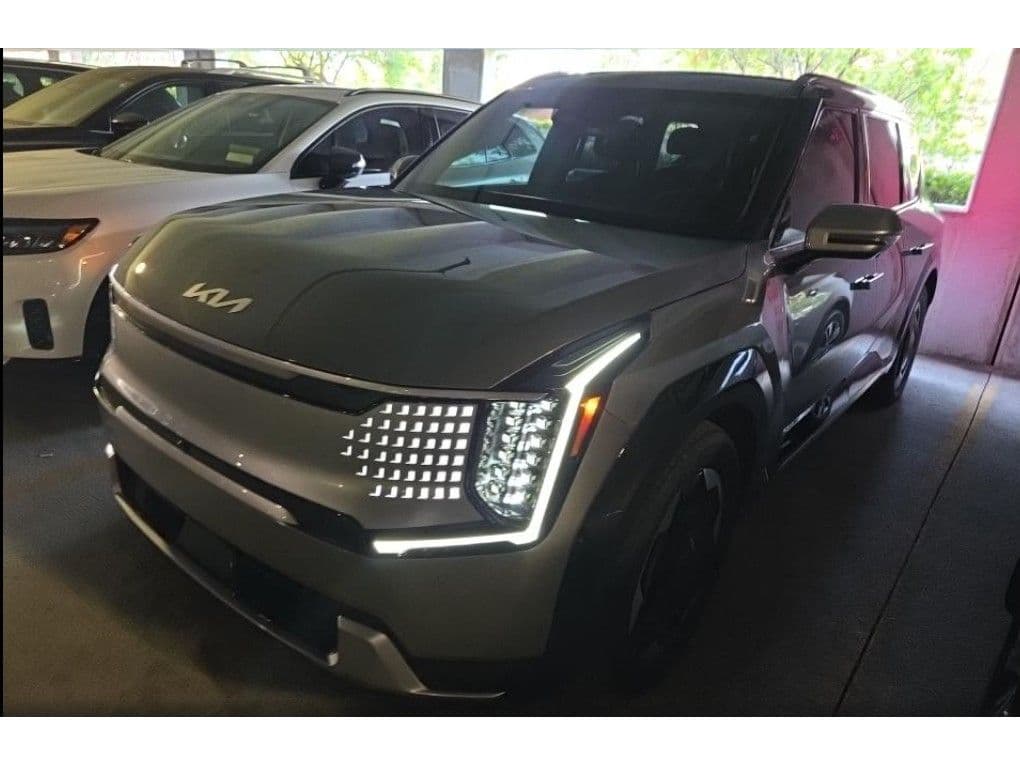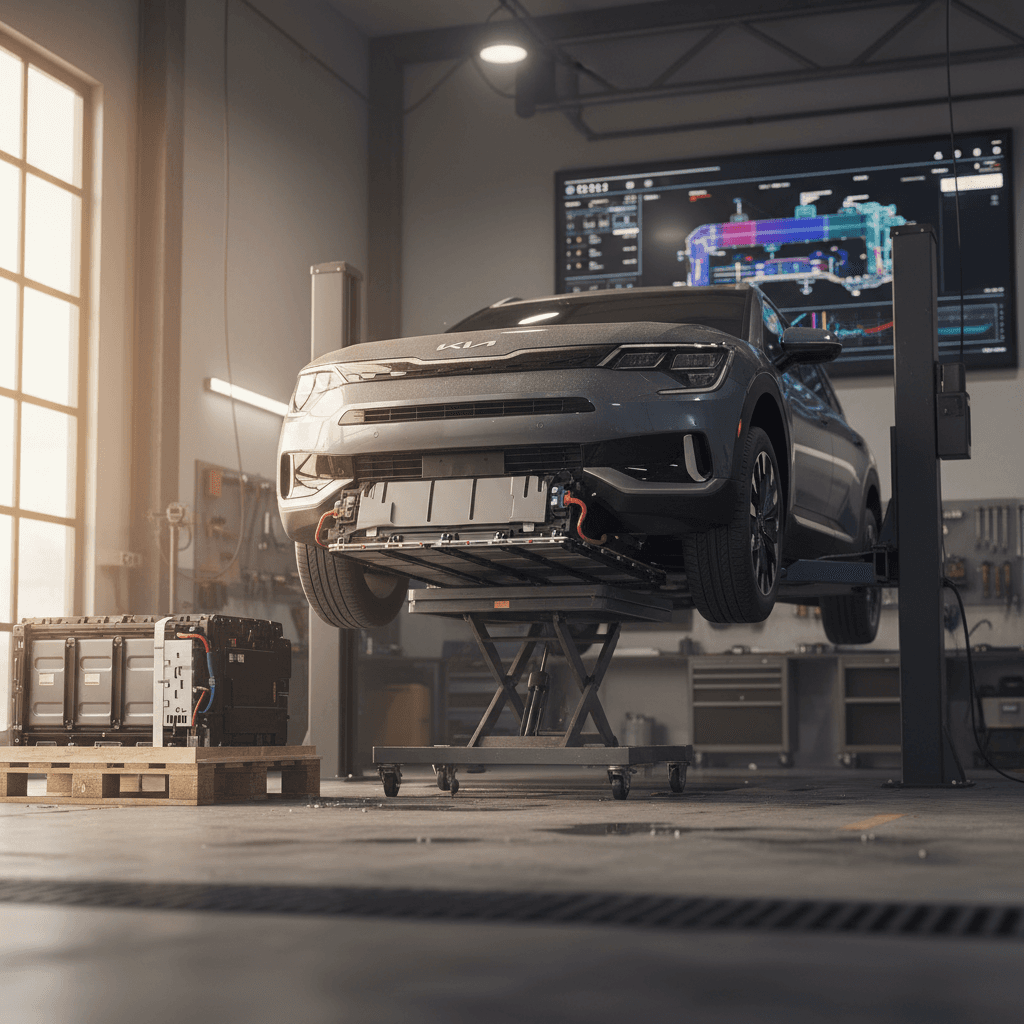
If you’re shopping for a three-row electric SUV, the **Kia EV9** is probably on your short list, and so is the question of **Kia EV9 battery replacement cost in 2026**. A traction battery is the single most expensive component in an EV, so it’s smart to understand how much an EV9 pack costs, what Kia’s 10‑year/100,000‑mile warranty really covers, and what that means for you as an owner or used buyer.
Why focus on 2026?
Overview: What does a Kia EV9 battery cost in 2026?
2026 Kia EV9 battery cost snapshot (US, early data)
In 2026, US Kia dealer parts sites list a **complete high‑voltage battery assembly for the EV9** at just over **$9,000** before any labor or taxes. That’s the raw hardware cost for a new pack. Once you factor in diagnostic time, battery removal and installation, cooling system service, programming, and shop fees, a realistic **total bill for a full out‑of‑warranty EV9 pack** lands in the **low‑to‑mid five figures** for most US markets.
Pack prices are not the same as what you’ll pay
How big is the Kia EV9 battery and why it matters for cost
Kia sells the EV9 with two large battery options on the E‑GMP platform. Exact capacities vary slightly depending on configuration, but US‑spec EV9s pair a **roughly mid‑70 kWh pack** in base trims with a **larger pack close to 100 kWh** in long‑range and higher‑performance models. Bigger packs use more cells and more raw materials, so they inherently **cost more to replace**.
Standard pack (Light trims)
- Mid‑70 kWh usable capacity.
- Lower hardware cost than the big pack.
- Best‑case replacement cost tends to be five‑figures but at the lower end.
Long‑range pack (Wind/Wave/GT‑Line)
- Close to 100 kWh usable capacity.
- More cells and modules to buy and install.
- Replacement pricing likely several thousand dollars higher than the small pack, all else equal.
Think in $/kWh, not just one big number
Kia EV9 battery warranty coverage in the US
For US‑market electric models, Kia backs the **high‑voltage battery and key EV components** with an **EV system warranty that typically runs 10 years or 100,000 miles** from the first in‑service date, whichever comes first. The EV9 follows this pattern. Within that period, the warranty is designed to cover **defects in materials or workmanship**, and Kia’s recent EVs have used a **capacity guarantee down to roughly 70%** of original usable capacity.
- High‑voltage battery pack and modules.
- Electric motor(s) and reduction gear unit.
- Power electronics like the inverter and onboard charger.
- Associated high‑voltage wiring and some control modules.
What about capacity loss?
It’s also worth noting that **federal regulations require at least 8 years/100,000 miles of EV battery coverage** on new EVs sold in the US. Kia goes beyond that baseline with the 10‑year term, which is one reason their EVs tend to hold value well on the used market.
Watch the fine print for second owners
Out-of-warranty Kia EV9 battery replacement cost (2026 estimates)
Because the oldest EV9s are only a couple of years old in 2026, we don’t yet have a large sample of full pack replacements in the wild. But we can triangulate **reasonable cost expectations** using Kia’s own parts pricing and what we already see on related E‑GMP models like the EV6.
Estimated 2026 Kia EV9 battery replacement costs (US, out of warranty)
These are rough retail ranges for a full high‑voltage pack replacement at a Kia dealer in 2026. Real invoices will vary by model year, trim, market, and whether Kia offers goodwill or core credits.
| Scenario | What’s included | Estimated cost range (USD) |
|---|---|---|
| Best‑case full pack replacement | New OEM EV9 battery pack, basic labor, minimal diagnostics, no major extras, low‑tax market. | $11,000–$13,000 |
| Typical full pack replacement | New OEM pack, diagnostics, battery R&R, cooling system service, software setup, shop fees, average US labor and tax. | $13,000–$17,000 |
| High‑cost market or complex repair | Long‑range pack, higher local labor rates, extra diagnostics, ancillary parts, higher state/local taxes. | $17,000–$20,000+ |
Treat these numbers as planning ranges, not quotes. Always request a written estimate from your specific Kia dealer.
Don’t anchor to the lowest number you see
The good news is that **virtually all 2024–2026 EV9s in the US are still well inside their 10‑year/100,000‑mile battery coverage window** in 2026. For the next several years, any genuine pack defect or early‑life capacity problem should be handled as a warranty event, not a customer‑pay battery replacement.
Module repairs vs full pack replacement
When you hear “battery replacement,” it’s easy to picture the entire pack being swapped. In reality, many EV battery issues can be resolved with **module‑level repairs** or replacement of a **battery control module** rather than the whole pack, especially when the vehicle is still under warranty.
Two ways an EV9 battery issue might be fixed
Full pack replacement is only one of several repair paths
Full pack replacement
- Dealer orders a complete high‑voltage battery assembly.
- Old pack is removed as a unit and replaced with a new or remanufactured one.
- Most expensive option, but often the cleanest fix for severe failures or major capacity loss.
Module or control‑unit repair
- Individual modules, contactors, or a battery control module are diagnosed and replaced.
- Lower parts cost but more diagnostic time.
- Common when a specific module throws a fault while the rest of the pack is healthy.
Why this matters for your wallet
Early EV9 owner reports in 2024–2025 already mention **individual module replacements** under warranty for isolated issues. That’s exactly what you want to see: the automaker fixing the weak link, not charging owners for a full new pack when it isn’t necessary.
Labor, taxes and related parts that change your bill
Even if you never pay for a full EV9 battery yourself, it’s worth understanding what drives that big number on the service invoice. Battery swaps are **labor‑ and equipment‑intensive jobs**, and the high‑voltage system touches a lot of other parts of the vehicle.
- **Diagnostic time:** Confirming that the pack is truly at fault, rather than a sensor, contactor, or wiring issue, can take hours of paid labor out of warranty.
- **High‑voltage safety procedures:** Technicians need special training, PPE, and lifting equipment. That adds both time and hourly rate compared with a simple 12‑volt battery swap.
- **Cooling and sealing:** The EV9’s pack is liquid‑cooled. Opening or replacing it often means topping off coolant, bleeding the system, and verifying for leaks.
- **Programming and calibration:** Once the new pack or modules are installed, the vehicle’s battery management system and related controllers need to be updated and verified.
- **Taxes, shop supplies and fees:** These can easily add 8–15% or more to a big repair bill, depending on your state and dealer.
Always ask for an itemized estimate
How long should a Kia EV9 battery last?
Kia’s modern EV batteries use high‑energy lithium‑ion chemistry, robust cooling, and a conservative management strategy. On related models like the EV6 and Niro EV, real‑world data points to **healthy packs well past 100,000 miles** with only modest capacity loss when the cars are driven and charged reasonably.
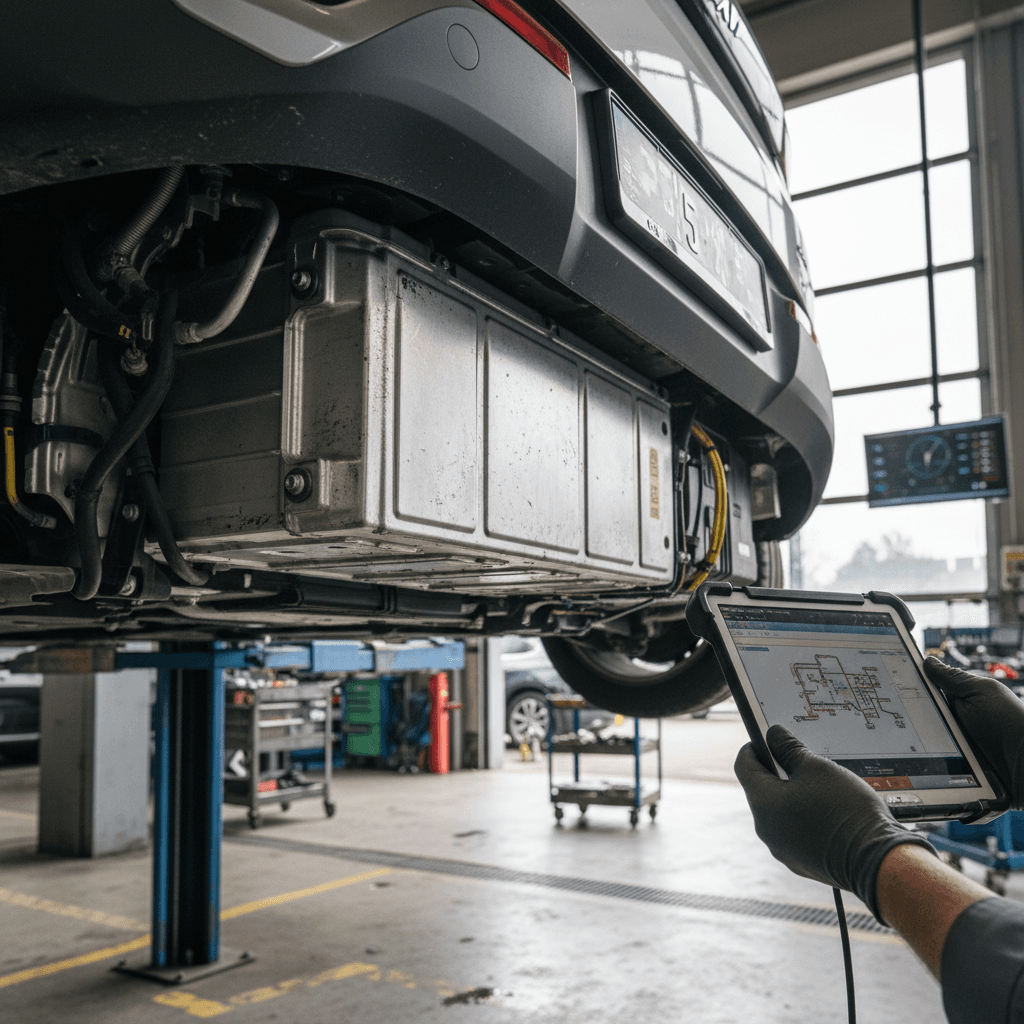
- With normal use, you should expect an EV9 battery to **comfortably outlast the 10‑year/100,000‑mile warranty window**.
- Kia’s 70% capacity threshold is conservative; many owners will see **higher remaining capacity** at 10 years if they avoid constant DC fast charging and deep discharges.
- High‑mileage fleet EVs on related platforms are already showing that **thermal management and smart charging matter more than calendar age alone**.
Fast charging isn’t “free”
Buying a used Kia EV9: battery checks that actually matter
By 2026, the **used EV9 market is just getting started**. Early off‑lease and first‑owner vehicles are entering the marketplace, and smart buyers are looking beyond leather and wheel size to the state of the high‑voltage battery. A clean Carfax doesn’t tell you whether the pack has been road‑tripped on DC fast chargers every weekend.
Used Kia EV9 battery due diligence checklist
1. Verify remaining battery warranty
Ask for the in‑service date and current mileage to confirm how many **years and miles of EV battery warranty** are left. Make sure you understand how Kia treats second owners for your model year.
2. Get a battery health report, not just a scan
A simple OBD‑II scan is not enough. You want an actual **state‑of‑health (SOH)** or capacity estimate, plus any history of module or control‑unit faults. This is exactly the gap Recharged fills with our <strong>Recharged Score</strong> battery health diagnostics on every EV we sell.
3. Look for DC fast‑charging patterns
Ask how the EV9 has been charged. Occasional DC fast charging is fine, but a history that’s almost exclusively high‑rate DC sessions is a yellow flag, especially in hot climates.
4. Inspect underbody and pack area
Have a technician check for **impact damage, corrosion, or fluid leaks** around the pack. An EV9 that bottomed out hard, or lived where roads are heavily salted, deserves extra scrutiny.
5. Check software and campaign history
Confirm that all **recalls, software updates, and battery‑related service campaigns** have been performed. These can materially improve pack longevity and reliability.
How Recharged approaches used EV9s
Ready to find your next EV?
Browse VehiclesSix ways to reduce your Kia EV9 battery cost risk
You can’t control raw battery prices, but you can absolutely influence whether you ever face a five‑figure repair. Think of it as managing **battery risk**, not just battery cost.
Practical strategies to keep EV9 battery costs low
Small habits and smart shopping decisions compound over a decade of ownership
Prioritize home Level 2 charging
Keep the pack out of extremes
Stay on top of software updates
Understand your exact warranty
Demand real battery health data when buying used
Compare repair vs. trade‑in
FAQ: Kia EV9 battery replacement cost & warranty
Kia EV9 battery cost & warranty: common questions
Bottom line: Should you worry about EV9 battery costs in 2026?
If you’re cross‑shopping a Kia EV9 in 2026, it’s rational, not paranoid, to ask about **battery replacement cost**. The honest answer is that a **full out‑of‑warranty pack** is a **five‑figure repair**, just as it is on almost any 100 kWh‑class EV. But for the next decade, most EV9 owners are protected by a **10‑year/100,000‑mile EV battery warranty**, and early data from Kia’s other E‑GMP models suggests that properly used packs age gracefully.
Instead of fixating on worst‑case numbers, focus on the levers you control: **how you charge, the climate your EV9 lives in, and how carefully you vet battery health when buying used**. If you want someone to do that homework with you, Recharged exists for exactly this moment, combining **battery‑deep diagnostics, transparent pricing, and EV‑specialist guidance** so you can enjoy a three‑row electric SUV without constantly looking over your shoulder at the pack.