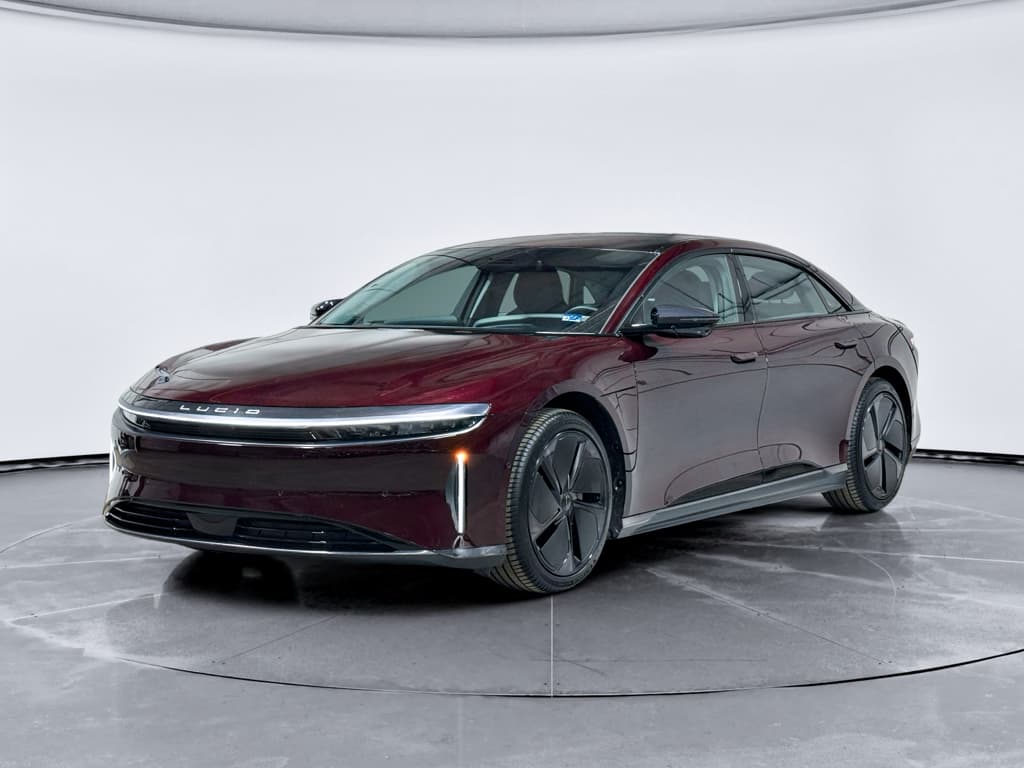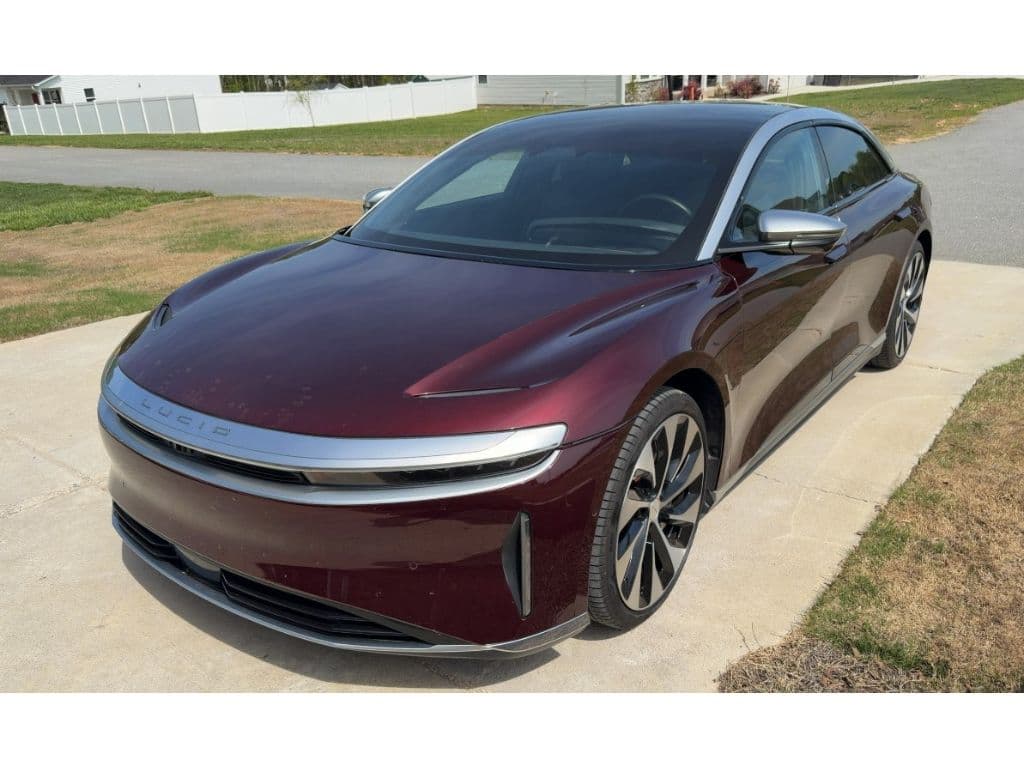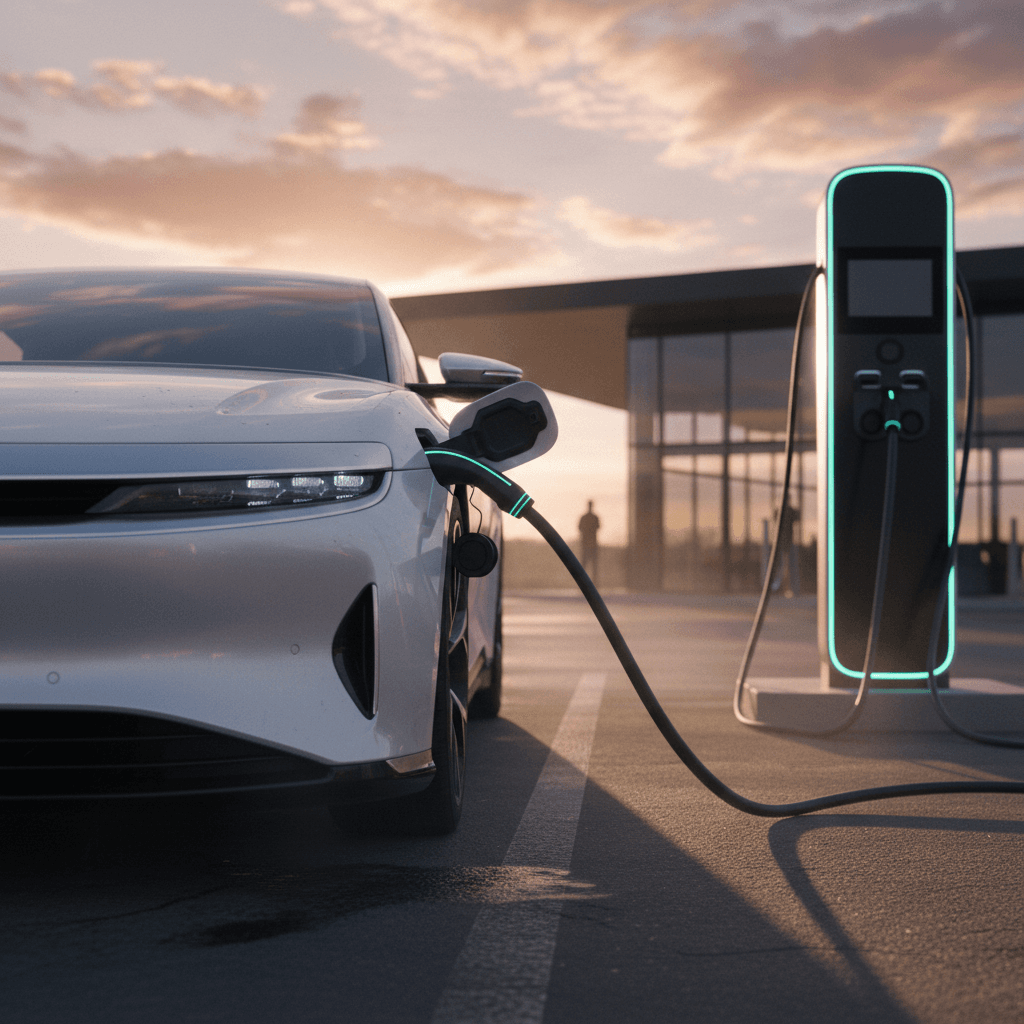
If you’re looking at a Lucid Air charging speed test, you’re probably asking two questions: how fast does it really charge in the wild, and what does that mean for road trips and daily life. On paper the Air is one of the quickest-charging EVs you can buy, but real-world results depend heavily on the charger, state of charge, weather, and now even which network you plug into.
Lucid Air at a glance
Why Lucid Air charging speed matters
Charging speed isn’t just a bragging right. It determines how flexible your Lucid Air feels as a daily driver and road-trip machine. A car with 400+ miles of range that recharges from 10–80% in half an hour changes how you plan your day compared with an EV that takes an hour or more to do the same.
- Road trips: Faster 10–80% charging cuts your stop time at highway fast chargers.
- Daily charging: High-speed DC charging is a safety net when you can’t plug in at home.
- Network choices: Now that the Lucid Air can use both CCS networks and Tesla Superchargers (via adapter), understanding speed differences helps you pick the right stop.
- Used buyers: Real-world charging performance is a key part of evaluating a pre-owned Lucid Air’s battery health.
Think in minutes, not just kW
Lucid Air charging basics and key specs
Before we dive into charging speed tests, it helps to anchor on what the Lucid Air is capable of on paper. Different trims use different battery sizes, but they share the same high-voltage backbone and fast-charging hardware.
Lucid Air key charging numbers
Lucid Air variants and charging capability (overview)
Approximate manufacturer and independent-test-based charging figures for common Lucid Air trims.
| Variant | Usable battery (approx.) | EPA range (up to) | Max DC power | Typical 10–80% DC time | Max AC (Level 2) |
|---|---|---|---|---|---|
| Pure | ≈88 kWh | ~410–420 miles | Up to 250–300 kW | ~24–30 min on strong DC fast charger | Up to 22 kW |
| Touring | ≈112 kWh | Up to 516 miles | Up to 300 kW | ~24–30 min on strong DC fast charger | Up to 22 kW |
| Grand Touring / Dream | ≈118 kWh | Up to 516+ miles | Up to ~300 kW | ~30–35 min (10–90% recorded in ~46 min) | Up to 22 kW |
Exact numbers vary slightly by model year, software update, and conditions, but this table shows the broad contours.
Specs are best case
DC fast charging speed test results
Independent testers have spent a lot of time timing Lucid Airs on 150–350 kW CCS fast chargers. Across those tests, one theme is consistent: when the station cooperates, the Air sits near the top of the EV pack for real-world charging speed.
What real DC fast charging tests show
Summarizing widely reported Lucid Air charging runs on high-power CCS stations.
Peak power near 300 kW
10–80% in ~24–31 minutes
10–90% in ~46 minutes
Those numbers put the Air in rare company. Averaging roughly 130–150 kW across an entire 10–80% or 10–90% session means you’re adding hundreds of miles of range in the time it takes to grab coffee and use the restroom.
Top-tier fast charging
Understanding the Lucid Air charging curve
When you look at a Lucid Air charging speed test, you’re really looking at its charging curve, how power ramps up, holds, and then tapers as the battery fills. The Air’s curve is aggressive early and then gradually steps down, which is part of why it feels so quick in the 10–60% window.
0–10%: ramp-up phase
- If you arrive nearly empty on a warm battery, the Air usually ramps quickly from double-digit kW into the hundreds.
- Within the first few minutes, it can already be well over 200 kW when the charger and conditions are ideal.
- This is why arriving a bit low on charge (10–20%) maximizes your time at high power.
10–80%: the sweet spot
- Between roughly 10% and 50–60%, the car targets its highest power levels, often holding 200+ kW for a meaningful stretch.
- Some tests show the pack taking on 2–3 kWh per minute in this window, which translates into very quick range gains.
- Above ~70–80%, the curve tapers hard; adding the last 20% can take as long as the first 70%.
Target 10–60% on road trips
Lucid Air charging speed test at Tesla Superchargers
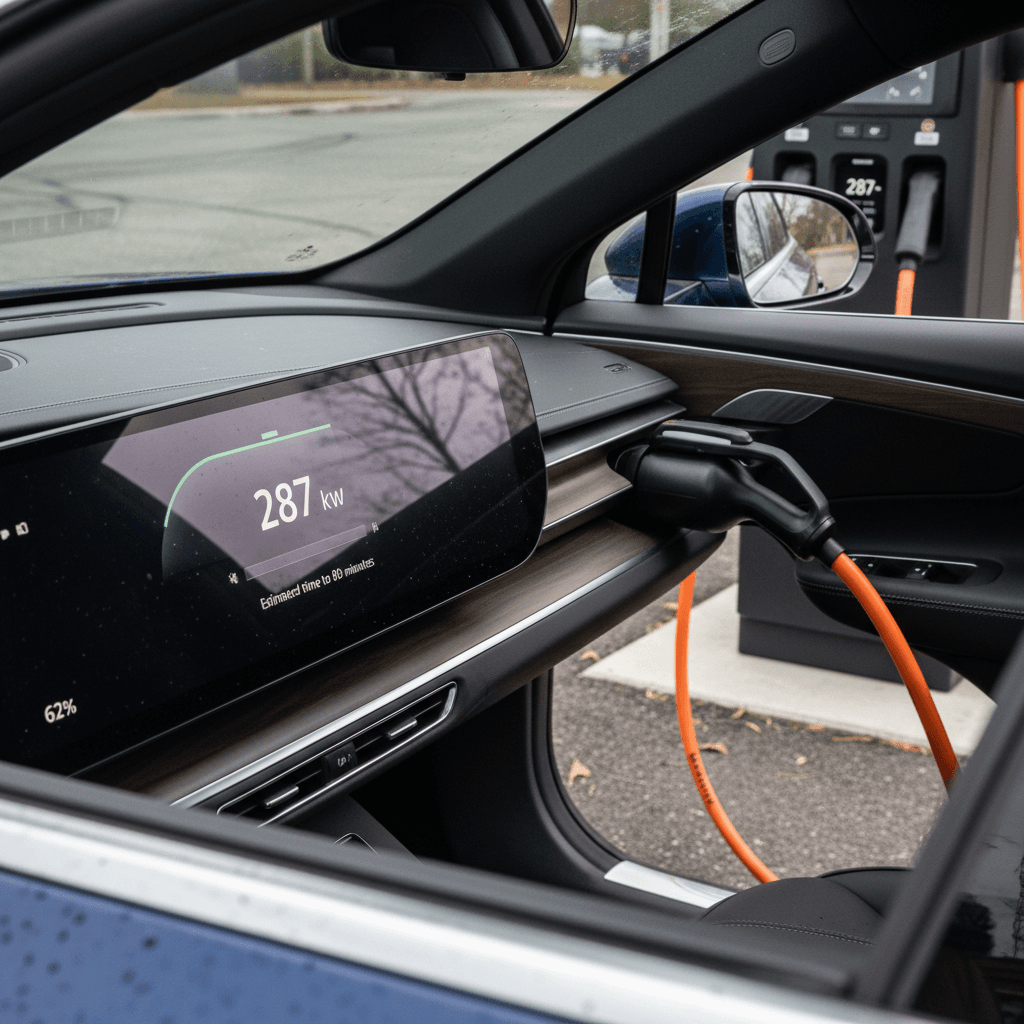
As of mid‑2025, Lucid Air owners in the U.S. can use Tesla’s Supercharger network with a Lucid-branded NACS-to-CCS1 adapter. That opens up tens of thousands of additional DC fast chargers, but with a big asterisk on speed.
Lucid Air DC fast charging: CCS vs. Tesla Supercharger
Why the same car can charge blazingly fast on CCS but relatively slowly on many Tesla posts today.
| Charger type | Connector / adapter | Max power to Lucid Air | Typical 10–80% time | Notes |
|---|---|---|---|---|
| High-power CCS (EA, EVgo, etc.) | CCS1 direct | Up to ~300 kW | ≈24–31 min | Best-case scenario for Lucid’s 900+V architecture. |
| Older 400 V Tesla Supercharger (V2/V3) | NACS→CCS1 adapter | Capped around 50 kW | Often 60–90+ min | Lucid’s adapter and the station voltage limit throughput. |
| Future higher-voltage Tesla sites (V4+) | NACS→CCS1 adapter | Potentially higher, but still limited by adapter today | To be determined | Lucid’s own Gravity SUV already taps more power than Air on some Superchargers. |
Figures below are typical in 2025–2026; future higher-voltage Superchargers may change this picture.
Don’t expect 300 kW at Superchargers
In practice, that means you should treat Tesla Superchargers as a convenience and coverage play, great when CCS options are thin or broken, but not your first choice if you’re trying to minimize total travel time in a Lucid Air.
Home and Level 2 charging performance
A lot of attention goes to DC fast charging speed tests, but most Lucid Air owners will add the bulk of their miles at home. Here’s how the Air behaves on Level 1 and Level 2 AC charging.
Lucid Air home charging options
1. Standard 120V outlet (Level 1)
Using the portable cord on a household outlet, expect a full recharge to take <strong>up to 2–3 days</strong>. This is a backup solution, not a long-term plan for such a large battery.
2. 240V Level 2 wallbox
A 40–48 amp Level 2 charger typically refills an empty pack overnight in <strong>8–9 hours</strong>, depending on battery size. That’s the sweet spot for most homeowners.
3. Lucid Connected Home Charging Station
Lucid’s own wallbox can deliver up to <strong>19.2 kW</strong> (80 amps on a 100‑amp circuit), adding as much as <strong>≈80 miles of range per hour</strong> under the right conditions.
4. Apartment or workplace Level 2
On shared 6–11 kW posts, expect 0–100% times in roughly <strong>10–12 hours</strong>. For commuters, topping up during the day often means you never get near empty.
Right-size your home charger
Real-world road trip charging strategies
Put all of this together and a pattern emerges: the Lucid Air is devastatingly efficient on long highway legs and one of the quickest EVs to recover big chunks of range, as long as you feed it high-power CCS juice. The trick is planning stops around that reality.
How to road-trip a Lucid Air efficiently
Practical ways to turn great charging hardware into fast door-to-door travel times.
Plan around high-power CCS first
Arrive low, leave in the middle
Stack charging with breaks
Watch cold-weather penalties
Think in door-to-door time, not just plug time
Battery health: smart charging habits for your Lucid Air
Aggressive fast charging is part of what makes the Lucid Air so compelling, but like any EV, repeated high-power sessions and frequent 100% charges can accelerate battery wear over many years. Lucid’s software gives you tools to hedge against that without wrecking your convenience.
- Use the built-in Daily charge limit (often 80% or less) for routine driving.
- Reserve 100% charges for long trips and drive soon after reaching full.
- Mix in plenty of Level 2 AC charging between DC fast sessions to keep the pack happy.
- Avoid letting the car sit for days at very low or very high state-of-charge when you can.
DC fast charging isn’t a daily diet
Buying a used Lucid Air? Charging clues to check
If you’re shopping the used market, how a Lucid Air charges tells you a lot about the battery, previous owner habits, and even software version. This is exactly why Recharged bakes charging and battery data into every vehicle’s Recharged Score.
Charging-related checks for a used Lucid Air
Ask for recent DC fast charging behavior
On a healthy pack at a strong CCS charger, you should still see high peak power and a brisk 10–80% session. Sluggish speeds on multiple different chargers can indicate battery or software issues.
Look for consistent range estimates
Very low projected range at moderate states of charge may signal notable degradation or calibration problems. Compare the displayed range with EPA figures for that trim and year.
Review charging history, if available
Frequent 100% DC fast charges and long periods sitting at full are harder on the pack. A more balanced mix of Level 2 and occasional DC is ideal.
Use a third-party health report
A structured battery and charging assessment (like the <strong>Recharged Score Report</strong>) can quantify remaining capacity and catch anomalies that a short test drive might miss.
How Recharged helps
Ready to find your next EV?
Browse VehiclesFAQ: Lucid Air charging speed questions answered
Frequently asked questions about Lucid Air charging speed
Bottom line: How fast is the Lucid Air, really?
Viewed across multiple Lucid Air charging speed tests, a clear picture emerges: on a healthy 200–350 kW CCS fast charger, the Air is one of the quickest-charging EVs you can buy in 2026, routinely adding hundreds of miles of range in well under half an hour. On Tesla Superchargers, it’s slower today but gains a huge safety net of extra plugs, especially in areas where CCS coverage is spotty.
If you’re cross-shopping a Lucid Air, new or used, fold charging into your decision the same way you would performance or interior quality. Understand where you’ll charge, how often you’ll lean on DC fast charging, and what a healthy charging curve should look like. And if you’re exploring a pre-owned Air, a Recharged Score Report with verified battery health and charging data can give you the confidence that the car’s real-world charging speed matches the promise on the spec sheet.