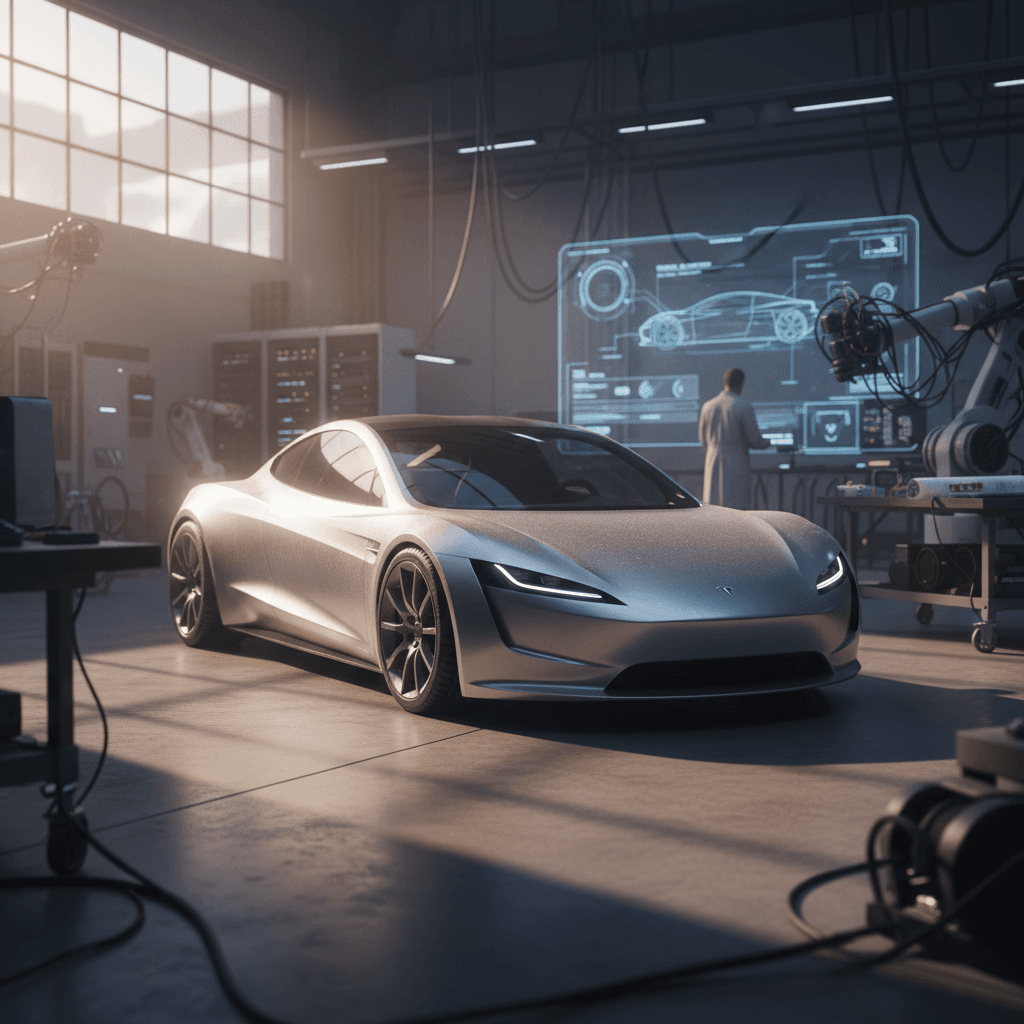
If you’ve been waiting for the next‑generation Tesla Roadster since its dramatic 2017 reveal, you’re not alone. Searches for the Tesla Roadster 2 release date spike every time Elon Musk mentions it, usually followed by another delay. As of early 2026, we finally have a clearer (if still tentative) picture of when this halo car might actually appear, and what that means for you as an EV shopper today.
Short answer
Tesla Roadster 2 release date at a glance
Tesla Roadster 2 timeline snapshot
Tesla’s public line as of early 2026 is that the production version of the next‑generation Roadster will be unveiled on April 1, 2026. Production is described as beginning roughly 12–18 months later, which would put first builds somewhere between mid‑2027 and late 2028 under optimistic assumptions.
Treat dates as aspirational, not guaranteed
How we got here: a short timeline of delays
- November 2017: Tesla unveils the next‑gen Roadster prototype, claiming a 0–60 mph time of 1.9 seconds, over 250 mph top speed and 620 miles of range, with deliveries targeted for 2020.
- 2018–2020: Roadster quietly slips behind higher‑priority programs like Model 3, Model Y and later Cybertruck. Tesla continues taking hefty deposits but stops talking about concrete dates.
- 2021–2023: Musk periodically reiterates that the Roadster is coming "after" other projects, first Plaid Model S, then Cybertruck, then a next‑gen platform. Each mention pushes the unofficial window further out.
- 2024–2025: Tesla leans heavily into autonomy and robotaxi plans. Roadster falls off most official roadmaps but survives as a side comment in interviews and shareholder meetings.
- Late 2025: At the annual shareholder meeting and in follow‑up commentary, Musk resets expectations: a production‑spec reveal on April 1, 2026 and production roughly a year or more after that.
- Early 2026: Investor decks list Roadster as still in "design development" while also saying preparations are underway for its production, signaling that even inside Tesla, the program is not yet locked down.
Why the Roadster keeps getting bumped
What Tesla is promising for the Roadster 2
Specs for the second‑generation Roadster have always lived somewhere between engineering ambition and science fiction. The original 2017 prototype claimed numbers that would have shattered every production‑car record, and recent comments from Musk suggest the final car could be even more extreme, especially if the optional SpaceX package makes it to production.
Headline specs Tesla has teased
Subject to change, and that’s putting it mildly
Brutal acceleration
Huge battery, huge range
Hypercar territory
The SpaceX package idea
Musk has repeatedly talked about a SpaceX‑inspired option package that uses compressed gas thrusters integrated into the car’s bodywork. In theory, these could add downforce or even brief hovering capability, and dramatically boost off‑the‑line acceleration.
It’s clever marketing and technically intriguing, but it also creates massive hurdles around homologation, crash safety, occupant safety, and liability. Even if prototypes exist, turning that into a street‑legal option everywhere from California to Europe is a tall order.
What’s more realistic
Even without sci‑fi features, the Roadster 2 could easily become one of the quickest production cars ever sold. Tesla already delivers sub‑2‑second 0–60 mph launches in Model S Plaid under ideal conditions.
The more important question isn’t whether Tesla can make something absurdly fast, it’s whether they can do it profitably, repeatably, and safely at whatever volume they ultimately target.
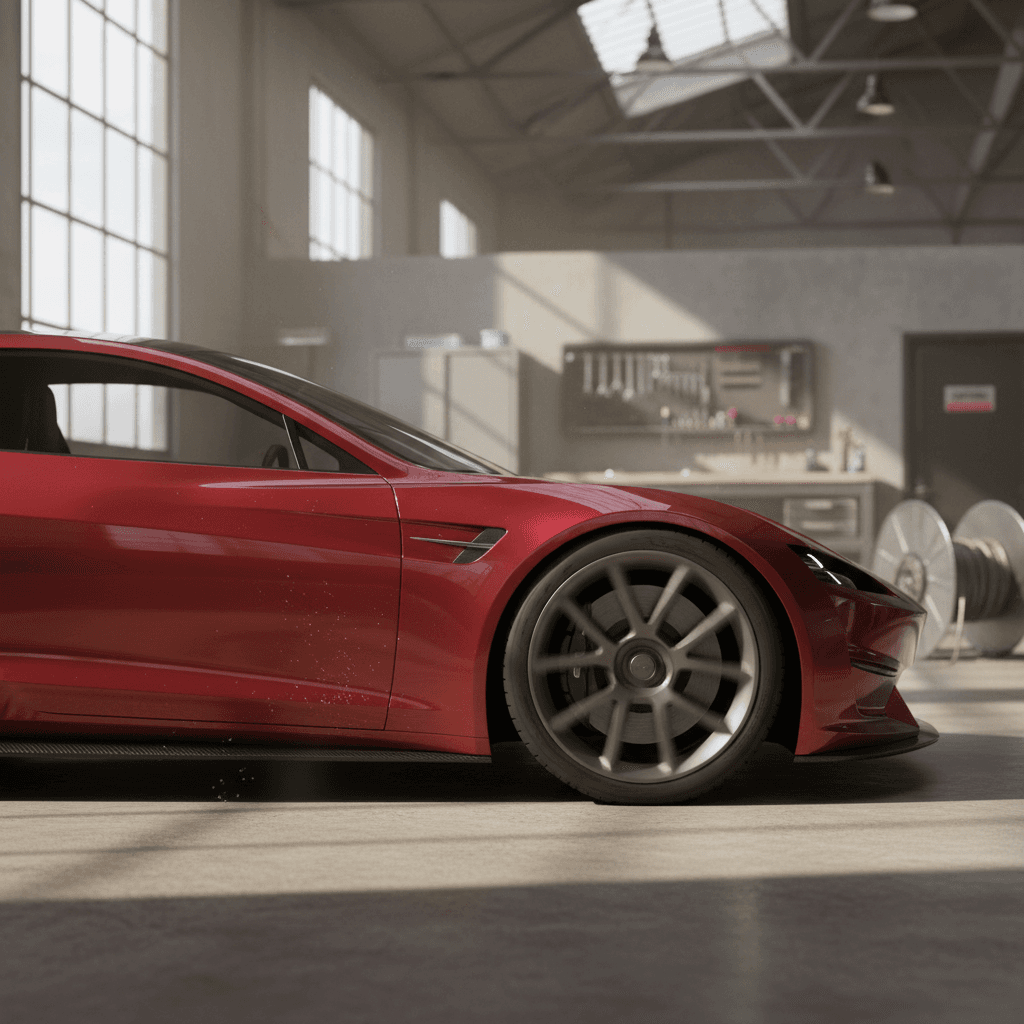
How credible is the 2026 Roadster release date?
When you hear a date like April 1, 2026 for the Roadster 2 reveal, the April Fools’ Day timing is impossible to ignore. Musk himself has joked about using that date so he can claim it was a joke if things slip again. That should tell you a lot about how firm this schedule really is.
Reasons for skepticism vs cautious optimism
Why you should keep both eyebrows raised
Why to be skeptical
- Track record: Roadster timelines have slipped by almost a decade from the original 2020 delivery promise.
- Internal signals: Recent investor materials still describe the car as in "design development," not late‑stage validation.
- Competing priorities: Tesla is prioritizing robotaxis, Cybercab, and lower‑cost mass‑market EVs.
- Regulatory friction: Anything involving rockets, hovering, or extreme acceleration will attract extra scrutiny.
Why it might finally happen
- Brand halo need: With rising competition, a new halo car could help reposition Tesla as a technology leader.
- Engineering maturity: Tesla now has years of experience with Plaid‑level performance and large battery packs.
- Investor pressure: After so many deposits and mentions, there’s pressure to either ship something or close the book.
- Infrastructure: Existing factories and NACS Supercharging dominance give Tesla more flexibility than in 2017.
How to interpret Tesla timelines
What this means if you reserved a Roadster
Some early fans put down five‑figure to six‑figure deposits for the Roadster as far back as 2017, expecting 2020 deliveries. Nearly a decade later, many of those customers are still in limbo, watching timelines slip and details morph.
Key realities for Roadster reservation holders
1. Timelines are still fluid
Even with a 2026 reveal target, Tesla has not committed to a firm start of deliveries. Depending on engineering, regulation, and internal priorities, 2027–2028 is a more realistic window than anything earlier.
2. Spec may change materially
The final Roadster could differ substantially from what you reserved in 2017, seating layout, doors, performance, even the presence of a SpaceX package. Treat all early specs as conceptual, not contractual.
3. Opportunity cost is real
Money tied up in a non‑interest‑bearing deposit for years is effectively an <strong>interest‑free loan to Tesla</strong>. You could have been driving, investing, or enjoying another performance EV in the meantime.
4. You can walk away
If the uncertainty no longer fits your life or finances, it’s reasonable to reassess. Many high‑profile reservation holders have canceled in recent years and redirected funds into vehicles they can actually drive.
5. Consider a bridge car
If you’re committed to eventually owning a Roadster but tired of waiting, a used high‑performance EV, like a Model S Plaid or Taycan, can be a smart "bridge" car for the next 3–5 years.
How Recharged can help if you’re done waiting
What the Roadster 2 means for everyday EV buyers
Even if you never plan to spend supercar money on a Roadster 2, the program still matters. Halo cars are rolling R&D labs: they showcase what’s possible at the bleeding edge, and over time those ideas trickle down into more attainable vehicles.
- Battery and thermal tech: Pushing 200 kWh into a small footprint stresses everything from cell chemistry to cooling. Lessons there can improve longevity and fast‑charging performance in future mass‑market EVs.
- Power electronics and motors: Delivering hypercar‑level power efficiently and repeatably tends to yield better inverters and motors that later show up in sedans and crossovers.
- Software and control: Launch control, torque vectoring, and traction algorithms honed on a Roadster can improve safety and performance for everyday drivers.
- Charging ecosystem: A car that can demolish packs that quickly will force even more robustness into Tesla’s charging and thermal management strategies, good news for long‑distance travel in more normal EVs.
Performance plateau, affordability frontier
Roadster 2 alternatives you can buy right now
If your main goal is "face‑melting acceleration" or "track‑day capable EV," you have options today that don’t require waiting on a moving target. Many of them show up on the used market well below their original MSRP, especially as early adopters trade into newer toys.
High‑performance EVs available years before the Roadster 2
Approximate specs and positioning for cars you can actually own today or in the near term.
| Model | 0–60 mph (approx.) | EPA range (approx.) | Typical used price (US) | Notes |
|---|---|---|---|---|
| Tesla Model S Plaid | 1.99 s | ~390 mi | Often well under original MSRP | Still one of the quickest cars on sale; roomy and practical. |
| Porsche Taycan Turbo / Turbo S | 2.4–2.6 s | ~220–290 mi | Varies widely; often below new by 30–40%+ | Exceptional driving dynamics; performance more repeatable than many rivals. |
| Lucid Air Grand Touring / Sapphire | 2.6 s down to ~2.0 s | ~410–500+ mi | Premium pricing, but used deals emerging | Blends big‑range touring with serious straight‑line pace. |
| Tesla Model 3 Performance | ~3.1 s | ~290–310 mi | Common in the used market at accessible prices | More attainable performance that still embarrasses many sports cars. |
| Hyundai Ioniq 5 N & Kia EV6 GT | ~3.4 s | ~200–270 mi | Still newer; expect more used volume soon | Track‑tuned EVs with playful character and strong warranties. |
Exact numbers vary by model year and trim; always confirm specs for the specific used vehicle you’re considering.
Leverage depreciation in your favor
Tips for shopping high‑performance used EVs
Whether you’re cross‑shopping used Plaids while you wait for the Roadster or simply want maximum thrill per dollar, performance EVs demand a bit more homework than a typical commuter hatchback.
Checklist for evaluating a used performance EV
1. Prioritize verified battery health
Ask for an objective battery‑health assessment, not just a guess based on range. At Recharged, every vehicle includes a <strong>Recharged Score</strong> that quantifies pack health using diagnostics, so you’re not buying a mystery.
2. Look at fast‑charging history
Frequent DC fast charging isn’t automatically bad, but extreme patterns (daily high‑power sessions) can accelerate degradation. Ask what mix of home vs fast charging the car has seen.
3. Inspect tires, brakes, and suspension
Performance EVs are heavy and powerful. Track days, launches, and aggressive driving can wear consumables quickly. Budget for near‑term replacement if they’re already tired.
4. Check software and feature status
Some features, like track mode, performance boosts, or driver‑assist suites, are software‑unlocked. Confirm what’s active on the VIN you’re buying and whether transfers are allowed.
5. Plan your charging setup
A 1,000+ horsepower EV isn’t much fun if you’re trickle charging on 120V. Make sure you can install a reliable Level 2 home charger or have dependable public charging access near you.
6. Run the total cost of ownership
Factor insurance (often higher for fast cars), potential tire costs, and any extended warranties or service plans. Sometimes stepping down one performance tier dramatically improves running costs.
Don’t let hype derail good decisions
FAQ: Tesla Roadster 2 release date and specs
Common questions about the Tesla Roadster 2
Bottom line on the Tesla Roadster 2
The Tesla Roadster 2 remains one of the most talked‑about cars that you still can’t buy. As of February 2026, the most honest answer to "What is the Tesla Roadster 2 release date?" is: there isn’t one. There’s a planned April 1, 2026 reveal and a vague 2027–2028 production window, framed by a long history of missed timelines and shifting priorities.
If the Roadster 2 does arrive anywhere near its promised performance, it will be a landmark EV, and a fascinating symbol of what’s technically possible. But your daily life as an EV driver will be shaped much more by charging access, battery health, and total cost of ownership than by 1‑second launch demos. That’s why, at Recharged, we focus on helping you find a used EV you’ll love living with today, complete with transparent battery diagnostics, fair pricing, and support from EV specialists who cut through the hype.