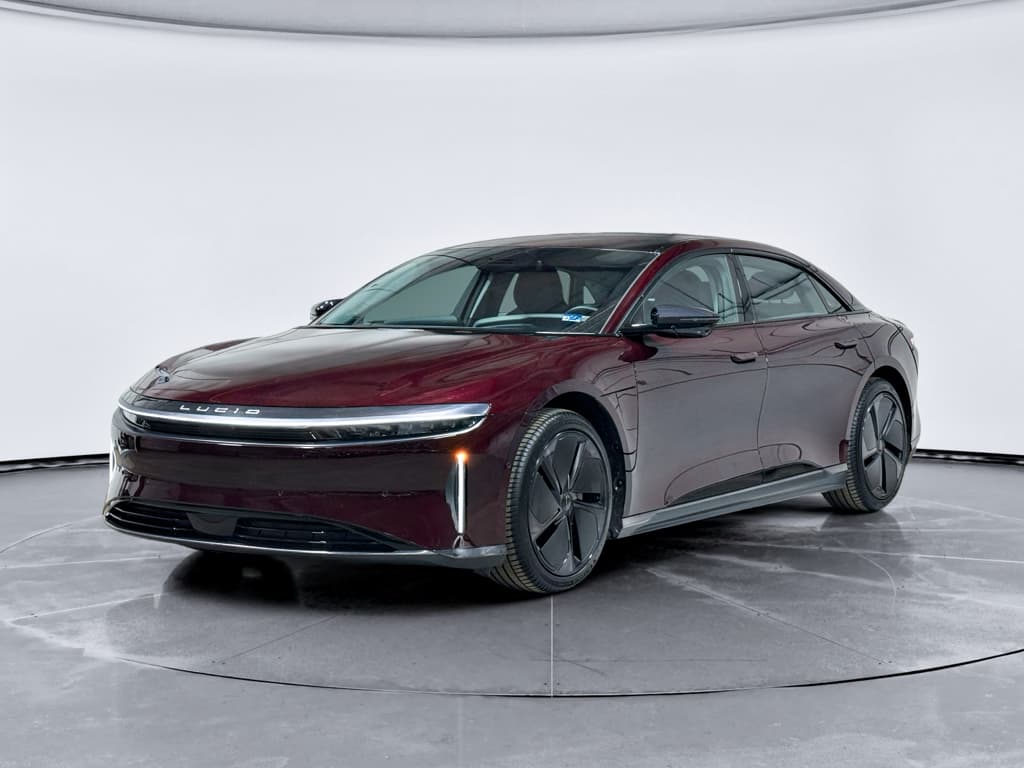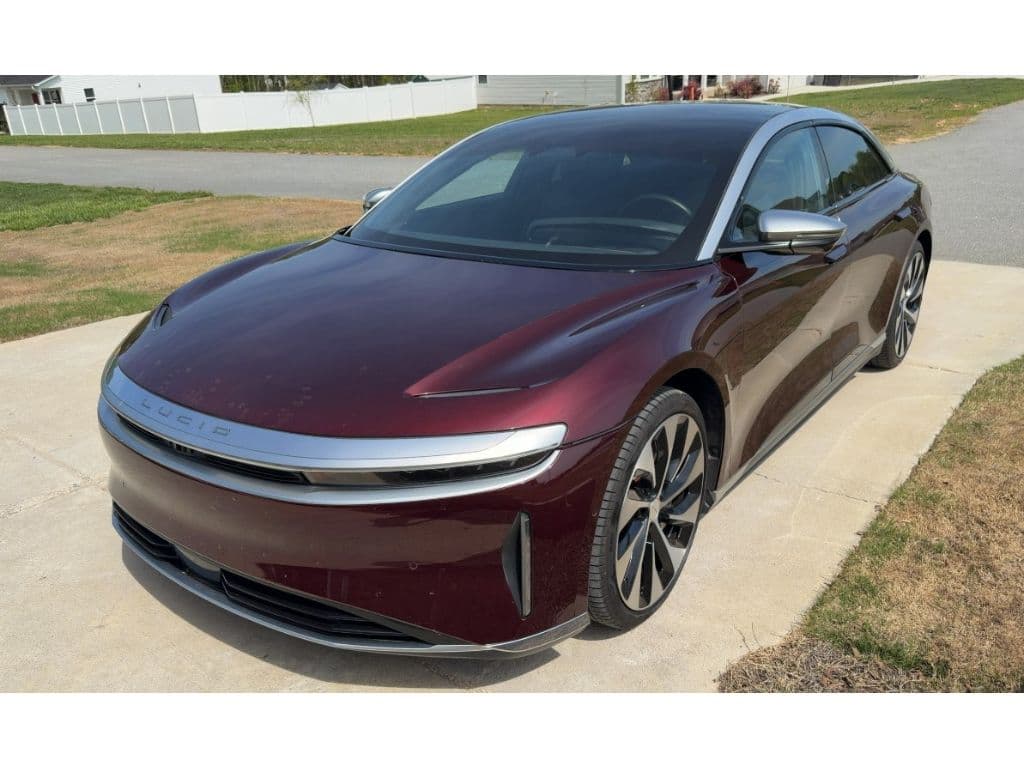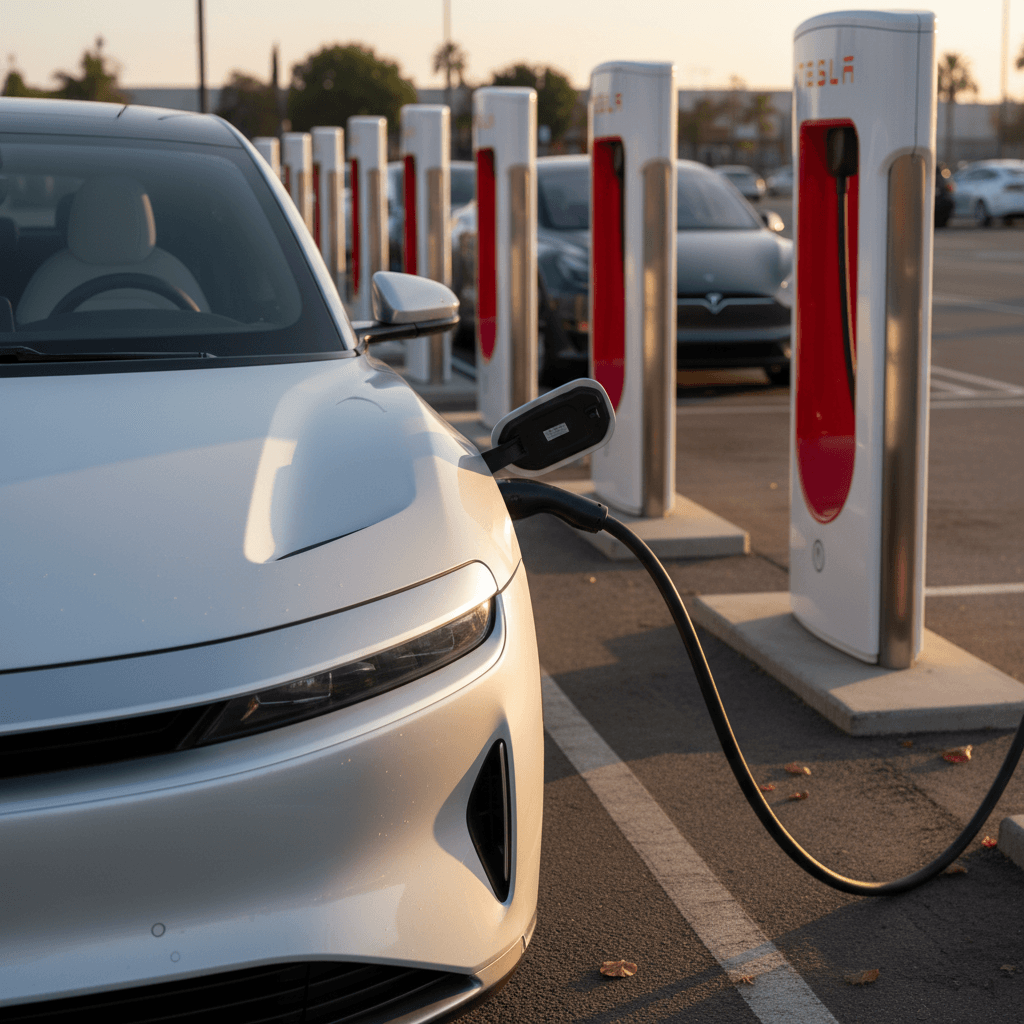
If you’re looking at a Lucid Air, or already own one, charging speed is one of its biggest selling points. This guide breaks down **Lucid Air charging speeds** at home, on DC fast chargers, and now on Tesla Superchargers, so you know exactly how long you’ll be plugged in and what that means for daily driving and road trips.
Why the Lucid Air is a charging outlier
Lucid Air charging basics: key numbers at a glance
Lucid Air charging snapshot
Those are the headline numbers. But what you really care about is **what they look like in your driveway and on an actual trip**, and how that differs between Pure, Touring and Grand Touring trims. Let’s start with the hardware.
Battery sizes, trims, and the onboard charger
Lucid doesn’t advertise pack size quite as loudly as range, but battery usable capacity and peak charging power are what drive your real‑world charging times. Across the Air lineup you’ll generally see four usable battery bands in North America:
Lucid Air trims, typical usable battery sizes, and DC peaks
Approximate usable capacities and peak DC fast‑charge capability by trim. Exact figures can vary slightly by model year and wheel/tire choice, but this is a practical guide for charging expectations.
| Trim | Typical usable battery (kWh) | Approx. EPA range (mi) | Typical DC peak (kW) |
|---|---|---|---|
| Pure | ≈88–92 | ~410–420 (RWD, aero wheels) | ≈200 kW |
| Touring | ≈92 | ~400–425 | ≈220–250 kW |
| Grand Touring | ≈112–118 | ~450–520+ depending on wheels | ≈250–300 kW |
| Sapphire / performance variants | ≈118 | ~420–430 | ≈300 kW |
Use this as a planning tool, not a replacement for your specific window sticker or owner’s manual.
Every Lucid Air sold in the U.S. uses **CCS for DC fast charging** and a J1772/CCS-style inlet for AC. On the AC side, the car packs one of the strongest onboard chargers in the market: **up to 19.2 kW** on Level 2 when paired with an 80‑amp, 240‑volt circuit and a compatible wall unit.
Onboard charger vs. station rating
Home charging speed: Level 1 vs Level 2 for Lucid Air
Lucid Air owners in the U.S. will rely on **Level 2 home charging** almost exclusively. The car’s pack is simply too large for Level 1 (120V) to be practical for anything but emergencies.
- Level 1 (120V household outlet): ~1–2 miles of range per hour. Filling a large Lucid Air pack from empty could take 2–3 days. Only use this when nothing else is available.
- Level 2 (240V, 32–80A): 20–65+ miles of range per hour depending on amperage. This is what most owners use overnight.
- Public Level 2: Typically 6–19 kW. In practice, expect 20–45 miles of range per hour on most public AC posts.
Approximate Lucid Air Level 2 charging speeds
How long it takes to add ~80 kWh (roughly 10–80% on a mid‑size Lucid Air pack) at different home-charger power levels.
| Charger / circuit | Max power to car | Miles of range per hour* | Time to add ~80 kWh |
|---|---|---|---|
| 120V / 15A (Level 1) | 1.4 kW | ~3–4 mi/hr | 55–65 hours |
| 240V / 30–32A | 7.2 kW | ~22–26 mi/hr | 10–12 hours |
| 240V / 40A | 9.6 kW | ~30–34 mi/hr | 7.5–9 hours |
| 240V / 60A | 14.4 kW | ~45–50 mi/hr | 5.5–6.5 hours |
| 240V / 80A (max AC) | 19.2 kW | ~60–70 mi/hr | 4–4.5 hours |
Assumes efficient wiring and typical losses; your exact numbers will vary.
Don’t overspend on amps you can’t use
For most households, a **40A–60A Level 2 setup** hits the sweet spot between speed, electrical-panel impact, and installation cost. Recharged can help you evaluate a used Lucid Air’s charging hardware, both on the car and at the previous owner’s home, as part of an overall ownership plan.
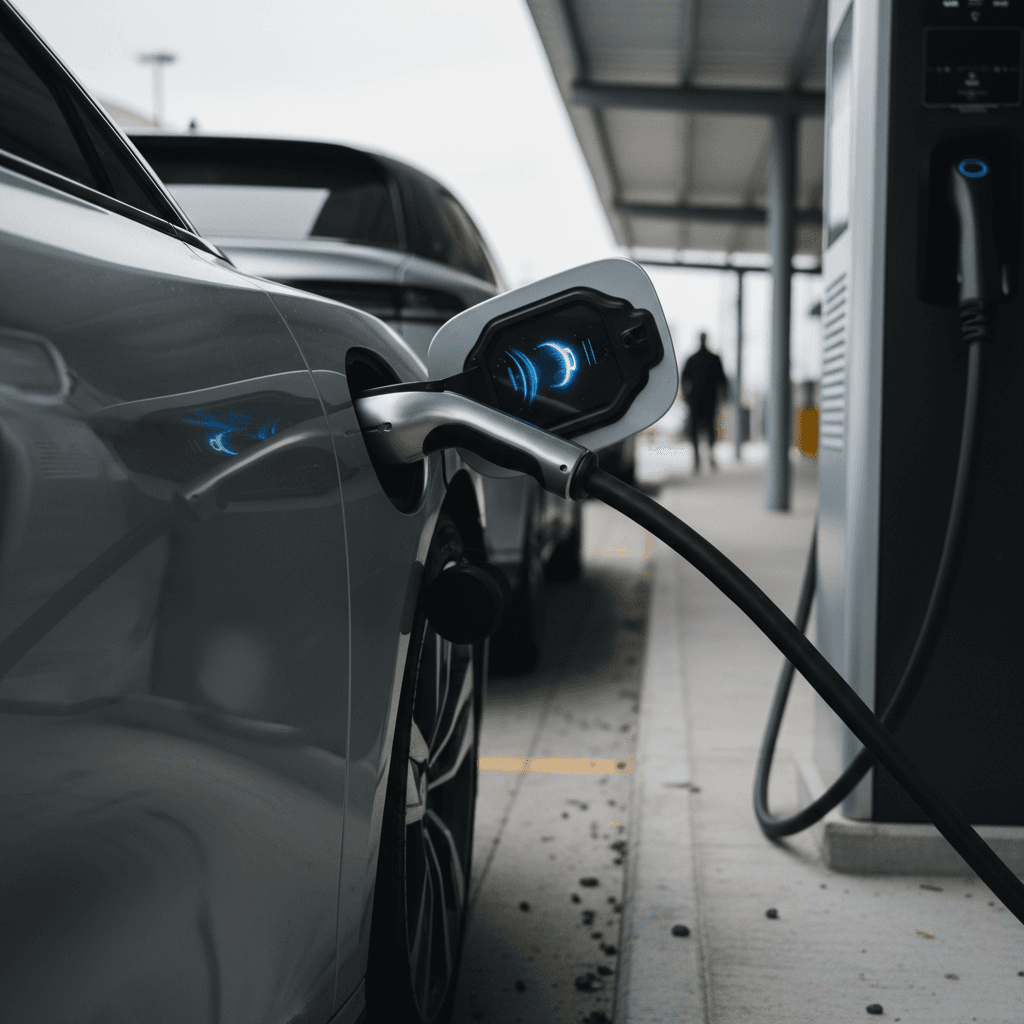
DC fast charging: how fast can a Lucid Air really charge?
On DC fast charging, a Lucid Air plays in the top tier of EVs, but the experience depends on trim, state of charge, temperature, and the station itself. In perfect conditions, Grand Touring and Sapphire trims can briefly hit **~300 kW**, while Pure and Touring generally top out a bit lower, around **~200–250 kW**.
How the Lucid Air’s DC fast charging behaves
Think in ranges and averages, not just the headline peak number.
Peak power window
Most Lucid Air trims reach their highest charge rate between roughly 10–30% state of charge, then gradually taper.
10–80% sweet spot
Like most modern EVs, the best blend of speed and range comes from charging between ~10% and 80% on road trips.
Temperature matters
Cold or very hot packs will charge slower until the battery reaches its preferred temperature range. Preconditioning helps.
In independent testing and owner logs, a well‑conditioned Lucid Air Grand Touring on a strong 350 kW charger can add **200+ miles in about 12–15 minutes**, and cover the 10–80% window in somewhere around **20–30 minutes** if the station maintains high output. Pures and Tourings land a few minutes slower, but still comfortably in the “coffee and restroom break” zone.
Don’t obsess over the exact kW number
Charging a Lucid Air at Tesla Superchargers (NACS adapter)
Lucid has joined the industry shift toward the **North American Charging Standard (NACS)** used by Tesla. For Air owners, that opens up thousands of additional DC fast‑charging stalls, but with a few important caveats.
Lucid Air + Tesla Supercharger: what you need to know
1. Adapter required for CCS-equipped Lucid Airs
Current Lucid Air models use a CCS inlet. To plug into Tesla Superchargers, you need a **Lucid-approved NACS-to-CCS DC adapter**. Newer model years may include one or offer it through Lucid.
2. Network access is rolling out in phases
Access to Tesla Superchargers for Lucid Air owners is being phased in by software and account support. Check your Lucid app or owner portal for the latest on when your VIN is enabled and which Supercharger sites are supported.
3. Not all Superchargers are equal
Early compatibility has focused on **V3 and newer** Tesla Superchargers. Legacy V2 stalls typically won’t work with non‑Tesla cars. In the Tesla app, look for locations marked as supporting “Non‑Tesla” charging.
4. Charging speed can be limited
Because most existing Tesla sites run around 400V, some Lucid Air trims may not hit their full 900V‑architecture potential and can see **lower peak speeds** than on a top‑tier CCS 350 kW station.
5. You’ll still use Lucid’s and Tesla’s apps
Plan on juggling at least one app. You’ll typically start sessions through the Tesla or Lucid app, link a payment method, and may see charge details in both places depending on how Lucid structures billing.
Superchargers are a safety net, not a silver bullet
Real-world charging time examples by trim
To move from theory to practice, here are **ballpark time estimates** based on typical Lucid Air behavior. These assume: warm weather, battery preconditioned, a healthy high‑power DC fast charger, and starting around 10% state of charge.
Approximate DC fast‑charge times by Lucid Air trim
How long a typical 10–80% highway stop might take under decent conditions.
| Trim | 10–60% (top‑off) | 10–80% (typical road‑trip stop) | Miles added (approx.) |
|---|---|---|---|
| Pure | ≈12–18 min | ≈22–30 min | ~260–300 mi |
| Touring | ≈12–17 min | ≈20–28 min | ~270–310 mi |
| Grand Touring | ≈10–16 min | ≈18–26 min | ~290–330 mi |
| Sapphire / performance | ≈11–17 min | ≈20–28 min | ~260–300 mi (stickier tires) |
Real‑world results vary with temperature, charger quality, traffic at the site, and software updates.
Overnight home charging
Suppose you drive 60–80 miles per day in a Lucid Air Touring. On a 40A Level 2 charger (about 9.6 kW), you’ll generally refill that in 2–3 hours. Even if you come home fairly low, say 20%, you can set a charge limit of 80% and be ready again well before morning.
“Dump charge” during errands
Park at a 19 kW public Level 2 for a two‑hour dinner or shopping stop, and you might add **40–100 miles** depending on trim and conditions. It’s not road‑trip fast, but it’s a quiet way to keep the pack topped up without ever worrying about range during the week.
How to get the fastest possible charge in the real world
You can’t control every variable, especially the health of public chargers, but you can stack the odds in your favor. Here’s how to consistently get strong speeds from a Lucid Air on road trips.
6 ways to maximize your Lucid Air’s charging speed
1. Arrive low, leave under ~80%
Charge stops are fastest when you plug in around **5–15%** and unplug around **60–80%**. Above ~80%, the charge curve slows sharply to protect the battery.
2. Use battery preconditioning
Start a DC fast‑charge session from the in‑car navigation or app so the car can **preheat or precool the pack** before you arrive. That can easily shave several minutes off a session in cold weather.
3. Favor 350 kW CCS chargers
The Air’s 900V system shines on **ultra‑fast 350 kW CCS stations**. A 150 kW unit will work, but you won’t see the same 200‑mile‑in‑12‑minutes behavior.
4. Avoid crowded or derated stations
If half the stalls are roped off or everyone’s complaining about low speeds, consider switching sites or using the next DC fast‑charge option instead of waiting on an ailing array.
5. Unplug and re‑plug if needed
On some legacy networks, charge power falls off for reasons that have nothing to do with your Lucid. Ending the session and re‑starting can sometimes restore a healthier rate for the remainder.
6. Keep software up to date
Lucid continues to tune charging curves and thermal management via over‑the‑air updates. Staying current can improve both **speed and predictability** over time.
Good news: planning is simpler than it looks
Battery health: daily charging habits that still keep it fast
Lucid’s pack is engineered for high‑power fast charging, but like any large lithium‑ion battery, **how you charge it every day** matters for long‑term capacity and consistent speed.
Battery-friendly charging habits for Lucid Air owners
These also tend to make road trips smoother.
Live between ~20–80% for daily use
For commuting and errands, set your charge limit to 70–80% and try not to dip below about 10–15% unless you’re en route to a fast charger.
Use scheduled overnight charging
Charging late at night on Level 2 keeps the pack happy and often takes advantage of lower electricity rates if your utility offers time‑of‑use plans.
Avoid repeated DC sessions on a hot pack
Back‑to‑back DC fast charges in high heat stress any EV battery. If you must do it, keep speeds moderate and stops short.
Keep the car plugged in when parked long-term
Lucid recommends leaving the car plugged in for long trips so the battery management system can maintain temperature and state-of-charge without depleting the pack.
What shortens pack life the fastest
Buying a used Lucid Air? Charging questions to ask
On the used market, the Lucid Air offers supercar‑level range and charging speed for far less than new‑sticker money, if you pick the right car and understand its charging history. Here are smart questions to ask a seller or dealership.
Used Lucid Air charging & battery checklist
1. Has the car primarily used home Level 2 charging?
A history of mostly **home Level 2 use** with occasional DC fast charging is ideal. Heavy fast‑charge use isn’t a deal‑breaker but may factor into price discussions.
2. What’s the current DC fast‑charge behavior?
Ask for recent screenshots or logs from a **10–80% DC session** at a healthy station. You’re looking for smooth, predictable power, not chronic 30–60 kW at every stop.
3. What charging equipment is included?
Confirm whether the sale includes a **mobile connector, wall box, or adapters**, and what their amperage ratings are. Replacing missing equipment can cost hundreds of dollars.
4. Is the car NACS‑ready?
Clarify whether the car’s VIN is already enabled for **Tesla Supercharger access** and whether a Lucid-approved NACS adapter is included or available at extra cost.
5. Any charging-related service history?
Ask for documentation on **charging port repairs, software updates, or DC‑charging complaints**. A well‑supported car with documented fixes is better than one with mystery issues.
Leverage third-party verification
Lucid Air charging speed FAQ
Frequently asked questions about Lucid Air charging speeds
The Lucid Air’s combination of massive range and genuinely quick charging means you’ll spend far less time thinking about kilowatts and cables than you might expect, once you understand how the car behaves on Level 2, CCS fast chargers, and Tesla Superchargers. If you’re cross‑shopping a used Air against other long‑range EVs, pay close attention to battery size, DC‑charging behavior, and whether the car is NACS‑ready. A transparent battery‑health report like the Recharged Score can turn those unknowns into clear data, so you can focus on enjoying one of the most capable EVs on the road rather than worrying about your next charge stop.