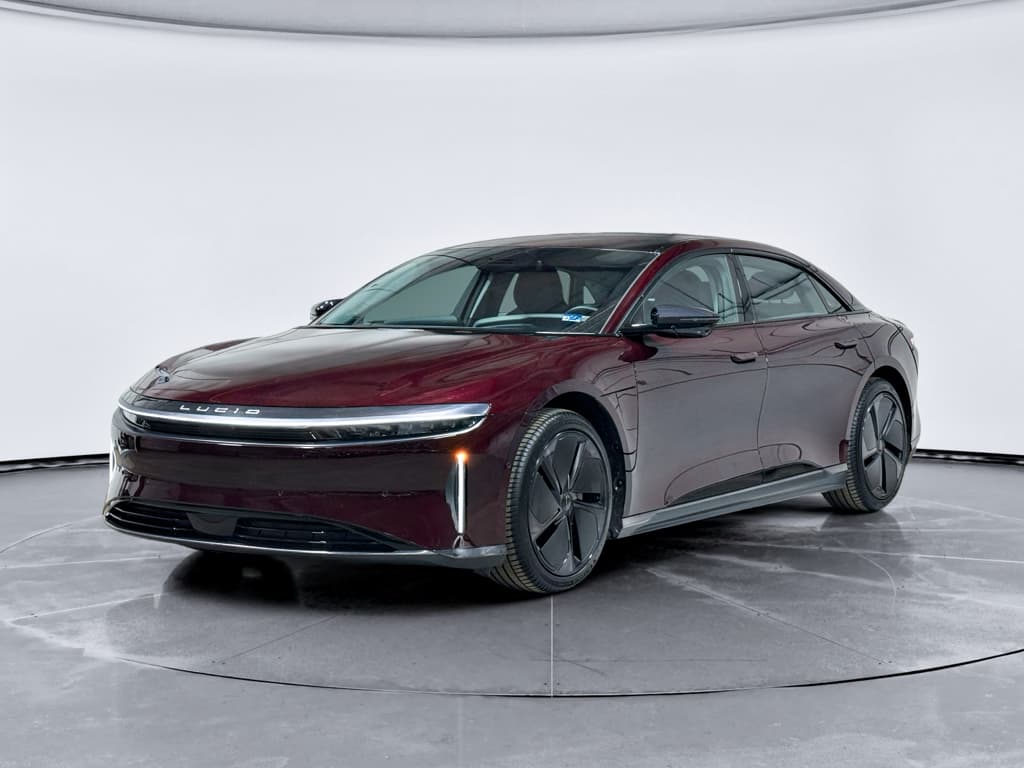
When you buy (or consider buying) a Lucid Air, you’re really buying two things: a gorgeous luxury sedan and one very serious battery pack. It’s natural to wonder: how long does a Lucid Air battery actually last, and what happens to that headline range as the years and miles pile on?
Key takeaway up front
Lucid Air battery lifespan: the short answer
Lucid Air battery life at a glance
Put simply, Lucid designed the Air’s battery to last at least 8 years or 100,000 miles while still keeping at least 70% of its original capacity. That’s Lucid’s official warranty line, and it’s roughly in step with other premium EVs. Early real-world data backs this up: owners of the first Airs delivered in late 2021 are typically seeing single-digit to low-teens percentage loss after several years, not a free fall in range.
Think in “usable life,” not perfection
Lucid Air battery basics: size, chemistry, and why it matters
Understanding what’s actually under the floor of a Lucid Air helps make sense of lifespan and range loss. Lucid uses large, high-voltage lithium-ion packs (700+ volts) with chemistry and thermal management tuned for both efficiency and longevity.
Lucid Air battery sizes by trim (recent model years)
Approximate usable battery capacities and EPA-rated range for popular Lucid Air trims.
| Trim | Approx. usable battery (kWh) | EPA range (mi, recent models) | Miles per kWh (EPA) |
|---|---|---|---|
| Pure | ~84–88 | ~419–420 | ~4.8–5.0 |
| Touring | ~88–92 | ~377–406 (wheel dependent) | ~4.0–4.4 |
| Grand Touring | ~112 | up to ~516 | ~4.4–4.6 |
| Dream Edition | ~118 | up to ~520+ | ~4.4–4.5 |
Actual range will vary with driving style, wheel size, climate, and battery condition.
Those are big packs by any standard, and Lucid squeezes class-leading efficiency out of them. The upside is that you start with so much range, 400 to 500+ miles, that even if the pack loses 10–20% over many years, you’re often still left with more real-world range than many brand-new EVs.
Battery chemistry & cooling
Warranty: how long is a Lucid Air battery officially covered?
For model years 2024–2026, Lucid’s New Vehicle Limited Warranty lays out clear coverage for the high-voltage battery:
- Basic vehicle: 4 years / 50,000 miles
- Powertrain: 8 years / 100,000 miles
- High-voltage battery: 8 years / 100,000 miles, guaranteed to retain at least 70% of its original capacity under normal use
- Corrosion perforation: 10 years / unlimited miles
That 70% figure is your key benchmark. If the battery drops below 70% of its original capacity within 8 years or 100,000 miles, due to defects and under normal use, Lucid is on the hook to repair or replace it under warranty terms. This doesn’t mean you should expect to be right at 70% on your 8th anniversary; it’s a floor, not a forecast.
Warranty is not a guarantee of zero degradation
Real-world Lucid Air battery degradation so far
Lucid Air production only started in late 2021, so we don’t have a decade of owner stories yet. But by early 2026, enough Dream Edition, Grand Touring, Touring, and Pure cars have racked up miles that a picture is starting to form.
Early Lucid Air battery health snapshots
What owners and service readouts are showing so far
Year 1 “settling”
Many owners see ~3–6% capacity drop in the first 12–18 months. That early dip is common to modern EVs as the battery “forms” and software tuning catches up with real-world use.
Years 2–4
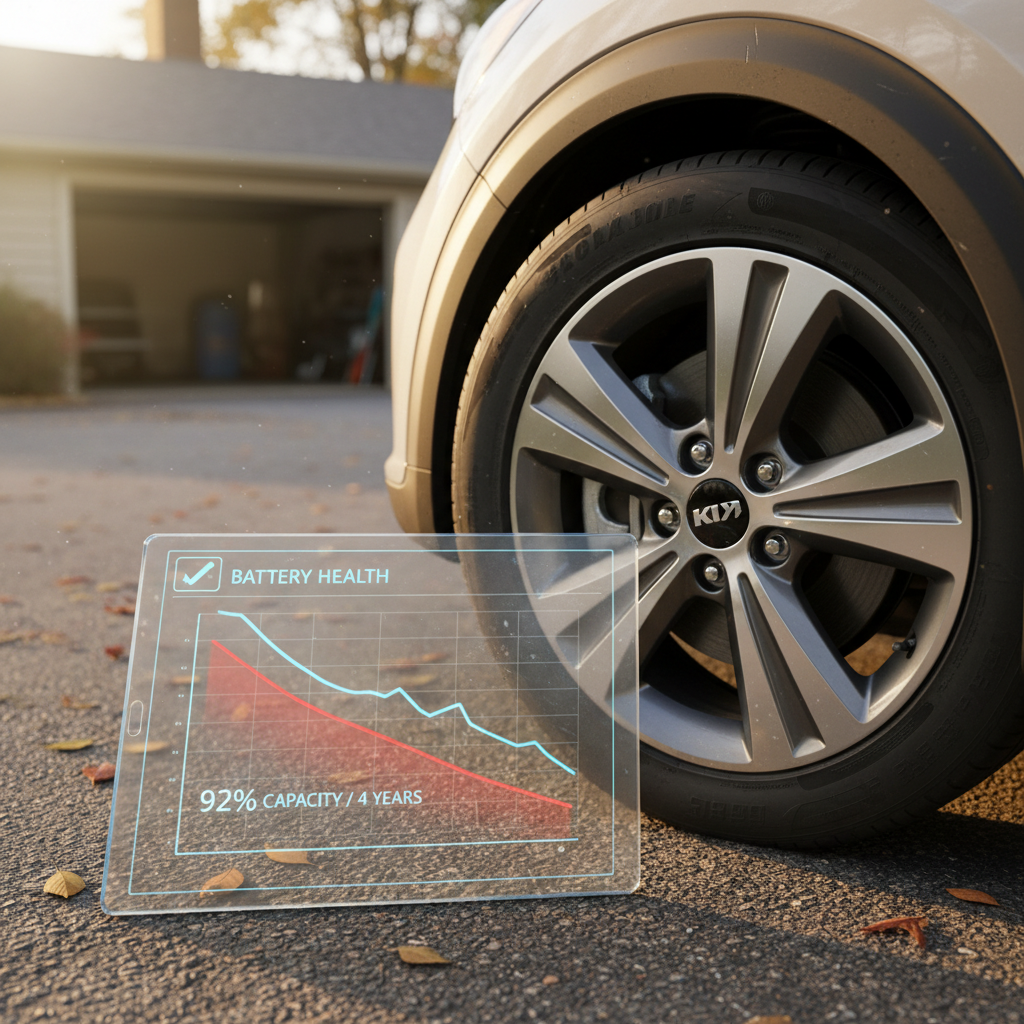
High-mileage Dream Edition and Grand Touring cars a few years in are typically showing ~8–12% total degradation, with service tools still reporting battery health in the low-to-mid 90% range.
Range vs. capacity
Remember that displayed range isn’t a lab test. Changes in tires, temperature, driving style, or software updates can make the projected miles swing more than the underlying battery health number.
When you zoom out and compare to other long-range EVs, the Lucid Air looks very much in line with the best of the bunch. There’s an initial hit as the pack ages out of its brand-new phase, then a slower, more gradual decline, exactly what you’d hope for in a $100,000-plus flagship.
The good news: early data suggests Lucid Air battery degradation is modest and comparable to the best long‑range EVs, as long as the pack is treated well.
So how many years and miles can a Lucid Air battery last?
Scenario 1: Typical commuter
You drive 10,000–12,000 miles a year, charge mostly at home on Level 2, and only fast-charge on road trips. In this world, it’s reasonable to expect your Lucid Air battery to remain highly usable for well over a decade, 10–15 years or more, before degradation becomes a real limitation.
You might see something like:
- ~5–10% loss in the first 3–4 years
- ~15–20% loss around 8–10 years
Scenario 2: High-mileage road warrior
You’re piling on 20,000+ miles a year with frequent DC fast charging. You’ll age the pack faster, but you’re still well within what Lucid designed for. You may reach the 100,000-mile warranty limit in 5–6 years, with capacity perhaps down in the 80–90% range depending on climate and habits.
Even then, with a car that started near 500 miles of range, you’re still in a very usable place for daily driving and long trips.
In both scenarios, the pack doesn’t hit a cliff. It simply loses range slowly over time. A Grand Touring that started near 500 miles of EPA range might still be a 400-mile road-trip machine at 80% capacity. That’s the quiet superpower of starting with such a large, efficient battery.
5 things that shorten (or extend) Lucid Air battery life
Not all miles are created equal. Two Lucid Airs with the same odometer reading can have very different battery health depending on how they’ve been used and charged. Here are the big levers you control.
Key drivers of Lucid Air battery lifespan
1. State of charge habits
Keeping the pack near 100% or letting it sit near 0% for long periods accelerates wear. The healthiest place is usually between about <strong>20% and 80%</strong> for day‑to‑day use.
2. Fast-charging frequency
DC fast charging is fantastic for road trips but tougher on the cells than slower AC charging. Frequent 250–300 kW sessions as your primary charging method will age the pack faster than plugging into a Level 2 charger at home.
3. Climate and parking conditions
Very hot environments, especially if the car sits in direct sun with a full battery, can nibble away at longevity. Covered or garage parking and avoiding extended time at 100% in extreme heat both help.
4. Driving style and load
Hard launches, heavy loads, and high sustained speeds draw more power and heat. That doesn’t mean you can’t enjoy the car, but a constantly thrashed battery will age faster than one driven smoothly most of the time.
5. Storage behavior
If you’re leaving the Air parked for weeks, storing it around <strong>40–60% charge</strong> in a cool place is much kinder to the pack than parking it at 100% or near empty.
What actually damages EV batteries
How to make your Lucid Air battery last as long as possible
Lucid publishes clear guidance in its owner materials: charge primarily with AC, avoid living at the extremes of the state-of-charge gauge, and let the car manage its own temperature. In practice, that boils down to a few simple habits.
- Set an 80% daily charge limit. For normal commuting, an 80% cap gives you a huge usable range while keeping the battery in its comfort zone. Bump to 90–100% before a long trip if you need it, then drive soon after reaching full.
- Plug in when parked, on Level 2, not DC fast. AC charging at up to ~19 kW is gentle on the pack compared to repeated 200+ kW DC sessions. Treat fast charging as a road-trip tool, not your daily routine.
- Precondition before fast charging. Use the Lucid navigation to route to the fast charger so the car can warm or cool the pack ahead of time. A battery at the right temperature charges faster and wears less.
- Avoid leaving it full in extreme heat. On a scorching day, it’s better to finish charging closer to your departure time than to leave the car baking at 100% for hours.
- Store it smart. If you’re going on vacation, park the car with the battery in the 40–60% range and, if possible, in a shaded or indoor spot.
Good news for road-trippers
Buying a used Lucid Air? Battery health checklist
If you’re eyeing a used Lucid Air, battery health should sit right next to paint, wheels, and service history on your checklist. The car’s resale value and your day‑to‑day satisfaction both hinge on how that pack has been treated.
How to evaluate a used Lucid Air’s battery
Questions to ask and data to gather before you sign
Ask about real usage
- Mileage and years in service
- Climate it lived in (Phoenix vs. Portland matters)
- Daily driving profile, short commutes or constant long hauls?
Charging history
- Home Level 2 vs. public DC fast charging?
- Any patterns of sitting at 100% for long stretches?
- Where it was usually parked (garage vs. street)?
Battery data & inspection
- Ask for any available service readouts or battery health reports.
- Look for error codes, derated fast‑charging, or range warnings.
- Take a long test drive and compare indicated range to expectations.
Where Recharged fits in
Lucid Air battery replacement: when, why, and how much
Full battery replacements in modern EVs are still rare in the first decade, especially when the pack is sized as generously as the Lucid Air’s. But every shopper eventually asks the same question: What happens when the battery is “done”?
When does replacement make sense?
For most owners, replacement only becomes a conversation when the car’s range no longer matches their life, not when it hits a specific percentage. A city commuter might be fine at 70% capacity; a salesperson doing 300 highway miles a day might not.
Under warranty, if your pack falls below Lucid’s 70% threshold due to covered defects, Lucid absorbs the repair or replacement cost according to the warranty terms.
How much does it cost?
Lucid doesn’t publish official out-of-warranty battery replacement pricing, and because the Air is still relatively new, we don’t yet have a large sample of real invoices to quote. Given the pack sizes and luxury market segment, it’s safe to assume five-figure costs for full replacement at today’s prices.
The good news: battery costs tend to trend downward over time, and with degradation so far looking modest, many owners may never need a full pack swap.
Watch for partial repairs and modules
FAQ: Lucid Air battery lifespan & degradation
Lucid Air battery lifespan: common questions
Bottom line: should you worry about Lucid Air battery life?
If you’re drawn to the Lucid Air, you’re probably a range hawk. The idea of that 400–500‑mile number shrinking over time can feel like watching your dream house slowly lose rooms. The reality so far is much calmer: Lucid Air batteries appear to be aging gracefully, and the car starts with so much range in hand that modest degradation still leaves you with an exceptionally capable EV.
Lucid’s 8‑year/100,000‑mile battery warranty with a 70% capacity promise sets a strong baseline, and early owner experience suggests most Airs are tracking comfortably above that floor. With smart charging habits, living around 20–80%, favoring Level 2 at home, and letting the car manage its own temperature, you’re stacking the deck in your favor for well over a decade of useful battery life.
And if you’re shopping the used market, don’t let fear of the unknown hold you back. A solid battery health report and transparent history tell you far more than internet folklore. At Recharged, every used Lucid Air comes with a Recharged Score battery health diagnostic, fair‑market pricing, financing options, and EV‑specialist support so you can enjoy that outrageous range, and its long lifespan, with clear eyes.