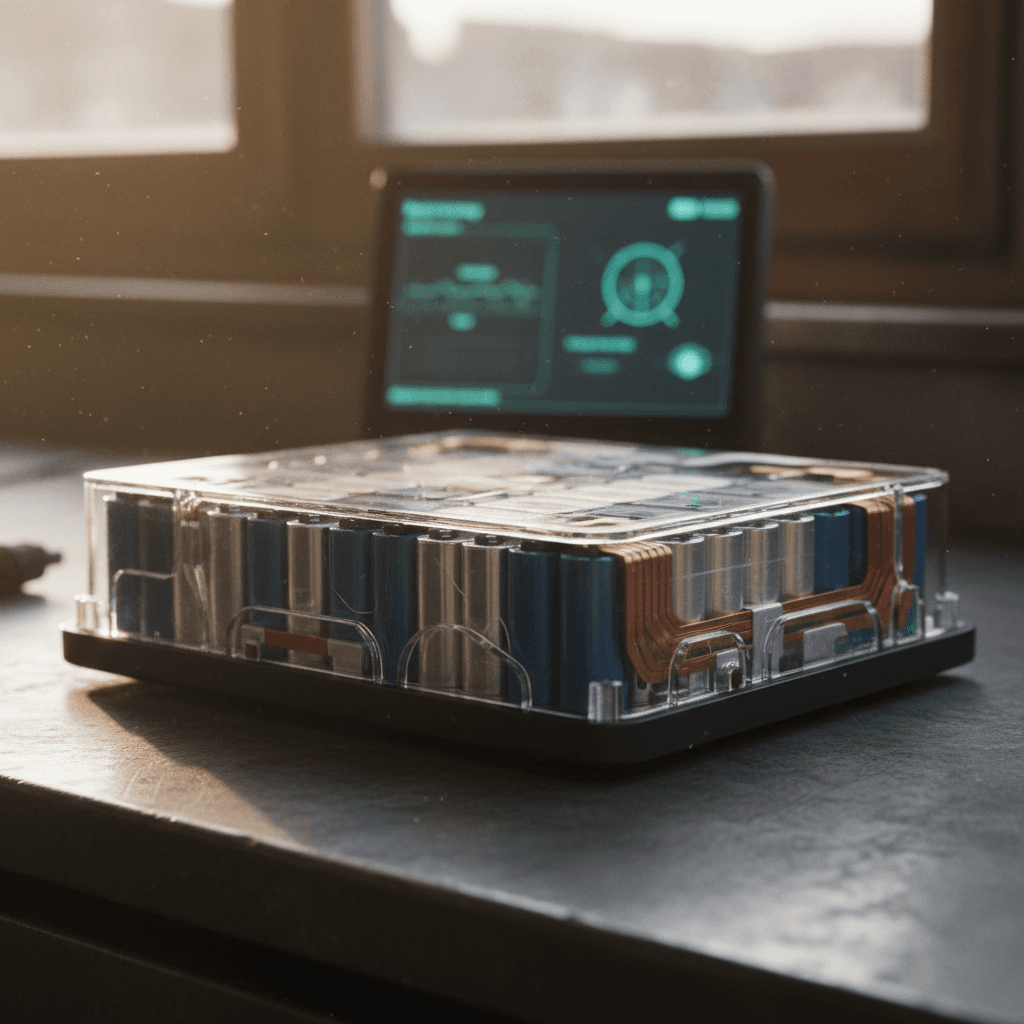
If you’re considering an electric vehicle, the first big question is almost always the same: What about the battery? Today’s electric cars almost all use a lithium‑ion battery, and understanding how that battery works, how long it lasts, and what can go wrong is the key to buying with confidence, especially if you’re looking at a used EV.
Why lithium‑ion matters
How lithium-ion batteries power EV cars
A lithium‑ion battery for EV cars is a large pack made up of hundreds or thousands of small cells, grouped into modules and managed by a sophisticated battery management system (BMS). The pack stores electrical energy as chemical energy and releases it when you press the accelerator.
Inside the pack
- Cells: Individual lithium‑ion cells (similar in principle to laptop cells) arranged in series and parallel.
- Modules: Groups of cells packaged together for easier cooling, monitoring, and service.
- Pack housing: A rigid enclosure, often forming part of the vehicle’s floor.
The supporting cast
- Battery Management System (BMS): Monitors voltage, temperature, and state of charge for every cell group.
- Thermal management: Liquid or air cooling keeps the pack in its ideal temperature window.
- High‑voltage contactors & safety systems: Isolate the pack during faults or crashes.
Think of it like a fuel tank, plus a brain
Key EV battery terms explained
Core lithium‑ion EV battery concepts
Get comfortable with these terms before you shop
kWh (kilowatt‑hours)
The size of the battery. More kWh generally means more range. A 60 kWh pack stores about twice as much energy as a 30 kWh pack.
kW (kilowatts)
The power going in or out. Charging speed is in kW; so is motor power. A 150 kW fast charger adds energy faster than a 50 kW unit.
State of charge (SoC)
The battery’s fuel gauge, usually shown as a percentage. 100% is full, 0% is effectively empty (with some buffer the BMS hides).
State of health (SoH)
An estimate of how much original capacity remains. For example, 90% SoH means the pack can store 90% of the energy it did when new.
Cycle
Roughly one full charge and discharge (for example, 2× 50% charges). EV packs are designed for thousands of cycles.
Battery warranty
Automakers typically guarantee the pack to keep at least 70% capacity for 8–10 years or 100,000–150,000 miles, whichever comes first.
Main lithium-ion chemistries: NMC vs LFP and more
Not all lithium‑ion batteries are the same. Automakers choose among several chemistries that balance energy density, cost, safety, and longevity. Today, the big three in EVs are NMC, LFP, and (to a smaller extent) NCA.
Common lithium‑ion chemistries in EV cars
How the main chemistries stack up for everyday drivers
| Chemistry | Used in (examples) | Typical strengths | Typical trade‑offs | Best for drivers who… |
|---|---|---|---|---|
| NMC (Nickel Manganese Cobalt) | Many crossovers & SUVs from Hyundai, Kia, VW, Ford | High energy density, strong performance, good fast‑charge capability | Uses cobalt, somewhat costlier, more sensitive to high temps | Want longer range in a smaller pack and often drive longer trips |
| LFP (Lithium Iron Phosphate) | Tesla base models in some markets, new Chevy Bolt, many Chinese EVs | Lower cost, excellent cycle life, very stable and robust | Lower energy density, packs are heavier for same range, can lose efficiency in cold | Prioritize longevity, value, and frequent DC fast‑charging over absolute max range |
| NCA (Nickel Cobalt Aluminum) | Many earlier Tesla packs, some performance EVs | Very high energy density and power, good for performance | Higher material cost and more complex thermal management | Want maximum range or performance and can avoid extreme heat/abuse |
Generalized comparison; individual models can vary.
Cold and heat affect chemistries differently
Battery size, range, and real‑world driving
Battery capacity, measured in kWh, is the biggest driver of rated range. But the real‑world range of an EV depends on more than just pack size and chemistry.
Typical lithium‑ion EV battery and range figures
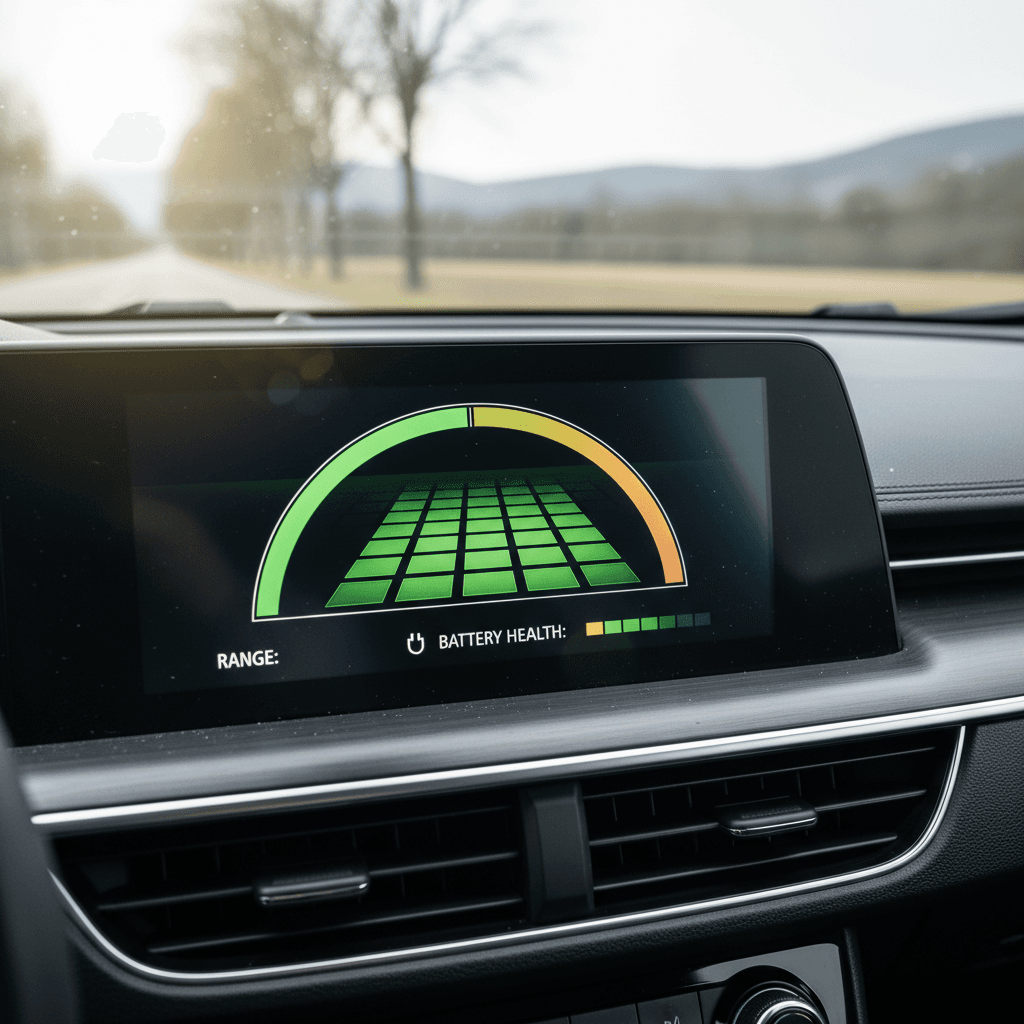
- Speed: Higher speeds increase aerodynamic drag and pull more power from the pack.
- Temperature: Cold weather temporarily reduces available energy, especially in LFP packs; extreme heat can increase degradation over time.
- Driving style: Hard acceleration uses more energy; smooth driving and one‑pedal regen stretch range.
- Load: Roof boxes, bikes, passengers, and cargo all add drag or weight, trimming range.
- Climate control: Cabin heating and cooling draw power from the same lithium‑ion battery that moves the car.
Right‑size your battery
How long do lithium-ion EV batteries last?
Early on, many shoppers worried that an EV battery would be like a giant smartphone battery, strong at first, then quickly fading. The data we’ve accumulated over the last decade tells a different story. Modern lithium‑ion batteries for EV cars are engineered to outlast the typical ownership period, and often the car itself.
What studies show about EV battery life
Modern EV batteries are proving significantly more durable than many early skeptics assumed, with most packs retaining the majority of their range well beyond their warranty period.
Good news for used EV buyers
What affects EV battery degradation?
While the overall picture is reassuring, not every EV battery ages at the same pace. How the pack is used and where the car lives still matters. The good news is that you can control many of the biggest factors, or at least understand what you’re getting when you buy a used EV.
Main drivers of lithium‑ion EV battery wear
1. Time and mileage
All lithium‑ion batteries gradually lose capacity simply with age and use. The first year or two often show a slightly steeper drop, then the curve tends to flatten.
2. High state of charge storage
Regularly parking at 100% for long periods accelerates wear. Many EVs let you set a daily charge limit (e.g., 70–80%) and reserve 100% for road trips.
3. Deep discharges
Frequently running the pack down to very low state of charge can stress cells. Try to avoid arriving home consistently with single‑digit battery percentage if you can.
4. Heat and cold
Prolonged exposure to high temperatures is especially hard on some chemistries, while deep cold mainly hurts short‑term performance and fast‑charge speed.
5. Frequent DC fast charging
Fast charging is safe when the car manages it properly, but an exclusive diet of high‑power fast charging, especially in heat, can increase degradation over many years.
6. Aggressive driving and towing
High sustained power loads and repeated full‑throttle bursts warm the battery. Occasional fun is fine; constant track‑day driving will age the pack faster.
Easy habits that help your pack last
Lithium-ion battery safety in EV cars
Lithium‑ion batteries can catch headlines when there’s a thermal event, but context is important. EV fires are rare compared with gasoline vehicle fires, and modern packs are heavily engineered for safety.
How EV makers protect lithium‑ion batteries
Layers of safety between you and the cells
Cell & module design
EV cells include internal safety features and are arranged to limit the spread of heat if a single cell fails.
Thermal management
Liquid cooling loops and chillers keep the pack in its preferred temperature range, improving safety and longevity.
Crash protection
Packs are typically mounted low in the floor in reinforced cases, away from common impact zones.
Battery Management System
The BMS constantly monitors voltages, temperatures, and currents, and can shut down the pack if it detects problems.
Standards & testing
EV packs must pass stringent abuse, penetration, and thermal runaway tests before reaching the road.
Software updates
Automakers can refine charging profiles or add protections over time via software, enhancing safety across the fleet.
DIY modifications are a bad idea
Solid-state and next-gen EV batteries
You’ll often hear that solid‑state batteries are coming to “fix” today’s lithium‑ion packs. The reality in late 2025 is that conventional liquid‑electrolyte lithium‑ion batteries are still the workhorses in nearly every EV on the road, while solid‑state and semi‑solid designs are entering pilot and demonstration stages.
- Several major automakers and battery suppliers have announced demonstration fleets or pilot production of solid‑state or semi‑solid packs between 2025 and 2028.
- Targets include higher energy density (more miles per kWh), faster charging, and improved safety margins.
- Large‑scale mass adoption is widely expected to happen after 2030, depending on cost and manufacturability.
- In the meantime, companies continue to refine traditional NMC and LFP lithium‑ion cells, squeezing out better longevity and performance each model year.
What this means for a car you buy today
Buying a used EV: how to check battery health
When you’re shopping for a used EV, the battery is the single most expensive component in the vehicle. The beauty of lithium‑ion is that failures are rare, but capacity loss is gradual and real. You want to know what you’re getting before you sign anything.
Checklist for evaluating a used EV’s lithium‑ion battery
1. Review the battery warranty
Check the in‑service date and mileage. Many EVs have 8–10‑year battery warranties that transfer to subsequent owners. Make sure there’s time and mileage left as a safety net.
2. Look at the indicated range
On a full charge, compare the car’s displayed range to what that model was rated for when new. A modest drop is normal; a big gap might warrant a deeper look.
3. Ask about charging habits
If possible, learn whether the previous owner mostly charged at home on Level 2, or relied heavily on DC fast charging, and whether they routinely parked at 100%.
4. Consider climate and usage
EVs that have lived in very hot regions or have very high mileage may show more degradation. That doesn’t mean you should avoid them, but price should reflect the battery’s condition.
5. Get a professional battery health report
Whenever you can, rely on an objective assessment. At <strong>Recharged</strong>, every vehicle includes a <strong>Recharged Score Report</strong> with verified battery health, so you’re not guessing from a dashboard guess‑o‑meter.
6. Test‑drive and fast‑charge if possible
A drive that includes highway speeds plus a brief fast‑charge stop can reveal whether the pack and thermal system behave normally.
How Recharged helps you shop smarter
Ready to find your next EV?
Browse VehiclesFAQ: lithium-ion battery for EV cars
Frequently asked questions about lithium‑ion batteries in EVs
Lithium‑ion batteries are the beating heart of modern electric cars, and the story they tell in 2025 is encouraging: long life, strong performance, and improving technology year after year. If you understand the basics, chemistry, capacity, degradation, and warranties, you can shop for your next EV, new or used, with the same confidence you’d bring to any big purchase. And when you’re ready to see how battery health looks in the real world, a used EV from Recharged backed by a Recharged Score Report can make that leap into electric driving a straightforward, data‑driven decision.