If you’re considering a Lexus RZ 450e, or watching the range drop on the one already in your driveway, the obvious question is: how long will the battery actually last? Not the marketing answer, but the real‑world, years‑and‑miles answer that determines whether this luxury crossover is a smart long‑term bet, especially on the used market.
Quick takeaway
Lexus RZ 450e battery basics
The RZ 450e rides on Toyota’s e‑TNGA platform and shares much of its hardware with the Toyota bZ4X and Subaru Solterra. In U.S. models through 2025, the RZ 450e uses a lithium‑ion pack with about 71–72 kWh gross capacity and roughly 64–69 kWh usable, depending on model year and market. Newer 2026‑onward models increase pack size slightly and improve efficiency, but the basic chemistry and philosophy are the same: be conservative, protect the pack, and keep degradation boringly low rather than chasing headline range numbers.
- Chemistry: Nickel‑rich lithium‑ion (similar to Toyota’s latest BEV packs) tuned for longevity more than maximum power
- Usable capacity: roughly 64–69 kWh in early RZ 450e models, with modest increases in later years
- Real‑world range when new: about 190–220 miles on U.S. highways for the 450e, depending on wheels, climate, and speed
- Thermal management: liquid‑cooled battery with active temperature control to protect the cells in heat and cold
Why Lexus under‑uses the battery
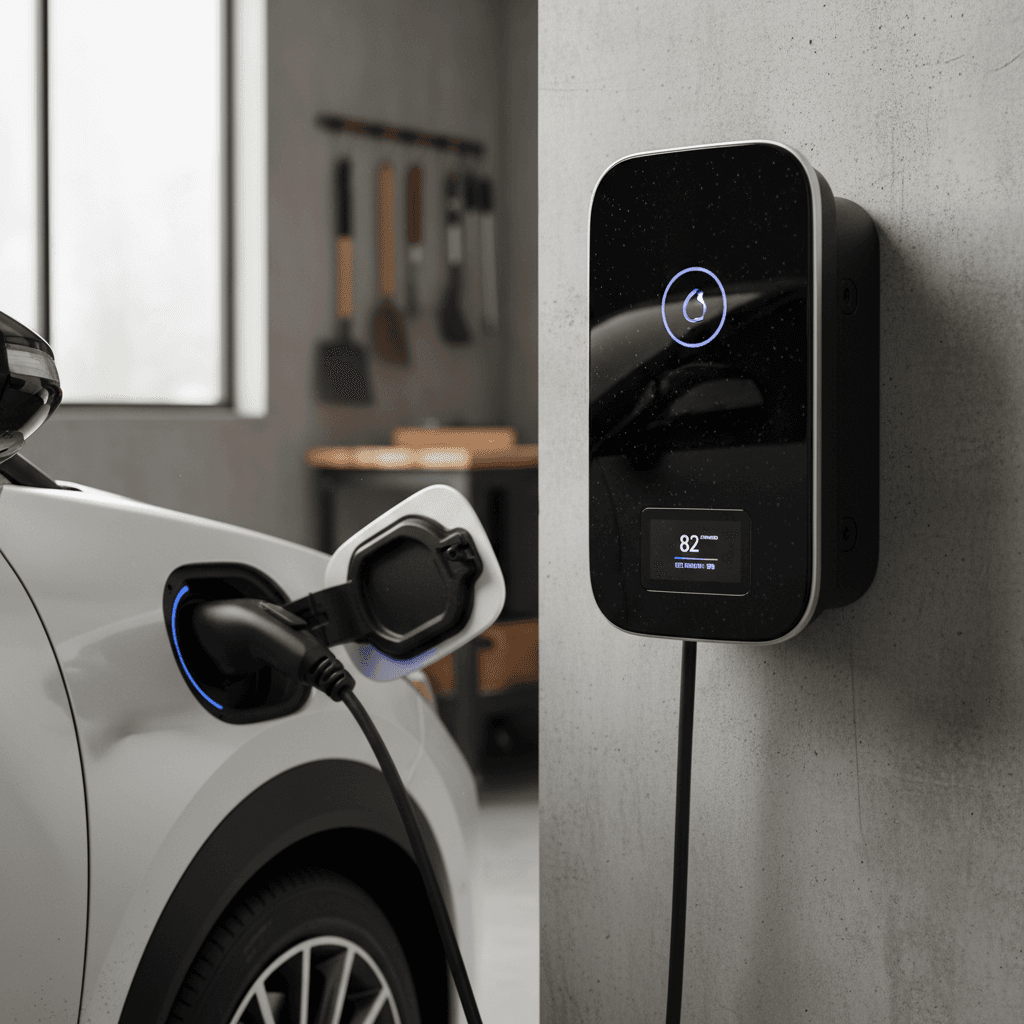
So how long will a Lexus RZ 450e battery actually last?
If you strip away the advertising gloss, modern Lexus and Toyota traction batteries are built for the long haul. Toyota’s hybrids are notorious for going 200,000–300,000 miles on original packs, and the same conservative engineering philosophy is carrying over to the RZ 450e.
Lexus RZ 450e battery lifespan at a glance
Put differently, if you buy a new RZ 450e in 2026 and drive a typical American 12,000–15,000 miles per year, you can reasonably expect the original battery to carry you into the mid‑2030s before its reduced range forces a tough decision. For a used RZ in 2030, the question isn’t “Will the battery fail?” so much as “Does the remaining range still fit my life?”
Battery degradation: what to realistically expect
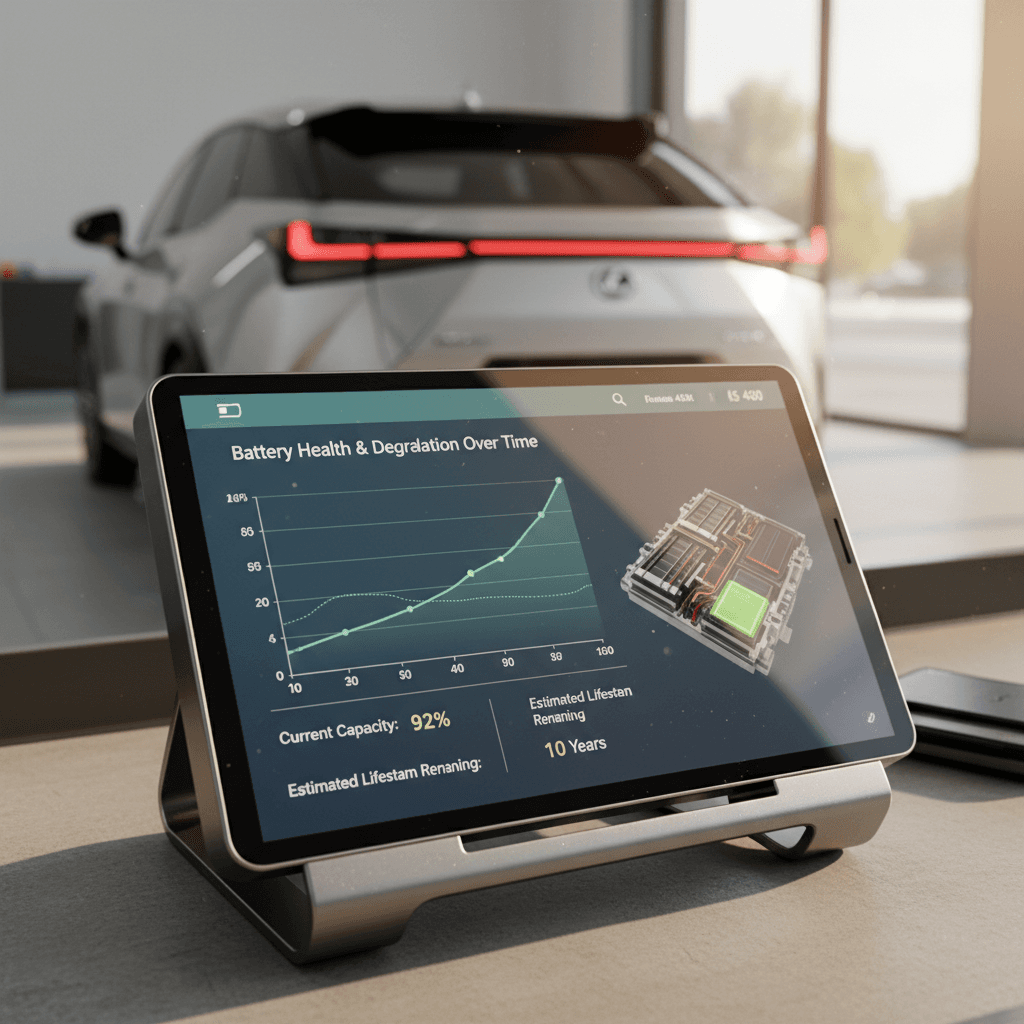
Degradation is the slow, permanent loss of capacity, the reason your RZ 450e that once showed 205 miles at 100% might be showing 190 miles a couple of years later, even on the same route, at the same temperatures. What matters is the curve of that loss over time, and Lexus is deliberately keeping that curve flat.
The typical RZ 450e degradation pattern
Not scientific to the decimal, but a realistic owner‑oriented model
Years 0–2
1–5% loss of usable capacity is common for many EVs in the first couple of years as the pack “stabilizes.” In day‑to‑day life, that’s roughly 5–10 miles of range difference, easy to miss unless you track it.
Years 3–7
The middle‑age plateau: if you charge reasonably (mostly Level 2, not living at 100%), annual loss might settle around 1–2% per year. By year 7, you might be down around 85–90% of original capacity.
Years 8+
This is where usage history really matters. A gently used RZ 450e could still be near or just below 80% capacity. A hard‑driven, always‑fast‑charged one could be lower. Very few owners will see sudden “fall off a cliff” failure.
Don’t trust the dash alone
Warranty coverage on the RZ 450e battery
Lexus knows battery fear is the number‑one hang‑up for first‑time EV buyers, so they back the RZ 450e pack with a long warranty window. Exact terms vary by region and model year, but for U.S.‑market BEVs you’ll generally see two key promises:
Typical Lexus RZ 450e battery warranty coverage (U.S.)
Check your specific model year and region, but this is what most RZ 450e owners will see in the paperwork.
| Coverage type | Typical term | What it usually covers |
|---|---|---|
| Traction battery defect warranty | 8 years / 100,000 miles | Failure of the high‑voltage battery pack due to defects in materials or workmanship |
| Capacity retention commitment (market‑dependent) | Often similar 8–10 year window | Assurance the pack will retain a minimum percentage of capacity (around 70%) over the warranty period |
| Hybrid/EV system warranty | 8 years / 100,000 miles | Inverters, battery ECU, and other high‑voltage components related to the battery system |
Always confirm details with Lexus or your dealer, especially if you’re cross‑shopping an imported or non‑U.S. vehicle.
Use the warranty years as a floor, not a ceiling
What shortens, or extends, RZ 450e battery life
Habits that shorten battery life
- Frequent DC fast charging from low state of charge to very high (90–100%), especially in hot weather.
- Letting the car sit at 100% for days, such as after an overnight charge you don’t drive off.
- Regularly running down near 0% before recharging, which stresses the cells at both ends.
- Parking in direct sun and hot climates without shade or garage space.
- High annual mileage with lots of high‑speed highway driving and heavy loads.
Habits that extend battery life
- Home Level 2 charging most of the time, using DC fast charging only for trips.
- Daily charge limits around 70–80% for commuting, with 100% reserved for road trips.
- Keeping the car garaged or shaded in extreme heat or cold when possible.
- Occasional balancing charges to 100% before long highway drives, not as a daily habit.
- Driving smoothly and avoiding constant full‑throttle launches that heat the pack.
How to keep your Lexus RZ battery healthy
Simple habits that pay off in extra years of range
1. Use Level 2 at home, not DC fast daily
Make a 240V Level 2 charger your default and save DC fast charging for road trips or genuine emergencies. It’s gentler on the pack and often cheaper than rapid charging anyway.
2. Set a sensible daily charge limit
If your commute is 60 miles round‑trip, you don’t need 100% every morning. Aim for roughly 70–80% as your daily target and bump to 90–100% only when you know you’ll use it soon.
3. Avoid letting the car sit "full" or "empty"
If you must charge to 100% the night before a trip, set a departure timer so charging finishes just before you leave. Similarly, don’t park it at 2% and leave it for days, plug it in.
4. Protect the car from extreme heat
Heat is the silent battery killer. A garage, carport, or even a tree makes a difference over ten summers. The RZ’s thermal management helps, but it’s not magic.
5. Keep software updated
Lexus rolls out battery management and charging tweaks over time. Keeping your RZ’s software current can quietly improve charging behavior and long‑term pack health.
6. Monitor long‑term trends, not single trips
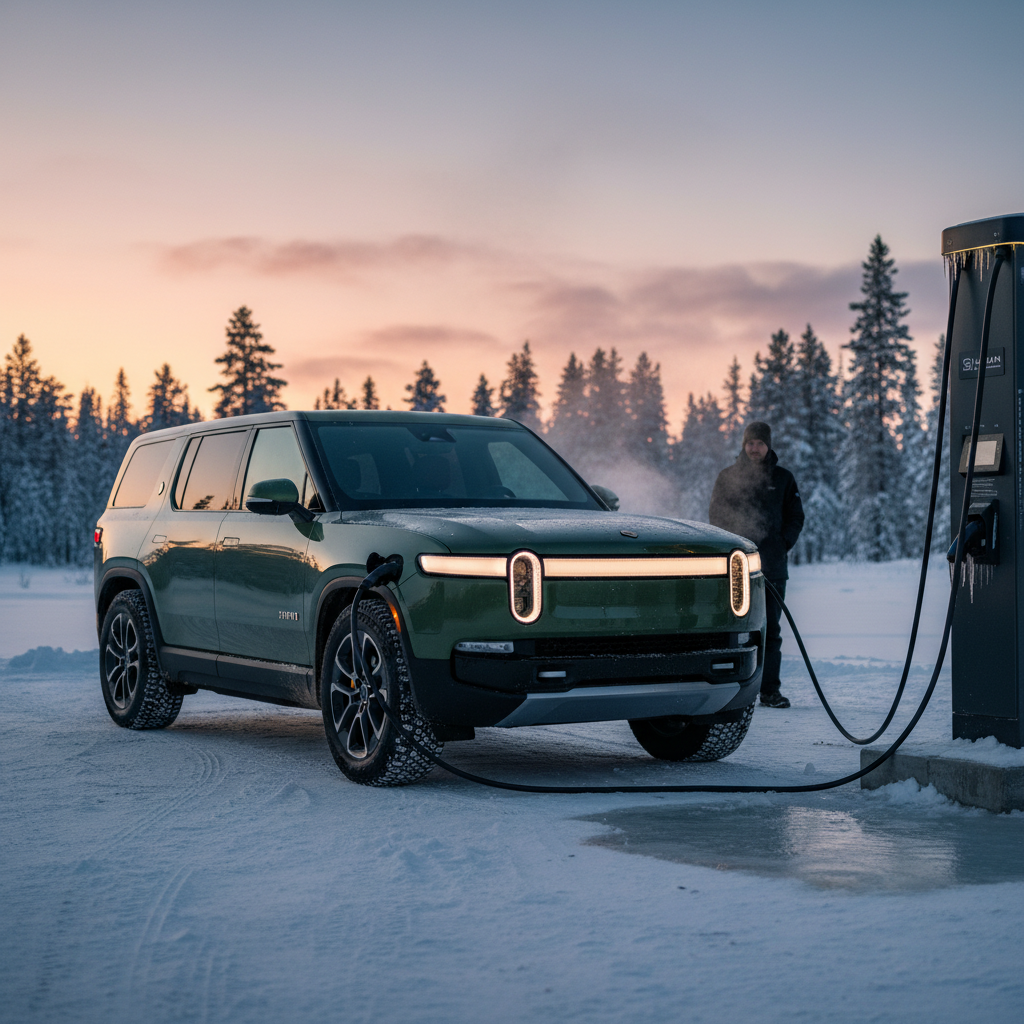
Track range over seasons and years rather than obsessing over one weirdly low readout in a snowstorm. Cold weather alone can knock 20–30% off winter range without meaning the battery is dying.
Where Recharged fits in
Ready to find your next EV?
Browse VehiclesBuying a used Lexus RZ 450e: what to look for
The RZ 450e is still a relatively young model (U.S. sales started in the 2023 model year), but the first wave of off‑lease and early adopters are already trickling into the used market. That’s good news for shoppers, as long as you know how to separate a pampered pack from a punished one.
Key battery‑related checks on a used RZ 450e
You don’t need to be an engineer, you just need to know what to ask for.
Battery health report
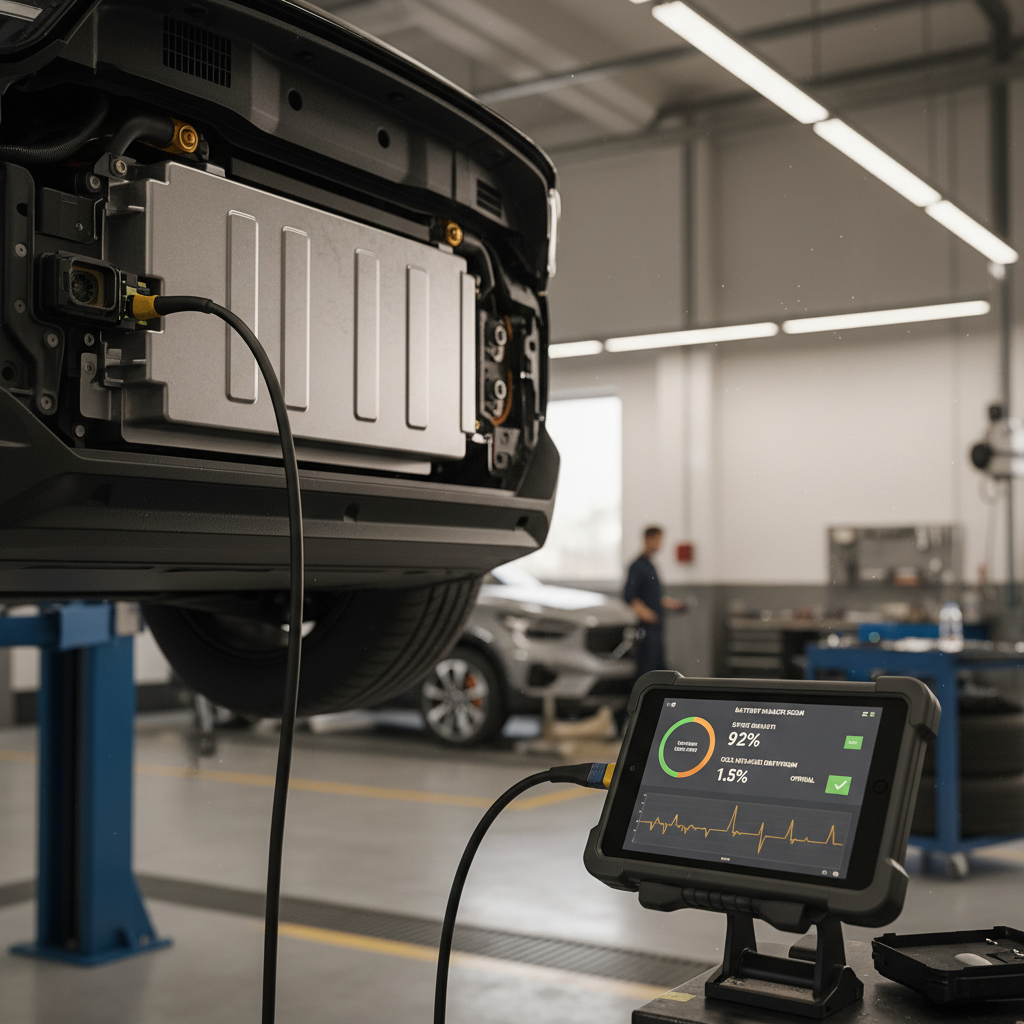
Ask for documentation of measured battery capacity, not just “seems fine.” At Recharged, our Score report tells you how much energy the pack can actually store compared with when it was new.
Charging history
Look for signs of constant DC fast charging or abuse: ride‑share use, road‑warrior mileage, or owners who lived at public fast chargers instead of home Level 2.
Software & service records
Has the car received all software updates and battery‑related service bulletins? Up‑to‑date software can improve both charging behavior and longevity.
Ask about typical use, not just mileage
How RZ 450e range changes over the years
The Lexus RZ 450e starts life with decent but not spectacular range. Think of it as a comfortable, quiet, nicely made EV that just doesn’t have the legs of a Model Y or Hyundai Ioniq 5 on cross‑country runs. That means any loss of range over time feels bigger because you’re starting from a modest baseline.
Illustrative RZ 450e real‑world range over time
Assumes a 2024 RZ 450e driven ~12,000 miles per year, mostly home‑charged on Level 2 in a moderate climate. Your numbers will vary, but the pattern is what matters.
| Vehicle age | Approx. battery capacity | Highway range (18–20" wheels) | City/suburban mixed range |
|---|---|---|---|
| Brand‑new | 100% | 190–210 miles | 220–240 miles |
| 3 years / ~36k miles | ~94–96% | 180–200 miles | 210–230 miles |
| 5 years / ~60k miles | ~90% | 170–190 miles | 200–220 miles |
| 8 years / ~96k miles | ~80–85% | 150–175 miles | 180–205 miles |
| 10+ years / 120k+ miles | ~70–80% | 135–165 miles | 170–195 miles |
Remember, this is an example curve, not a guarantee, but it’s a realistic way to think about planning long‑term ownership.
Cold weather can lie to you
When should you worry about replacing the battery?
A failing EV battery is like a failing transmission in a gas car: very rare in the first decade, very expensive when it does happen. The good news is that on the RZ 450e, outright pack failure is not what you should be losing sleep over. The realistic questions are about economics and livability:
- Has the car’s practical range dropped so far that it no longer fits your commute or road‑trip pattern, even with planning?
- Is the car outside its battery warranty window, making a future pack issue your problem rather than Lexus’s?
- Does the cost of a replacement or refurbished pack make sense relative to the car’s market value? In many cases, selling or trading into a newer EV is the smarter move.
- Are you seeing warning lights, repeated charging faults, or large, sudden jumps in displayed state of charge? Those are reasons to get the pack inspected, not just shrug at “normal” degradation.
Battery replacement is the last resort
Lexus RZ 450e battery lifespan FAQ
Frequently asked questions about RZ 450e battery life
The bottom line on Lexus RZ 450e battery lifespan is reassuringly boring. This isn’t an experimental chemistry or a range‑chasing science project; it’s a conservative Lexus‑grade EV pack designed to age slowly and predictably. If you treat it decently, favoring home Level 2 charging, avoiding extreme heat when you can, and not living at 100% state of charge, you should see a useful decade or more out of the original battery. And if you’re shopping used, pairing that engineering with a verified battery health report from Recharged turns an abstract fear into a concrete number, so you can decide with your head, not your anxiety.