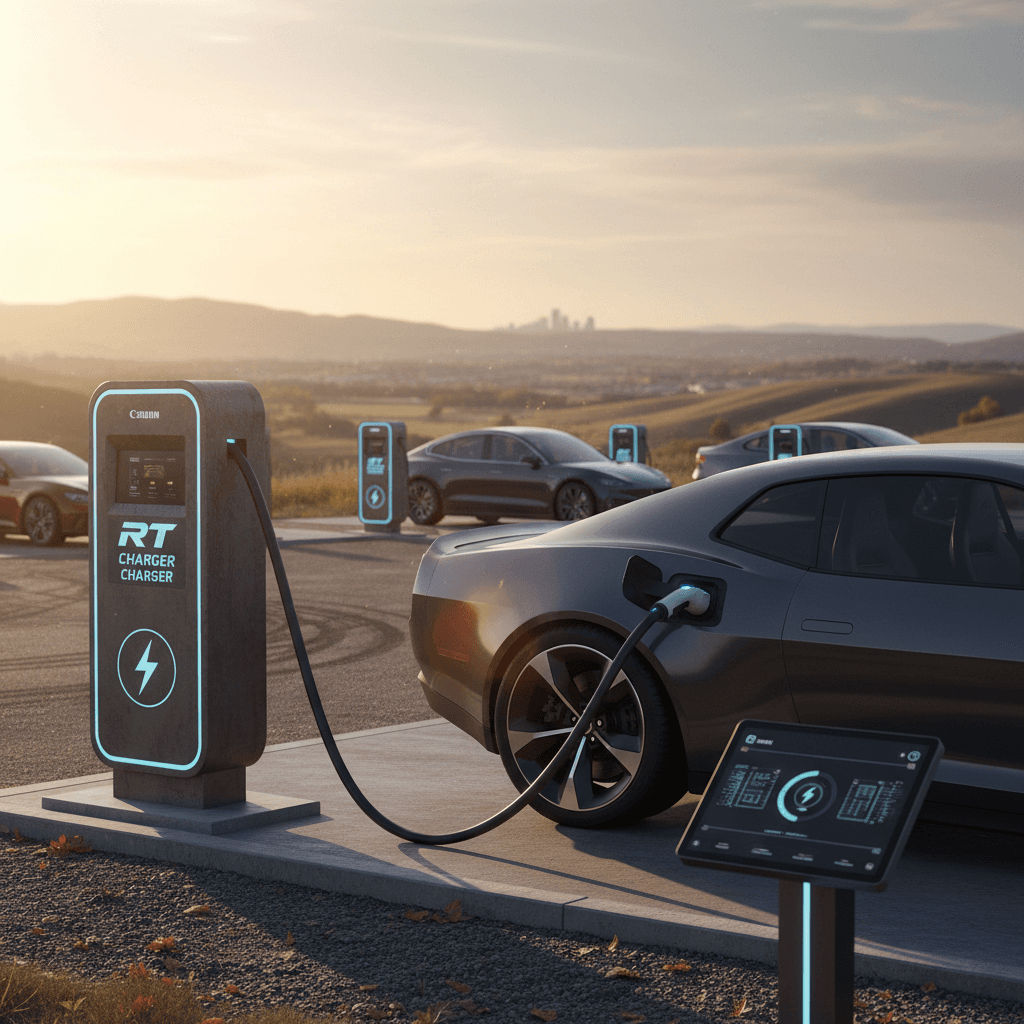
If you plan to take road trips in an electric car, you’re going to get very familiar with Level 3 EV charging stations. These are the high‑powered DC fast chargers that can add hundreds of miles of range in the time it takes to grab a coffee, if you know how to use them and what to expect in the real world.
Quick definition
What is Level 3 EV charging?
EV charging is usually grouped into three levels. Level 1 and Level 2 use household-style AC power, while Level 3 uses DC power and much higher power levels. With Level 3, the charger does the heavy electrical conversion and sends DC directly to your battery, which is why it’s so much faster than plugging into the wall or a typical home station.
Charging levels at a glance
How Level 1, Level 2 and Level 3 compare in speed and use case.
| Charging level | Power source | Typical power | Miles of range per hour* | Typical use |
|---|---|---|---|---|
| Level 1 | 120V AC outlet | 1–1.9 kW | 2–5 miles | Overnight at home when driving very little |
| Level 2 | 240V AC (home or public) | 3.3–19.2 kW | 10–45 miles | Daily charging at home, workplace, public destinations |
| Level 3 (DC fast) | High‑voltage DC | 50–350+ kW | 150–1,000+ miles (per hour equivalent) | Highway stops and quick top‑ups on trips |
Approximate speeds refer to many mainstream EVs; your results will vary by model and conditions.
Not every EV can use Level 3 charging
How Level 3 EV charging stations work
A Level 3 station is essentially a high‑power DC power supply sitting behind a user‑friendly screen and cable. Instead of feeding AC power to your car’s onboard charger, it converts AC to DC inside the station and negotiates directly with your battery management system (BMS) over a digital protocol. Together, they decide how much power the pack can safely accept moment by moment.
What’s going on behind the scenes?
Four key systems at a Level 3 EV charging station
Power modules
Control electronics
Cooling system
Network connection
Think in kW, not amps
Level 3 vs. Level 2 and Level 1 charging
When Level 3 charging shines
- Road trips and long commutes: You need a lot of range quickly, far from home.
- Time‑sensitive stops: You only have 20–40 minutes to charge.
- Limited home charging: Apartment dwellers may occasionally rely on DC fast charging to catch up.
When Level 2 is still king
- Daily charging: Overnight Level 2 is cheaper, gentler on the battery, and usually more convenient.
- Destination charging: Hotels, workplaces, parking garages, your car can sit for hours.
- Battery longevity: Regularly using Level 2 instead of Level 3 generally supports long‑term battery health.
Don’t ignore your owner’s manual
How fast can Level 3 chargers refill your battery?
Visit three Level 3 EV charging stations and you’ll see everything from 50 kW posts in older parking lots to gleaming 350 kW stations along the interstate. Real‑world charging speed depends on both the charger’s rating and your vehicle’s DC fast‑charge capability.
DC fast charging in the U.S. today
Typical Level 3 charger ratings and what they mean
Approximate real‑world results for many mid‑size EVs in mild weather, charging from about 10% to 80%.
| Charger rating | Example use | 10–80% charge time | Miles of range added (approx.) |
|---|---|---|---|
| 50 kW | Older highway sites, small town stations | 45–70 minutes | 120–180 miles |
| 100–150 kW | Many current highway corridors | 25–45 minutes | 170–260 miles |
| 250–350 kW | Newest high‑power sites | 18–30 minutes (if car supports it) | 200–300+ miles |
Your actual charging time and miles added depend on your battery size, efficiency, and charging curve.
Your car is the real bottleneck
Where to find Level 3 charging stations
In 2025, most major interstate corridors and metro areas in the United States have at least some Level 3 coverage, though density still varies widely. Four big networks, Tesla Supercharger, Electrify America, EVgo, and ChargePoint, control the majority of DC fast‑charging ports, with dozens of smaller regional players filling gaps.
Best ways to locate Level 3 EV charging stations
Use more than one tool so you’re not surprised on the road.
EV‑specific apps
Network apps & maps
Built‑in navigation
Look beyond the interstate
What Level 3 EV charging stations cost to use
Unlike most home charging, where you pay your local electric rate, Level 3 EV charging stations are priced by the operator. You’ll typically pay a higher per‑kWh rate than you would at home, plus, some networks add session fees, idle fees, or membership discounts.
Typical fast‑charging costs in the U.S.
Ballpark pricing ranges as of late 2025; check your app for exact, current rates.
| Location type | Typical pricing model | Approximate effective cost |
|---|---|---|
| Urban DC fast hub | Per kWh + idle fee | $0.35–$0.60 per kWh |
| Highway travel plaza | Per kWh or per minute | $0.40–$0.70 per kWh equivalent |
| Retail parking lot | Per kWh, often with membership discounts | $0.30–$0.50 per kWh |
| Tesla Supercharger (non‑Tesla EV) | Per kWh, sometimes with dynamic rates | Often slightly above home rates but below typical third‑party fast chargers in many areas |
Many networks offer lower prices for subscribers or for slower charging tiers.
Watch for idle fees
Does frequent fast charging hurt your battery?
Every lithium‑ion battery slowly degrades, and high‑power charging is one of several factors that can speed that up. Heat is the main villain. Level 3 EV charging stations pump energy into the pack quickly, which generates heat the cooling system must manage. The good news: most modern EVs are designed to handle regular DC fast charging without dramatic early failure, especially if you follow a few best practices.
- Avoid fast charging from 0% or to 100% except when necessary; the battery is happiest in the middle of its range.
- In hot or very cold weather, expect slower speeds as the BMS protects the pack.
- If you fast charge often, try to do your big DC sessions on road trips and rely on Level 2 at home the rest of the time.
- Pay attention to your car’s battery‑care recommendations in the app or manual; automakers tune charging curves differently.
Good news for used‑EV shoppers
Ready to find your next EV?
Browse VehiclesPractical tips for using Level 3 chargers on road trips
Road‑trip playbook for Level 3 EV charging stations
1. Plan your route around fast chargers
Use your car’s navigation or an app like A Better Routeplanner to place Level 3 stops 80–150 miles apart, depending on your range and weather.
2. Target 10–20% arrival, 60–80% departure
Fast charging is quickest when your battery is low and slows dramatically above ~80%. Shorter, more frequent stops often beat one long session.
3. Precondition your battery when possible
Many EVs can warm or cool the pack on the way to a charger. This can noticeably increase peak charging speeds and reduce stop time.
4. Favor reliable stations over “perfect” ones
A slightly slower but well‑reviewed site can be a better bet than an untested new 350 kW installation.
5. Have a Plan B within 20–30 miles
Add backup chargers to your route. A single station can be offline or full just when you arrive low on charge.
6. Think about amenities, not just kW
You’ll be there 20–40 minutes. Restrooms, food, lighting, and safety matter just as much as peak power.
Arrival state of charge matters
What to look for in a used EV if you’ll rely on fast charging
If Level 3 EV charging stations will be your lifeline for road trips, or because you can’t install home charging, you need a car that’s built for the job. Specs on a window sticker only tell part of the story; you also want insight into real‑world battery health and charging behavior.
Fast‑charging features that matter on a used EV
Don’t buy on range alone, look at how quickly that range comes back.
DC fast‑charge rating
Battery thermal management
Verified battery health
Leverage expert‑guided buying
FAQ: Level 3 EV charging stations
Frequently asked questions about Level 3 EV charging
Bottom line: How to make Level 3 charging work for you
Level 3 EV charging stations are what make electric road‑tripping feel “normal”, coffee break in, hundreds of miles of range out. But they’re not magic, and they’re not free. Understanding how fast your particular EV can charge, what public stations really cost, and how fast charging fits into battery health will help you plan smarter trips and avoid unpleasant surprises.
If you’re shopping for a used EV, especially as your first electric car, it’s worth thinking through your charging reality before you buy. Will you mostly charge at home and hit Level 3 a few times a year, or will fast charging be part of your weekly routine? A transparent battery health report and expert guidance, like you get with a Recharged purchase, can ensure the EV you choose matches how and where you plan to plug in.