When you first start looking at electric vehicles, the jargon hits fast: Level 1 vs Level 2 vs Level 3 charging, AC vs DC, kW vs kWh. Underneath the acronyms, though, it’s really about one thing: how quickly and conveniently you can add miles back into your battery. This guide breaks down each charging level in plain English so you know what’s fast, what’s “fast enough,” and what makes sense for your home, your commute, and your next used EV.
Quick takeaway
What EV charging “levels” actually mean
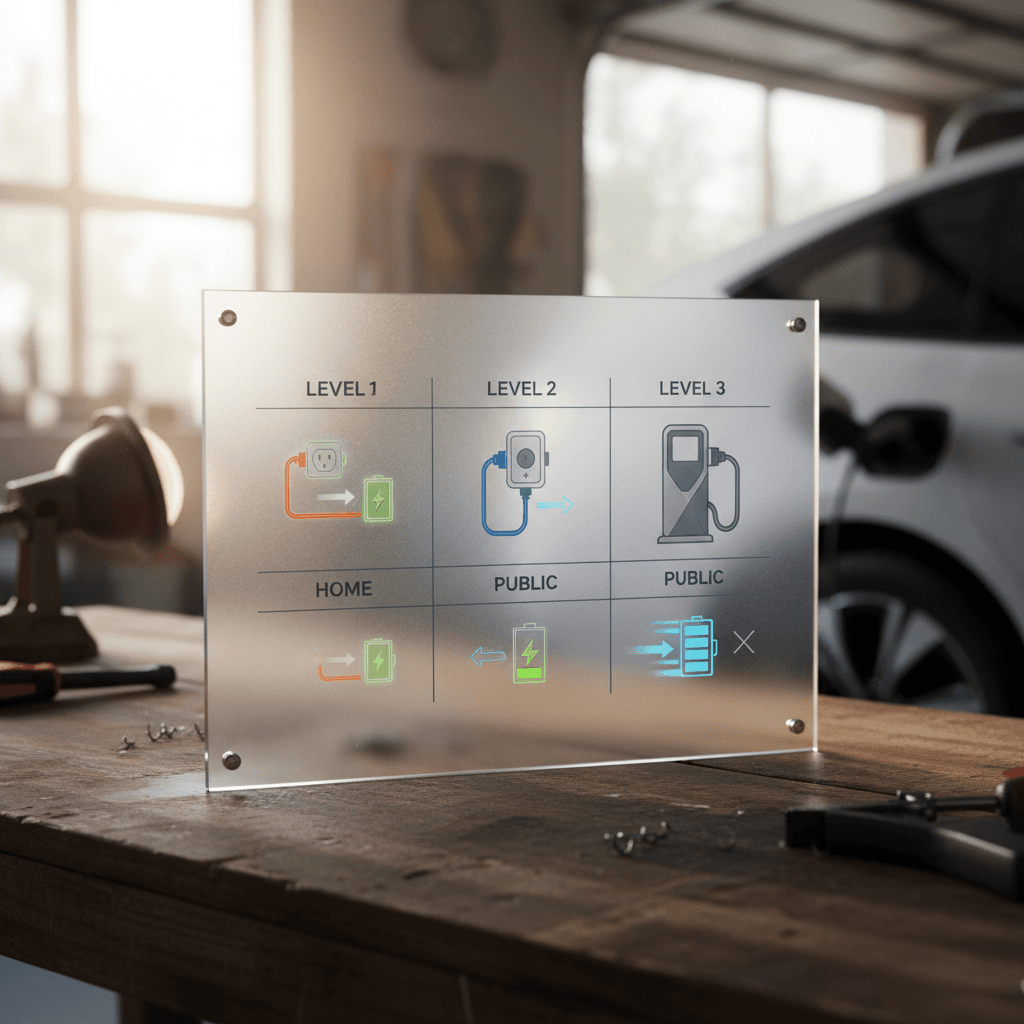
In North America, EV charging is grouped into three main levels defined by voltage and power. Level 1 and Level 2 use AC (alternating current), similar to the power that runs your home. Level 3 uses DC (direct current) and much higher power, usually at dedicated public fast‑charging stations. The higher the power in kilowatts (kW), the faster your car can charge, up to the limit of its onboard hardware.
Charging speed at a glance
About those numbers
Level 1 charging (120V): slow, but sometimes enough
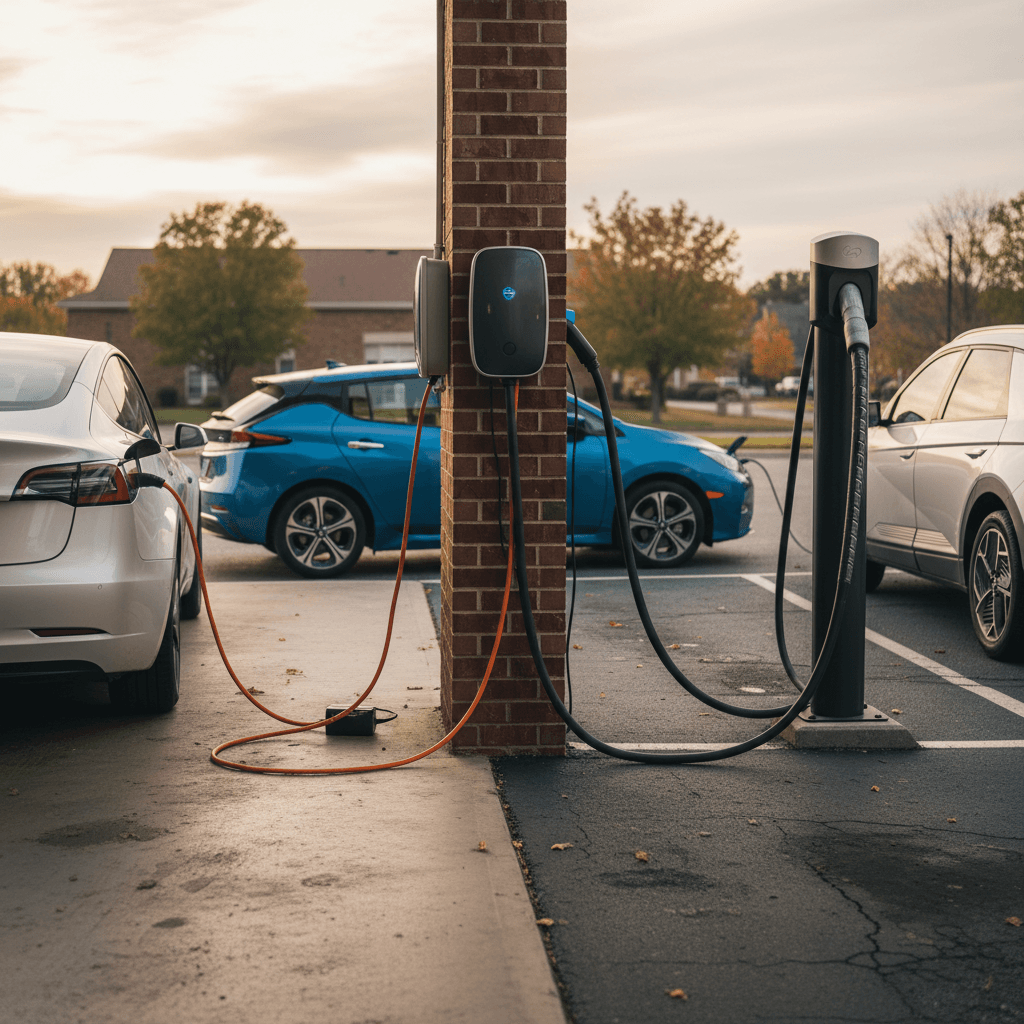
Level 1 charging uses a standard 120‑volt household outlet, the same type you’d plug a lamp or laptop into. Most EVs include a portable Level 1 cordset with the car. You plug one end into the wall, the other into the vehicle’s J1772 or NACS port, and that’s it.
Level 1 charging basics
What you can expect from a regular wall outlet
Typical power
1.2–1.4 kW from a 15–20A, 120V circuit.
Speed
About 3–5 miles of range per hour of charging for many EVs.
Best use cases
Overnight charging for low‑mileage drivers, plug‑in hybrids, and short‑term while you wait for Level 2 installation.
When Level 1 can work
- Pros: No installation if you have a nearby outlet, lowest upfront cost, good for PHEVs and low‑mileage drivers.
- Cons: Very slow for modern battery‑electric vehicles, can struggle in cold climates, ties up a 120V outlet long‑term.
- Watchouts: The outlet and circuit should be in good condition and ideally on a dedicated circuit; long extension cords are not recommended.
Level 2 charging (240V): the home and workhorse option
Level 2 charging uses 240 volts, the same type of power an electric dryer or oven uses in the U.S. It can be delivered by a hard‑wired wallbox or a plug‑in unit connected to a 240V receptacle. Power typically ranges from about 3.8 kW up to 19.2 kW on high‑amp circuits, but most home setups fall in the 7–11 kW range.
What Level 2 feels like in real life
For most drivers, Level 2 turns your home into your primary “fuel station.” A typical 32–48 amp charger on a 240V circuit adds roughly 15–35 miles of range per hour for many EVs. That means arriving home with 40–60 miles left and waking up to a full battery, even if you only started charging late in the evening.
Where you’ll find Level 2
- Homes: Garages, driveways, carports with a dedicated 240V circuit.
- Workplaces: Office parking lots encouraging employees to drive electric.
- Destinations: Hotels, shopping centers, public garages where you park for hours.
These chargers use J1772 or NACS connectors in North America; many used EVs on the market today rely on J1772 for AC charging.
Common Level 2 home charging options
How different amperage settings affect power and real‑world speed
| Circuit / Charger Setting | Max Power (kW) | Approx. Miles per Hour* | Typical Use |
|---|---|---|---|
| 20A / 16A charging | 3.8 kW | ~10–15 mi/hr | Apartments, older panels, low‑mileage drivers |
| 30A / 24A charging | 5.8 kW | ~15–25 mi/hr | Most commuters, modest electrical capacity |
| 40A / 32A charging | 7.7 kW | ~20–30 mi/hr | Common sweet spot for home Level 2 |
| 60A / 48A charging | 11.5 kW | ~30–40 mi/hr | Faster overnight top‑ups, larger batteries |
Your EV’s onboard charger may cap the maximum AC charging rate, even if the wallbox can provide more power.
Why Level 2 is the default choice
Level 3 charging (DC fast): for road trips and quick top‑ups
Level 3 charging, often called DC fast charging or DCFC, skips the onboard AC charger and sends high‑power DC directly to the battery. Typical station ratings today range from about 50 kW on the low end to 350 kW at newer highway sites, though your car may not be able to use the maximum.
What to know about Level 3 DC fast charging
Great for long trips, overkill for daily use
Where you’ll see it
Along highways, in high‑traffic urban corridors, and at some big retail centers.
Speed potential
During the fastest part of a session, many EVs can add 150–300 miles of range per hour of charging, sometimes more.
Cost profile
Usually the most expensive way to charge per kWh, but you’re paying for time saved and convenient locations.
Tapering is normal
- Pros: Extremely fast, critical for long‑distance travel, helps when you can’t install home charging.
- Cons: Higher cost per kWh, more variability in reliability and speed, can be busier at peak times.
- Best used for: Road trips, emergency top‑ups, apartment dwellers who rely on public infrastructure.
Side‑by‑side comparison: Level 1 vs Level 2 vs Level 3
Level 1 vs Level 2 vs Level 3 at a glance
How the three EV charging levels compare on speed, cost, and typical use cases.
| Charging Level | Voltage / Power | Miles of Range per Hour* | Typical Locations | Best For |
|---|---|---|---|---|
| Level 1 | 120V / ~1.2–1.4 kW | ~3–5 mi/hr | Standard home outlets | Low daily mileage, PHEVs, temporary solution |
| Level 2 | 240V / ~3.8–11.5 kW (higher possible) | ~12–40 mi/hr (sometimes more) | Homes, workplaces, destinations | Daily charging for most EV drivers |
| Level 3 (DC fast) | High‑voltage DC / ~50–350 kW | Roughly 150–300+ mi/hr during peak | Highway sites, major retail hubs | Road trips, quick top‑ups, public‑only charging |
Real‑world results vary by vehicle, weather, battery size, and how full your pack is when you plug in.
How charging levels impact battery health
Battery health is a big question for many used‑EV shoppers, and charging behavior is part of the story. The good news: modern EVs have robust battery management systems that protect the pack, but how often and how hard you fast‑charge still matters over many years.
- Level 1 and Level 2: Generally considered “gentle” on the battery. Charging overnight at moderate power and avoiding frequent 100% charges is a battery‑friendly routine.
- Level 3 DC fast charging: Occasional use, like a few times a month for road trips, has a modest impact for most drivers. Heavy reliance on DC fast charging multiple times per week, especially up to 100%, can increase long‑term degradation.
- High states of charge and heat: Keeping the battery at 100% for long periods or fast‑charging repeatedly on very hot days is tougher on the pack than cycling between roughly 20–80%.
Battery‑friendly habits
Which charging level do you actually need?
The right answer depends on where you live, how far you drive, and whether you can install equipment. Instead of thinking in abstract kW, start with your daily miles and how many hours you’re typically parked at home or work.
Charging strategies by driver type
Urban / suburban commuter (20–50 miles per day)
Level 2 at home is ideal; a 20–30 amp setup usually covers everything overnight.
If home charging isn’t possible, look for workplace Level 2 plus occasional public top‑ups.
Level 3 is mostly for road trips, not daily use.
Low‑mileage driver (under 20 miles per day)
Consider starting with Level 1 if you have overnight parking near an outlet.
Upgrade to Level 2 if winters are harsh or your schedule is irregular.
Use public Level 2 or Level 3 only as backup.
Long‑distance commuter or frequent road‑tripper
A higher‑amp Level 2 (32–48A) at home keeps recovery times short between days.
Plan routes around reliable Level 3 corridors for longer trips.
Avoid relying on DC fast charging every single workday if you can help it.
Apartment / condo resident
Check for existing Level 2 in your building or nearby public garages.
If outlets are limited, prioritize EVs that charge quickly on Level 2 and have good range buffers.
Expect to use Level 3 more often; factor that into your time and budget.
Where Recharged fits in
Costs and installation: what to expect
The hardware and installation side often decides whether you live with Level 1 for a while or jump straight into Level 2. While prices vary by region and home, the basic cost patterns are similar across the U.S.
Key cost considerations for each charging level
1. Level 1 equipment
Most EVs include a Level 1 cordset in the purchase price. Your main cost is making sure you have a safe, conveniently located 120V outlet and, if needed, a simple electrician visit to add a dedicated circuit.
2. Level 2 hardware
Wallboxes and portable 240V chargers typically run a few hundred dollars, with higher‑amp, feature‑rich models costing more. Look for UL‑listed units from reputable brands and check your EV’s maximum AC charge rate before overspending on amps you can’t use.
3. Electrical work
Installation ranges from relatively inexpensive (adding a short 240V run in a modern panel) to more costly if your service is maxed out and needs an upgrade. Get quotes from licensed electricians and ask about future‑proofing if you plan to add another EV later.
4. Operating costs
Per‑kWh energy cost is usually lowest at home (especially with off‑peak rates), higher on public Level 2, and highest on Level 3 DC fast charging. Even so, in most areas charging an EV at home is still significantly cheaper than buying gasoline on a per‑mile basis.
Safety first with higher power
Charging strategies for used EV owners
If you’re shopping the used EV market, you’re not just choosing a car, you’re choosing a charging lifestyle. Battery size, remaining capacity, and charging hardware all interact with your daily routine.
Match the car to the charging you have
- If you’ll be on Level 1 for a while, consider a used EV with a smaller, efficient battery and realistic daily range that fits your commute.
- If you’re installing Level 2 at home, you have more flexibility to choose larger‑battery SUVs or crossovers without worrying about overnight recovery.
- Check whether the car supports strong DC fast‑charging speeds if you expect to rely on Level 3 for road trips or public‑only charging.
Use reports and data, not guesses
A used EV’s real‑world range and charging speed depend on battery health as much as brochure specs. With a Recharged vehicle, the Recharged Score battery report gives you a verified snapshot of pack health, so you can judge whether your planned Level 1, Level 2, or Level 3 mix will still feel comfortable years down the road.
Plan before you plug in
FAQ: Level 1 vs Level 2 vs Level 3 charging
Frequently asked questions about EV charging levels
Bottom line: how to choose your charging setup
EV charging levels sound technical, but the decision comes down to your habits. Level 1 is the minimum viable option if you drive lightly and can plug in for long stretches. Level 2 is the practical standard for most EV owners, turning your home into an overnight fueling station. Level 3 DC fast charging is the long‑distance enabler, essential for road trips and for drivers who must rely on public infrastructure, but not something you need to use every day.
If you’re considering a used EV, start with your real driving patterns and the power you have access to, then look for a vehicle whose battery size, charging speed, and condition match that reality. Recharged was built to make that easier: verified battery health, transparent pricing, and EV‑savvy support from your first question to delivery. With the right mix of Level 1, Level 2, and Level 3 in your toolbox, living with an electric car becomes straightforward, and often more convenient than gas.