If you’re shopping for an EV, or already own one, you’ve probably heard about Level 1, Level 2, and DC fast charging. They’re not three different plugs so much as three different speeds and use cases. Understanding how they compare on cost, convenience, and impact on battery health will help you choose the right setup and avoid paying for more charging than you really need.
Quick takeaway
Level 1 vs Level 2 vs DC Fast Charging at a Glance
Typical Charging Speeds by Level
These ranges are ballparks, based on recent charging guides and real-world testing. Your exact results will depend on your EV’s onboard charger, battery size, temperature, and how crowded a station is. But the relative gap between Level 1, Level 2, and DC fast charging is consistent across almost every model.
Core Specs: Level 1 vs Level 2 vs DC Fast
Voltages, power, and real-world speed ranges for the three main charging levels.
| Feature | Level 1 | Level 2 | DC Fast |
|---|---|---|---|
| Voltage | 120V AC | 240V AC (or 208V commercial) | 400–800V DC |
| Typical power | 1.4–1.9 kW | 3.8–19.2 kW | 50–350+ kW |
| Range added | 3–5 mi/hr | 10–60 mi/hr | 100–300+ mi/hr |
| Best use case | Backup / very light use | Daily charging at home or work | Road trips & fast top-ups |
| Location | Any standard outlet | Home, workplace, public | Highway corridors, major hubs |
Think of Level 1 and Level 2 as your daily fuel and DC fast as the highway gas station.
What Is Level 1 Charging?
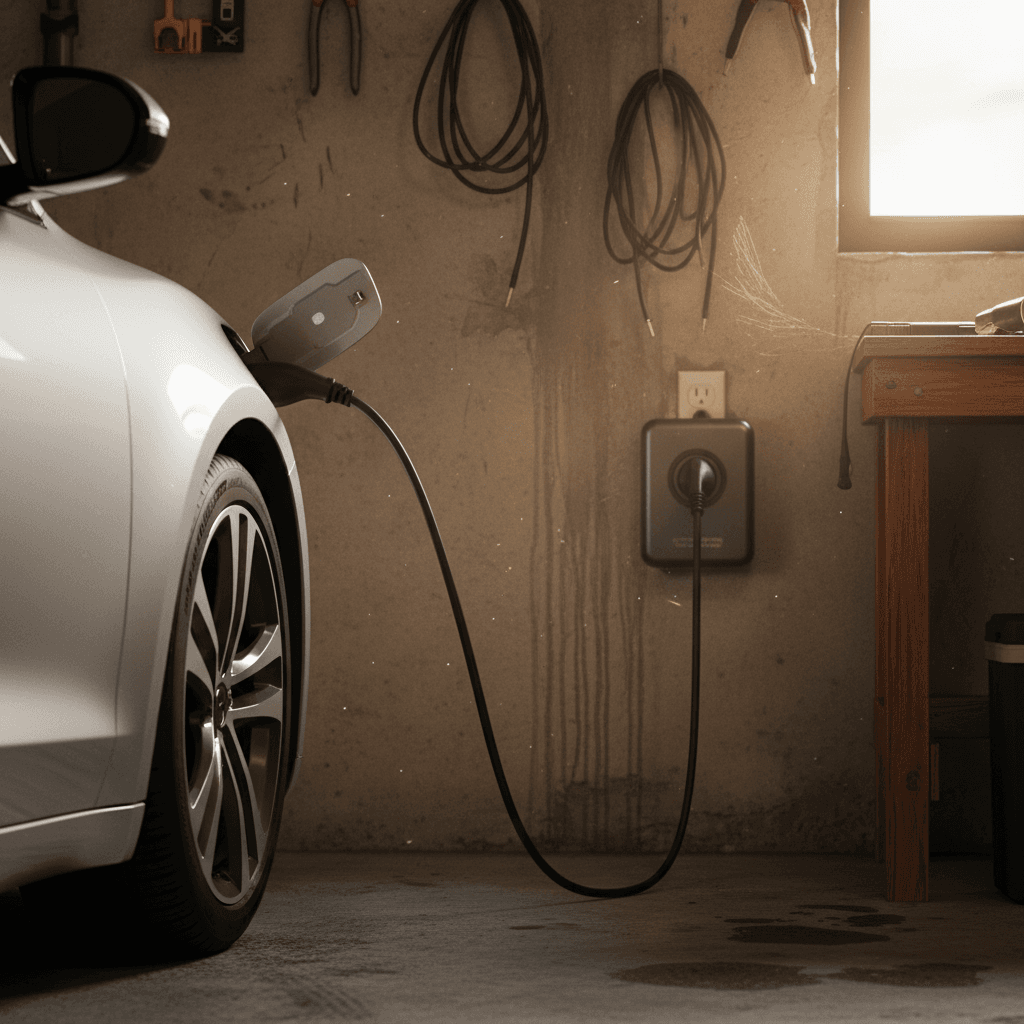
Level 1 charging uses a standard 120‑volt household outlet, the same one you’d use for a lamp or laptop. Most EVs include a portable Level 1 cordset in the trunk from the factory, and many used EVs on Recharged still come with one.
- Power: roughly 1.4–1.9 kW
- Speed: ~3–5 miles of range per hour of charging
- Connection: 120V outlet plus a J1772 or NACS connector at the car, depending on your EV
- Hardware cost: usually included with the car; no electrician required if the outlet is in good shape
Where Level 1 actually works well
Level 1 advantages
- Lowest upfront cost – no new hardware or permits in most homes.
- Simple and flexible – plug into any properly grounded 120V outlet.
- Gentle on the battery – low power means very little heat and stress.
Level 1 tradeoffs
- Slow – a nearly empty battery can take 30–40+ hours to refill.
- Not ideal for heavy driving – if you routinely use 60–80 miles per day, Level 1 alone will struggle.
- Requires a good circuit – old or overloaded outlets can trip breakers or overheat; have an electrician inspect if you’ll use it daily.
120V safety reminder
What Is Level 2 Charging?
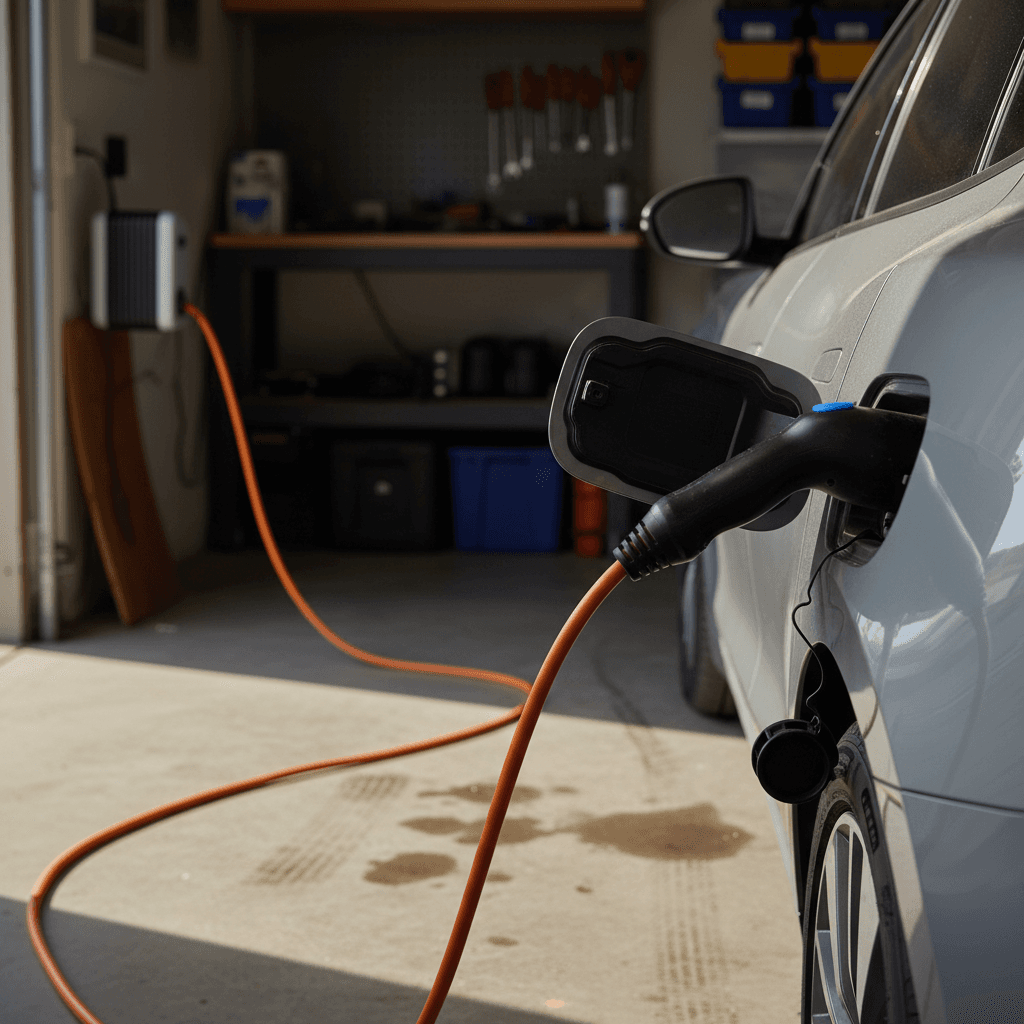
Level 2 charging uses 240 volts, the same kind of power as an electric dryer or oven. This is the workhorse of EV ownership: fast enough to refill a typical battery overnight, yet affordable enough to install at home.
Level 2 Charging Essentials
Why it’s the default choice for most EV owners
Home-friendly power
Most home units provide 7.2–11.5 kW (30–48 amps), enough to add ~25–40 miles of range per hour for many EVs.
Overnight full charges
From a typical daily state of charge, you can easily get back to 80–100% while you sleep, even on larger-battery SUVs.
Requires installation
You’ll usually need a 240V outlet or a hardwired charger, plus a permit and an electrician, especially in older homes.
Recent data from charging providers and industry guides shows Level 2 typically adds 25–30 miles of range per hour on a common 7.7 kW home unit, and up to 40–60 miles per hour on higher-power 11–19 kW hardware, assuming your vehicle’s onboard charger can accept that much power.
Why Level 2 dominates home charging
What Is DC Fast Charging?
DC fast charging (sometimes called Level 3) skips the car’s onboard AC charger and feeds high‑voltage DC directly into the battery. Power levels range from about 50 kW on older stations to 350 kW or more on the newest highway sites.
- Voltage: typically 400–800V DC (and higher on some new platforms)
- Typical power: 50–350+ kW depending on station, car, and state of charge
- Speed: often 100–300+ miles of range per hour; many newer EVs can add 150–200 miles in 20–30 minutes under ideal conditions
- Location: highway corridors, high-traffic sites, large retail centers, fleet depots
Best way to think about DC fast
When DC fast shines
- Road trips – cover 400–800 miles a day by hopping from fast charger to fast charger.
- Apartment dwellers – if you lack consistent home charging, well-placed DC sites can make EV ownership workable.
- Fleet and rideshare – commercial vehicles with high daily mileage rely heavily on DC fast.
Why it’s not for every day
- Higher cost per kWh than home charging, often 2–3x more.
- Battery stress if heavily used at high states of charge or in extreme heat.
- Time and variability – queues, reduced power when stations are busy, and slower speeds in cold weather.
Side-by-Side: Level 1 vs Level 2 vs DC Fast
Which Charging Level Fits Which Scenario?
Match driving patterns and living situations to the right charging level.
| Scenario | Level 1 | Level 2 | DC Fast |
|---|---|---|---|
| Daily commute under 30 miles | Works if you can plug in nightly | Ideal; fast top‑ups | Not needed |
| Daily commute 30–80 miles | Too slow on its own | Recommended | Rarely, for heavy days |
| Apartment, no dedicated parking | Unreliable | Helpful if your building offers it | Crucial for long trips / weekly top‑ups |
| Frequent highway road trips | Only as emergency backup | Great for destination charging at hotels | Primary tool for long-distance travel |
| Used EV with smaller battery | Can work if mileage is low | Very comfortable; quick refills | Useful for occasional long drives |
Most drivers end up using a combination: Level 2 at home plus DC fast on road trips.
Rule of thumb
Charging Costs: Home vs Public Level 2 vs DC Fast
Charging speed gets the headlines, but cost per mile is where the real difference shows up. Across many U.S. markets, residential electricity for home Level 1/Level 2 charging is roughly $0.10–$0.30 per kWh, while DC fast charging often runs $0.40–$0.65 per kWh before any parking or session fees.
Typical Cost Ranges by Charging Level
Approximate U.S. averages; your local rates may be lower or higher.
| Charging Type | Where | Typical Cost | Example: 75 kWh battery from low to full |
|---|---|---|---|
| Home Level 1 or Level 2 | Residential electricity | $0.10–$0.30/kWh | ~$8–$23 |
| Public Level 2 | Workplaces, garages, retail | Often $0.20–$0.40/kWh (sometimes free) | ~$15–$30 |
| DC fast charging | Highway & retail stations | Commonly $0.40–$0.65/kWh | ~$30–$49 |
Even if DC fast is twice as expensive per kWh, you may still use it occasionally for convenience, just don’t build your entire fueling strategy around it.
Beware all-DC-fast routines
Battery Health: Does Fast Charging Hurt Your EV?
Every lithium-ion battery slowly loses capacity with time and use. How you charge it can influence the pace of that decline, which is why many EV owners wonder whether DC fast charging is “bad” for battery health.
- High charging power creates more heat, which accelerates chemical aging if unmanaged.
- DC fast charging pushes much higher power than Level 1 or Level 2, especially from low to about 60–70% state of charge.
- Most EVs slow the charge rate dramatically above ~80% to protect the battery. That’s why road trip guides recommend charging in shorter “bursts” between about 10–20% and 60–80%.
What studies and field data suggest
Battery-Friendly Charging Habits
1. Make Level 2 your default
Use Level 2 at home or work for the bulk of your charging. It’s cheaper and easier on the battery than frequent DC fast sessions.
2. Use DC fast mainly for travel
Save high‑power charging for road trips or when you truly need a quick top‑up, and unplug once you’ve got enough to reach the next stop comfortably.
3. Avoid sitting at 100% for long
If you’re using fast charging, try to reach 80–90%, then drive. For daily driving, many EVs let you set a lower charge limit in the app.
4. Watch temperature extremes
In very hot or very cold weather, the car may limit charging speed to protect the pack. That’s normal; don’t fight it by hopping between chargers.
Which Charging Level Do You Actually Need?
Choosing between Level 1, Level 2, and DC fast charging isn’t about picking a winner, it’s about matching your daily miles, parking situation, and budget. Here’s how to think it through.
Charging Recommendations by Driver Type
Use these as starting points, then adjust to your reality
Short-trip commuter
Profile: 10–25 miles/day, single‑family home.
- Level 1 can work if you can plug in nightly.
- Level 2 adds comfort and future-proofs for a larger EV.
- DC fast is only for the occasional long weekend trip.
Apartment driver
Profile: 20–60 miles/day, shared parking.
- Look for Level 2 in your building or nearby garages.
- Expect to blend Level 2 with some DC fast for convenience.
- Level 1 is useful only if you have a dedicated outlet.
Road-trip regular
Profile: Frequent highway trips, 200+ miles at a time.
- Level 2 at home keeps you topped up before you leave.
- DC fast is your main tool on the road, plan stops around food and rest breaks.
- Choose an EV with strong DC fast capabilities if this is you.
Think in miles added per hour
Smart Charging Strategies for Used EV Buyers
If you’re buying a used EV, you’re not starting from zero. The previous owner’s charging habits and the car’s existing battery health matter, and so does how you plan to charge it going forward.
Questions to ask about charging history
- Did the owner mostly charge on Level 2 at home or rely heavily on DC fast?
- How often did they fast-charge to 100% for long trips?
- Does the car show any noticeable range loss compared with the original EPA estimate?
At Recharged, every vehicle includes a Recharged Score Report with verified battery health, so you’re not guessing.
Right-size your future setup
- If you’re coming from a gas car, start with the assumption that you’ll want Level 2 at home if you have a driveway or garage.
- In apartments, map out nearby Level 2 and DC fast options before you buy.
- Budget for charging just like you would for fuel, especially if you’ll lean on public DC fast stations.
How Recharged helps
Ready to find your next EV?
Browse VehiclesFAQ: Level 1 vs Level 2 vs DC Fast Charging
Frequently Asked Questions
Bottom Line: Build the Right Mix, Not the “Fastest”
Level 1, Level 2, and DC fast charging each play a different role. Level 1 is the universal backup and a workable solution for light driving. Level 2 is the daily workhorse that keeps costs and battery stress low while covering most people’s miles overnight. DC fast is the highway pit stop that makes long‑distance EV travel practical, but it’s too costly and hard on infrastructure to be your everyday fuel.
As you shop for a new or used EV, focus on how you’ll actually charge most of the time. If you have access to home or workplace Level 2, you’ll likely find EV ownership simpler and cheaper than you expect. If you’re still figuring out your charging plan, the team at Recharged can help you understand what each model needs, how healthy its battery is, and what mix of Level 1, Level 2, and DC fast makes sense for your life.