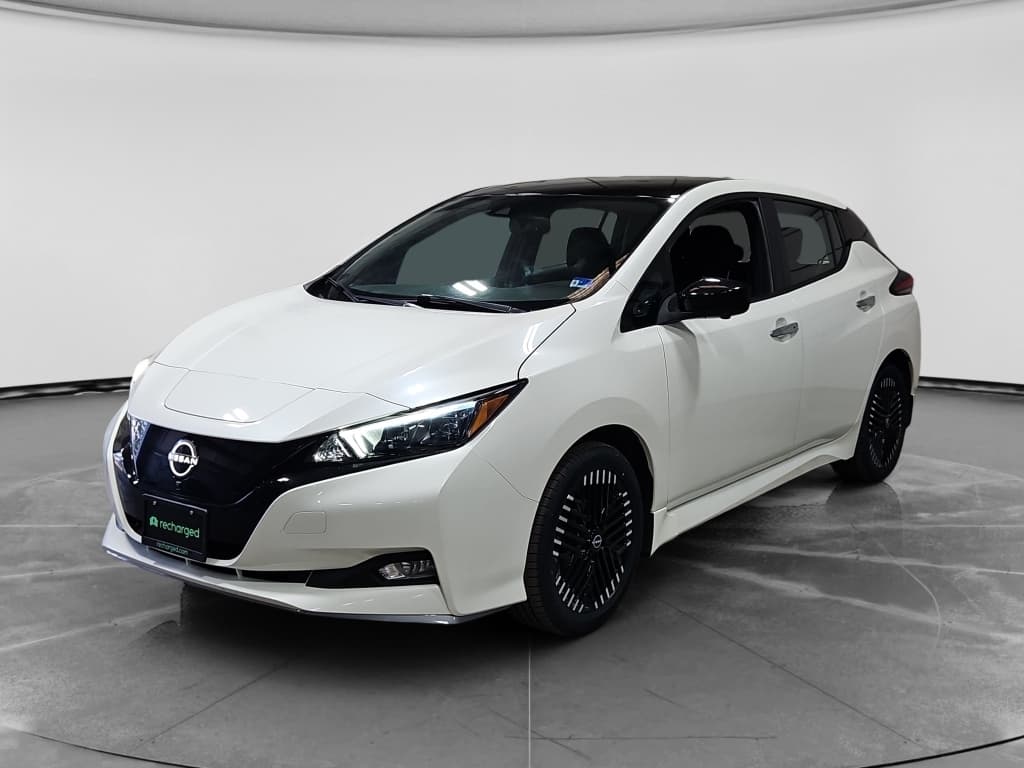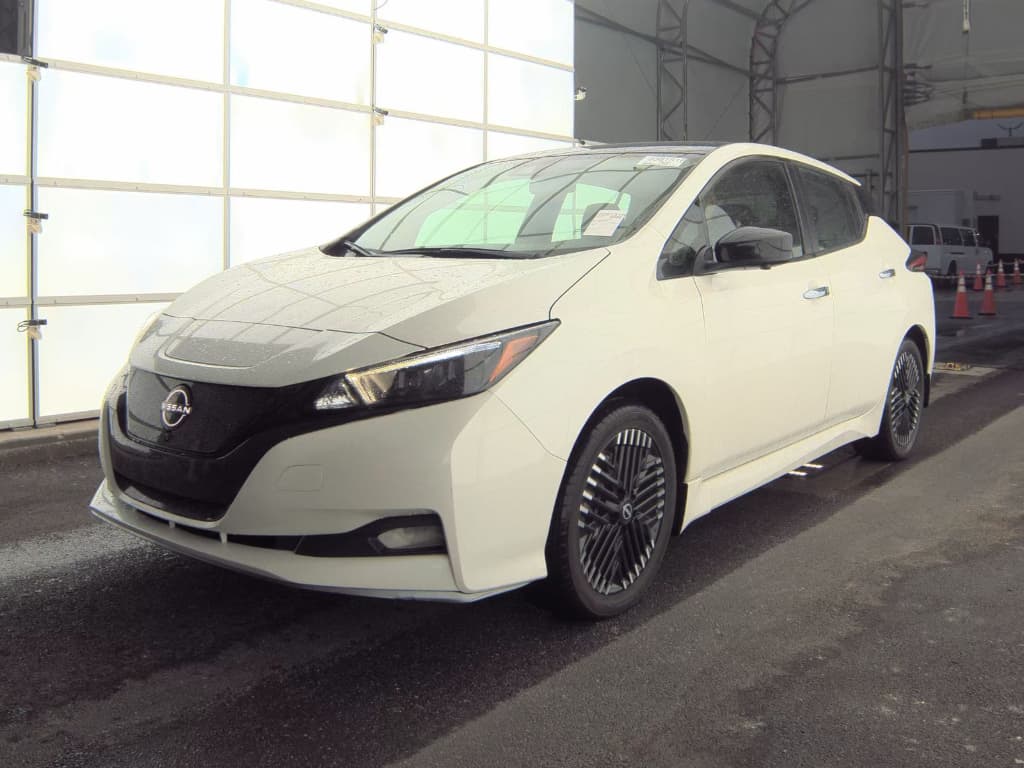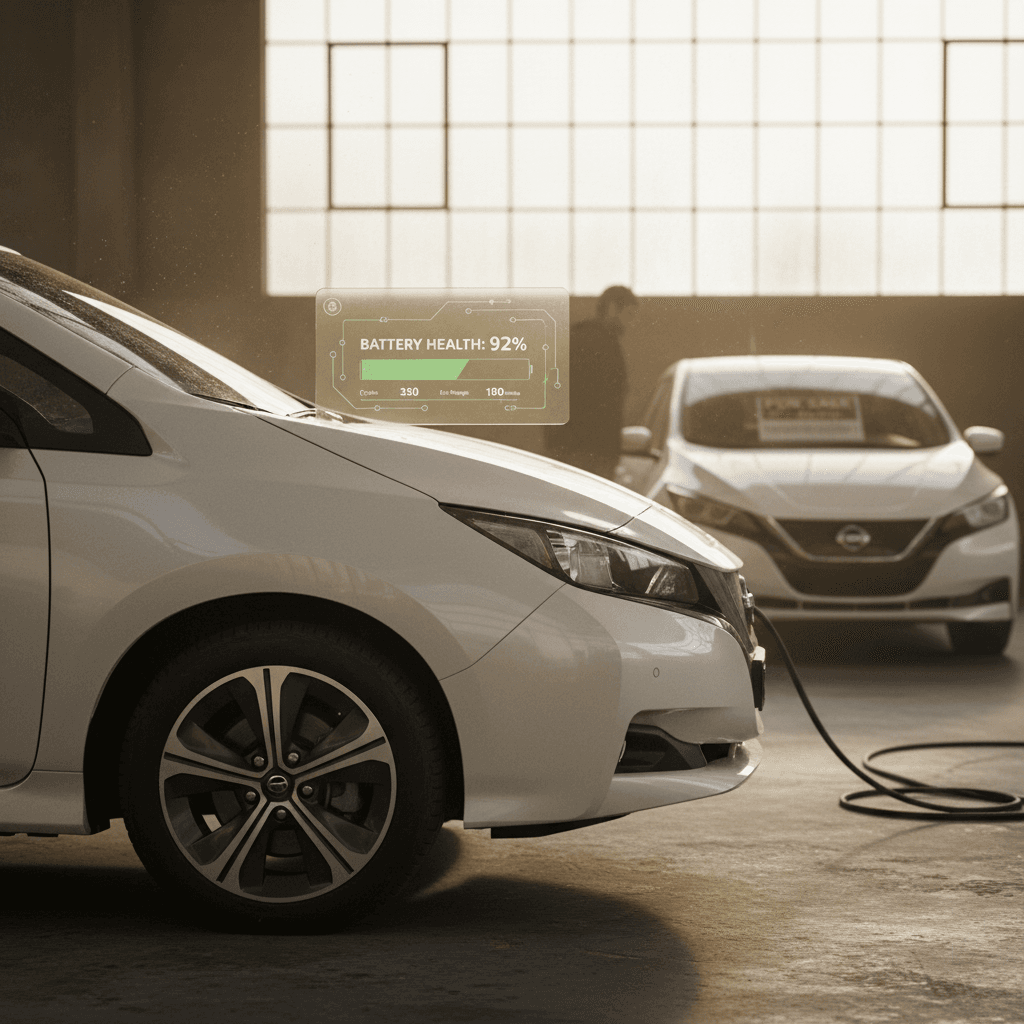
Search for a “leaf car” today and you’re almost certainly looking at the Nissan Leaf, the OG mass‑market EV. In 2025 it’s no longer the shiny new thing, but on the used market it’s become something more interesting: the cheapest on‑ramp into real electric ownership. The trick is knowing exactly which Leaf you’re buying and how much battery you’re really getting.
Quick take
Why the Nissan Leaf car still matters in 2025
The Nissan Leaf isn’t the newest or fastest EV, but it quietly shaped the used EV market. It’s one of the most common electric hatchbacks on the road and consistently ranks among the most popular used EVs in the U.S. Buyers gravitate to the Leaf for three simple reasons: price, simplicity, and the fact that it looks and drives like a normal compact car rather than a science project.
Leaf car by the numbers
That last stat is the Leaf’s whole pitch in one line: you’re getting a full BEV for roughly the cost of a used Civic with a dented fender. But there are tradeoffs baked into that bargain, especially range and fast‑charging, that you need to understand before you wire any money.
Leaf car generations, batteries and real-world range
When people say “a Leaf car,” they might mean anything from a 2013 city runabout with half its original juice to a late‑model 60 kWh SV Plus that can legitimately replace a gas car for many families. The hardware changed significantly over time, so step one is decoding which Leaf you’re actually shopping.
Key Leaf car versions at a glance
The most common Leaf generations you’ll see on the used market and what they’re like to live with.
| Model years | Generation / notes | Battery sizes | EPA range when new | Typical best use |
|---|---|---|---|---|
| 2011–2015 | First-gen, smaller battery, no active cooling | 24 kWh | 73–84 mi | Short urban commutes, second car |
| 2016–2017 | Facelift, improved chemistry | 30 kWh (some 24 kWh) | ~107 mi | Suburban commuting, light highway use |
| 2018–2024 | Second-gen body, more power | 40 kWh | ~149 mi | Daily commuter up to ~50–60 miles/day |
| 2019–2024 | Leaf Plus (larger pack) | 62 kWh | ~215–226 mi | Longer commutes, limited road trips |
| 2025 (current) | Carry-over spec in U.S. | 40 / 60 kWh | 149 / 212 mi | Same as above, but newer warranty |
| 2026+ (announced) | All-new Leaf crossover | 52 / 75 kWh (est.) | Up to ~300 mi | Main-car duty, serious road-trip capability |
Always verify battery size and State of Health (SoH) on any specific car, this table is only a starting point.
Range rule of thumb
How a Leaf car really feels on the road
Around town, the Leaf is exactly the kind of car that converts skeptics to EVs. It’s quiet, quick enough from 0–40 mph, and the low center of gravity makes it feel planted in a way economy hatchbacks rarely do. Steering is light but accurate. You’re not buying a Leaf for back‑road thrills; you’re buying it because traffic feels less like punishment and more like a video game you might actually win.
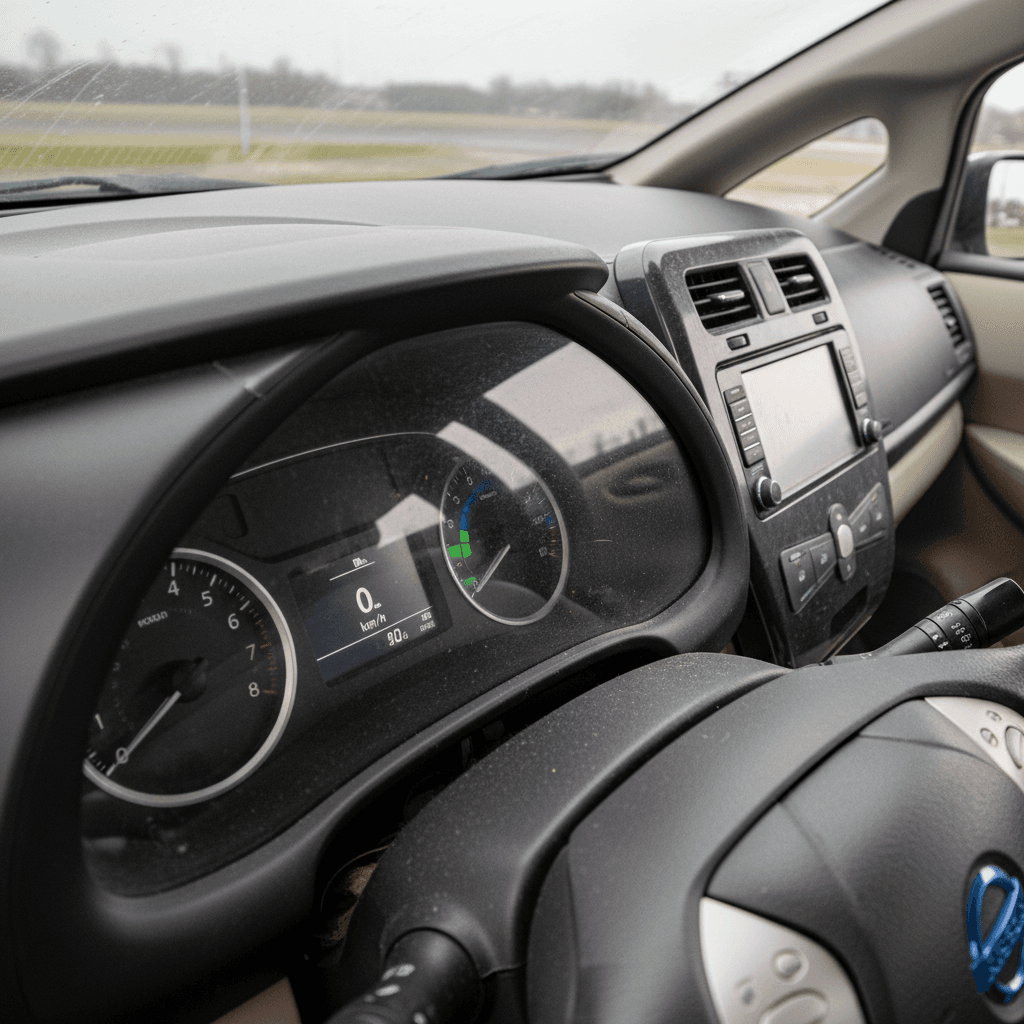
On the highway, the truth catches up with the Leaf. Earlier models in particular can feel out of their depth on long, fast stints: more wind noise, shorter range, and a fast‑charging standard (CHAdeMO) that was never designed for cannonball runs between states. If your daily life is 85% city and suburban miles, you’ll forgive it. If you live in the left lane, you won’t.
Charging a Leaf car: home, CHAdeMO and the future
Charging is where the Leaf car story splits in two. At home, it’s a delightfully boring appliance: you plug it in, it charges, you leave in the morning with a full “tank.” Out in the wild, however, the Leaf is the last kid at the party still using CHAdeMO fast charging while the industry has moved to CCS and NACS.
Home charging: the Leaf at its best
- Level 1 (120V): Fine for very short commutes (10–20 miles/day). Think emergency backup, not daily plan.
- Level 2 (240V): The sweet spot. A 40 kWh Leaf can go from near-empty to full in roughly 7–8 hours overnight on a 32–40 amp home charger.
- Because the Leaf’s pack is relatively small, it actually benefits more from home charging than giant‑battery luxury EVs.
Public charging: the CHAdeMO wrinkle
- All fast‑charge‑equipped Leaf cars in the U.S. use CHAdeMO, a standard now being phased out in favor of CCS and Tesla’s NACS.
- Networks are still adding and maintaining CHAdeMO stations, but at a slower pace than CCS or NACS.
- Most new high‑power sites prioritize CCS/NACS; CHAdeMO often tops out around 50 kW.
Translation: public fast charging in a Leaf is fine for occasional use, but it’s a poor foundation for a road‑trip lifestyle.
About adapters and Tesla Superchargers
Battery health: the make-or-break factor on a used Leaf
Here’s the part most glossy listings gloss over: a Leaf’s battery chemistry and thermal management are its biggest weakness, especially in hot climates. Early cars used air‑cooled packs that were cheap and simple but prone to faster degradation than the liquid‑cooled batteries in many newer EVs.
- Each Leaf car has 12 little battery bars on the right side of the gauge cluster that represent State of Health (not just charge level).
- Losing one or two bars is normal with age; when you’re down to 8–9 bars, usable range can be dramatically lower than the original EPA number.
- Heat is the enemy: Phoenix, Las Vegas, Texas and similar markets are notorious for tired Leaf packs.
- Lots of DC fast‑charging sessions can accelerate degradation, especially on older 24–30 kWh batteries.
Why Recharged cares so much about Leaf battery data
Reading Leaf battery bars vs real data
Those 12 little capacity bars are better than nothing, but they’re about as precise as estimating your own age from a blurry Polaroid. Two 10‑bar Leafs can have materially different remaining capacity. A proper scan, exact State of Health, cell balance, temperature history, turns a mystery box into a known quantity. That’s why serious Leaf buyers either bring a scanner or buy from a seller who has already done the homework.
Leaf car pricing, value and total cost of ownership
The reason the phrase “leaf car” trends in search isn’t styling or performance, it’s price. In late 2025, the Leaf is one of the cheapest ways to get into an EV, especially if you’re willing to consider an older, shorter‑range example.
What Leaf cars typically cost right now
Approximate U.S. pricing for common used Leaf model years in average condition. Local markets will vary.
| Model year | Typical used price | What you usually get | Good fit for… |
|---|---|---|---|
| 2013–2015 | $5,000–$8,000 | 24 kWh pack, heavy degradation likely in hot-climate cars | Ultra-short commutes, second car, tinkerers |
| 2016–2017 | $7,000–$10,000 | 30 kWh pack if optioned, modest range boost | Budget suburban commuters who mostly stay local |
| 2018–2020 | $10,000–$14,000 | Newer body, 40 kWh pack | Daily use under ~60 miles/day, first EV experiment |
| 2019–2022 Leaf Plus | $13,000–$18,000 | 62 kWh pack, ~200+ miles when new | Primary car for many households, light road-trip use |
| 2023–2024 | $16,000–$19,000+ | Late-build cars, more warranty left | Buyers who want newer tech and longer coverage |
These are ballpark numbers. Battery health, mileage, and regional demand can swing values thousands of dollars either way.
Where the Leaf quietly wins
Checklist: what to check before buying a Leaf car
With a Leaf, you’re not just buying a car; you’re buying whatever is left of a lithium-ion battery that may have had a hard life. Use this pre‑purchase checklist to avoid regret six months down the road.
10 essential checks for any Leaf car
1. Confirm battery size and trim
Is it a 24, 30, 40 or 62 kWh Leaf car? Don’t assume based on model year, look at the window sticker, VIN details, or build sheet.
2. Inspect capacity bars the right way
Turn the car fully on, make sure it’s near 100% state of charge, then photograph the capacity bars. Fewer than 10 bars should trigger deeper questions or a lower price.
3. Get a real battery health report
Use a scan tool or buy from a seller that provides third‑party diagnostics like the <strong>Recharged Score</strong>, which reports estimated remaining capacity and cell balance.
4. Study the charging history
Ask how often the Leaf has been DC fast‑charged and whether it lived in very hot climates. A mostly‑garaged, mostly‑Level‑2 car is ideal.
5. Test a full‑throttle highway pull
On-ramp, foot down from 30–70 mph. You’re not drag‑racing, you’re checking that the car accelerates smoothly with no warning lights or power loss.
6. Listen for suspension and steering noises
Clunks over bumps or vague steering can indicate worn bushings or struts. These are fixable but should factor into price.
7. Confirm CHAdeMO port and cable condition
Open the charge door and inspect both the J1772 (AC) and CHAdeMO (DC) ports. Look for corrosion, broken latches, or missing dust caps.
8. Check tires and brakes for city wear
Many Leaf cars live their lives in stop‑and‑go traffic. Brakes can last a long time in EVs, but tires can get chewed up by instant torque and curbs.
9. Verify software updates and recalls
Ask for dealer service records or run the VIN to confirm any recall work (especially battery‑related campaigns) has been completed.
10. Make sure it fits your daily map
Before you buy, map your real commute and weekend drives against the car’s realistic range with a degradation buffer. If it’s tight on paper, it’ll be miserable in life.
How Recharged simplifies the checklist
Recalls, safety and reliability notes
Mechanically, the Leaf has been a pretty dependable little appliance. No turbos, no multispeed transmission, no exhaust system; just an inverter, a single‑speed reduction gear, and the battery pack that everything else revolves around. The key reliability watchpoints today revolve around high‑voltage components and a few recent recall campaigns.
- Earlier Leafs have had isolated on‑board charger and inverter failures, which can be costly out of warranty but are not epidemic.
- Battery degradation is a wear‑item issue rather than a failure mode, annoying, but predictable if you check State of Health.
- Recent model years have seen battery‑related recalls around Level 3 fast‑charging safety; owners were advised to avoid DC fast charging until software updates are applied.
- Nissan’s passive battery cooling means the car is less complex but more vulnerable to extreme heat than some competitors.
Don’t ignore open recalls
Who a Leaf car is perfect for (and who should skip it)
Is a Leaf car right for you?
Match the car to your life, not your aspirations.
Great fit
- You drive under 60 miles most days and can charge at home or work.
- You want the lowest-cost path to daily EV driving, not the latest tech flex.
- You live in a moderate climate where batteries aren’t cooked every summer.
- You already own a long‑range vehicle for road trips, or you don’t road‑trip much.
Probably not for you
- You regularly drive 150+ miles in a day and rely on public fast charging.
- You live in a region where CHAdeMO support is sparse and shrinking.
- You want a single car to handle cross‑country vacations without planning.
- You’re extremely sensitive to range loss in cold winters or hot summers.
The Leaf is the EV equivalent of a great used washing machine: boring to brag about, indispensable when it just works, and shockingly cheap if you buy it smart.
Leaf car FAQ
Leaf car frequently asked questions
Bottom line: is a Leaf car a smart buy?
A Leaf car is not the EV for people who measure self‑worth in kilowatts and screen size. It’s the EV for people who quietly want to stop buying gas and don’t mind driving the sensible shoes of the electric world. If your life looks like a repeatable commute, you can charge at home, and you buy based on verified battery health rather than paint color, the Leaf can be an absurdly good deal.
Where Recharged fits into that story is simple: we strip away the guesswork. Every Leaf on our marketplace comes with a Recharged Score report, fair market pricing and EV‑specialist support from your first question to delivery. If a particular Leaf won’t comfortably cover your real‑world routes, we’ll tell you, and help you find the electric hatchback that will.