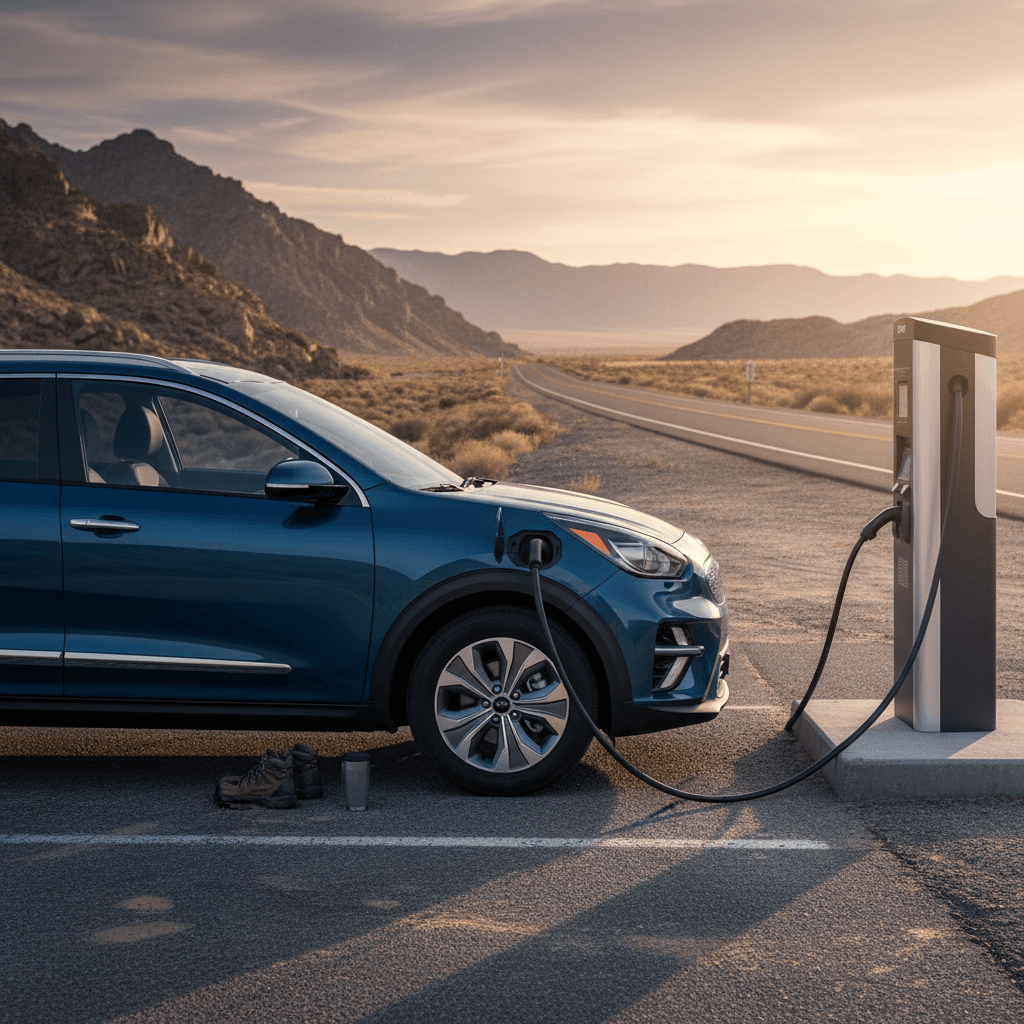
If you own a Kia Niro EV and you’re eyeing a road trip, you’re not alone. The Niro’s efficiency and compact size make it a great everyday EV, but long-distance driving raises new questions: How far can I really go at 70–75 mph? How often will I need to fast charge? And what’s the best way to treat the battery on a big trip? This guide breaks down practical, data-driven Kia Niro EV long-distance driving tips so your first (or next) EV road trip feels predictable instead of stressful.
Model years this applies to
Is the Kia Niro EV good for long-distance drives?
On paper, the Niro EV’s EPA range around 239–253 miles and a ~64.8 kWh battery pack look solid. In real-world highway driving at U.S. speeds, owners and independent testers commonly see around 190–220 miles per full charge, depending on temperature, elevation, wind, and how fast you drive. That’s plenty for well-planned legs between DC fast chargers, especially across the U.S. and Canada where major corridors are increasingly well covered.
Kia Niro EV long-trip baseline numbers
Think in legs, not full charges
Real-world Kia Niro EV highway range: what to expect
EPA ratings are useful, but they’re optimistic for highway-heavy driving. For recent Niro EVs, a typical reality check at 70–75 mph looks like this:
Approximate real-world Niro EV highway range
These are ballpark figures for a healthy-battery Niro EV cruising continuously at U.S. highway speeds.
| Conditions | Speed | Outside Temp | Estimated Real-World Range |
|---|---|---|---|
| Ideal road-trip day | 70 mph | 65–75°F (18–24°C) | ~210–230 miles |
| Typical mixed conditions | 70–75 mph | 40–85°F (4–29°C) | ~190–220 miles |
| Cold, heater on | 70–75 mph | 20–40°F (-6–4°C) | ~150–180 miles |
| Very fast driving | 80+ mph | Any | Range can drop below 170 miles |
Always leave yourself a 10–15% state-of-charge buffer beyond these numbers when planning legs.
Your individual results will vary, but for planning purposes it’s conservative to assume about 190–210 highway miles per full charge in normal weather and to build your charging plan around 120–160 mile legs. That way, unexpected headwinds, rain, or detours don’t force you into battery-anxiety territory.
Don’t plan to zero
Smart charging strategy for long-distance Niro EV trips
Long-distance EV driving is really about charging strategy. The Niro EV’s DC fast charging curve peaks around the low-80 kW range on a powerful charger when the battery is warm and between roughly 10–50% state of charge. After about 60–70%, the charge rate starts to fall off to protect the battery. You can use that behavior to your advantage.
An efficient Kia Niro EV fast-charging rhythm
1. Start the day around 80–90%
Leaving your hotel or home at 80–90% gives you a comfortable first leg without spending ages on that slow final 10–20% at a DC fast charger. If you can plug in overnight on Level 2, that’s ideal.
2. Plan legs of 120–160 miles
Use routing apps to pick chargers roughly 120–160 miles apart. This corresponds to arriving with about 15–30% in most conditions, which is both comfortable and efficient.
3. Charge from ~10–20% up to ~70–80%
This keeps you in the faster part of the Niro’s DC fast-charging curve. Going beyond 80% is fine occasionally, just know that the last 20% can effectively double your stop time.
4. Prioritize 100+ kW-capable stations
The Niro EV itself tops out around the mid‑80 kW range, but plugging into a 100–350 kW station ensures the car, not the charger, is the bottleneck in the 10–60% zone.
5. Combine charging with meals and breaks
Treat 30–40 minute charges as normal rest stops. Plan major meals around the longest charges and quicker restroom or coffee stops around short top‑ups.
6. Keep an eye on stall conditions
If a station is derating or multiple cars are sharing power, you might only see 30–40 kW. In that case, it can be smarter to unplug earlier and hop to a healthier site down the road.
Use the ‘80% rule’ on travel days
Route planning apps and tools that work well with the Niro EV
The Niro EV doesn’t have the most advanced native route planning compared with some newer EVs, but you can fully compensate with third-party tools. The trick is to use one app to design the day and another to sanity-check station status.
Useful route-planning tools for Kia Niro EV road trips
Pair at least one planning app with one community-driven charger map.
A Better Routeplanner (ABRP)
Great for pre-trip planning with the Niro EV:
- Enter your exact model and battery size
- Set a reference speed (e.g., 105% of speed limit)
- Adjust weather, headwind, and consumption assumptions
- Export or copy the route into your phone’s navigation
PlugShare
Best for charger reliability checks:
- See station ratings and recent check-ins
- Filter by connector type and network
- Look for photos of the location and amenities
- Avoid sites with multiple recent “out of order” reports
Network-specific apps
Crucial for payment and live status:
- Electrify America, EVgo, ChargePoint, etc.
- Start sessions via app if RFID readers misbehave
- See which stalls are occupied in real time
- Access occasional per‑kWh pricing and promo rates
Leverage hotel charging
Driving techniques to stretch Niro EV range on the highway
You don’t need to hypermile your Kia Niro EV to survive a long drive, but small habits add up quickly at 70+ mph. Think of efficiency as range insurance you can dial up or down as needed.
- Set a realistic cruising speed. The jump from 70 to 80 mph can easily cost you 10–20% of your range. If a leg is tight, dropping to the right lane and cruising at 65–70 mph is often all it takes to reach the next charger comfortably.
- Use smooth inputs. The Niro EV is very efficient when you maintain steady speed and avoid unnecessary bursts of acceleration. Let adaptive cruise do the boring work when traffic is light.
- Watch elevation. Climbing long grades can temporarily spike consumption. If you know a big climb is coming later in the leg, consider leaving the previous charger with a slightly bigger buffer.
- Exploit regen on descents. Long downhill stretches can return meaningful energy if you keep speed under control and use appropriate regen settings, especially after a mountain pass.
- Limit HVAC waste. In winter, use seat and steering‑wheel heaters first and keep cabin temperature moderate. In summer, pre‑cool while still plugged in and use eco climate modes on the highway.
Roof racks, bikes, and cargo boxes matter
How to use drive modes and regen settings on road trips
Kia gives you useful control over how the Niro EV responds to your right foot and how aggressively it slows when you lift off the accelerator. Understanding those tools helps make long drives calmer and more efficient.
Choosing the right drive mode
- Eco mode: Softens throttle response and trims HVAC output. It’s an easy default on road trips, especially in mild traffic, but can feel sluggish when merging or passing.
- Normal mode: A good balance for mixed driving. If Eco feels too dull on rolling highways, Normal is a fine compromise with only a small hit to efficiency.
- Sport mode: Fun and responsive, but easy to waste energy. Save it for short bursts (merges, quick passes) rather than leaving it on all day.
Dialing in regen and i‑Pedal
- Use the steering-wheel paddles to adjust regen level on the fly. Lower regen (or coast) is often more efficient at a steady highway cruise.
- Higher regen levels are helpful in traffic, on hills, or approaching exits, recapturing energy instead of heating up your friction brakes.
- Some Niro EVs offer auto regen using radar to adjust braking based on traffic. Try it in moderate traffic; it can reduce fatigue and smooth your drive.
Note: With a full or nearly full battery, regen will be limited. That’s another reason not to leave DC fast chargers at 100% unless you truly need the range.
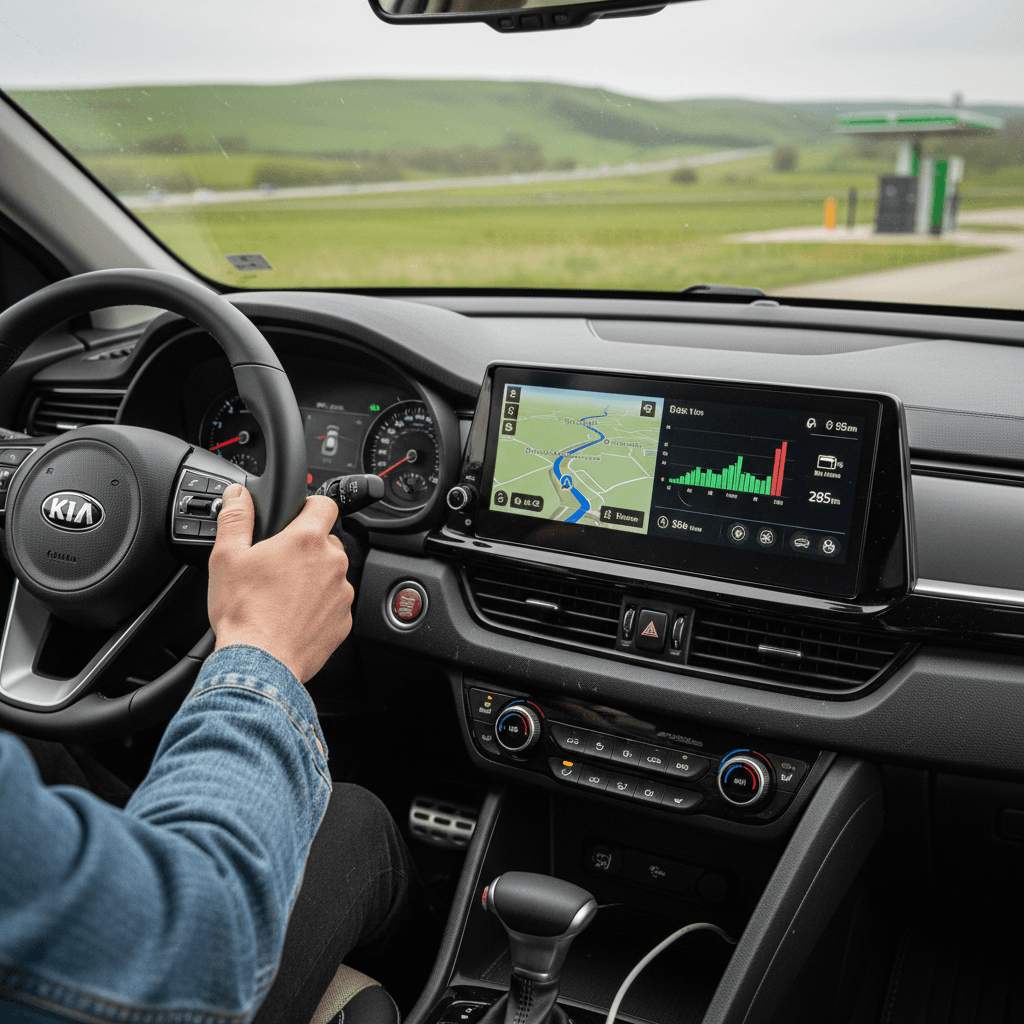
DC fast charging tips specific to the Kia Niro EV
Compared with some ultra‑fast EVs, the Niro EV’s DC charging is modest but predictable. Understanding its behavior keeps you from wasting time waiting on a stall that’s already slowed down.
- Arrive warm and low. The battery charges fastest when it’s both warm and in the roughly 10–50% range. Consecutive highway legs naturally condition the pack, no special tricks required.
- Watch the charge-power display. When you first plug in around 10–20%, you should see power ramp toward 70–80+ kW on a strong charger. If it’s stuck at 20–30 kW with a low state of charge, the station may be power‑limited or sharing heavily; consider moving stalls or switching sites.
- Don’t chase 100% on DC. In most situations, going from 80% to 100% on a fast charger can nearly double your stop time for relatively few extra miles. It’s fine to do occasionally, but don’t make it your default habit.
- Use AC (Level 2) for topping off. If you can reach your destination with 20–30% left and plug into a Level 2 charger overnight, you’ll wake up effectively “full” without ever sitting through a painfully slow DC top‑off.
- Know your connector and adapters. U.S.-spec Niro EVs use CCS1 DC connectors and J1772 for AC. As more stations convert to NACS, verify that either your route includes CCS sites or that a reliable CCS-to-NACS solution is available and supported before you lean on those locations.
Watch for derated or busy stations
Protecting your Niro EV’s battery on long drives
One upside of Kia’s battery and thermal management is that Niro EV packs have generally aged well, even in cars that see regular highway use. Still, your habits on road trips can influence long-term health, especially if you road-trip frequently.
Battery-friendly habits for frequent Niro EV travelers
Avoid living at 100%
Charging to 100% right before a long leg or a mountain pass is fine. What you want to avoid is letting the car sit for many hours at or near 100%, especially in hot weather.
Use DC fast charging thoughtfully
Occasional 10–80% DC fast charging is what the Niro EV is built for. If you take lots of trips, try to lean on Level 2 whenever it’s convenient (overnight at hotels, destination chargers, home).
Stay between ~10–85% day to day
On normal days, a 10–80% or 20–85% window is gentle on the pack. On road trips it’s OK to explore more of the battery; just don’t make 0–100% cycles your baseline routine.
Let the car manage temps
Don’t overthink battery pre‑conditioning unless your owner’s manual specifically calls out a feature. The Niro’s thermal system will protect itself; your main job is to avoid extreme abuse like repeated back‑to‑back high‑power DC sessions on a very hot day.
Do an occasional full charge/balance
Many Kia manuals suggest an occasional 100% charge to allow the battery management system to recalibrate. A good time is the night before a trip where you’ll start driving soon after it reaches full.
Used Niro EVs age surprisingly well
Ready to find your next EV?
Browse VehiclesPacking, comfort, and charging-stop strategy
Long trips are about more than electrons. The way you pack and structure your day can make a Niro EV road trip feel either like a slog or a series of manageable sprints.
Make your Kia Niro EV road trip feel effortless
Small tweaks to how you pack and schedule breaks have an outsized impact on how the day feels.
Pack with efficiency in mind
- Keep heavy items low and centered to avoid affecting handling.
- Avoid overloading the roof; use a hitch rack if you carry bikes.
- Don’t bury your charging cables; you’ll need quick access at every stop.
Align charges with natural breaks
- Plan one longer stop around meals (30–45 minutes).
- Use shorter 15–25 minute top‑ups for bathroom and stretch breaks.
- Favor stations co‑located with restrooms, coffee, and safe walking options.
Maximize in‑cabin comfort
- Use seat and wheel heaters before cranking cabin heat.
- Save your favorite driver profile and navigation view for quick setup.
- Use adaptive cruise and lane‑keeping assist to reduce fatigue when conditions allow.
Turn chargers into micro-destinations
Buying a used Kia Niro EV for road trips
If you’re shopping for a Niro EV with road trips in mind, you’re doing the right kind of due diligence. Battery health and fast-charging behavior matter more for EV touring than for short‑range commuting, and those factors vary from car to car.
Questions to ask about a used Niro EV
- How has it been charged? A mix of home Level 2 and occasional DC fast charging is ideal. Heavy DC use isn’t automatically bad, but it makes a verified battery test more important.
- What’s the current usable range? Ask for recent highway-range data or a third‑party range test if possible, not just the original EPA rating.
- Any charging quirks? Slow DC sessions, limited max charge level, or intermittent faults can be clues that warrant deeper inspection.
How Recharged helps road‑trip shoppers
Every used EV we list, including the Kia Niro EV, comes with a Recharged Score Report. That report includes:
- A verified battery-health reading based on real diagnostics, not guesses.
- Insights into expected real-world range at highway speeds.
- Fair market pricing and history checks so you’re not overpaying for degraded packs.
If you’re unsure how a specific Niro EV will behave on a 500‑mile weekend trip, an EV specialist at Recharged can walk you through the data before you buy.
Kia Niro EV long-distance driving FAQ
Frequently asked questions about Niro EV road trips
Key takeaways for confident Niro EV road trips
Long-distance driving in a Kia Niro EV is less about squeezing out every last mile and more about adopting the right rhythm: realistic 190–210 mile expectations in mild weather, 120–160 mile legs between chargers, and 10–80% DC fast-charge sessions paired with natural rest breaks. Add in a bit of planning, using tools like ABRP and PlugShare, favoring reliable networks, and booking hotels with Level 2 charging, and the car’s efficiency becomes a real advantage.
If you’re already a Niro EV owner, these long-distance driving tips should help your next trip feel calmer and more predictable. And if you’re still shopping, especially in the used market, a transparent view of battery health is critical. That’s why every used EV at Recharged comes with a Recharged Score Report and EV-specialist guidance, so you can choose a Niro EV that fits not just your commute, but your road‑trip ambitions as well.