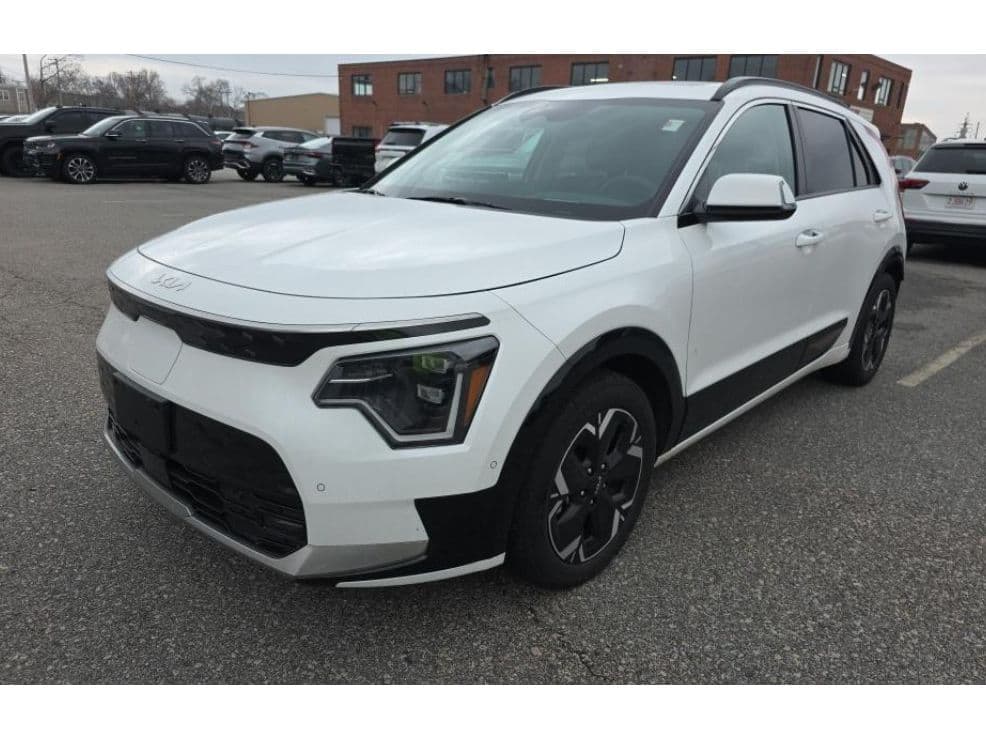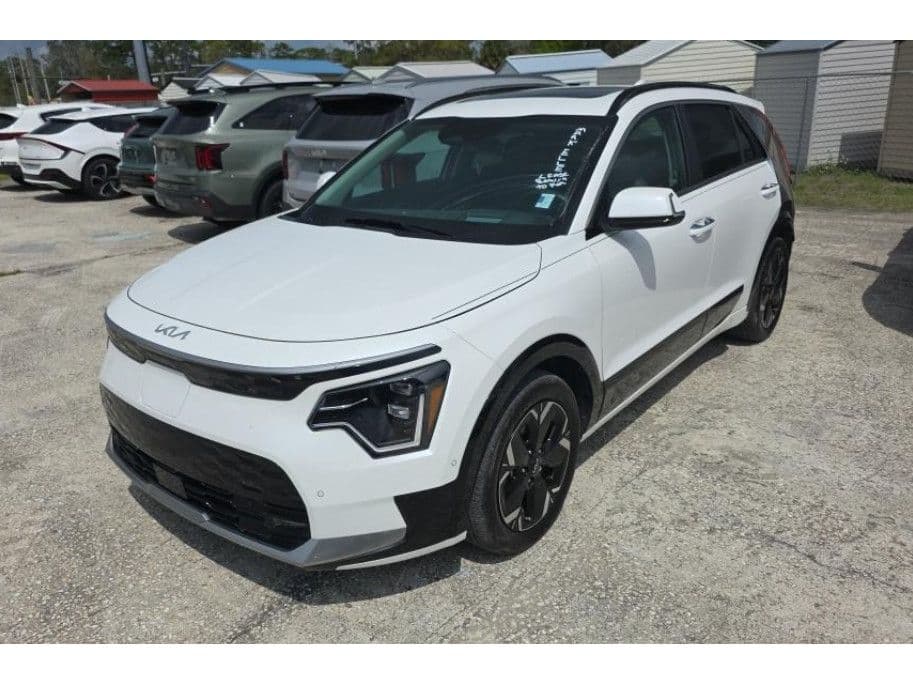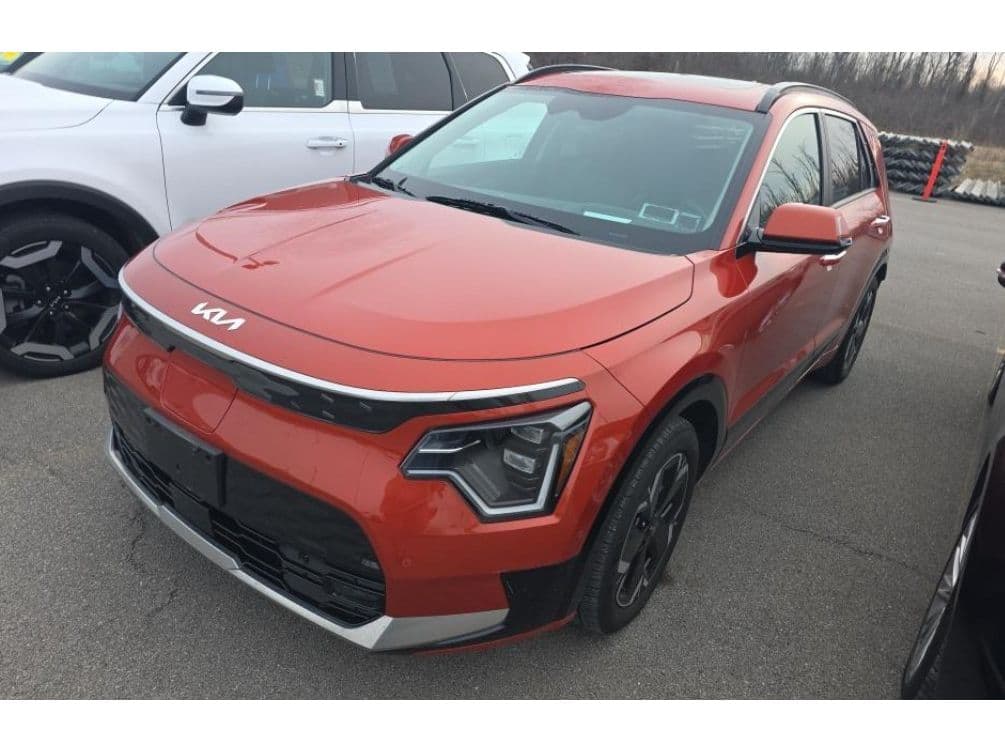
If you’re looking at a Kia Niro EV, you’ve probably heard that electric vehicles can lose value fast. The good news is that the Kia Niro EV depreciation curve over 5 years is predictable, and if you understand it, you can use it to your advantage when you buy, sell, or trade.
Key takeaway on 5‑year Niro EV depreciation
Kia Niro EV 5‑year depreciation at a glance
Kia Niro EV 5‑year depreciation snapshot
Industry analyses of EV resale value regularly show the **Kia Niro EV losing just under 60% of its value over five years**. One widely cited study pegs 5‑year depreciation at **about 59.2%**, or roughly **$23,000 lost on a well‑equipped example**. In real‑world used listings, early Niro EVs (2020 model year) are often trading at **around 40–45% of original MSRP**, which lines up with those estimates.
Depreciation isn’t the whole story
How the Kia Niro EV depreciation curve typically looks
Let’s turn percentages into something more concrete. Below is a **simplified 5‑year depreciation curve** for a Kia Niro EV with a notional **$39,000 MSRP**. Real numbers will vary based on trim, incentives, and mileage, but the shape of the curve is representative.
Illustrative 5‑year Kia Niro EV depreciation curve
Example value path for a new Kia Niro EV with a $39,000 MSRP.
| Ownership point | Estimated market value | Cumulative depreciation | Percent of value lost |
|---|---|---|---|
| New (Year 0) | $39,000 | – | 0% |
| Year 1 | $28,000 | $11,000 | 28% |
| Year 3 | $20,500 | $18,500 | 47% |
| Year 5 | $16,000 | $23,000 | 59% |
Depreciation is front‑loaded: the biggest drop is in the first two years, then the curve flattens.
Two things stand out: 1. The first year hurts the most. Like nearly every new car, the Niro EV takes its biggest single hit in year one. 2. The curve flattens after year three. By the time the car is 3–5 years old, each additional year typically shaves off a smaller dollar amount, assuming normal mileage and condition.

Why this matters to you
What drives the Kia Niro EV’s depreciation?
Main forces shaping the Niro EV’s depreciation curve
The Niro EV doesn’t depreciate in a vacuum, several market and technical factors push its value around.
Range & tech evolution
Charging speed & network
Incentives & new-car pricing
EV market volatility
Warranty confidence
Segment competition
EVs vs gas: different life cycle
Kia Niro EV vs other EVs and hybrids
Studies that rank EVs by 5‑year depreciation consistently show the **Kia Niro EV near the segment average or slightly worse**, with around **59% depreciation** compared to an EV average just under that mark. In other words, it’s not the very worst, there are luxury EVs and early compliance cars that lose more, but it is in the group that **sheds more than half its value** in five years.
How the Niro EV’s 5‑year depreciation compares
Illustrative comparison using recent third‑party analyses. Exact figures vary by source and model year, but the relationships are directionally accurate.
| Vehicle | Type | Approx. 5‑year depreciation | Approx. value retained |
|---|---|---|---|
| Kia Niro EV | Compact EV crossover | ≈59% | ≈41% |
| Hyundai Kona Electric | Compact EV crossover | ≈58% | ≈42% |
| Tesla Model 3 | Compact EV sedan | ≈50–53% | ≈47–50% |
| Kia Niro Hybrid | Hybrid crossover | ≈40–45% | ≈55–60% |
| Typical gas compact SUV | Gas crossover | ≈40–50% | ≈50–60% |
The Kia Niro EV depreciates more than many hybrids and some crossovers, but tracks closely with other mainstream EVs.
Why this can be good news for used buyers
Leasing vs buying: how residuals fit the curve
If you’ve shopped Niro EV leases, you’ve probably noticed **eye‑catching low monthly payments**. Part of the magic trick is on the back end: Kia and its finance partners often set **optimistic residual values** to make leases look cheaper, especially when federal tax credits get baked into the deal.
On paper: lease residuals
- Lease contracts often assume a **higher end‑of‑term value** than today’s used‑market reality.
- This keeps payments low, because you’re “paying off” less depreciation on paper.
- Some lessees find their buyout price is **higher than the car’s market value** at the end of the term.
In practice: market values
- Real‑world 3‑year‑old Niro EVs often list **below their residual values**, especially after recent EV price corrections.
- That’s great if you plan to **turn the car in and walk away**, less great if you hoped to buy it at lease end.
- Before deciding, compare your residual to **actual used listings** and trade‑in offers.
How Recharged can help on lease turn‑in
How mileage, condition, and battery health shift the curve
Depreciation curves are averages. The **actual curve for your Kia Niro EV** will bend up or down based on how you use and care for it, especially when it comes to the battery.
Factors that push your Niro EV above or below the average curve
1. Mileage vs age
Most 5‑year forecasts assume roughly **12,000–15,000 miles per year**. If your Niro EV has 30,000 miles after five years, expect it to sit **above** the typical curve. At 90,000+ miles, it may fall below.
2. Battery health and range
Used EV shoppers care deeply about **remaining usable range**. A Niro EV that still delivers range close to its original rating will command more than one showing obvious degradation. Transparent battery reports are a big plus.
3. Accident and maintenance history
Clean history reports, documented maintenance, and **no major collision damage** help keep your car on the upper edge of the curve. Structural damage or airbag deployment almost always pushes value down.
4. Trim, options, and color
Desirable trims (like better infotainment or driver‑assist suites), **heat pumps for cold climates**, and popular colors tend to hold value better. Odd color combos or sparse equipment can soften demand.
5. Local incentives and demand
Some states and utilities offer **stacked incentives** on new EVs, which indirectly pressure used prices. In markets with strong EV adoption and high fuel prices, used Niro EVs may hold up slightly better.
6. Charging behavior
Heavy reliance on DC fast charging and frequent 100% charges can accelerate battery wear. Cars that lived mostly on **Level 2 home charging** with moderate charge levels usually age better, supporting higher resale value.
Where Recharged’s battery data fits in
5‑year Kia Niro EV depreciation examples by model year
To make this more tangible, let’s look at **illustrative examples** for different Niro EV model years. These are rounded, directional numbers meant to reflect typical market behavior, not exact valuations for any given VIN.
Sample 5‑year depreciation snapshots for Kia Niro EV
Illustrative used‑value ranges for common model years, assuming average mileage and condition in the U.S.
| Model year | Original MSRP (approx.) | Age in 2026 | Typical used value range | Approx. depreciation |
|---|---|---|---|---|
| 2020 Niro EV | $40,000 | 6 years | $16,000–$19,000 | ≈52–60% |
| 2021 Niro EV | $40,500 | 5 years | $17,000–$20,000 | ≈50–58% |
| 2022 Niro EV | $41,000 | 4 years | $19,000–$23,000 | ≈44–54% |
| 2023 Niro EV (redesigned) | $42,000–$45,000 | 3 years | $23,000–$28,000 | ≈38–48% |
| 2024–2025 Niro EV | $43,000–$46,000 | 1–2 years | $31,000–$37,000 | ≈20–35% |
The specifics will vary by region and trim, but the pattern, steep early drops, then slower declines, is consistent.
Why you see such wide ranges online
How to use the depreciation curve to your advantage
You can’t control broad market trends, but you can decide **where to step onto the curve** and how to step off. Here are practical ways to turn the Niro EV’s 5‑year depreciation profile into an asset instead of a liability.
Smart strategies for buyers and sellers
Different playbooks depending on whether you’re buying, holding, or selling a Niro EV.
If you’re buying used
- Target Niro EVs that are **2–4 years old**; you avoid the steepest front‑loaded depreciation.
- Prioritize cars with **documented battery health** and moderate mileage.
- Compare pricing against the **approximate 5‑year curve**, if an asking price sits well above the line, negotiate hard or keep shopping.
- Consider financing through providers who understand EV resale; Recharged can help you **line up competitive used‑EV financing**.
If you already own one
- Think about selling or trading around **years 3–5** if you want to maximize return before the next tech wave hits.
- Keep mileage reasonable and **follow recommended maintenance** to hold your car near the top of the curve.
- Store fast‑charging receipts and service records; this can reassure the next buyer about how the car was treated.
- Get periodic valuations so you’re not caught off‑guard by market swings.
If your lease is ending
- Compare your **buyout (residual) price** to current market values for similar Niro EVs.
- If the residual is **higher than market**, you’re usually better off handing it back and shopping the used market.
- If it’s lower, buying the car and keeping it another few years can beat starting over on a new‑car curve.
- Use instant‑offer tools like Recharged’s to see what a third party would actually pay today.
If you’re cross‑shopping models
- Stack the Niro EV’s 5‑year depreciation against other used‑EV values.
- Some EVs lose more, some lose less, pair that with factors like range, charging, and comfort.
- A slightly sharper depreciation hit can be acceptable if **purchase price and running costs** are low enough.
- Think total cost of ownership, not just resale value in isolation.
Use Recharged to benchmark the curve in real time
FAQ: Kia Niro EV depreciation and resale value
Frequently asked questions about the Kia Niro EV depreciation curve
Bottom line: is the Kia Niro EVs 5‑year depreciation a deal-breaker?
Viewed in isolation, the **Kia Niro EV depreciation curve over 5 years looks steep**, close to 59% of value lost from new, with the biggest drop in the first 1–3 years. But that’s less a flaw of the Niro EV itself and more a reflection of how quickly EV tech and pricing are evolving in 2026.
If you buy new and trade frequently, that curve is a real cost you’ll feel in your wallet. If you buy strategically, stepping in around **2–4 years old**, verifying battery health, and holding the car through the flatter part of the curve, the Niro EV shifts from a depreciation headache to a **value play in the used market**.
Recharged was built around that insight. By combining verified battery diagnostics, transparent pricing, and expert guidance, we make it easier to see exactly **where a specific Niro EV sits on the curve**, and whether it belongs in your driveway. If you’re ready to put depreciation to work for you instead of against you, a carefully chosen used Niro EV can be a very smart move.