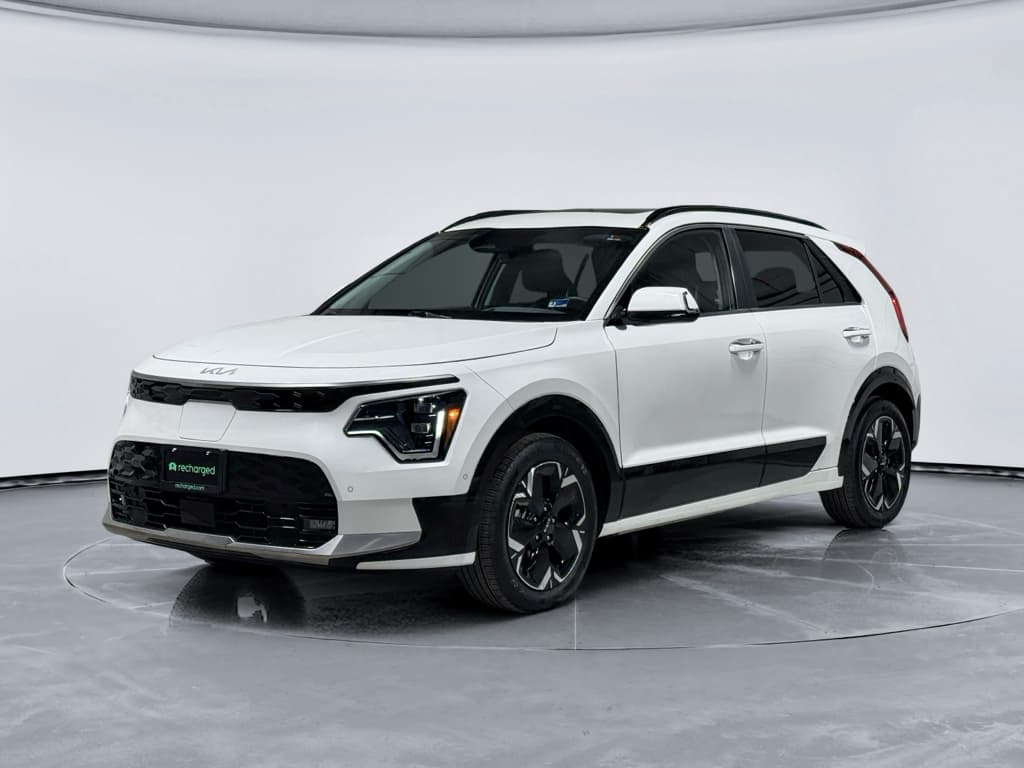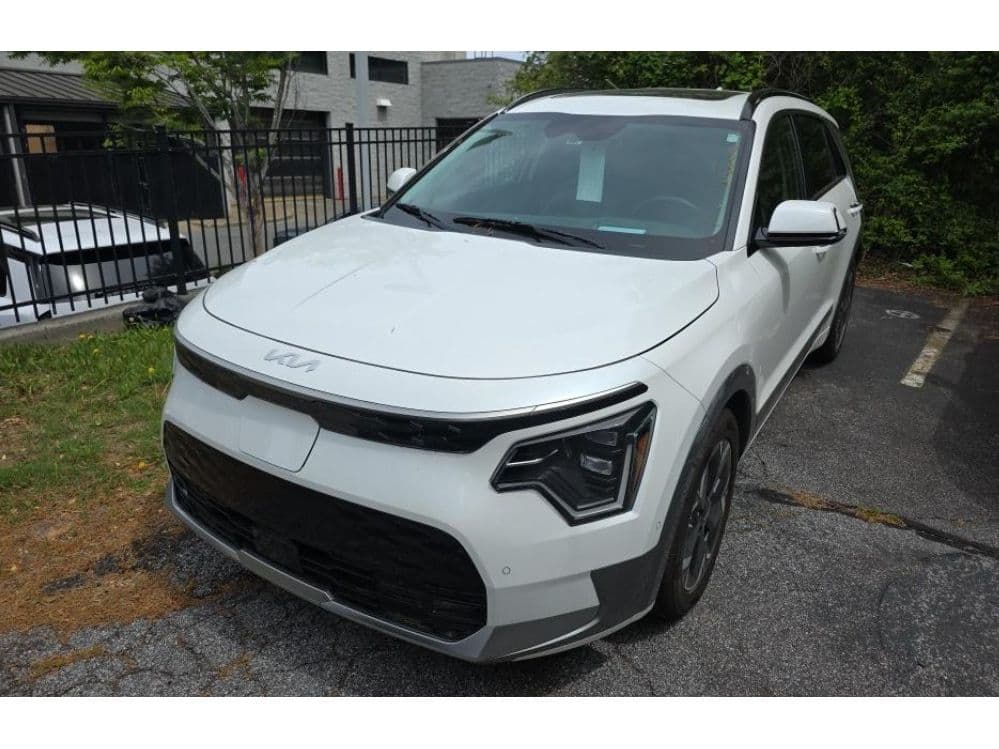
If you’re looking at a Kia Niro EV, or already own one, the natural question is: what does it actually cost per mile to drive on electricity? Understanding your Kia Niro EV charging cost per mile helps you compare it to gas cars, budget for daily commuting, and decide whether a used Niro EV makes financial sense.
Quick answer
Why Kia Niro EV charging cost per mile matters
Cost per mile is the cleanest way to compare the Kia Niro EV to a gasoline SUV or even other EVs. Instead of guessing based on battery size or MPGe, cost per mile bakes in your local electricity prices, how efficiently you drive, and how often you rely on public fast charging. If you’re shopping used, it’s also a simple lens to understand how a specific car’s battery health and charging habits will affect your real‑world costs over time.
Think in miles, not gallons
Kia Niro EV efficiency: miles per kWh explained
To get to cost per mile, you first need to know how many miles you get from each kilowatt‑hour (kWh) of electricity. Think of kWh as the EV equivalent of gallons of gas.
- Recent Kia Niro EV models sold in the U.S. use a roughly 64.8 kWh battery and are EPA‑rated around 253 miles of range on a full charge.
- That works out to about 3.4 miles per kWh in official testing (253 ÷ 74.5 kWh wall energy including losses is roughly in that ballpark, EPA publishes 3.4 mi/kWh).
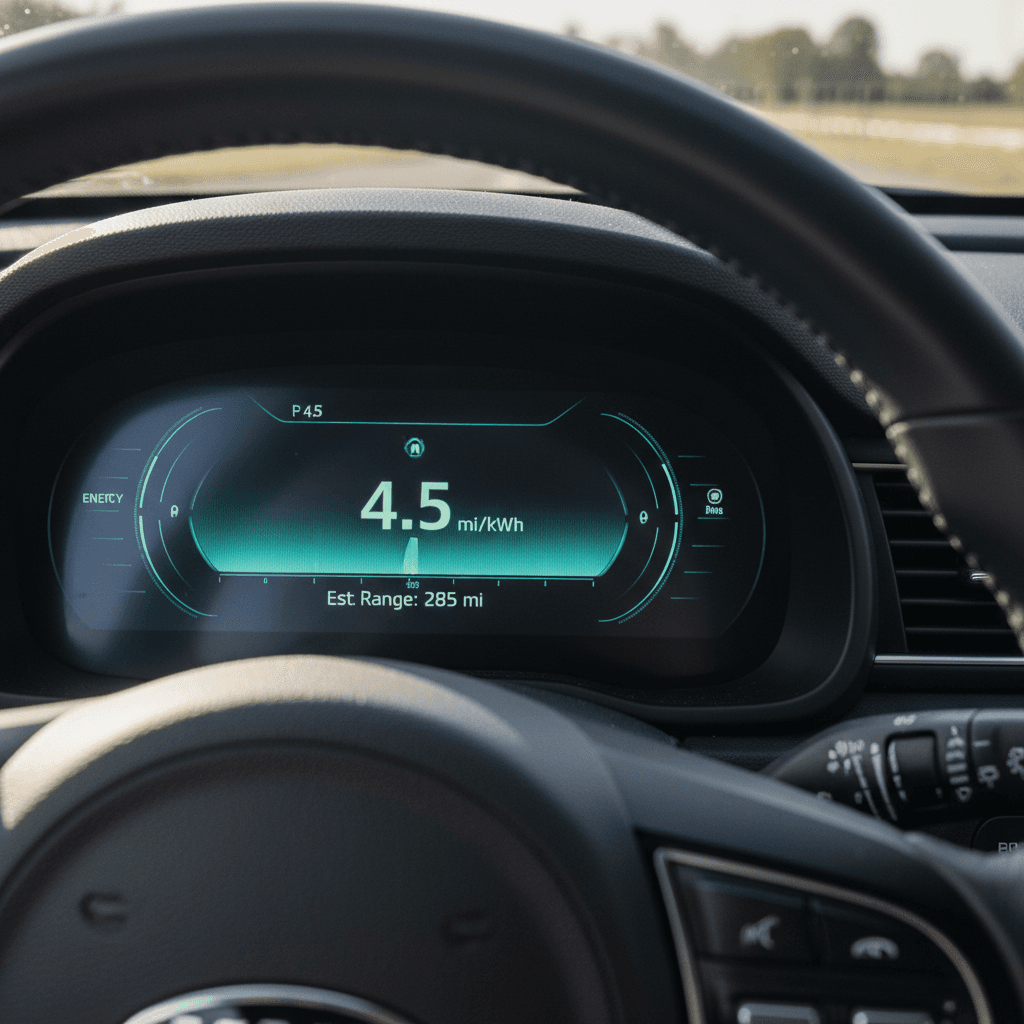
- Owners often see anywhere from 3.2 to 4.5 mi/kWh in the real world, depending on climate, speed, and driving style. In mild weather and city driving, 4+ mi/kWh is common; in cold weather and high‑speed freeway use, 3–3.3 mi/kWh is more typical.
The one number that drives everything
Kia Niro EV efficiency at a glance
Typical Kia Niro EV charging cost per mile
Now let’s connect efficiency to your electric bill. The simple formula for Kia Niro EV charging cost per mile is:
Cost per mile = (Electricity price per kWh) ÷ (Miles per kWh)
Typical Kia Niro EV cost per mile at home
Examples using common U.S. residential electricity prices and realistic efficiency numbers.
| Electricity price (¢/kWh) | Efficiency (mi/kWh) | Cost per mile | Rough cost per 1,000 miles |
|---|---|---|---|
| 15¢ (cheap power) | 4.0 | $0.038/mi | $38 |
| 18¢ (near recent U.S. average) | 3.6 | $0.050/mi | $50 |
| 20¢ (higher‑cost markets) | 3.4 | $0.059/mi | $59 |
| 25¢ (expensive power) | 3.2 | $0.078/mi | $78 |
These are illustrative; plug in your own rate and mi/kWh below for a personalized number.
Rule of thumb
Home charging vs public charging costs
Where you plug in makes as much difference as how you drive. Home charging is usually the cheapest, workplace charging can be even better if it’s subsidized, and highway fast chargers are the EV equivalent of buying gas at the most expensive station on the interstate.
How charging location changes your cost per mile
Assumes a realistic 3.5 mi/kWh in mixed driving. Rates are typical 2024–2026 U.S. examples, not guarantees.
Home Level 2 (most common)
Typical rate: 15–22¢/kWh
Approx. cost per mile: $0.04–$0.06
- Best blend of convenience and cost
- Off‑peak time‑of‑use plans can be even cheaper
Workplace or free Level 2
Typical rate: Free–15¢/kWh
Approx. cost per mile: $0–$0.04
- Many employers or apartments subsidize charging
- Can dramatically lower your blended cost per mile
Public DC fast charging
Typical rate: ~$0.35–$0.60/kWh
Approx. cost per mile: $0.10–$0.18
- Great for road trips and emergencies
- Too expensive to rely on for all your driving
Don’t judge EV costs by road trips alone
How to calculate your own Kia Niro EV cost per mile
You don’t need a spreadsheet or an engineering degree to work this out. Here’s a simple, repeatable way to turn your own driving data into a personalized cost per mile for your Niro EV.
5‑step process to calculate your cost per mile
1. Find your electricity rate
Look at your utility bill for the <strong>all‑in price per kWh</strong> (including taxes and fees). If it’s confusing, divide the total electric charges by the total kWh used that month.
2. Grab your mi/kWh number
On your Kia Niro EV’s cluster or infotainment screen, note your <strong>average mi/kWh</strong> over the last few hundred or thousand miles. That smooths out short‑term weather swings.
3. Plug into the formula
Use: <strong>Cost per mile = (Electricity price per kWh) ÷ (mi/kWh)</strong>. Example: at $0.18/kWh and 3.8 mi/kWh, your cost per mile is 0.18 ÷ 3.8 ≈ <strong>$0.047/mi</strong>.
4. Adjust for fast charging
If 20% of your driving is done on DC fast charging at, say, $0.45/kWh, calculate a separate cost per mile for those sessions and blend it: 80% home cost + 20% fast‑charge cost.
5. Track a month of driving
For maximum accuracy, log your total kWh added (many apps or smart chargers can do this) and miles driven over a month. Divide total dollars spent on charging by miles driven.
Use real wall‑energy if you can
Key factors that change your cost per mile
Two Kia Niro EV drivers can pay very different prices per mile, even with the same car and the same utility. Here’s what tends to move the needle the most.
What makes your Kia Niro EV cheaper, or more expensive, per mile
Focus on the levers you actually control; ignore the ones you can’t.
Climate & cabin heat/cooling
In cold weather, your Niro EV’s battery and cabin heating can push efficiency down into the low 3s (mi/kWh) or worse. In very hot weather, air‑conditioning has a smaller but noticeable effect. Pre‑conditioning while plugged in helps a lot.
Speed & driving style
A gentle 55–65 mph cruise can easily deliver 3.8–4.2 mi/kWh, while running 75–80 mph with aggressive accelerations can drag you down near 3.0. The faster you go, the more air‑resistance dominates.
Share of DC fast charging
Occasional road‑trip fast charging won’t blow your budget, but using DC fast chargers for most of your driving can double or triple your cost per mile compared to home Level 2 charging.
Home electrical setup
A properly sized Level 2 charger on a dedicated 240V circuit is efficient and convenient. Long, undersized extension cords or repeated Level 1 charging runs slightly less efficiently and can be a safety risk.
Battery health on older Niro EVs
Some degradation is normal over time. Lower usable capacity doesn’t necessarily change mi/kWh, but it can shift when and how often you charge, which affects how much high‑priced public charging you end up using.
Time‑of‑use (TOU) rates
Many utilities offer cheaper off‑peak rates overnight. If you schedule charging during those windows, your cost per mile can drop dramatically, even when headline rates are high.
Watch your peak rates
Kia Niro EV cost per mile vs gas cars
Cost per mile isn’t just a fun number; it’s how you answer the question, “Is a Niro EV actually cheaper to drive than a gas crossover?” Let’s stack it up against some common gasoline equivalents.
Kia Niro EV vs gas vehicles: cost per mile
Illustrative comparison using rounded 2025‑era prices and efficiency numbers.
| Vehicle type | Assumed efficiency | Energy price | Approx. cost per mile |
|---|---|---|---|
| Kia Niro EV (home charging) | 3.6 mi/kWh | $0.18/kWh | $0.05/mi |
| Compact gas sedan (~35 mpg) | 35 mpg | $3.50/gal | $0.10/mi |
| Compact SUV (~28 mpg) | 28 mpg | $3.50/gal | $0.13/mi |
| Midsize pickup (~20 mpg) | 20 mpg | $3.50/gal | $0.18/mi |
| Kia Niro EV (frequent DC fast charge) | 3.3 mi/kWh | $0.45/kWh | $0.14/mi |
Your exact numbers will depend on local gas and electricity prices, but the gap in operating cost is usually large.
The usual pattern
Used Kia Niro EVs, battery health, and real‑world costs
If you’re shopping for a used Niro EV, cost per mile is more than just a math exercise. It’s intertwined with battery health, how the previous owner charged, and how much highway vs city driving the car did.
Why battery health matters economically
- Degradation doesn’t directly kill efficiency, but it shrinks usable range, which can force more frequent, and sometimes more expensive, charging stops.
- If a tired pack pushes you to rely on DC fast charging more often, your effective cost per mile can creep up even if mi/kWh stays similar.
- Extremely degraded packs may eventually require repair or replacement, which is a major cost item you should factor into used‑car pricing.
How Recharged helps with the numbers
Every used EV sold through Recharged includes a Recharged Score Report with verified battery health data and pricing analysis. That lets you:
- See how the car’s current range and efficiency compare to when it was new.
- Understand how previous charging behavior might affect future fast‑charging needs and thus your cost per mile.
- Compare multiple used Niro EVs, and other EVs, on a total cost of ownership basis, not just sticker price.
If you want help working through the math on a specific car, Recharged’s EV specialists can walk you through the report line by line.
Money‑saving tips for Kia Niro EV owners
Once you understand the levers that drive cost per mile, you can start intentionally pushing them in your favor. You don’t need to hypermile your way down the freeway; small, consistent habits make the biggest impact.
Practical ways to lower your Niro EV’s cost per mile
Use off‑peak or EV‑specific utility plans
Call your utility or check their website for <strong>time‑of‑use (TOU)</strong> or EV‑specific rates. Scheduling your Niro EV to charge after midnight can easily shave a couple of cents off every mile.
Target 3.8–4.0 mi/kWh when you can
On open roads, driving 60–65 mph instead of 75–80 mph and using Eco mode can raise your efficiency into the high 3s or low 4s, cutting your per‑mile cost without dramatically changing your routine.
Pre‑condition while plugged in
On cold or hot days, start climate pre‑conditioning while the car is still plugged in. That way, more of your battery’s energy goes to moving the car rather than heating or cooling it from scratch.
Minimize unnecessary fast‑charging
Build your routine around home or workplace Level 2 charging and reserve DC fast chargers for trips. You’ll not only lower your cost per mile but also treat the battery more gently over time.
Keep tires inflated and aligned
Low tire pressure and poor alignment hurt efficiency just as they do on gas cars. Checking pressures monthly can keep your mi/kWh, and your cost per mile, where they should be.
Choose the right used Niro EV
If you’re buying used, look for a car with <strong>healthy battery diagnostics and clean charging history</strong>. On Recharged, the Recharged Score makes it easy to spot vehicles likely to maintain strong efficiency and low running costs.
FAQ: Kia Niro EV charging cost per mile
Frequently asked questions
Bottom line: what you’ll really pay per mile
When you put all the pieces together, the Kia Niro EV is one of the most cost‑efficient ways to cover miles in a practical crossover footprint. For a typical U.S. driver who charges mainly at home, your real‑world Kia Niro EV charging cost per mile will usually live in the $0.04–$0.07 range, with occasional fast charging nudging that number up on road‑trip months.
The key is to understand your own electricity rates, keep an eye on your mi/kWh, and use fast charging strategically rather than as a daily habit. If you’re evaluating a used Niro EV, pair these simple calculations with objective battery‑health data, like the Recharged Score report, to see not just what you’ll pay upfront, but what each mile will cost you over years of ownership.
Run the numbers with your own utility rate and driving pattern, and you’ll have a far clearer picture than any generic MPGe label can give you, whether you buy your next Kia Niro EV through Recharged or just use these tools to be a more informed EV owner.