If you live in or around Annapolis and you’re thinking about an electric vehicle, you’ve probably heard that federal EV tax credits changed in late 2025. That’s true, but it doesn’t mean all EV rebates in Annapolis disappeared. Between Maryland’s own incentives, BGE’s EVsmart programs, and smart used-EV shopping, there are still meaningful savings on the table if you know where to look.
Key date to know
Overview: EV rebates in Annapolis after the federal shake-up
From an Annapolis driver’s point of view, EV incentives now fall into four buckets: federal tax credits (mostly gone for vehicle purchases), the Maryland state EV excise tax credit, Maryland Energy Administration (MEA) charger rebates, and BGE EVsmart bill-credit programs for home charging. The exact mix you can use depends on whether you’re buying new or used, and whether you install home charging.
EV incentive landscape for Annapolis drivers (2026)
Quick snapshot: What rebates can Annapolis drivers still get?
At-a-glance: EV incentives around Annapolis
Use this as your cheat sheet before you dive into the details.
Buying a new EV
- Federal purchase credit: Ended for delivery after Sept. 30, 2025.
- Maryland EV excise tax credit: Still available (up to $3,000) for eligible new EVs titled in MD.
- Utility perks: BGE EVsmart bill-credit programs for smart home charging.
Buying a used EV
- Federal used EV credit: Ended for purchases after Sept. 30, 2025.
- No Maryland used-EV purchase credit today, but used prices often reflect past incentives.
- Local savings: Lower purchase price plus BGE and MEA charger incentives if you install home charging.
Installing home charging
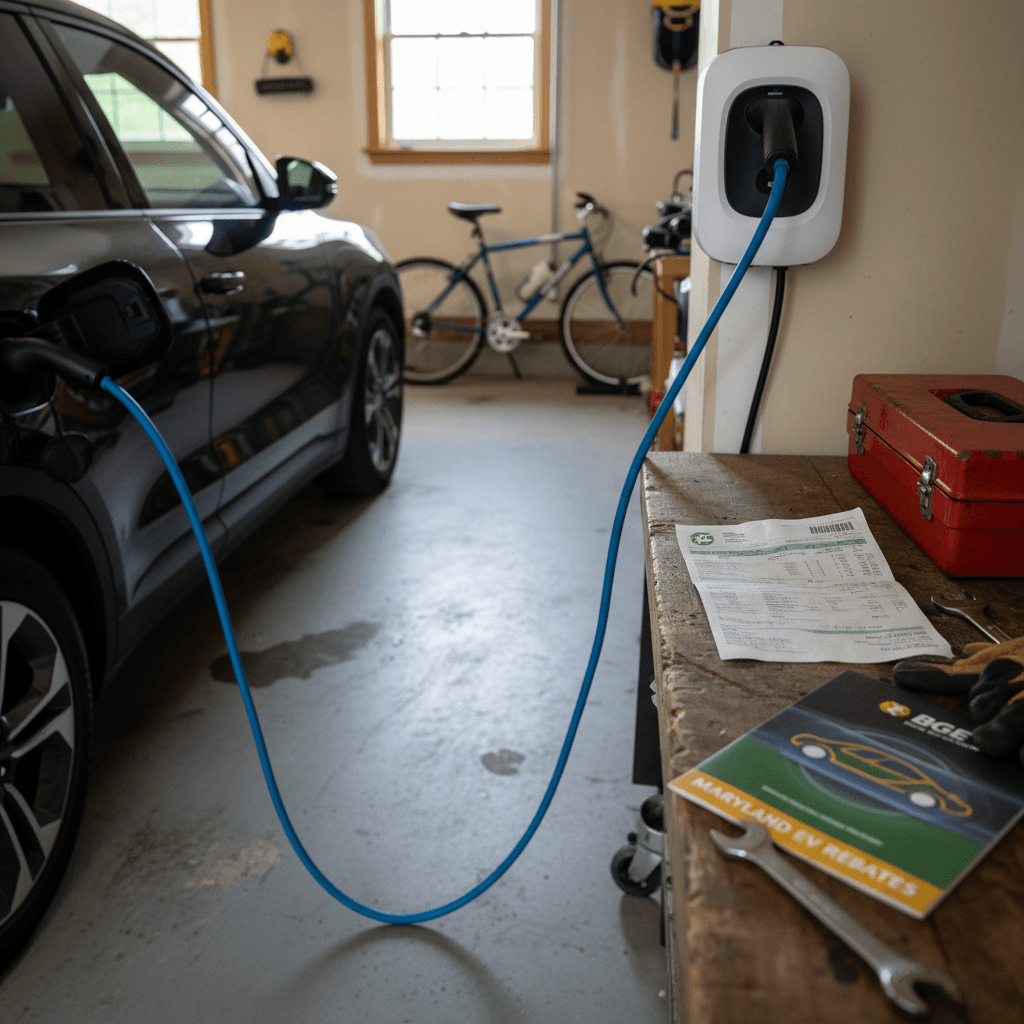
- MEA Residential Charger Rebate: Up to 50% of project cost, capped at $700 per Level 2 charger.
- Federal 30% charger credit: Up to $1,000 if your property sits in an eligible census tract and the project is in service by June 30, 2026.
- BGE Smart Charge: Ongoing bill credits for smart charging behavior.
Commercial & multifamily
- MEA Commercial Rebates: Up to 50% of costs, capped at $5,000 per charger for businesses and multi-unit dwellings.
- Federal commercial credit: Up to 30% of costs per charger for qualifying sites.
Federal incentives: What changed and what’s left
For years, shoppers in Annapolis could count on the federal Clean Vehicle Tax Credit, up to $7,500 for new EVs and up to $4,000 for qualifying used EVs. Under the One Big Beautiful Bill Act passed in summer 2025, those credits were cut off for vehicles placed in service after September 30, 2025. That includes both new and used clean vehicles purchased from licensed dealers.
- New EV purchase credit: No longer available for vehicles delivered after Sept. 30, 2025.
- Used EV purchase credit: Also ended for qualifying used EVs bought after Sept. 30, 2025.
- Commercial & lease structures: Automakers briefly continued pass-through savings on leases, but those have largely wound down into 2026. Always confirm current offers with the dealer.
- Charger installation credit: A separate federal credit for residential EV charging equipment, 30% of project cost up to $1,000, remains available through June 30, 2026 for properties in eligible census tracts.
Don’t assume a federal EV rebate still applies
Maryland EV excise tax credit for new vehicles
Maryland has its own incentive that matters for Annapolis buyers: a state excise tax credit for qualifying new plug‑in vehicles titled in Maryland. This is separate from the now‑ended federal purchase credits and is one of the most valuable remaining EV rebates for Annapolis shoppers.
Maryland new EV excise tax credit basics (for Annapolis buyers)
High‑level outline of how Maryland’s state-level credit works as of early 2026. Exact terms and funding levels can change, always confirm details with the MVA or MarylandEV.org before you buy.
| Feature | Current situation (early 2026) |
|---|---|
| Program type | Maryland excise tax credit applied when you title a qualifying new EV in Maryland. |
| Maximum credit | Up to about $3,000 per qualifying vehicle, subject to funding and your tax liability. |
| Vehicle price cap | Vehicle’s base purchase price generally must not exceed $50,000. |
| Battery requirement | Battery capacity must be at least 4–5 kWh (most modern EVs qualify). |
| Timing window | Purchases and titles between July 1, 2023 and June 30, 2027 are within the current statutory window, subject to funding. |
| Who qualifies | Maryland residents and businesses titling eligible EVs in Maryland; limited number of vehicles per person or business entity. |
| How you claim it | You or the dealer submit required forms to the Maryland MVA; the state applies the credit against your excise tax. |
Use this table as a starting point when you talk with a dealer or tax professional.
How to confirm your exact Maryland credit
Maryland charger rebates for home and business
Even if you’re shopping a used EV, you can still tap some of the richest incentives in Maryland by subsidizing your home or workplace charging. The Maryland Energy Administration (MEA) runs an EV charging rebate program that has been repeatedly funded and reopened because demand is strong and it directly supports the statewide charging network.
Maryland Energy Administration (MEA) EV charger rebates
Applies statewide, including Annapolis and the rest of Anne Arundel County.
Residential Level 2 chargers
- Rebate amount: Up to 50% of eligible project costs, capped at $700 per charger.
- What counts as “cost”: Charger hardware, professional installation, permitting, and site prep.
- Eligibility notes: Charger must be new, safety certified, and installed at a Maryland residence to charge EVs. Level 1 (120V) units are no longer eligible.
- Funding: First‑come, first‑served; applications must be submitted after installation is complete.
Commercial & multifamily sites
- Rebate amount: Up to 50% of costs, typically capped around $5,000 per Level 2 charger for businesses and multifamily properties, with an overall per‑applicant cap.
- Good fits: Apartment communities in Annapolis, workplace fleets, public parking garages, and retail locations.
- Tip: Combining MEA funds with federal commercial credits can dramatically cut the net installed cost.
Stacking MEA + federal charger credits
BGE EVsmart: Bill credits and local perks for Annapolis
Most Annapolis households receive electricity from Baltimore Gas and Electric (BGE), whose EVsmart programs are designed to nudge charging into off‑peak hours. Instead of a one‑time rebate, the flagship Smart Charge Management program offers ongoing bill credits if you charge smart.
Smart Charge Management program
- Who qualifies: BGE residential customers within the utility territory who own an eligible EV or eligible Level 2 home charger.
- What you earn: Up to roughly $120/year in bill credits per participating device, depending on your charging speed and behavior.
- How it works: You enroll either your connected EV (Tesla, some Toyota, Lexus, Jeep, etc.) or a supported smart charger (ChargePoint, Emporia, Wallbox, and others). BGE uses data to reward you for charging during “smart times.”
- Key rule: You can’t enroll both the car and the charger at the same time, you choose one.
Other EVsmart perks to know
- Public charging network: BGE operates public chargers across its territory; as a customer you may receive promotional pricing or referral rewards from time to time.
- Referral incentives: The EVsmart Residential Rebate Referral Program has offered a $25 RFID charging card for each friend you refer who completes certain EVsmart applications, up to a cap per customer.
- Rate insights: Through the Smart Charge portal, you see detailed data on your charging costs and can adjust habits to save more.
Specific program terms, eligible vehicles/chargers, and payment amounts can change, so always review the latest details on BGE’s EVsmart site before enrolling.
Easy win for used-EV buyers
How Annapolis buyers can stack savings on a used EV
With the federal used EV tax credit gone for post‑September 2025 purchases, Annapolis drivers sometimes assume there’s no financial help for a used EV. The reality is more nuanced. The up‑front sticker price of many used EVs already bakes in years of incentives and market adjustments, and you can still compress your total cost of ownership with smart charging and state‑level programs.
Where used EV savings still come from
- Depreciation: Early buyers shouldered the biggest hit. As a used buyer, you often pay far less than original MSRP, even accounting for past incentives.
- Lower fuel and maintenance costs: Electricity typically beats gas on a cost‑per‑mile basis in Maryland, and EVs skip oil changes, exhaust work, and many tune‑ups.
- Charger incentives: MEA rebates and federal charger credits don’t care if your EV is new or used, they care that you install qualifying equipment.
- BGE bill credits: Smart Charge Management rewards how you charge, not how old your EV is.
How Recharged can help Annapolis shoppers
Shopping used is where doing your homework really pays off. At Recharged, every vehicle comes with a Recharged Score Report that includes verified battery health, fair‑market pricing, and a clear view of the car’s history, exactly the information you need to feel comfortable skipping a federal purchase credit and still coming out ahead.
If you’re in Annapolis or anywhere in Maryland, you can browse used EVs entirely online, get financing, arrange a trade‑in or instant offer, and have the car delivered, backed by EV‑specialist support instead of a generic used‑car pitch.
Checklist: How to actually claim your EV rebates
Step-by-step game plan for Annapolis drivers
1. Decide: new vs. used EV
Start by setting a budget and range target. New EVs may still qualify for Maryland’s excise tax credit, while used EVs tend to offer a lower purchase price but rely more on charging incentives to reduce total ownership cost.
2. Verify your address and utility
Confirm that your Annapolis home is in BGE territory (most are) and note whether you live in a single‑family home, townhouse, or multifamily building, this will affect charger installation options and eligibility for some rebates.
3. Check Maryland EV excise tax credit eligibility
If you’re leaning new, confirm that your target model’s price, battery size, and in‑service dates fit the latest Maryland rules, and that state funding is still available. A quick visit to MarylandEV.org and the MVA’s EV credit page is essential.
4. Plan your home charging setup
Decide whether you’ll install a Level 2 charger. Get written quotes from licensed electricians that break out equipment, labor, permitting, and any panel upgrades so you can document costs for MEA and federal credit applications.
5. Confirm charger incentive eligibility
Before work starts, verify that your chosen charger model and installation meet the current rules for the MEA rebate and, if applicable, the federal 30% tax credit (including the eligible census‑tract requirement).
6. Keep every document
Save purchase agreements, installer invoices, permits, electrical diagrams, and proof of payment. Incentive programs are document‑driven; missing paperwork is the fastest route to losing money you should have received.
7. Enroll with BGE EVsmart
Once your EV or charger is in place, enroll in BGE’s Smart Charge Management program (and any time‑of‑use or EV‐friendly rate options) so you start earning bill credits as soon as possible.
8. File for state and federal benefits
Submit MEA rebate applications promptly after installation and coordinate with your tax professional to properly claim any Maryland excise tax credit and the federal charger credit on your next return.
Common pitfalls Maryland drivers run into
Watch out for these rebate‑killing mistakes
- Assuming old federal rules still apply: Many online calculators and blog posts still reference the pre‑2025 Clean Vehicle Credit. Always check dates against the Sept. 30, 2025 cutoff and current IRS guidance.
- Letting the vehicle price creep past Maryland’s cap: Adding options or dealer add‑ons can nudge a new EV over Maryland’s price limit, knocking out the state credit. Ask the dealer to show you the exact price Maryland uses for the credit calculation.
- Skipping permit or inspection requirements on charger installs: A “cheap” under‑the‑table installation can make you ineligible for MEA rebates and could raise safety or insurance issues.
- Buying a charger that isn’t on any eligibility lists: For MEA rebates and BGE Smart Charge Management, certain brands and models are preferred or required. Check eligibility lists before you click “buy.”
- Missing application deadlines: Programs like MEA’s operate on limited annual budgets. File as soon as your project is complete instead of waiting until tax time to think about it.
FAQ: EV rebates and incentives in Annapolis
Frequently asked questions about EV rebates in Annapolis
So… is an EV still worth it around Annapolis?
Even without the old federal purchase credits, an EV can still be a smart financial choice for Annapolis drivers, especially if you log a fair number of miles each year, can install home charging, and are willing to lean on programs like Maryland’s excise tax credit, MEA charger rebates, and BGE’s EVsmart bill credits. The value story has shifted from a single big rebate at purchase to a mix of right‑priced vehicles and ongoing operating savings.
If you’re considering a used EV, the homework gets more important but also more rewarding. That’s where a transparent, data‑driven marketplace like Recharged can make your life easier, pairing verified battery health, fair‑market pricing, and financing and trade‑in options with clear guidance on which incentives you can still use from Annapolis. Put differently: the incentive landscape may have changed, but the opportunity to drive electric on favorable terms is very much alive if you understand the rules and play them to your advantage.