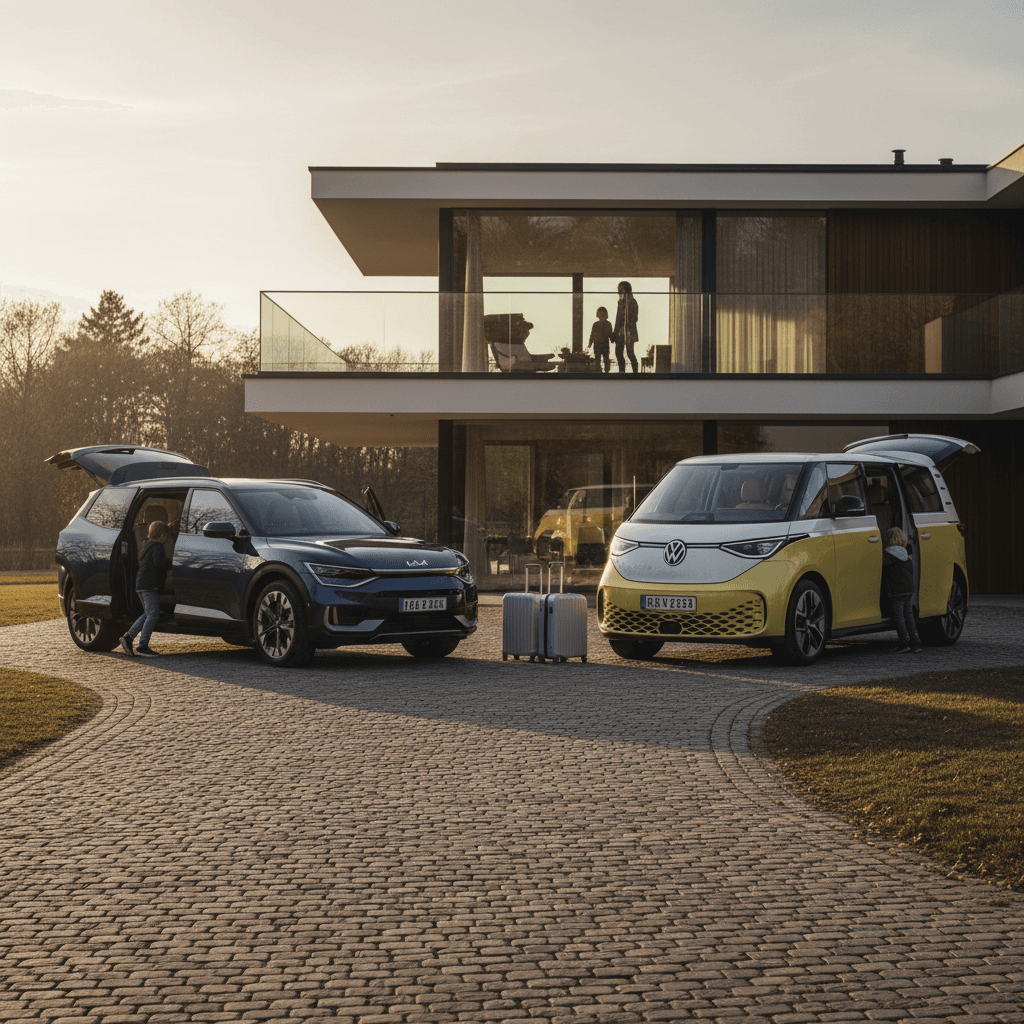
If you’re shopping for a roomy electric family hauler, you’ve probably landed on the Kia EV9 vs Volkswagen ID. Buzz debate. One is a sharp-edged three-row SUV, the other a retro electric bus that looks like it rolled out of a childhood lunchbox. Both promise space, style and zero tailpipe emissions, but they solve the same problem in very different ways.
Two shapes, one mission
Kia EV9 vs Volkswagen ID. Buzz: who are they for?
Kia EV9: electric do‑everything SUV
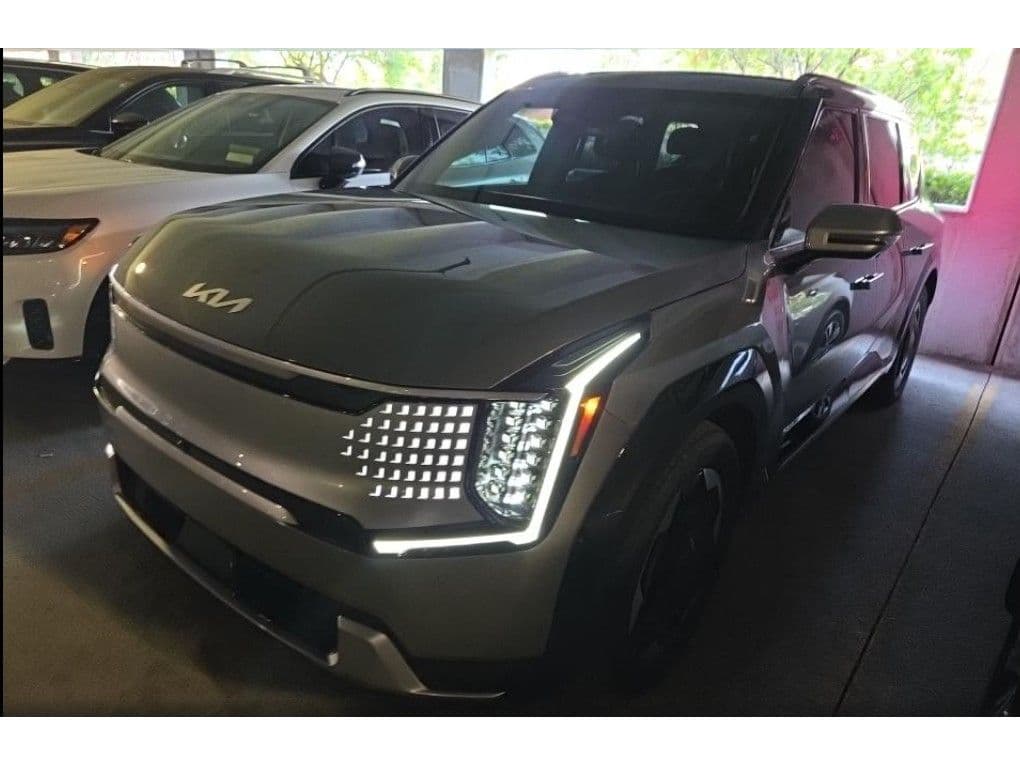
The Kia EV9 is a three-row SUV built on Hyundai–Kia’s E-GMP platform. It offers available all‑wheel drive, up to about 300 miles of EPA range in its most efficient U.S. trims, and as much as 5,000 pounds of towing capacity. It feels familiar if you’re coming out of a gas SUV, just with instant electric shove and fast 800‑volt DC charging.
It’s the better fit if you:
- Regularly tow a camper, boat or pair of jet skis
- Need true three‑row flexibility but want SUV styling
- Take long highway trips and care about range and fast charging
- Plan to keep the vehicle for many years and want mainstream resale appeal
Volkswagen ID. Buzz: electric family lounge
The Volkswagen ID. Buzz is a long‑wheelbase electric minivan with unmistakable Microbus styling. U.S. models use a roughly 91 kWh battery (about 86 kWh usable) and deliver around 230–235 miles of EPA range depending on drive configuration. Inside, it’s a bright, upright living room on wheels with sliding doors and a huge glass area.
It’s a better match if you:
- Prioritize easy access for kids, car seats and grandparents
- Love the idea of a road‑trip camper and flexible interior
- Mostly drive regionally and don’t need maximum range
- Want something that looks nothing like the neighbors’ SUVs
Think about your longest day, not your average day
Key specs: Kia EV9 vs VW ID. Buzz at a glance
Core specs comparison
High‑level specs for U.S. models; exact numbers vary by trim and model year.
| Spec | Kia EV9 (U.S.) | VW ID. Buzz (U.S. LWB) |
|---|---|---|
| Body style | 3-row SUV | 3-row (or 2+3) electric minivan |
| Seats | 6 or 7 | Up to 7 (2-3-2) |
| Battery (usable approx.) | ~82–95 kWh (varies by pack) | ~86 kWh |
| EPA range (best case) | ~300+ miles (RWD Long Range) | ≈234 miles RWD, ≈231 miles AWD |
| Drivetrain | RWD or AWD | RWD or AWD |
| Peak DC fast charge | Up to 210 kW on 800V | Up to ~200 kW (400V architecture) |
| Towing capacity | Up to 5,000 lb properly equipped | Light towing only in U.S., focus on people/gear |
| Turning circle | Tight for its size | Van‑like, good for parking lots |
Always verify final specs for the exact trim and year you’re considering, especially on the used market.
What these numbers mean for you
Space, seating and family usability
In a family EV, how the space works day‑to‑day matters more than the spec sheet. The Kia EV9 and Volkswagen ID. Buzz both offer multiple rows and big cargo holds, but they feel very different from the driver’s seat and the third row alike.
Interior layouts: SUV vs van
Both are big inside; the way you use that space is what changes.
Kia EV9 interior
- Seating: 6‑passenger (captain’s chairs) or 7‑passenger bench in the second row.
- Third row: Adult‑friendly for shorter trips; kids and teens are fine back there all day.
- Cargo: With all three rows up, space is decent for groceries and a couple of carry‑ons. Fold the third row and you’re in road‑trip territory.
- Access: Traditional rear doors; third‑row access depends on how often you fold/slide the second row.
VW ID. Buzz interior
- Seating: Flexible benches and available captain’s chairs depending on configuration.
- Sliding doors: Power sliders on both sides make kid wrangling in tight parking lots dramatically easier.
- Cabin feel: Huge windows and upright seating create a bright, lounge‑like space.
- Cargo: With three rows in place, space is more generous than most SUVs; with rear seats removed or folded, it turns into a mini cargo van or camper shell.
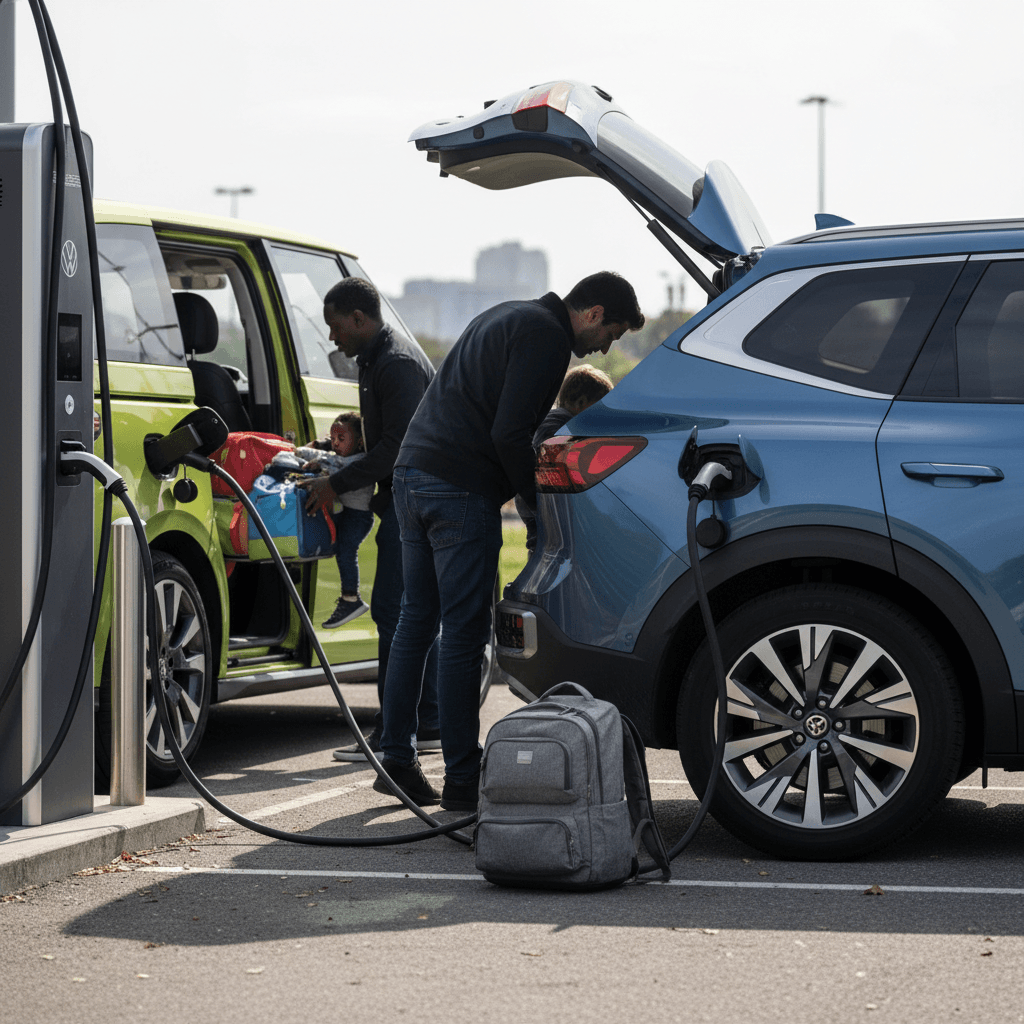
If you’re wrangling car seats…
Range, performance and towing capability
On paper, both of these big boxes have similar battery sizes. In real life, the sleeker EV9 and the brick‑shaped Buzz turn that energy into range very differently. Add in towing or a fully loaded cabin, and those differences get amplified.
Range and performance snapshot
Representative U.S. trims; check the window sticker or EPA label for exact figures on a given vehicle.
| Metric | Kia EV9 | VW ID. Buzz |
|---|---|---|
| Official EPA range (approx.) | ~230–304 mi depending on trim | ≈231–234 mi depending on drive |
| Power output | Approx. 215–379 hp in current U.S. trims (more in future GT) | Roughly 282 hp RWD, ~330 hp AWD |
| 0–60 mph (quickest) | Around 5 seconds (dual‑motor GT‑Line/GT) | Comfortably quick, more minivan brisk than drag‑strip |
| Towing | Up to 5,000 lb when properly equipped | Light towing in U.S.; main focus is passenger duty |
| Highway efficiency | More efficient shape; better long‑distance range per kWh | Boxier profile; range drops faster at high speeds |
Real‑world highway range will usually be lower than EPA ratings, especially at 75 mph, in winter, or when towing.
Mind the towing penalty
If you rarely tow and mostly run between school, work and weekend soccer, both the EV9 and ID. Buzz have more than enough shove and range. If you dream about a 3,500‑pound camper and a three‑state loop, the EV9’s greater range headroom and 5,000‑pound tow rating put it in a different league.
Charging and road-trip experience
Kia and Volkswagen take different technical routes to keep big batteries happy on the road. What you feel is how long you’re stopped on a road trip and how easy it is to find a plug.
Charging: what you’ll actually live with
Both are capable highway companions; the EV9 simply spends less time tethered when you’re hustling.
Kia EV9 charging
- Architecture: 800‑volt system borrowed from the EV6, enabling very high peak DC fast‑charge rates.
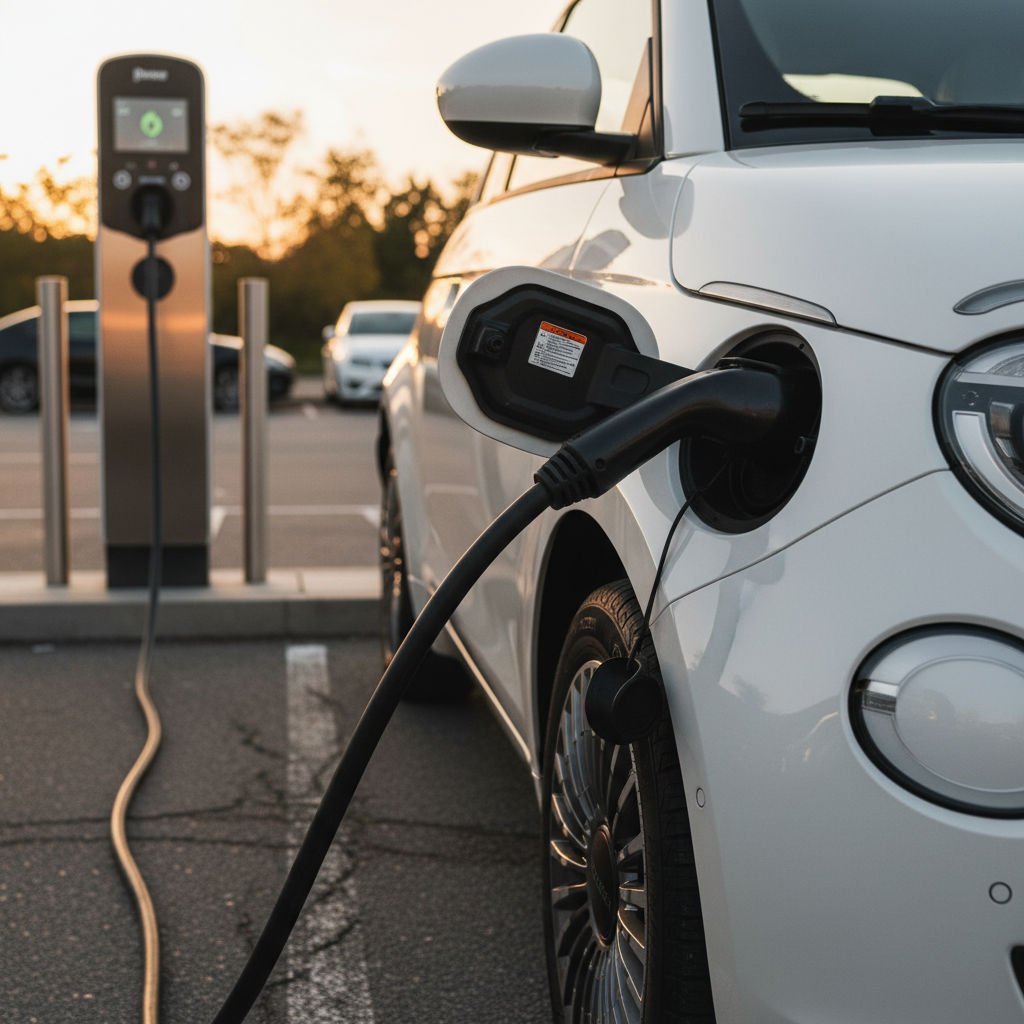
- DC fast charging: On a strong 350 kW charger, going from 10–80% can be under 30 minutes in good conditions.
- Home charging: 11 kW onboard AC charger makes overnight 240V charging straightforward.
- Networks: Uses CCS plugs for earlier model years; newer production and future updates will lean into NACS (Tesla) access. Either way, adapters and growing NACS support are widening your options.
VW ID. Buzz charging
- Architecture: 400‑volt system, similar to VW’s ID.4, with peak DC charging in the ~170–200 kW range depending on conditions.
- DC fast charging: 10–80% in the low‑30‑minute range at an optimal station, slightly slower as the pack warms or cools.
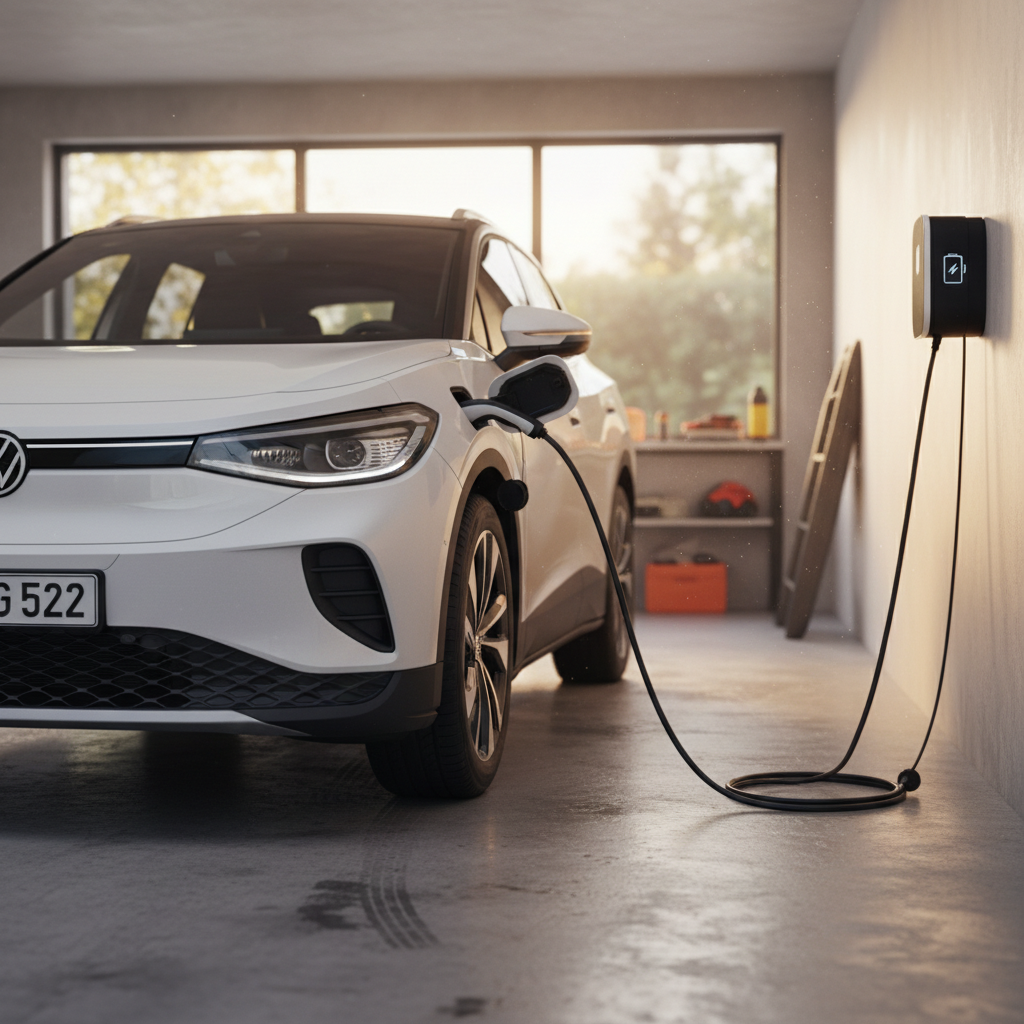
- Home charging: Level 2 at 9–11 kW is typical; an overnight charge from low to full is easy for most households.
- Networks: CCS standard, plus emerging NACS compatibility via adapters and future hardware changes depending on model year.
Road‑trip sanity check
Pricing, trims and value
Both of these are premium EVs, not budget commuters. New‑car pricing will vary wildly by trim, incentives and dealer markups, but the way each brand structures trims, and how they may age on the used market, is worth thinking about now.
Kia EV9 pricing and value
New EV9s span a broad range, from relatively modestly equipped rear‑drive trims up through high‑spec GT‑Line and future GT performance models. That spread means you’ll see everything from simpler family haulers to tech‑loaded showpieces hitting the used market over the next few years.
- Value sweet spot: Mid‑level trims with the larger battery and either RWD (for maximum range) or AWD (for traction and tow rating).
- Incentives: Depending on assembly location and evolving tax‑credit rules, some EV9s may qualify for federal or state EV incentives when new, worth checking if you’re cross‑shopping against a leased or nearly new used model.
- Depreciation: As one of the first mainstream three‑row EV SUVs, the EV9 is attracting a broad audience, which usually helps long‑term demand on the used market.
Volkswagen ID. Buzz pricing and value
The ID. Buzz arrives as a bit of a halo product for VW. Early U.S. examples tend to be well‑equipped long‑wheelbase passenger vans, with pricing to match. That cool factor and relatively low supply can keep used prices strong at first, especially for rare color combinations.
- Value sweet spot: Mid‑spec Buzz models with the larger battery, preferably with the options that make it a true people mover, sliding doors, driver‑assist suites and flexible seating.
- Incentives: Depending on final assembly and federal rules in a given year, some Buzz models may or may not have qualified for tax credits when new. That history can influence used pricing.
- Depreciation: Niche vehicles can swing: the Buzz’s charm may keep demand high with enthusiasts, but a narrower audience than a three‑row SUV could also mean more volatility.
Where used EV value gets real
Daily driving, comfort and tech
The best family car is the one nobody complains about riding in. On that front, both the EV9 and ID. Buzz make a strong case with quiet cabins, modern driver assistance and enough screens to satisfy any teenager. They just go about it with different personalities.
How they feel from behind the wheel
You’re not buying a sports car, but you don’t have to suffer, either.
Kia EV9 on the road
- Driving feel: More traditional SUV stance with confident highway manners and a planted, heavy feel.
- Noise and comfort: Quiet, composed cabin with good isolation over broken pavement.
- Tech: Wide dual‑screen layout, head‑up display in higher trims, and a full suite of active safety features.
- Parking: High seating position and plenty of cameras make tight spots manageable once you learn the footprint.
VW ID. Buzz on the road
- Driving feel: More upright, with a commanding view and a cheerful, relaxed demeanor. It’s quick enough, but tuned for comfort.
- Noise and comfort: Big glass means more road and wind noise than a cocooned SUV, but also a more open, airy feeling.
- Tech: VW’s latest infotainment and driver‑assist suite; still a learning curve for the menus, but plenty of capability once set up.
- Parking: Boxy edges and short overhangs make it surprisingly easy to slot into a space, much like a minivan.
Third‑row reality check
Kia EV9 vs ID. Buzz on the used market
Both models are still relatively new in the U.S., which means the earliest used examples are just beginning to appear. That’s an opportunity: you can let someone else take the first‑year depreciation hit while you focus on condition and configuration.
What to look for in a used EV9 or ID. Buzz
1. Battery health and fast‑charge history
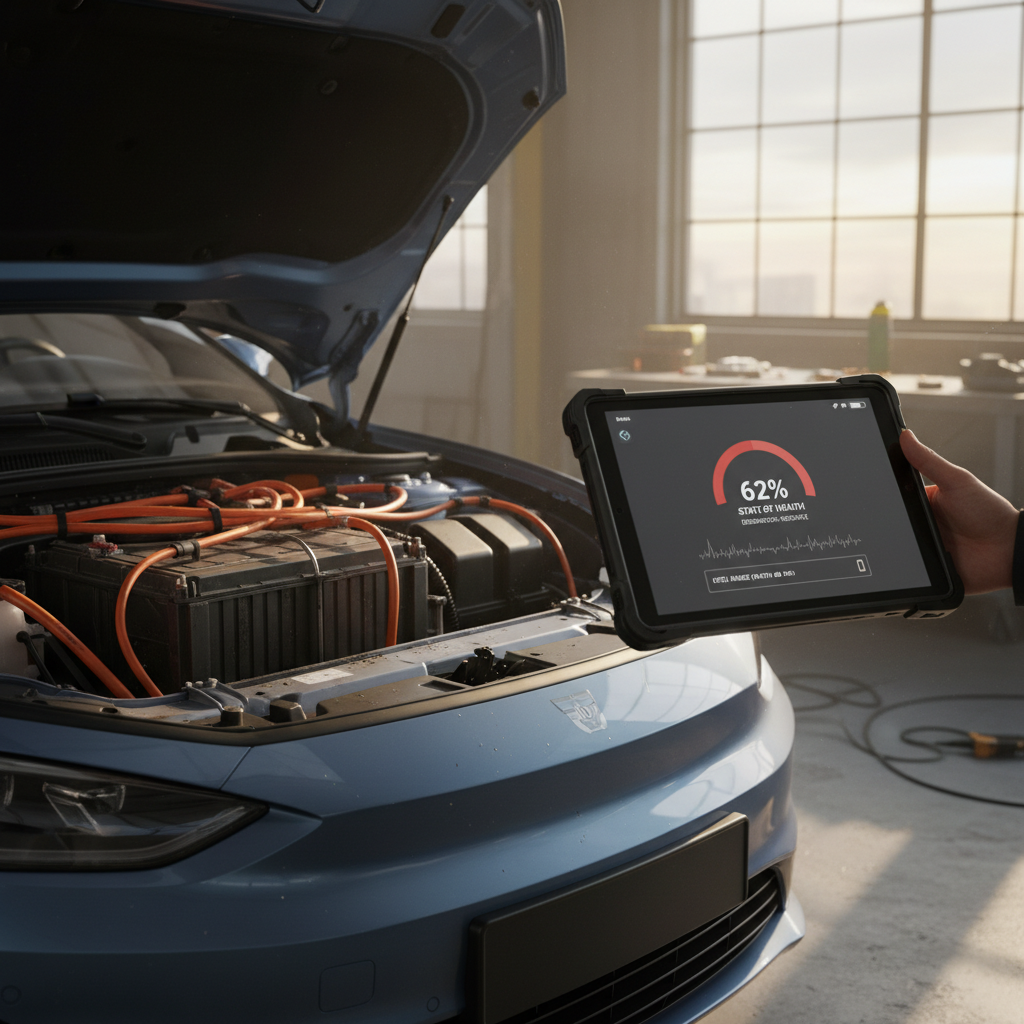
Big, heavy family EVs work their batteries hard. Ask for a battery health report, like the Recharged Score you get automatically through Recharged, and review how often the car was DC fast‑charged vs. gently charged at home.
2. Prior towing or heavy loads
For an EV9, a trailer hitch is a clue it may have towed frequently. Towing isn’t a dealbreaker, but it does mean more stress on the battery and cooling systems. For an ID. Buzz, heavy loads matter more than towing; check for signs of commercial or rideshare use.
3. Software updates and recalls
Modern EVs improve over time with software updates. Confirm the vehicle’s been kept current, and check for any open recalls or service campaigns addressing charging, range estimation or safety systems.
4. Tires, brakes and suspension wear
These are big, heavy vehicles with instant torque. Uneven tire wear or tired dampers can tell you a lot about how gently, or not, the previous owner treated it.
5. Charging hardware and cables
Make sure included home‑charging cables, adapters and, if applicable, tow hardware are present and in good condition. Replacing missing EV gear isn’t cheap.
How Recharged can help
Ready to find your next EV?
Browse VehiclesHow to choose between the EV9 and ID. Buzz
You’re not going to make a bad choice here. Both the Kia EV9 and Volkswagen ID. Buzz are deeply capable family EVs. The trick is to be honest about how you’ll use the car most of the time, and once or twice a year.
Match the EV to your life, not your Instagram
Choose the Kia EV9 if…
You want an electric replacement for a big three‑row SUV, not a style experiment.
You regularly drive long highway stretches and want the extra range and faster charging to keep stops short.
Towing a serious trailer, boats, medium campers, gear for a small business, is part of your plan.
You care about broad resale appeal in a few years and want something that fits mainstream tastes.
You prefer a slightly more cocooned, traditional SUV driving experience.
Choose the VW ID. Buzz if…
You fell in love at first sight and can’t stop picturing it in your driveway, that matters more than spec charts.
You have young kids, older relatives or mobility concerns and want the easiest possible access with sliding doors.
Most of your driving is local or regional, and you’re comfortable planning around a bit less range.
You’re thinking about light camper conversions, weekend surf trips or bike hauling more than towing big trailers.
You like cars with personality and don’t mind explaining what you drive at every charging stop.
Don’t overbuy on range, or underbuy on reality
In the end, the Kia EV9 vs Volkswagen ID. Buzz choice is less about kilowatts and more about how you and your crew live. The EV9 is the pragmatic pick: a hugely capable, modern three‑row SUV that just happens to run on electrons. The ID. Buzz is the heart pick: an electric minivan with vintage soul and a living‑room interior that makes every Target run feel like a field trip. Decide which kind of family hauler you want to be, then find the cleanest example you can, ideally with a verified battery‑health report, and you’ll be happy either way.