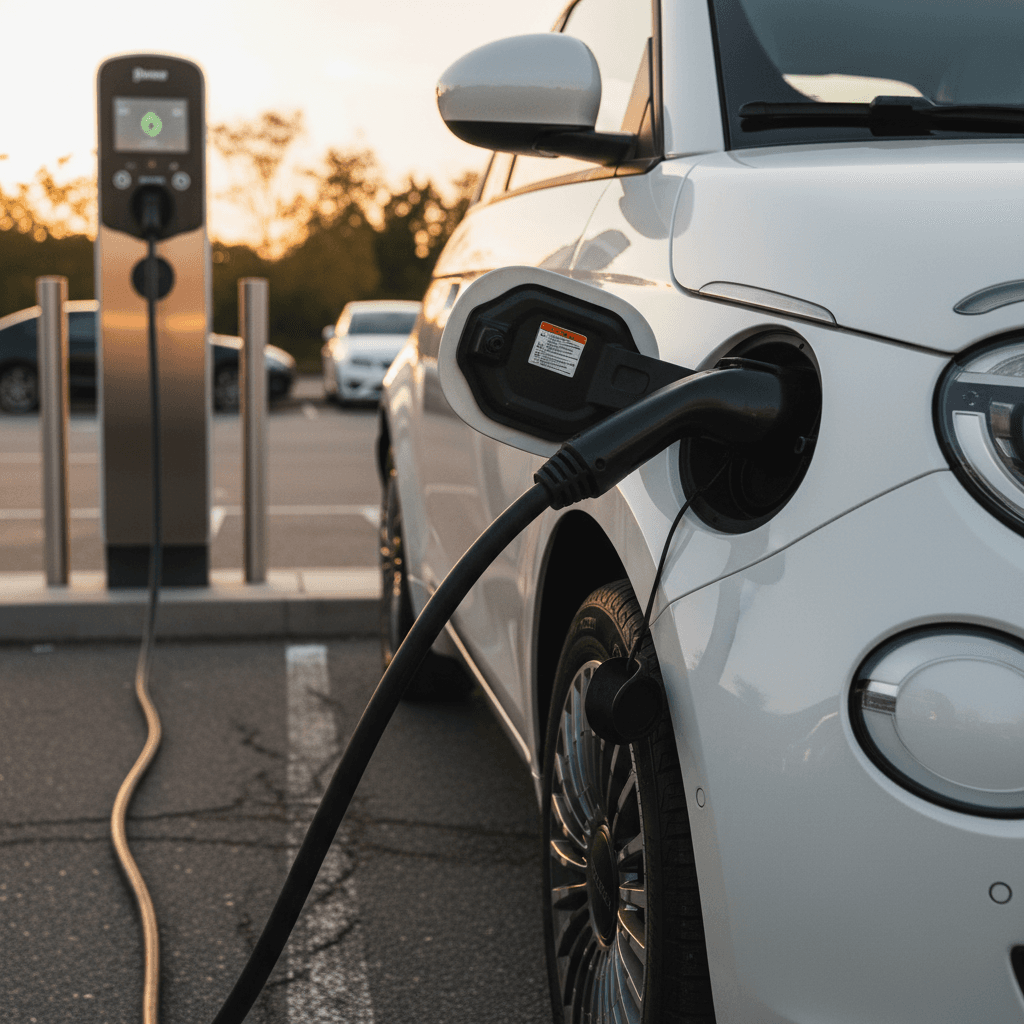
If you’re considering a Fiat 500e, or already own one, the big question is simple: **how fast does it really charge** in the real world? Lab specs say the new 500e can hit up to 85 kW on a DC fast charger and add dozens of miles in just a few minutes, but real-world charging speed tests tell a more nuanced story. This guide walks through those results and shows you how to get the quickest, most convenient charges from your 500e.
Two very different 500e generations
Why Fiat 500e charging speed matters
The Fiat 500e is a **city-first EV**. Its compact hatchback footprint and roughly **140–150 miles of rated range** make it a natural second car or commuter. That also means you’ll **lean heavily on charging**: topping up overnight at home and grabbing quick hits at public stations when your day runs long. Understanding real charging speeds helps you answer questions like: - Can you recover meaningful range during a 20–30 minute stop? - Is Level 2 at home enough, or do you really need DC fast charging access? - How much does charging slow down above 80%?
- Daily commuters who drive 30–60 miles want to know if an overnight Level 2 charge is plenty.
- Urban drivers need confidence that a 15–25 minute stop at a DC fast charger adds enough range.
- Used-500e shoppers (especially for the older 24 kWh model) want to understand the **limitations of no DC fast charging**.
Good news for 500e owners
Fiat 500e battery and charging basics
Key Fiat 500e charging specs by generation
Old 500e vs new 500e at a glance
2013–2019 Fiat 500e (U.S. “compliance” car)
- Battery: 24 kWh pack
- Charging: AC only, 6.6 kW onboard charger
- Connector (U.S.): J1772 (AC only)
- Home Level 2 time: roughly 4 hours (0–100%) on a 240V, 30A circuit
- DC fast charging: not available from the factory
2024+ Fiat 500e (new global / U.S. model)
- Battery: ~37 kWh usable (often labeled 42 kWh gross)
- Onboard AC charger: up to 11 kW
- Peak DC fast charging: up to 85 kW
- Home Level 2 time: ~4–6 hours, depending on charger amperage
- DC fast charging 10–80%: ~25–35 minutes in ideal conditions
For North America, the 2024+ Fiat 500e uses a **CCS Combo Type 1** inlet that supports both Level 2 AC and DC fast charging. Fiat quotes up to **85 kW peak DC power**, which, on paper, is enough to add roughly 25–30 miles of range for every 5 minutes spent charging when the battery is in its sweet spot.
Fiat 500e charging stats at a glance
DC fast charging speed test results
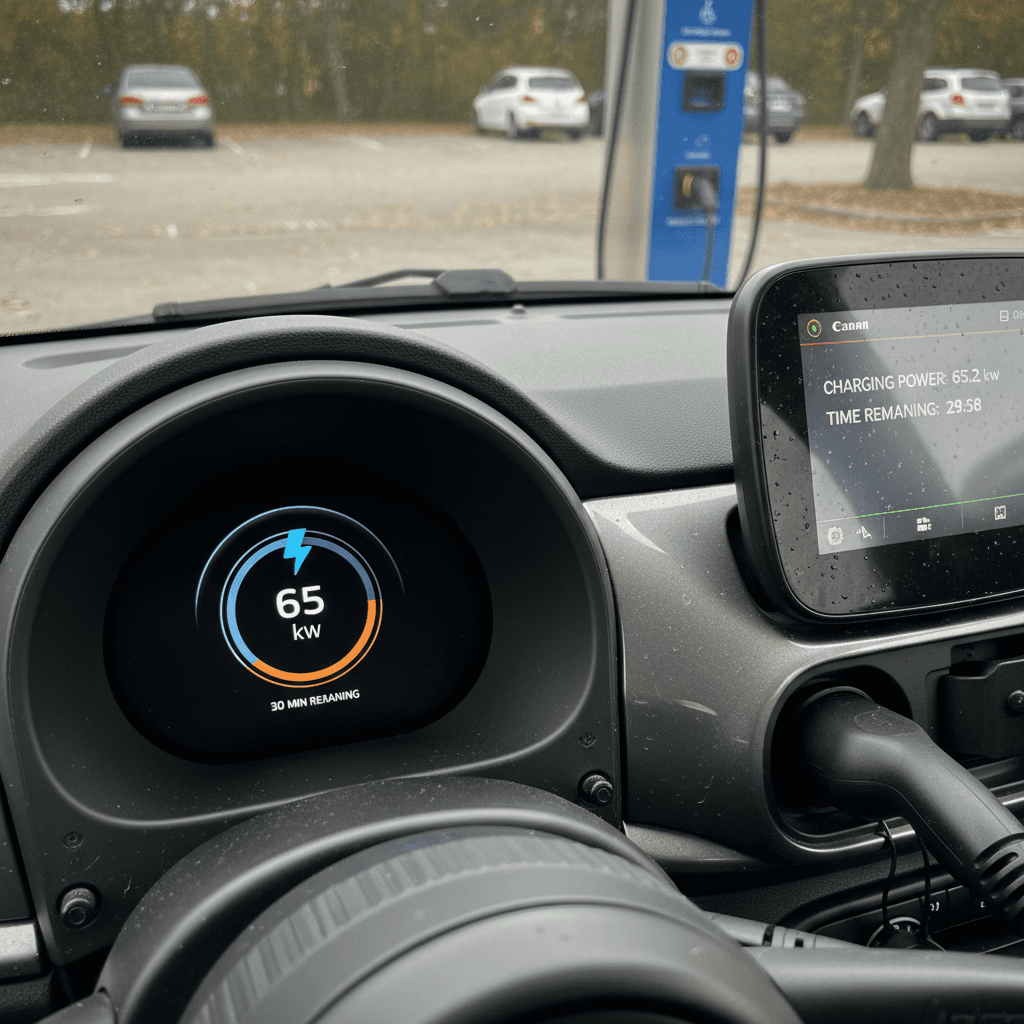
Let’s start with what most shoppers care about in a **Fiat 500e charging speed test**: how quickly it charges on a **DC fast charger** when you’re on the move. Independent instrumented testing of the new 500e found that from **10% to 90% state of charge (SoC)** on a high-powered DC station, the car averaged about **38 kW** and took **roughly 51 minutes** to complete that window. That’s much slower on average than the 85 kW headline figure suggests, but it doesn’t tell the whole story.
New Fiat 500e DC fast charging test snapshot
Approximate numbers based on instrumented testing and manufacturer data.
| Charging window | Time (approx.) | Average power | Approx. range added* |
|---|---|---|---|
| 10–50% | ~20–22 minutes | 45–55 kW | ~55–65 miles |
| 10–80% | ~30–35 minutes | 40–50 kW | ~80–95 miles |
| 10–90% | ~51 minutes | ~38 kW | ~110–120 miles |
Real-world averages can be noticeably lower than peak power claims, but still practical for a small-battery EV.
Peak vs average charging speed
In practice, 500e owners rarely need to charge all the way to 90% on DC. The smart strategy is to **arrive low, charge to 60–80%, and leave**, catching the quickest part of the curve. On a healthy charger with good conditions, that usually means you’re plugged in for **20–30 minutes**, enough time for a coffee and a stretch, before you have another day’s worth of city driving.
Level 2 home charging: how long it really takes
Most Fiat 500e owners will do **almost all** of their charging at home. The new car includes or offers a Level 2 solution, and its onboard charger can accept up to **11 kW** AC, though many households won’t supply that much. Here’s what charge times look like in the real world.
Fiat 500e Level 2 charging times (approximate)
Assumes the new ~37 kWh usable battery. Times are estimates, not lab results.
| Charger / circuit | Power (approx.) | 0–100% time | Miles of range per hour |
|---|---|---|---|
| 120V Level 1 (standard outlet, 12A) | 1.3–1.4 kW | 30–35 hours | 4–5 mi/hr |
| 240V Level 2, 30A (older 7.2 kW EVSE) | ~7 kW | 5.5–6 hours | 20–25 mi/hr |
| 240V Level 2, 40A (9.6 kW) | ~9 kW | 4–4.5 hours | 27–32 mi/hr |
| 240V Level 2, 48A (11 kW max) | 10–11 kW | ~3.5–4 hours | 32–36 mi/hr |
You don’t need the absolute fastest wallbox, most owners are fine with a 32–40 amp Level 2 charger.
Right-size your home charger
How the Fiat 500e charging curve behaves
Charging speed isn’t just about the station’s advertised power. It’s about the **charging curve**, how many kilowatts the car actually accepts at each state of charge. For the 42 kWh versions of the Fiat 500e sold abroad (closely related to the U.S. car), testing shows a pattern that applies well to the new U.S. 500e:
- From 5–20% SoC, the car can sit near its peak, around 75–85 kW on a strong DC fast charger.
- From 20–60% SoC, power gradually steps down, but often holds between 60 and 75 kW.
- Around 60–80% SoC, it tapers further, down toward 40–50 kW.
- Above 80–90% SoC, power can fall sharply, often under 30 kW, as the battery protects itself.
The sweet spot for road trips
Because the Fiat 500e is highly efficient in city driving, those higher-power portions of the curve go a surprisingly long way. European testing of the 42 kWh model suggests that at or near peak power, you can add roughly **60–75 miles of real-world range in 10–15 minutes** under ideal conditions. Even as power tapers, the car’s low consumption keeps your **miles-per-minute** refresh rate competitive with larger EVs that sip more energy per mile.
Real-world vs on-paper charging numbers
What the brochure says
- Battery: ~37–42 kWh pack
- Peak DC: up to 85 kW
- 10–80% DC: roughly 25–35 minutes in ideal conditions
- Level 2 home: as little as ~4 hours on a high-amperage wallbox
What owners & tests see
- Average DC power over a 10–90% session closer to 35–45 kW
- Stations, temperature, and battery preconditioning can easily add 5–15 minutes
- Most people use DC fast charging only for short hops from 15–70%
- At home, anything 7 kW and up feels “fast enough” for overnight use
Cold weather slows everything down
Tips to make your Fiat 500e charge faster
Practical ways to reduce your charging time
1. Arrive at fast chargers with a low, but safe, SoC
Aim to reach DC fast chargers around **10–20% SoC**. Below that window, you risk arriving with too little buffer. Above it, the charging curve may already be tapering and you’ll spend more time for fewer miles.
2. Unplug around 60–80% on DC
The last 20–30% of the battery fills slowly. For road trips, it’s usually faster to **leave at 70–80% and drive to the next charger** than to wait for 90–100% at a tapering rate.
3. Use preconditioning when available
If your 500e or charging app supports battery preconditioning, use it before a DC session. A warm battery can accept higher power and shorten your stop, especially in cold climates.
4. Right-size your home charging circuit
If you can, install at least a **32–40 amp Level 2 charger** on a 240V circuit. For most 500e owners, that’s the sweet spot of fast, affordable, and easy on your home electrical panel.
5. Keep the battery between 20–80% for daily use
Living in the middle of the pack is often healthier for long-term battery life. That can preserve your **charging speed and usable range** over the years, especially on a used 500e.
6. Learn your local DC fast chargers
Not all stations are equal. Over time, you’ll notice which locations consistently deliver close to the 500e’s potential and which underperform. Favor the good ones on longer drives.
How Recharged can help
Ready to find your next EV?
Browse VehiclesCharging costs and planning ahead
The Fiat 500e’s small battery and high efficiency make it relatively inexpensive to keep charged. In many U.S. markets, a full home charge on typical residential rates works out to just a few dollars. Public DC fast charging is pricier per kWh, but you’re also paying for **time saved** and road-trip flexibility.
Planning your Fiat 500e charging routine
How most owners actually live with the car
Daily commuting
Plug in most nights at home and let the car handle the schedule. A 30–60 mile commute is easily topped up during an overnight session, even on a modest Level 2 charger.
Weekend errands & city life
Short trips and stop‑and‑go driving play to the 500e’s strengths. Many owners find they only need to plug in every few days.
Occasional road trips
Plan for more frequent, shorter DC stops than you would with a long‑range EV. Use apps to map **reliable CCS fast chargers** along your route and keep stops in the 10–70% window when possible.
Buying a used Fiat 500e: what to check about charging
If you’re looking at a used Fiat 500e, whether it’s the original 24 kWh model or the newer 42 kWh version, charging behavior should be part of your evaluation. A healthy battery and the right charging hardware make the difference between a fun, low‑stress city car and a frustrating one.
Used Fiat 500e charging checklist
Confirm which generation you’re buying
Verify the model year and whether the car is the **older 24 kWh “compliance” 500e with no DC fast charging** or the newer 2024+ car with **CCS fast charging up to 85 kW**. This dramatically changes your ownership experience.
Review battery health and range
Ask for a **battery health report** or range history. Degradation reduces both range and the practical usefulness of DC fast charging. With Recharged, every used EV comes with a **Recharged Score** that includes battery diagnostics.
Test a real charging session
If you can, plug the car into a Level 2 charger during your test drive and confirm it pulls the expected power (around 6–11 kW depending on the EVSE). For a newer 500e, also try a brief DC fast‑charge stop to ensure the CCS hardware works properly.
Inspect the charge port and cables
Look for damage, corrosion, or loose connections on the charge port and any included home charging equipment. Fixing a damaged inlet or buying a replacement EVSE can add unexpected cost.
Check software & charging settings
Make sure scheduled charging, charge limits, and any charging‑related settings in the infotainment system are working correctly and easy to access. Misconfigured limits can make the car appear to charge slowly.
Plan your charging ecosystem
Before you buy, map out where you’ll charge most often, home, work, or public networks. If you’re buying from Recharged, you can talk with an **EV specialist** about home‑charging options and public‑network strategies for your area.
Fiat 500e charging FAQ
Common Fiat 500e charging questions
Bottom line: is the Fiat 500e fast enough to charge?
If you’re expecting Tesla‑style, 250 kW headline numbers, the Fiat 500e will disappoint on paper. But if you judge it as what it is, a compact, city‑focused EV with a small battery, its **real‑world charging speed test results** make a lot more sense. A healthy new 500e can gain a workday’s worth of range in a **20–30 minute DC fast‑charge stop**, and it easily refills overnight on a modest Level 2 home setup.
For many drivers, that’s more than enough. And if you’re exploring a **used Fiat 500e** or other pre‑owned EV, working with a specialist retailer like Recharged can help you decode battery health, charging behavior, and ownership costs before you buy, so the charging experience you get matches the lifestyle you have in mind.