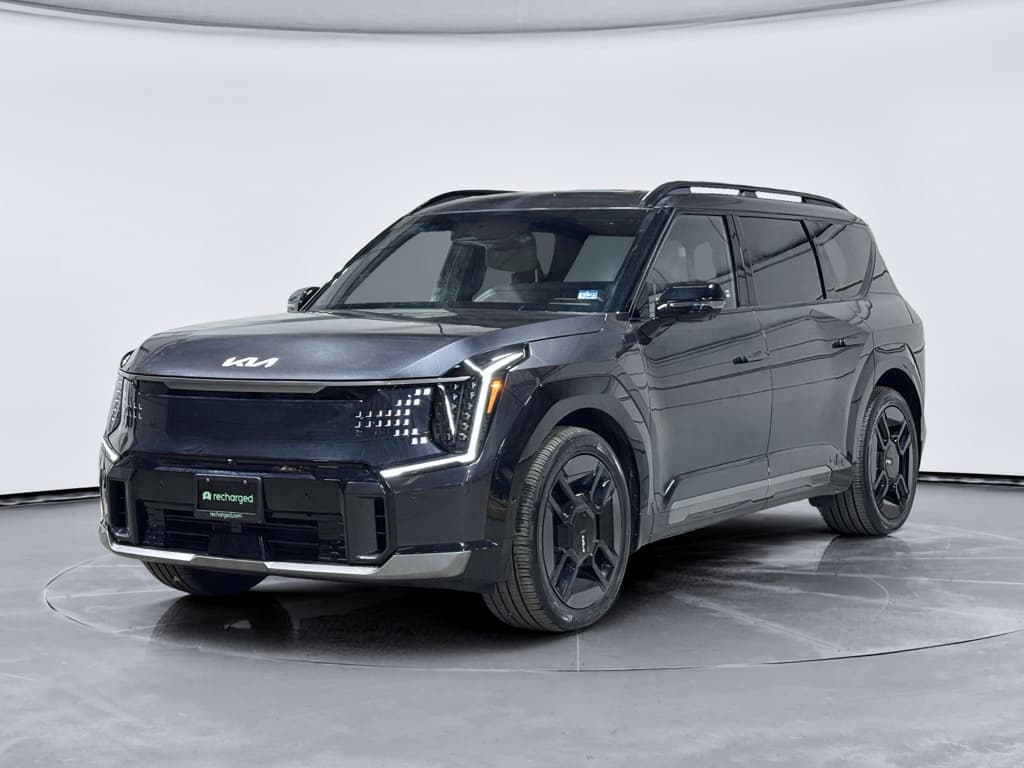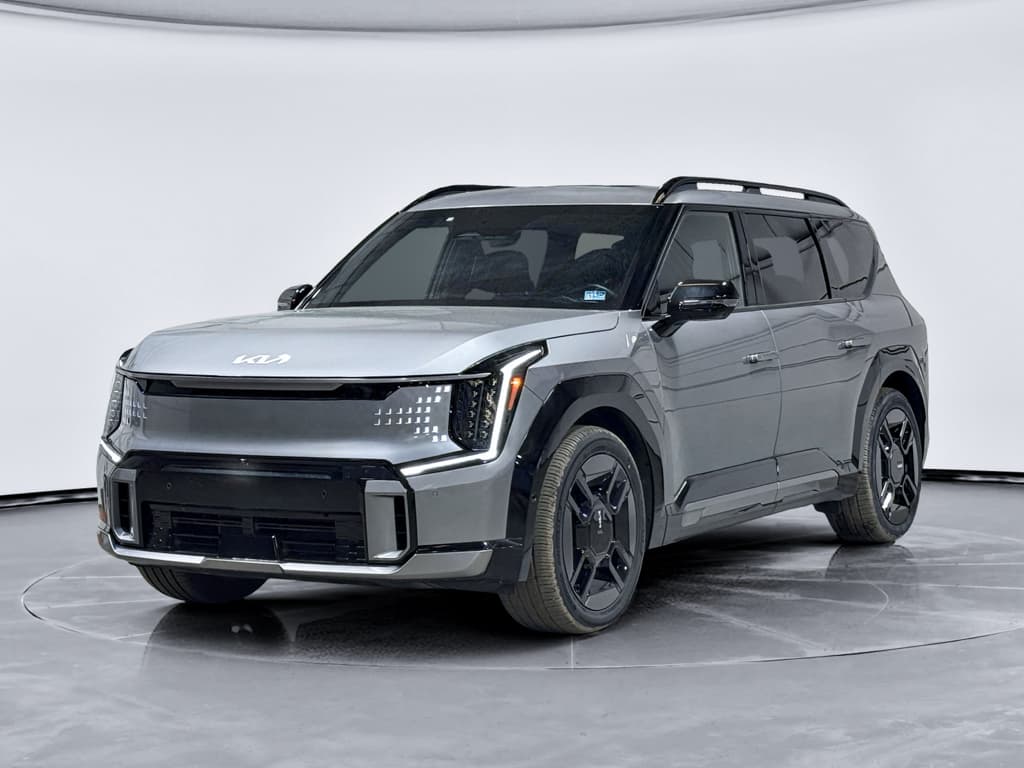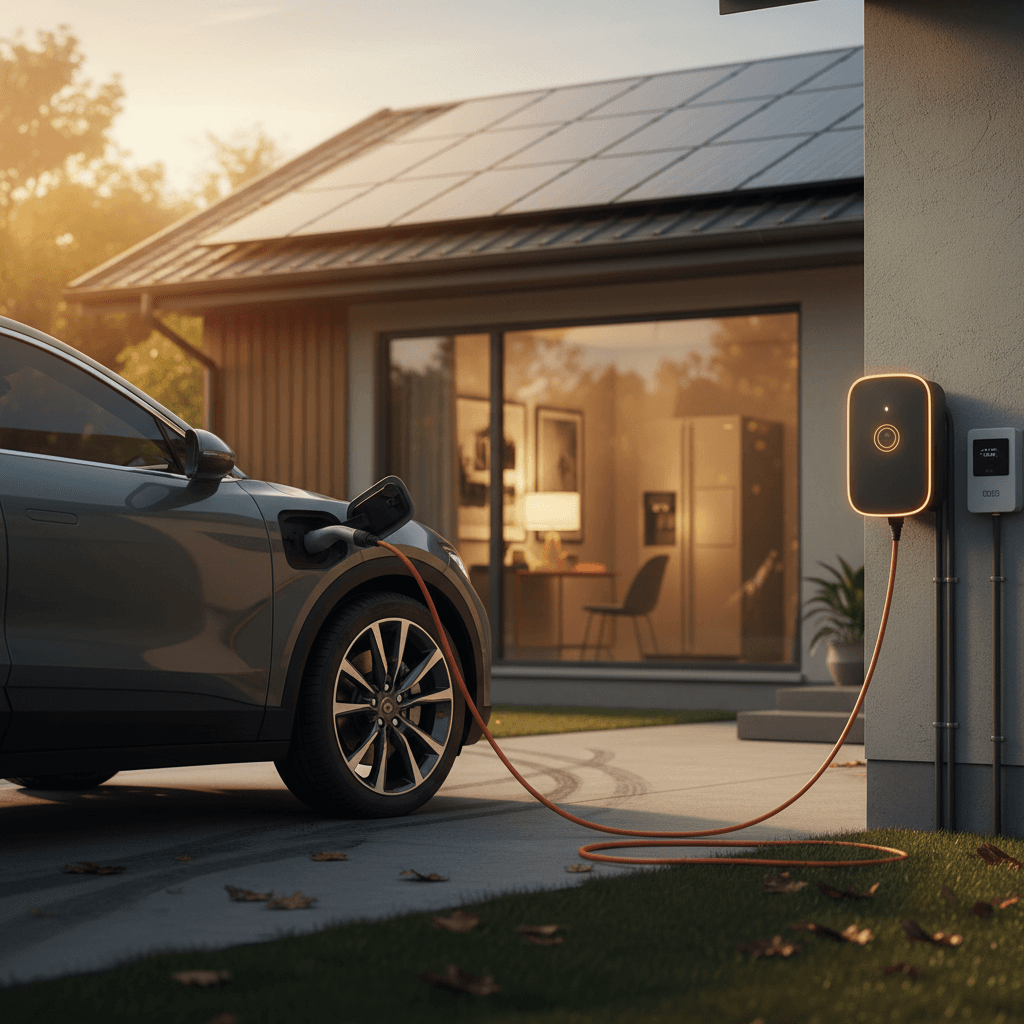
The Kia EV9 wasn’t just engineered to haul kids and Costco runs. With its built‑in bidirectional hardware, it can also act as a silent home generator. A proper Kia EV9 vehicle-to-home setup lets you power critical loads during an outage and, in some markets, arbitrage electricity prices like a tiny hedge fund in your driveway.
Quick reality check
Why Kia EV9 vehicle-to-home matters
Most EV owners first discover V2H when a storm knocks the grid offline and suddenly that 99.8 kWh battery in the driveway looks a lot like a lifeline. A typical U.S. home uses roughly 25–30 kWh of electricity per day. That means a fully charged EV9 can, in principle, run an average household for multiple days, especially if you’re smart about which circuits you power and when.
What Kia EV9 V2H can do for you
Beyond just keeping the lights on
Energy resilience
Keep critical circuits running during blackouts: fridge, Wi‑Fi, a few outlets, lights, maybe your gas furnace blower.
Bill optimization
In time‑of‑use markets, charge the EV9 off‑peak and discharge at peak to shave your bill if your utility allows it.
Cleaner energy
Pair V2H with solar to store excess daytime production in your EV9 rather than curtailing it or sending it back for pennies.
Think of the EV9 as a giant home battery
Kia EV9 V2H: what you can actually do today
Automakers love futuristic CES demos. What matters is what’s shipping. As of 2026, Kia’s V2H story in the U.S. is grounded in a specific, real product: the Wallbox Quasar 2, a bidirectional DC charger purpose‑built to work with the EV9’s CCS‑based charging system and Kia’s bidirectional software update.
Kia EV9 V2H at a glance
V2H is not just V2L
Equipment you need for Kia EV9 vehicle-to-home
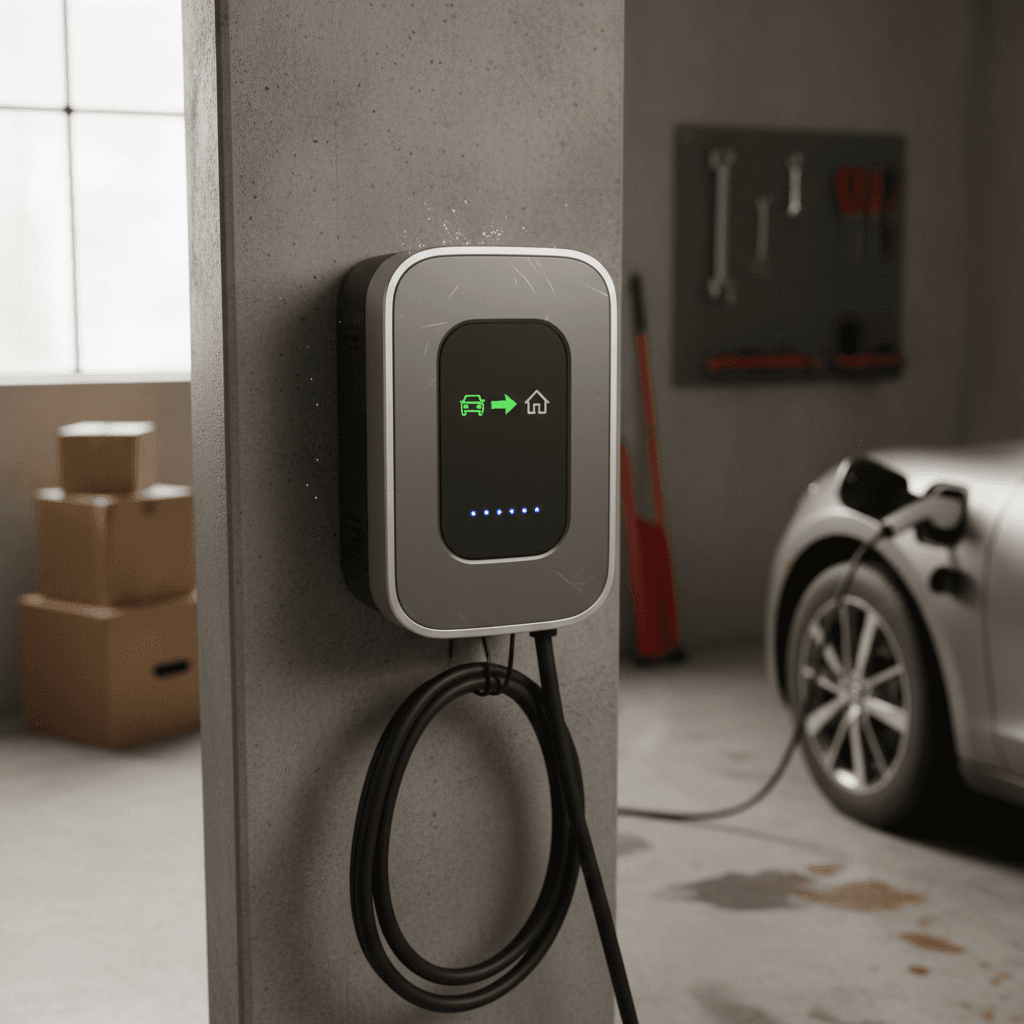
A proper Kia EV9 vehicle-to-home setup is a small ecosystem, not a single box from Amazon. At minimum, you’ll combine the car, a Quasar 2 charger, and dedicated home power hardware that can safely island your house from the grid.
Core components of an EV9 V2H system
What each piece does and why you need it
| Component | Role in the system | Who provides it |
|---|---|---|
| Kia EV9 with V2H software | Stores and supplies energy; communicates with charger for bidirectional operation. | Kia (vehicle + software update via dealer). |
| Wallbox Quasar 2 | 11.5 kW bidirectional DC charger that moves power between EV9 and home. | Wallbox; sold through Wallbox and partners. |
| Power Recovery Unit (PRU) or backup interface | Connects Quasar 2 to your main panel, manages islanding during outages. | Wallbox + licensed electrician/installer. |
| Main service panel + subpanel | Distributes power to home circuits; backup panel feeds essential loads during outages. | Your existing electrical system; may require upgrades. |
| Utility metering & permissions | Ensures V2H/V2G complies with local interconnection rules and safety requirements. | Your utility and local permitting authority. |
Exact model names and pricing can change; always confirm current details with your installer and Kia dealer.
EV9 compatibility check
Home and utility requirements for EV9 V2H
Here’s where dreams of powering the neighborhood meet the lumbering reality of building codes and utility rules. A Kia EV9 V2H system can only be installed where the home and local grid are ready for it.
Home readiness checklist
1. Sufficient electrical service
Most V2H setups expect at least 100–200A service for the home, with available capacity for an 11.5 kW charger. If your panel is already maxed out with HVAC, EV charging, and electric cooking, you may need a service upgrade.
2. Compatible main panel location
Your main panel and meter location affect how easy it is to add a PRU or backup subpanel. Long wire runs through finished walls mean higher labor costs.
3. Utility interconnection approval
Some utilities treat V2H/V2G similarly to home solar or batteries. Expect paperwork, inspections, and possibly a new meter or tariff before you can export or backfeed power.
4. Space for equipment
Quasar 2 and the PRU take wall space near your panel or garage. Your installer will need clearances for code‑compliant mounting and service access.
5. Local permitting rules
Your city or county may have specific requirements for transfer switches, labeling, and anti‑islanding protection. A licensed electrician familiar with DERs (distributed energy resources) is worth their fee.
Do not DIY your transfer switch
Step‑by‑step Kia EV9 vehicle-to-home setup
Once you’ve confirmed your EV9 and home are candidates, the actual process isn’t mystical, but it is bureaucratic. Think of it as buying solar, with your car as the battery.
- Confirm EV9 eligibility with a Kia dealer. Provide your VIN, trim, and software version; ask explicitly about V2H support and any required updates.
- Pre‑qualify your home on Wallbox’s Quasar 2 site or with their installer partner. You’ll share your address, service size, photos of your panel, and EV9 details.
- Get a site visit and formal quote. A licensed electrician or partner like COIL will inspect your panel, grounding, and equipment locations, then price hardware and labor.
- Submit utility and permit applications. Your installer usually handles this, but approvals can take weeks depending on your location and whether V2G export is involved.
- Install Quasar 2, PRU, and backup subpanel. This can be a one‑ or two‑day job: mounting hardware, pulling conduit, wiring the backup panel, and commissioning the system.
- Commission the EV9 for V2H. Your installer and Kia’s documentation will walk you through pairing the car with the charger and enabling bidirectional operations in the app.
- Run a controlled outage test. Before a real storm, simulate a grid outage so you can see what stays powered, how fast the EV9 discharges, and whether any settings need tweaking.
Where Recharged fits in
Ready to find your next EV?
Browse VehiclesUsing your EV9 to power your home
Once your Kia EV9 vehicle‑to‑home setup is commissioned, daily life doesn’t change much, until the grid flickers. Then, all those kilowatt‑hours turn into peace of mind.
During normal grid operation
- Use scheduled charging so your EV9 fills up during off‑peak hours or when your solar is producing freely.
- Let the Quasar 2’s software manage when to pull from the car versus the grid if your utility offers favorable tariffs.
- Set minimum state‑of‑charge limits in the app so the system never drains the EV9 below your daily driving needs.
During an outage
- Quasar 2 and the PRU detect the outage and automatically island your backup panel from the grid.
- The EV9 begins supplying power to the critical‑loads panel: lights, fridge, outlets, possibly your gas furnace blower or mini‑split.
- You monitor remaining range and battery percentage in the Kia app and the Wallbox app, shedding unneeded loads as needed.
Set a floor for your range
Costs, payback, and whether V2H is worth it
The inconvenient truth about early V2H is that it’s more about resilience than quick financial payback. You’re buying a feature set that behaves more like insurance than a high‑yield savings account.
Kia EV9 V2H: where the money goes
And what you get back
Hardware cost
Expect the Quasar 2, PRU, and accessories to cost several thousand dollars before installation. Whole‑home‑backup capable systems tend to live in stationary‑battery price territory.
Installation & upgrades
Trench work, panel upgrades, labor, permits, and inspections can rival the cost of the charger itself, especially in older homes.
Value proposition
The real payoff is keeping your home live during extended outages without a noisy, fuel‑hungry generator, using a battery you already own for transportation.
Bill savings are a bonus, not the thesis
Kia EV9 V2H vs simple V2L backup
An honest EV9 energy guide has to address the budget alternative: skipping full V2H and relying on the EV9’s built‑in 120V V2L outlets or adapter to run a few key devices directly.
Full V2H (Quasar 2 + PRU)
- Pros: Automatic switchover, powers a critical‑loads panel, behaves like a whole‑home battery, fully code‑compliant.
- Cons: High upfront cost, requires permits and utility approvals, more complex to design and install.
- Best for: Homes with frequent or long outages, solar households, energy nerds who will actually tune the system.
Simple V2L (120V outlets/adapter)
- Pros: Cheap and simple; run an extension cord to your fridge, Wi‑Fi, a few lamps; no panel work required.
- Cons: Manual management, limited power, no automatic load transfer, easier to overload circuits or create cord spaghetti.
- Best for: Renters, light‑outage areas, or owners who mainly want the EV9 as a big, quiet camping generator.
A hybrid strategy that often makes sense
Common pitfalls and how to avoid them
Avoid these Kia EV9 V2H gotchas
Assuming every EV9 is V2H‑ready
Hardware revisions and software builds matter. Always verify V2H eligibility by VIN with Kia before buying a used EV9 or ordering a bidirectional charger.
Underestimating installation complexity
V2H is closer to adding a home battery than installing a simple Level 2 charger. Budget time and money for panel work, permits, and inspections.
Ignoring driving needs during outages
Don’t treat your EV9 as an infinite battery. Set a reserve state of charge so you can still drive if you need to evacuate or commute.
Not planning your critical loads
Randomly throwing circuits on the backup panel can waste your precious kWh. Work with your electrician to prioritize exactly what must stay live during an outage.
Forgetting long‑term battery health
Occasional deep discharges for emergencies are fine, but chronic cycling for tiny bill savings isn’t worth accelerated battery wear. Balance grid games with pack longevity.
Watch thermal limits
Kia EV9 vehicle-to-home FAQ
Frequently asked questions about EV9 V2H
How Recharged fits into your EV9 energy plan
Choosing a Kia EV9 as both family hauler and home battery means the car’s pack is now part of your household infrastructure. When you shop used, that makes verified battery health more than a trivia point, it’s the backbone of your resilience plan. Every EV we list at Recharged comes with a Recharged Score battery‑health report, transparent pricing, and EV‑specialist guidance so you can confidently pick an EV9 that’s ready for years of V2H duty.
Whether you start with a simple V2L outage kit or go all‑in on a Wallbox‑powered Kia EV9 vehicle-to-home setup, the through‑line is the same: you’re turning a depreciating asset into a working piece of your home’s energy system. If you’re ready to run the numbers on a used EV9, or compare it with other V2H‑capable EVs, Recharged can help you find, finance, and deliver the right EV to your driveway.