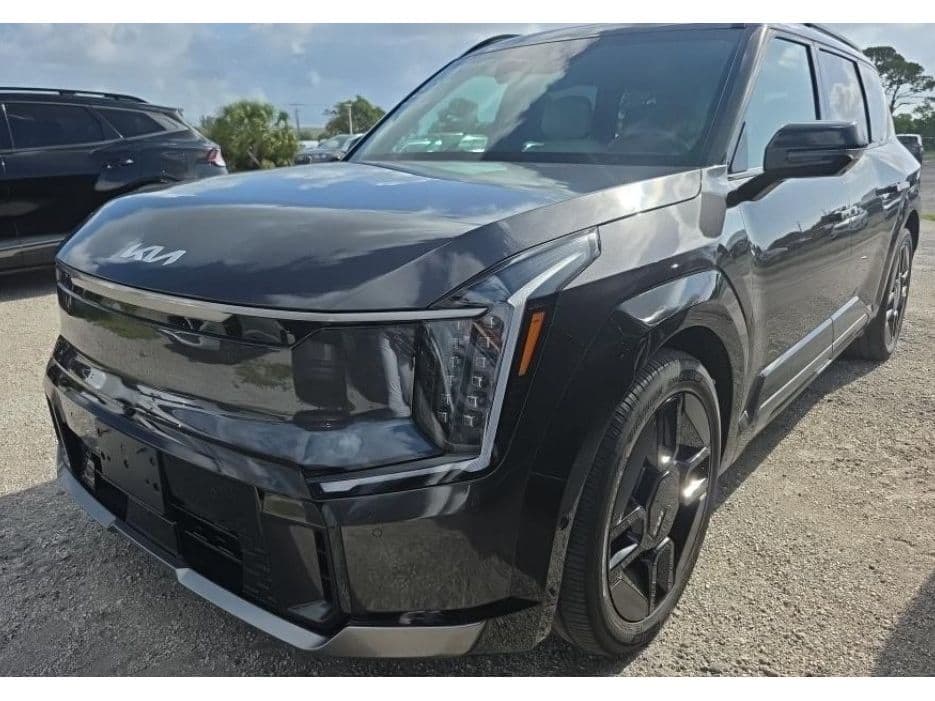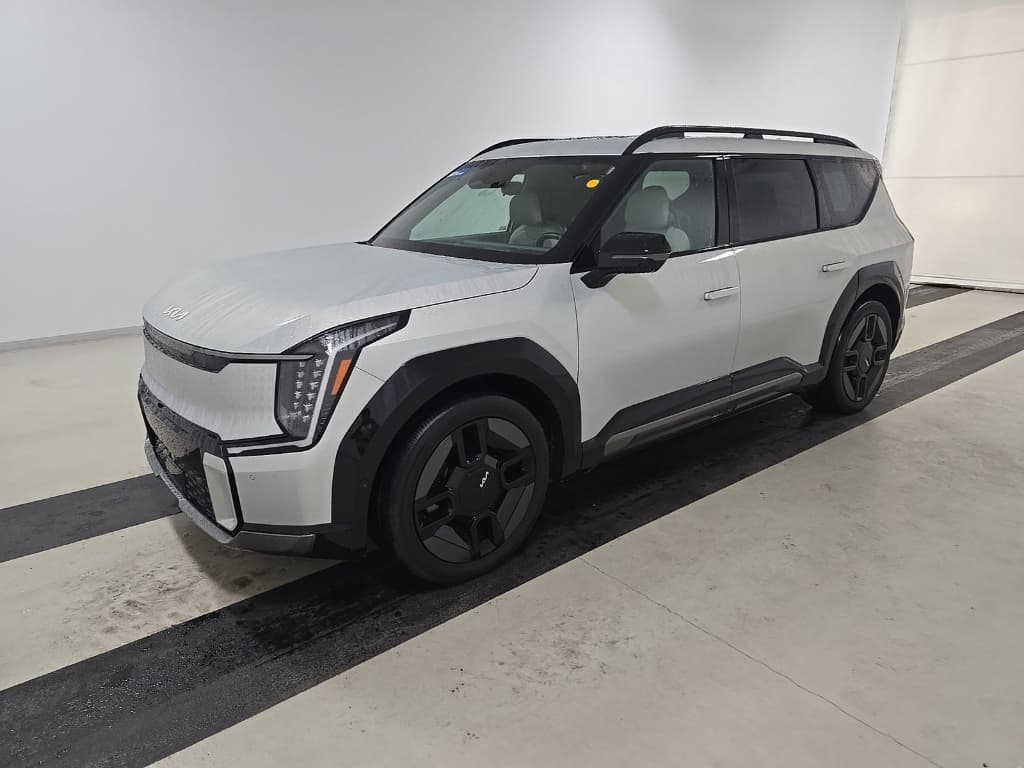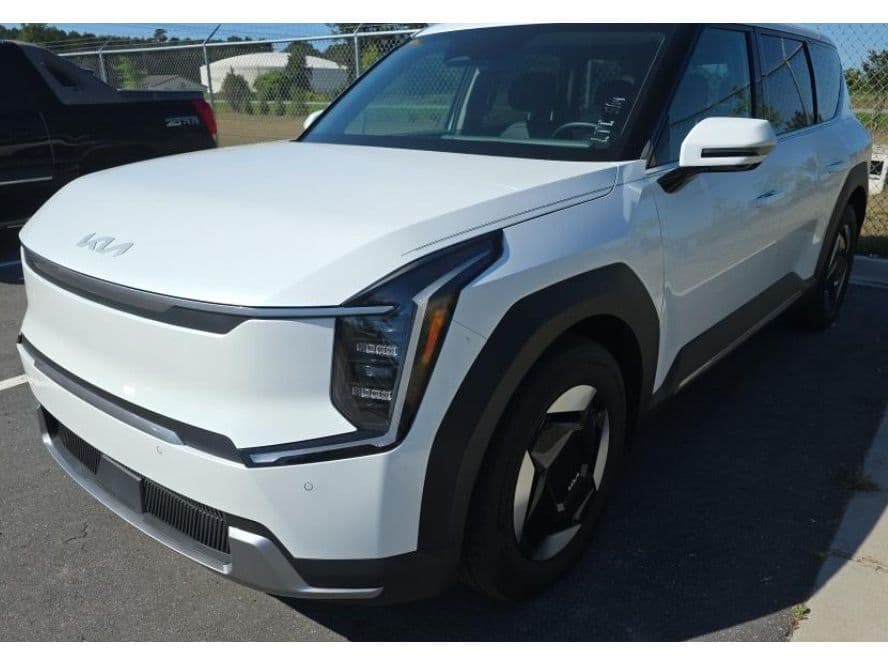
The Kia EV9 insurance cost in 2026 sits squarely in “luxury-family-EV” territory: not ruinous, but absolutely something you need to budget for. This is a three-row, 6,000‑pound electric flagship with a luxury price tag and a battery the size of a studio apartment. Insurers notice all of that. The good news is that its excellent safety record and a few smart moves on your part can keep premiums from running away.
What this guide covers
Kia EV9 insurance cost in 2026: the quick overview
Kia EV9 insurance at a glance (2026 U.S. estimates)
Across multiple national rate tools and 2025–2026 insurance datasets, most U.S. drivers are seeing full‑coverage Kia EV9 premiums cluster around the mid‑$2,000s per year. Some sources peg it as high as about $2,650 annually for an average driver, while others show around $1,700 for a six‑month policy that annualizes to the low‑$3,000s for higher‑risk profiles. In other words: if you’re a clean‑record, middle‑of‑the‑road driver, plan on something slightly above the national full‑coverage average for 2026 and you’ll be in the right ballpark.
Your mileage may vary, wildly
How much does Kia EV9 insurance cost in 2026?
2026 Kia EV9 insurance cost ranges (U.S., full coverage)
Approximate ranges for a 2024–2026 Kia EV9 with typical limits (e.g., 100/300/100 liability, comprehensive and collision) and a clean record. Actual quotes will vary.
| Driver profile | Estimated annual premium | Monthly equivalent | What this usually means |
|---|---|---|---|
| Excellent risk in low-cost state | $1,700–$2,100 | $140–$175 | Middle‑aged driver, clean record, strong credit, suburban or rural, lower‑theft area. |
| Average driver in average state | $2,300–$2,900 | $190–$245 | Typical commuter with solid record and good credit in a mainstream market. |
| Urban / high‑cost market | $2,900–$3,600+ | $245–$300+ | Dense metro area with higher repair and labor costs, more claims, or higher theft risk. |
| Young or high‑risk driver | $3,600–$5,000+ | $300–$415+ | Under 25, ticket/accident history, or minimal prior insurance; insurers price in a lot more risk. |
These are directional guideposts for budgeting your EV9, not guaranteed prices.
Most national averages for the Kia EV9 point to roughly $2,400–$2,900 per year in 2026 for full coverage if you’re a typical driver with solid credit. That’s somewhat above the overall U.S. average full‑coverage premium but in line with other high‑value electric SUVs. Minimum‑coverage policies (state‑mandated liability only) can drop closer to the low‑$1,000s, but for a vehicle in EV9 money, that’s a false economy, one bad accident and you’ll wish you’d paid for comprehensive and collision.
Quick way to sanity‑check a quote
Why the Kia EV9 isn’t cheap to insure
- High vehicle value. A nicely equipped EV9 can easily push into luxury‑SUV pricing. Insurers are on the hook for that full value if it’s totaled.
- Big battery, big repair bills. Collision damage around the pack, high‑voltage wiring, or underbody protection can turn a minor shunt into a five‑figure claim.
- Complex sensors and bodywork. Cameras, radar, lidar, and exotic panels in the bumpers and pillars aren’t cheap to source or calibrate.
- Three-row family duty. Many EV9s will be loaded with people and gear. Insurers know that when a full-size family EV is in a crash, the potential exposure is high.
There’s also the broader EV story: industry data through 2024–2025 shows that EV collision and comprehensive claims tend to cost more than their internal‑combustion equivalents, thanks mostly to labor‑intensive repairs and limited parts availability. That doesn’t mean EV9 drivers crash more; it just means each crash is more expensive for the insurer, and they price accordingly.
Totaled sooner than you think
8 factors that shape your personal EV9 insurance rate
What underwriters actually look at for a Kia EV9
1. Where you live and park
ZIP code is destiny. Dense urban areas with higher accident, theft, and litigation rates cost more. Off‑street or garage parking at night can help, and some carriers explicitly ask how the EV9 is stored.
2. Your driving history
Few things move the needle like tickets and at‑fault accidents. A clean three‑ to five‑year history can knock hundreds off an EV9 policy versus a driver with recent violations.
3. Credit‑based insurance score
In most states, insurers use a credit‑based score as a proxy for risk. Strong credit can materially reduce your EV9 premium; weak credit can make it sting.
4. Annual mileage and usage
A 6,000‑mile‑per‑year family shuttle used mostly on weekends will price differently than a 20,000‑mile‑per‑year commuter or rideshare vehicle. Be honest, but don’t round up unnecessarily.
5. Coverage limits and deductibles
High liability limits and low deductibles drive the premium up. Raising comprehensive and collision deductibles from $500 to $1,000 can drop your annual EV9 cost meaningfully, if you can afford the out‑of‑pocket risk.
6. Driver age and household makeup
Under‑25 drivers, especially males, are rate kryptonite. Add a teen to an EV9 policy and you can see eye‑watering quotes. Multi‑car and multi‑driver discounts can help, but youth still carries a surcharge.
7. Safety and driver‑assist features
Advanced driver assistance systems (ADAS) like forward collision avoidance and lane keeping can qualify the EV9 for discounts, particularly when combined with its top safety ratings.
8. EV‑specific discounts or surcharges
Some insurers now offer modest <strong>EV discounts</strong> for lower local emissions or telematics‑verified gentle driving; others quietly add surcharges for higher repair costs. It’s worth asking how your carrier treats EVs specifically.
EV9 safety ratings and how they (quietly) help your premium
If there’s a counterweight on the insurance scale for the Kia EV9, it’s safety. From the 2024 launch, the EV9 has scored well in crash testing, and by the 2025 and 2026 model years it has earned the Insurance Institute for Highway Safety’s Top Safety Pick+ award, the group’s highest designation. NHTSA testing has likewise shown strong results for overall crash performance.
- High scores in small‑ and moderate‑overlap frontal crashes plus side impact testing mean the EV9 protects people well when things go wrong.
- Good head restraint and crash cage performance reduces the chance of serious neck and torso injuries.
- Available crash‑avoidance tech (automatic emergency braking, lane‑keeping, blind‑spot monitoring) can qualify for safety discounts with some insurers.
- A strong safety record over the first few years of sales gives actuaries more confidence that the EV9 won’t become an outlier loss machine.
Family hauler, not a liability grenade
Kia EV9 vs other electric SUVs: insurance cost comparison
If you’re cross‑shopping the EV9 with other family EVs, it helps to know where it lands. Across 2025–2026 insurance surveys, big luxury EVs like the Mercedes‑Benz EQS SUV or Tesla Model X often sit at the top of the expense pyramid, while smaller crossovers like the Hyundai Ioniq 5 or Kia EV6 slide closer to mainstream pricing.
Approximate 2026 full‑coverage insurance ranges by EV model
Directional comparison of typical annual premiums for comparable drivers. Actual quotes depend heavily on your profile and state.
| Model | Segment | Typical annual full coverage (2026) | How it compares to EV9 |
|---|---|---|---|
| Kia EV9 | 3‑row electric SUV | $2,400–$2,900 | Baseline for this guide. |
| Kia EV6 | 2‑row electric crossover | $2,100–$2,700 | Generally a bit cheaper than the EV9 thanks to smaller size and lower value. |
| Hyundai Ioniq 5 | 2‑row crossover | $2,100–$2,700 | Similar band to EV6; can undercut EV9 for many drivers. |
| Tesla Model Y | 2‑row crossover | $2,300–$3,200 | Often similar to or slightly above EV9, depending on market and insurer appetite for Tesla claims data. |
| Tesla Model X | 3‑row luxury EV | $3,000–$4,000+ | Typically more expensive than EV9 to insure due to higher vehicle cost and repair pricing. |
| Volvo EX90 | 3‑row luxury EV SUV | $2,700–$3,300+ | Likely to sit slightly above EV9, in line with premium European brands. |
For a family buyer, the EV9 tends to cost more to insure than two‑row EV crossovers, but often a bit less than the priciest luxury nameplates.
Big takeaway from the comparison
10 ways to lower your Kia EV9 insurance cost
You can’t change the fact that the EV9 is a large, expensive electric SUV. You can absolutely change how scary your premium looks. Here’s where to start.
Practical levers you can actually pull
1. Quote with at least 3–4 insurers
Different companies treat EVs very differently. Some see an EV9 and shrug; others see a moving liability spreadsheet. Get quotes from a mix of national and regional carriers before you commit.
2. Adjust deductibles thoughtfully
If you can comfortably handle a $1,000 out‑of‑pocket hit, raising comprehensive and collision deductibles from $500 can shave meaningful dollars off your premium without gutting coverage.
3. Right‑size your liability limits
Don’t go bare‑bones, but don’t blindly accept ultra‑high limits without considering your net worth and risk tolerance. Many families land around 100/300/100 plus an umbrella policy for extra protection.
4. Enroll in telematics / usage‑based programs
“Drive‑safe and save” style programs that track braking, acceleration, and mileage can work well with the EV9’s smooth torque and regenerative braking, especially if you’re a gentle driver.
5. Ask about EV or green‑vehicle discounts
Some insurers now offer modest incentives for insuring electric vehicles or using home charging during off‑peak hours. The discount won’t pay your mortgage, but every bit helps.
6. Bundle home and auto
Bundling your EV9 with homeowners or renters insurance can unlock double‑digit percentage discounts with many carriers. Run the math on the combined package, not just the car.
7. Clean up tickets before you shop
If a minor violation is about to age off your record, waiting a few months before binding a long policy term can sometimes nudge you into a better risk tier.
8. Remove unnecessary add‑ons
Roadside assistance, rental reimbursement, and “bells and whistles” coverage all add cost. Some EV9 buyers get roadside via Kia, a credit card, or another membership, don’t pay for it twice.
9. Be strategic with youthful drivers
If you have a teen at home, talk to your agent about which vehicle they’re listed as primary on, and hunt hard for good‑student and driver‑education discounts.
10. Consider a slightly older or lower‑trim EV9
A used 2024 EV9 with a lower sticker price costs less to replace than a brand‑new 2026 GT‑Line. Over a few years, the difference in insurance and depreciation can be substantial.
Paying in full vs monthly
Used Kia EV9 insurance in 2026: what changes?
By 2026, the earliest 2024 EV9s are already in the used market sweet spot. That’s where Recharged leans in: making late‑model used EVs easier to shop and easier to understand. From an insurer’s point of view, a gently used EV9 isn’t dramatically different from a new one, but a few details work in your favor.
New vs. used Kia EV9: how insurance usually shifts
Same metal, different math on value and risk.
Insuring a new EV9
- Higher replacement cost: A brand‑new EV9, especially in GT‑Line trim, gives insurers a big number to cover if it’s totaled.
- Loan or lease requirements: Lenders often insist on low deductibles and robust coverage, which raises cost.
- Gap coverage pressure: You’re more likely to consider gap insurance early in the loan life, further increasing total spend.
Insuring a used EV9
- Lower actual cash value: A 2‑year‑old EV9 has already taken the steepest depreciation hit, so the insurer’s maximum exposure is lower.
- More flexibility on coverage: With smaller loans, or a paid‑off vehicle, you can sometimes adjust deductibles and optional coverages more aggressively.
- More data on reliability: As claim histories mature, insurers get more comfortable pricing used EV9s, which can stabilize rates.
Where Recharged fits in
Insurance and the true cost of owning an EV9
When you zoom out from the monthly bill, insurance is just one line item in the EV9’s total cost of ownership. Big electric SUVs save you money on fuel and some types of maintenance, but they hand some of that back in insurance and, in some states, higher registration or property taxes.
Where the EV9 can save you money
- Fuel: Even with rising electricity prices, charging at home, especially off‑peak, is usually far cheaper per mile than gas for a similarly sized three‑row SUV.
- Routine maintenance: No oil changes, fewer wear items, and less brake wear thanks to regen keep day‑to‑day service costs in check.
- Potential incentives: Depending on when and how you buy, state or utility incentives for EVs and home charging can ease the pain elsewhere.
Where the EV9 can cost more
- Insurance: As this guide makes clear, premiums tend to run above a comparable gas SUV, though not wildly so in many markets.
- Collision repairs: Body shops that can handle aluminum and high‑voltage EVs are still a smaller, pricier club.
- Depreciation: Like most high‑priced EVs, the EV9 can shed value quickly in the first few years, something buyers of used EV9s on platforms like Recharged can actually use to their advantage.
Think in five‑year chunks, not monthly crumbs
Kia EV9 insurance cost 2026: FAQ
Frequently asked questions about Kia EV9 insurance in 2026
The Kia EV9 is a big, impressive piece of electric hardware, and insurers price it accordingly. In 2026 you should expect to pay more to insure it than a compact crossover or a modest gas SUV, but not wildly more than its electric peers, and less than some luxury badges. The key is to treat insurance as part of the EV9’s total financial picture, not an afterthought. If you pair smart coverage choices with the right vehicle, ideally a well‑documented used EV9 with a strong Recharged Score Report, you can enjoy the space, safety, and serenity of this three‑row electric flagship without letting the premium drive the whole ownership story.