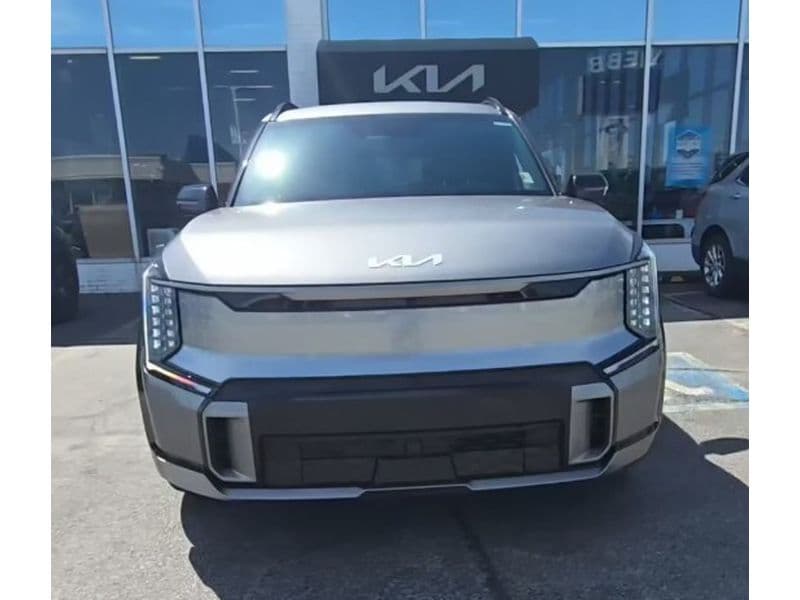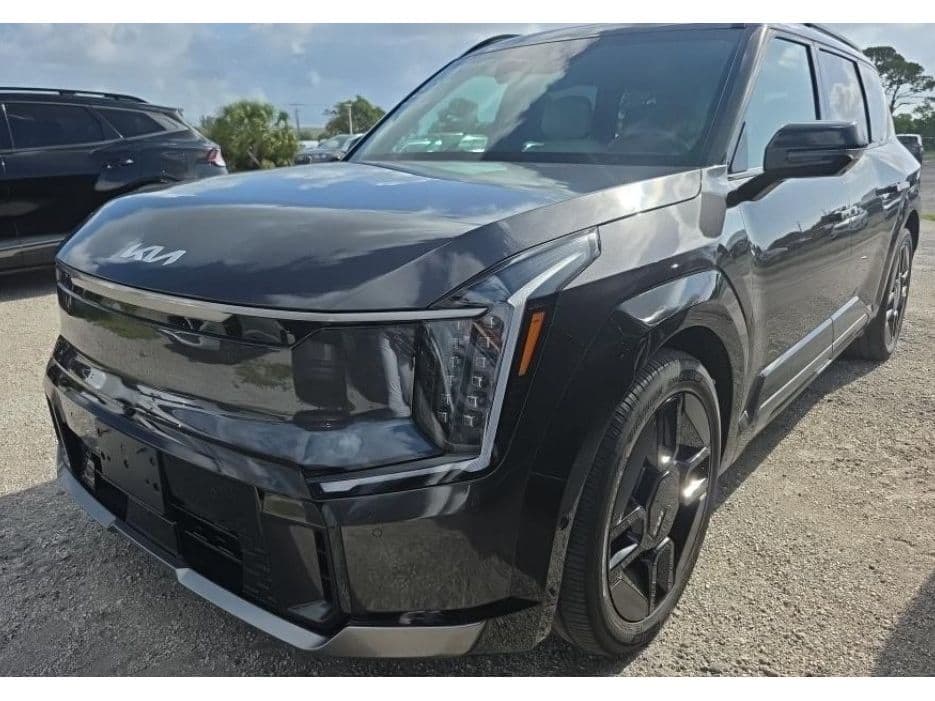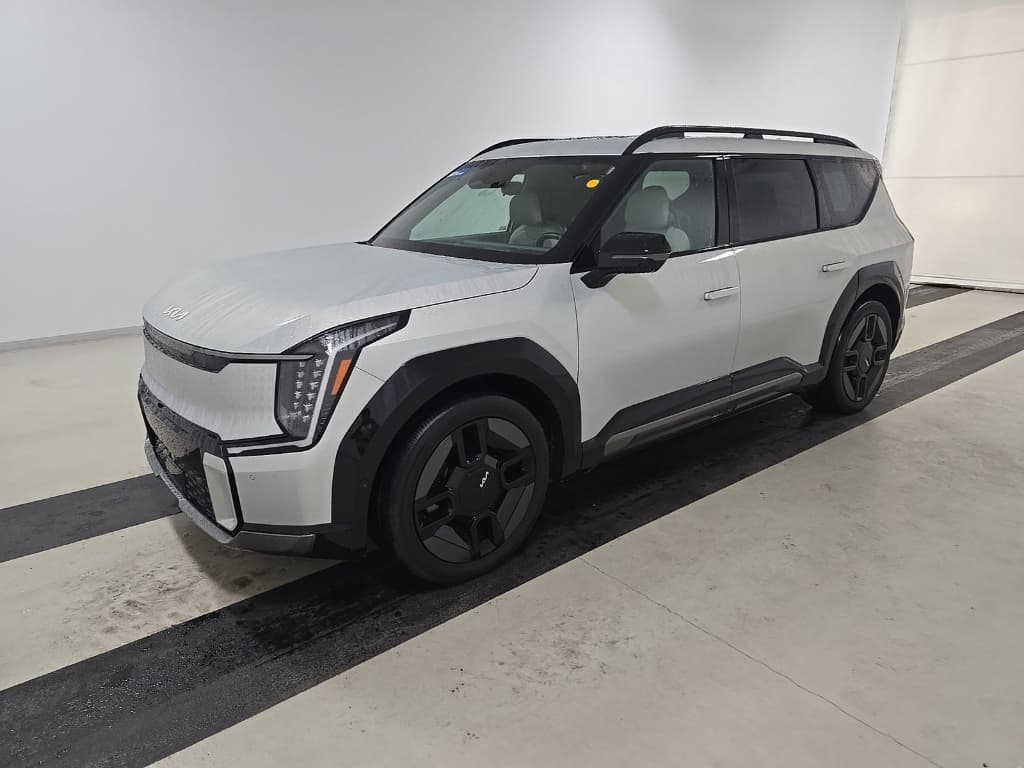
If you’re looking at a Kia EV9, you’re probably wondering how its big three‑row body pairs with Kia’s 800‑volt tech at the plug. Marketing claims promise 10–80% in the mid‑20‑minute range, but what does a real Kia EV9 charging speed test actually look like, and how does that translate to road‑trip time and home charging in your driveway?
Why the EV9’s charging matters
Kia EV9 charging overview: key specs
Kia EV9 battery & charging headline numbers
Every EV9 rides on Hyundai‑Kia’s E‑GMP platform with an 800‑volt electrical architecture. That allows impressively high DC fast‑charging power, 230 kW+ in real tests, without the heavy, high‑amp cables you see on 400 V systems. Two usable battery sizes are available:
- 76.1 kWh pack – standard on the Light RWD trim.
- 99.8 kWh pack – standard on Light Long Range and all AWD trims. This is the pack in most U.S. EV9s you’ll see at chargers.
On paper, Kia quotes roughly 20 minutes (10–80%) for the small pack and 24 minutes for the large pack when plugged into an “up to 350 kW” DC fast charger. Independent instrumented tests and owner logs actually back that up surprisingly well, as long as you respect a few conditions we’ll get into.
How fast is the Kia EV9 in real‑world fast‑charging tests?
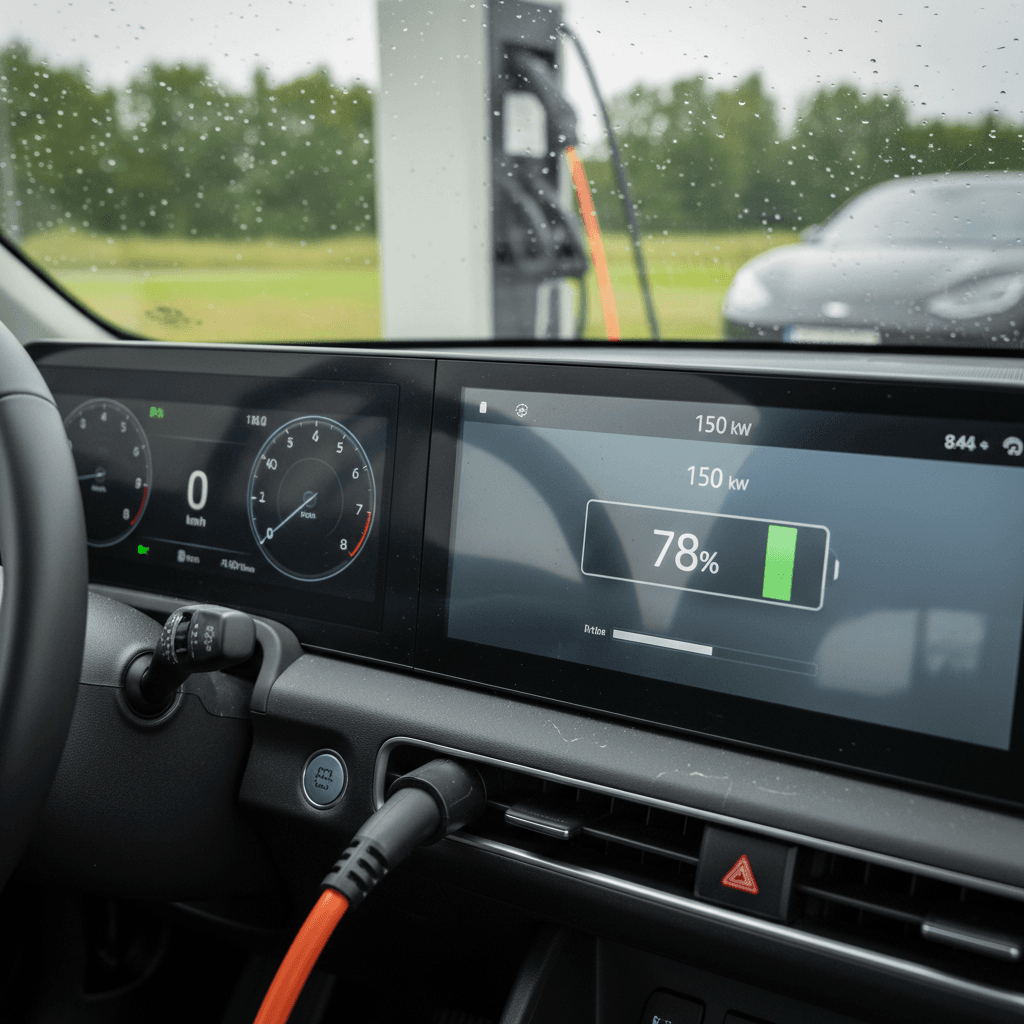
Let’s translate the marketing claims into something you can actually plan around. Several independent tests and a growing number of EV9 owners have now run full 10–80% DC sessions on 350 kW hardware.
Real‑world Kia EV9 DC fast‑charging results
What testers and owners are actually seeing at 350 kW stations
Peak charging power
Well‑conditioned EV9s on 350 kW hardware typically hit ~230–235 kW peak early in the session, slightly above Kia’s own 230 kW spec.
Average 10–80% power
Across the 10–80% window, you’re looking at an average of roughly 180–195 kW on the big 99.8 kWh pack in good conditions.
10–80% elapsed time
Multiple logged sessions on big‑pack EV9s land in the 23–25 minute range for 10–80% when the charger and temperature cooperate.
One detailed test on a 99.8 kWh EV9 measured a peak of about 234 kW and an average of just under 192 kW between 10–80%. That produced a 10–80% time right around 24 minutes, essentially dead‑on with Kia’s claim. Owners posting their charge logs are regularly reporting 9–81% or 9–80% sessions in the 23–25 minute window on 350 kW stations when they arrive with a warm battery and low state of charge.
Plan your stop, don’t chase 100%
10–80% Kia EV9 charging speed test results
To make the numbers more tangible, let’s walk through a representative 10–80% DC session on a 99.8 kWh Kia EV9 at a 350 kW station. We’ll assume a typical dual‑motor Land or GT‑Line with EPA range around 270–280 miles.
Sample Kia EV9 99.8 kWh 10–80% DC charging session
Approximate values based on instrumented tests and owner logs on 350 kW hardware in good conditions.
| Time from plug‑in | State of charge | Instantaneous power | Estimated miles added (since 10%) |
|---|---|---|---|
| 0 min | 10% | ~200 kW ramping up | 0 mi |
| 5 min | ~35% | ~230 kW near peak | ~70 mi |
| 10 min | ~55% | ~210–220 kW | ~135 mi |
| 15 min | ~68–70% | ~185–195 kW | ~185 mi |
| 20 min | ~77% | ~160–170 kW | ~215 mi |
| 24 min | 80% | ~140 kW tapering | ~230–240 mi |
Don’t treat these as guarantees; think of them as what’s realistic when charger power, temperature and arrival SOC are all in your favor.
For the smaller 76.1 kWh pack, the same power levels against fewer kWh to fill mean the 10–80% window is shorter, roughly 20 minutes when conditions are ideal. Either way, you’re getting highway legs in the 180–230 mile range per 20–25 minute stop, depending on trim, driving speed, and weather.
Why your EV9 might charge slower than this
Understanding the Kia EV9 charging curve
The headline number everyone loves to quote is peak kW, but what really counts is the shape of the charging curve, how long the car can hold big power before tapering. That’s where the EV9 quietly outperforms a lot of rivals.
Early session: big power fast
- From roughly 10–40%, the EV9 quickly ramps to ~230 kW and holds there.
- Many logs show power staying above 200 kW to the high‑40% range.
- This is where you gain the bulk of your usable highway miles per minute.
Mid‑session: gentle taper, not a cliff
- Between about 50–70%, the EV9 tapers to the 180–200 kW band.
- It still adds energy quickly compared with many 400 V SUVs that have dipped well under 150 kW by this point.
- Only past ~80% do you see a more pronounced ramp‑down toward 100–120 kW and eventually lower.
In other words, the charging curve on the EV9 isn’t just “peaky”, it’s wide and flat where it counts. That’s a big reason why its 10–80% time is competitive even against EVs that briefly show a slightly higher peak number on the screen.
Where the EV9 beats the spec sheet
Home charging the Kia EV9: Level 1 and Level 2 speeds
Most of your charging won’t happen at 350 kW highway stations, it’ll happen at home. Here the EV9 is less spectacular on paper but very usable in practice.
Kia EV9 home charging options
How long it really takes to refill that big battery at home
Level 1 (120 V outlet)
Roughly 1–2 kW, or 3–5 miles of range per hour. A full charge on the big pack can take 40+ hours. Fine for emergencies or very light use only.
Level 2, 32 A (typical public J1772)
A lot of public Level 2 posts are 208 V / 32 A, which gives the EV9 around 6–7 kW. Enough for 25–30 miles of range per hour, but slower than the car’s max AC capability.
Level 2, 48 A (home or high‑power wallbox)
With a 240 V / 48 A circuit, the EV9’s ~11 kW on‑board charger can deliver a full 10–100% in about 9 hours on the 99.8 kWh pack, easily enough for overnight refills.
If you’re setting up home charging for an EV9, a 40–48 A Level 2 circuit (typically 50–60 A breaker) hits the sweet spot between cost and capability. It lets you comfortably add 35–40 miles of range per hour of charging, which covers even long daily commutes overnight.
Double‑check AC current limits in the EV9’s settings
If you don’t own an EVSE yet, this is where working with an EV‑focused retailer helps. At Recharged, our specialists can walk you through matching a home charger to an EV9’s 11 kW capability and your home’s panel limits so you’re not over‑ or under‑buying hardware.
Road‑tripping in an EV9: Optimal charging strategy
On a road trip, the EV9’s combination of big battery and strong 10–80% performance gives you options. The trick is to avoid treating every stop like a “charge to 100% and sit” situation.
EV9 road‑trip charging strategy
1. Target 10–80% windows
Plan your legs so you arrive with around 10–20% and unplug near 75–80%. That keeps you in the high‑power, flat part of the charging curve and maximizes miles per minute.
2. Prioritize 350 kW (or 300 kW‑class) sites
The EV9 can use its 800 V system to pull serious power from the highest‑output stations. A 150 kW unit will still work, but you’ll leave a lot of potential speed on the table.
3. Precondition the battery when possible
Arriving with a warm pack helps the car jump to high power faster. Even without manual preconditioning controls, driving at highway speeds for 20–30 minutes before a stop usually does the trick.
4. Don’t chase 100% unless you must
Above 80%, power falls quickly. Going from 80–100% can take as long as 10–80% did. In most cases it’s faster to leave sooner and add another short stop later.
5. Watch for shared cabinets
Some “350 kW” stations split that power between stalls. If another car plugs into the same cabinet, your EV9’s power can drop sharply. If possible, pick a stand‑alone stall.
6. Build slack into your plan
Even with a strong charging curve, you’re still at the mercy of station uptime and congestion. Use apps that show real‑time status and don’t bank on the last charger on a route being available.
How the EV9 compares to other 3‑row EVs
Fast charging vs battery health on the EV9
Inevitably, the question with any big‑battery fast‑charging EV is how hard you can lean on that capability without paying for it in degradation. The EV9 is too new for multi‑year fleet‑scale data, but we can combine what we know about its chemistry, pack size, and charging behavior to set realistic expectations.
- The EV9’s packs are relatively large for the vehicle class, so each cycle from 10–80% is only a partial cycle in battery‑health terms.
- The 800 V architecture reduces current for a given power level compared with 400 V systems, which lowers internal heat and stress.
- Kia’s BMS manages cell temperatures aggressively; you may notice fans and coolant pumps running after hard fast‑charge sessions.
- Anecdotal reports of capacity issues so far are isolated and often tied to specific faults rather than typical, gradual wear.
Don’t ignore obvious battery faults
For everyday use, the standard battery‑health advice still applies: live between roughly 10–80% or 20–90% for daily driving, reserve 100% charges for trips, and don’t leave the pack sitting at full for days. Occasional high‑power DC fast‑charges are exactly what the EV9 was designed to handle.
Charging tips if you’re buying a used Kia EV9
The EV9’s fast‑charging performance makes it a tempting candidate on the used market: you get three rows, a big battery, and genuinely modern charging. But that also means you want to be sure the previous owner didn’t abuse the pack, or that any issues are at least properly diagnosed.
Used Kia EV9 charging checks
Simple ways to sanity‑check charging behavior before you buy
1. Check estimated range at 100%
On a full charge, a healthy long‑range EV9 should show an estimated range in the ballpark of 270–300 miles, depending on trim and recent driving. A number that’s radically lower may point to a capacity or calibration issue.
2. Time a 20–30 minute DC session
If possible, visit a strong DC fast charger, start around 10–20% and see how far you get in 20–30 minutes. You don’t need lab gear, just watch whether the car quickly ramps over 180–200 kW and how it holds.
3. Watch the charging curve
Healthy EV9s spend a lot of time above 180 kW up to around 60–70% SOC. If your test session instantly drops and hovers around 80–100 kW on good hardware with a warm battery, something may be limiting the pack.
4. Ask for a battery health report
At Recharged, every EV9 listing comes with a Recharged Score Report that quantifies battery health, fast‑charge behavior, and fair‑market pricing so you’re not guessing about how the car was used.
Because the EV9 is a high‑value, high‑tech SUV, it’s exactly the kind of vehicle where transparent battery diagnostics can make or break a used‑car deal. That’s why Recharged bakes pack health, charging behavior, and pricing benchmarks into every vehicle’s Recharged Score, and backs it with EV‑specialist support so you can ask detailed charging questions before you click “buy.”
Kia EV9 charging speed: FAQs
Frequently asked questions about Kia EV9 charging speed
Bottom line: how the EV9’s charging stacks up
The Kia EV9 doesn’t just look like a flagship; its charging performance behaves like one. Real‑world tests confirm that the 800 V system and big pack deliver on the promise of roughly 20–24 minute 10–80% sessions when hardware and conditions cooperate, with a flatter‑than‑average charging curve that keeps speeds high well into the state‑of‑charge band.
At home, a solid Level 2 setup turns that large battery from a liability into an asset: you arrive near empty, plug in overnight, and wake up to a full day or more of driving. On the road, smart planning around 10–80%, strong stations, and realistic arrival SOC lets the EV9 match the cadence of normal rest breaks without turning every stop into a slog.
If you’re considering a used EV9, it’s worth insisting on data, not just impressions. With a Recharged Score Report, you get verified battery health, charging behavior, and fair‑market pricing up front, plus EV‑savvy support to help you interpret what a specific car’s charging history means for your everyday use. That’s how you turn impressive spec‑sheet numbers into confidence at the plug.