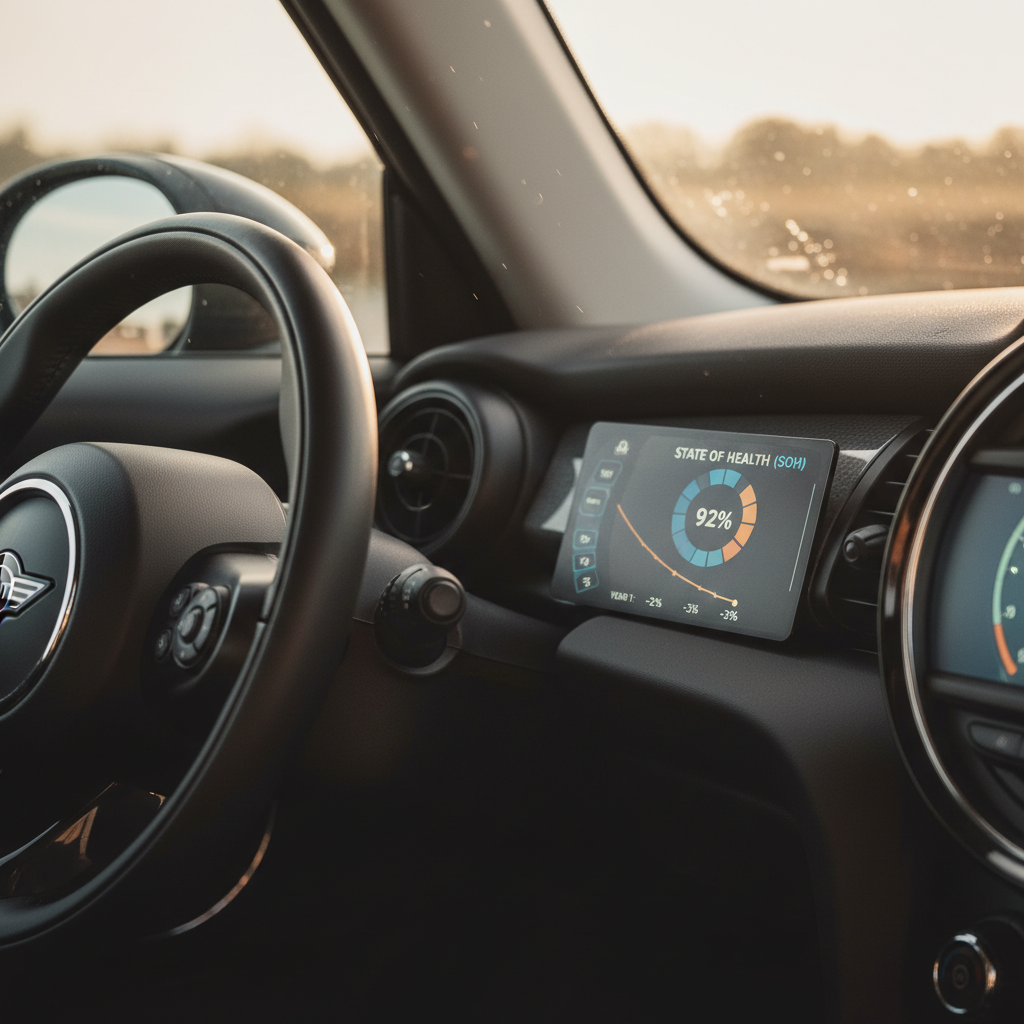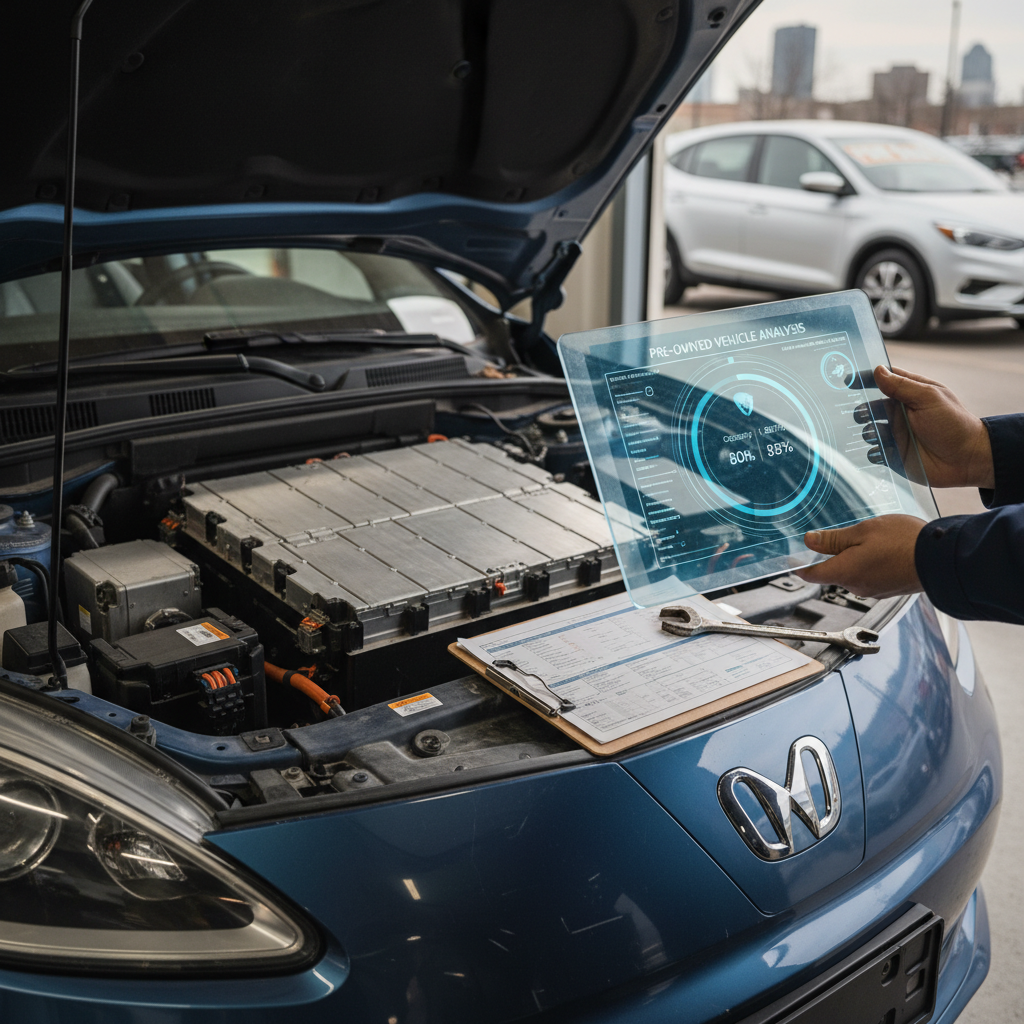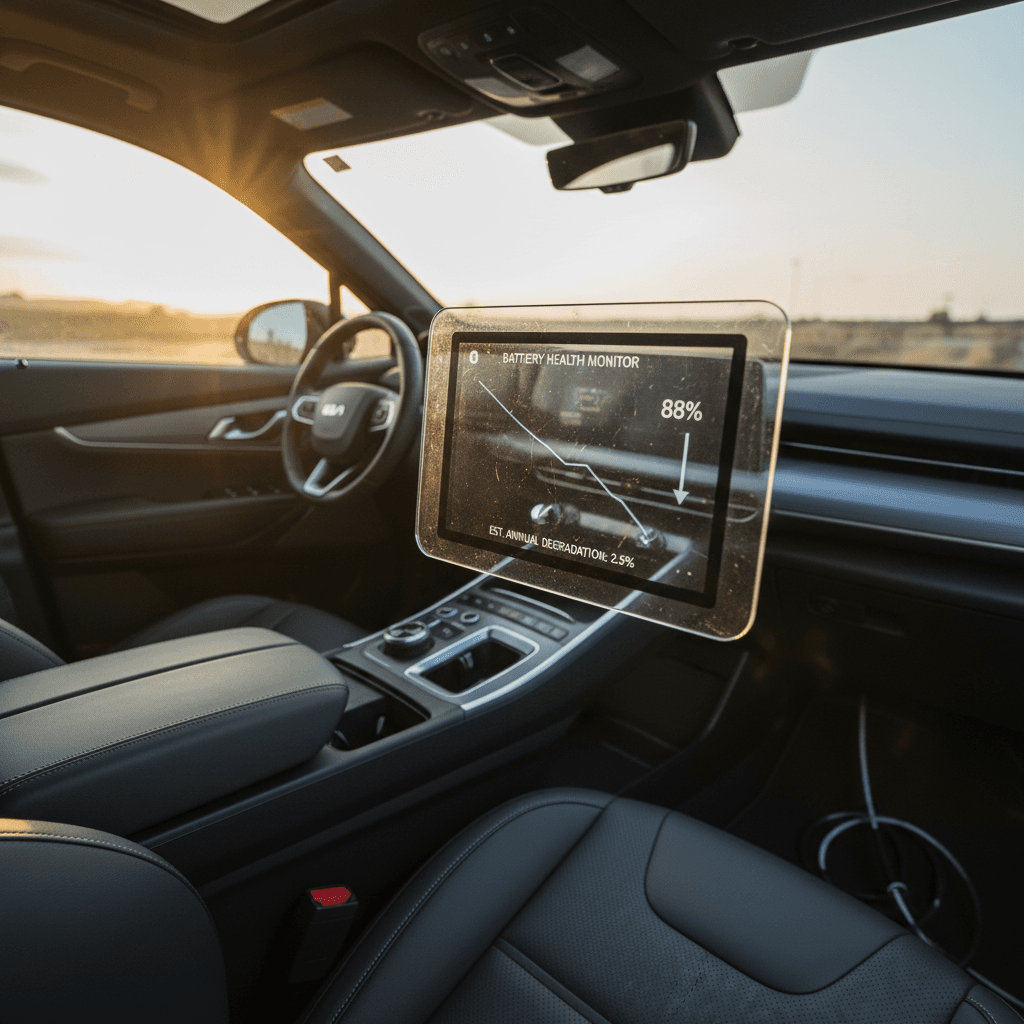
If you’re considering a Kia EV9, or already own one, the big long‑term question is simple: how much will the EV9 battery degrade per year, and what does that do to your range and resale value? The good news is that modern Kia packs, including the EV9’s, are showing slower, steadier degradation than many shoppers fear.
Key takeaway up front
Kia EV9 battery degradation per year: the short answer
Because the Kia EV9 is still a relatively new model, we don’t yet have 8–10 years of vehicle‑specific data. But we do have three solid guideposts: Kia’s battery warranty targets, long‑term data from similar Hyundai–Kia E‑GMP vehicles like the IONIQ 5 and EV6, and independent EV fleet studies covering thousands of modern packs. Put together, they paint a reassuring picture.
- Most modern EV batteries lose roughly 1.5–2.5% of capacity per year on average over the long term.
- Kia’s battery warranty is written around the battery still having at least 70% of original capacity after 8–10 years / 100,000–160,000 km (market‑dependent).
- Real‑world studies of large EV fleets show about 1.8–2.3% per year average degradation under typical use.
- Hyundai–Kia’s E‑GMP platform (shared by EV6, IONIQ 5/6, and EV9) has earned a reputation for slower‑than‑average degradation in independent testing and high‑mileage owner cases.
A reasonable expectation
Why the EV9’s battery chemistry ages the way it does
To understand Kia EV9 battery degradation per year, it helps to look at the hardware itself. The EV9 uses the same E‑GMP platform and lithium‑ion NMC chemistry as the Hyundai IONIQ 5/6 and Kia EV6, scaled up to a big pack (up to 99.8 kWh gross). That means we can lean on data from those models to predict how the EV9 will age.
Kia EV9 battery tech at a glance
These design choices are there to slow degradation, not speed it up
High‑capacity NMC pack
The EV9 uses a large lithium‑ion NMC battery, similar chemistry to other high‑range EVs. A bigger pack spreads daily use over more kWh, which tends to reduce yearly wear compared with small packs driven the same miles.
Liquid thermal management
A sophisticated liquid cooling and heating system keeps cells in their preferred temperature window. Good thermal management is one of the biggest factors in slowing long‑term degradation, especially in hot climates.
High‑power fast charging
The E‑GMP platform supports ultra‑fast DC charging (up to 210 kW+). Used occasionally, this doesn’t doom the battery, but frequent 0–100% fast charging can increase yearly degradation compared with mostly slower home charging.
Like most modern EVs, the EV9’s battery management system (BMS) intentionally keeps some buffer at the top and bottom of the pack. When your display reads 0–100%, you’re rarely using the absolute limits of the cells. That built‑in cushion helps preserve long‑term health even if you occasionally charge to “100%” or run it very low.
Don’t obsess over every percent
Kia EV9 battery warranty: what “70% capacity” really means
Kia’s warranty isn’t a crystal ball for degradation, but it does tell you how confident they are in the pack. For the EV9, Kia markets an 8‑year high‑voltage battery warranty, typically to around 100,000 miles / 160,000 km depending on region. The fine print ties coverage to capacity loss and defects.
Typical Kia EV9 high‑voltage battery warranty terms*
Exact terms vary by market; always confirm with your local Kia dealer and warranty booklet.
| Item | Typical Coverage | What It Means For You |
|---|---|---|
| HV battery duration | 8 years / 100,000–160,000 km | Kia will repair or replace the pack if it fails due to defects during this period. |
| Capacity threshold | Around 70% state of health | If usable capacity drops below ~70% within the warranty period under normal use, you may qualify for repair or replacement. |
| Transferability | Usually transferable | Helps support used EV9 resale value; later owners still benefit from remaining coverage. |
| What’s not covered | Abuse, improper modifications, some extreme use | Track use, damage, or ignoring required updates can jeopardize coverage. |
*Representative summary only; not a substitute for your actual warranty document.
Warranty isn’t a guarantee of zero loss
What real‑world EV data suggests about EV9 degradation
Because we don’t yet have decade‑long Kia EV9 histories, we look to two main sources: independent EV fleet studies and long‑term data from related E‑GMP vehicles like Hyundai’s IONIQ 5 and Kia’s EV6.
What large‑scale studies show about EV battery degradation
From a shopper’s standpoint, the most useful translation is this: EV battery degradation tends to be front‑loaded and then slow. You might see a few percent drop in the first couple of years as the pack “settles,” followed by a long, shallow glide, often just 1–2% per year, if the car is used and charged reasonably.
Early Kia EV9 owner reports: what’s normal so far
Early Kia EV9 owners posting battery health screenshots and real‑world range data generally report behavior that looks similar to other Hyundai–Kia EVs:
- Slight apparent capacity loss (or simply colder‑weather range swings) in the first year.
- On‑screen “battery health” indicators fluctuating a few percent, often more about how the BMS estimates capacity than actual, permanent degradation.
- Very little evidence of dramatic, real‑world capacity loss in low‑mileage EV9s, outside of isolated defect or 12‑volt charging issues addressed via recalls or software updates.
BMS estimates vs. reality
7 things that speed up Kia EV9 battery degradation
The EV9’s pack is robust, but it’s not magic. Certain usage patterns will push yearly degradation toward the higher end of the typical 1.5–2.5% range, or beyond in extreme cases. The big culprits are similar across all EVs.
Habits that can age an EV9 battery faster
1. Living at 100% state of charge
Occasionally charging your EV9 to 100% for a trip is fine. But parking it full for days in a hot driveway or airport lot increases stress on the cells and accelerates chemical aging.
2. Regularly running down to near 0%
Deep discharges every once in a while won’t kill the pack, but frequently draining to the bottom of the battery gauge before recharging can add wear compared with staying between roughly 10–80% for daily driving.
3. Constant ultra‑fast DC charging
The E‑GMP platform shines at high‑power DC fast charging, but heat and high current are harder on cells than slower AC charging. If most of your charging is on 150–350 kW fast chargers, expect somewhat higher yearly degradation.
4. Extreme heat with no shade or garage
High temperatures are tough on lithium‑ion chemistry. Parking the EV9 in direct sun for long stretches, especially at a high state of charge, is one of the fastest ways to age the pack, even if you’re not driving.
5. Frequent heavy towing at high speed
The EV9 is built for towing, but pulling a heavy trailer at highway speeds regularly keeps the pack operating at higher power and temperature levels, which can nudge long‑term degradation upward.
6. Ignoring software updates and recalls
Several Hyundai–Kia EVs have had software updates that improve charging behavior, thermal management, or 12‑volt interactions. Skipping these can leave you with sub‑optimal battery management.
7. Poor charging hardware or wiring
Undersized or faulty home wiring, low‑quality EVSEs, and repeated charge interruptions can cause extra heat and stress. Investing in a <strong>proper Level 2 home charger</strong> and professional installation is part of protecting the battery.
How to slow your Kia EV9’s battery degradation
You don’t need to baby the EV9 to keep the battery healthy. Focus on a few sustainable habits that fit your lifestyle, and you’ll likely keep degradation at the lower end of the normal range.
Everyday habits
- Target 60–80% for daily driving. If your commute is modest, use the EV9’s charge‑limit setting so it stops around 70–80% on ordinary days.
- Reserve 100% for trips. Charge to full right before you leave for a road trip instead of the night before, so the pack doesn’t sit full for hours.
- Plug in when parked in extreme cold. Keeping the car connected lets the battery management system condition the pack when needed.
- Use eco or normal driving modes. Hard launches now and then are fine, but constantly hammering the accelerator increases heat and load.
Charging and storage choices
- Favor Level 2 home charging. For most drivers, overnight Level 2 at home is ideal for both convenience and battery health.
- Park in shade or a garage when possible. Simply avoiding full‑sun baking significantly helps long‑term health, especially in hot climates.
- Avoid long‑term storage at very high or very low charge. If you’ll park for weeks, aim for roughly 40–60% state of charge.
- Stay current on OTA updates and service campaigns. Many updates quietly improve thermal and charging behavior over time.
Think in years, not days
What yearly degradation looks like in miles of range
Numbers get more meaningful when you translate capacity loss into real‑world range. Let’s use a simple example: an EV9 rated around 300 miles when new (your exact figure will depend on trim, wheels, climate, and driving style).
Illustrative EV9 range over time at different degradation rates
These are simplified examples, assuming a notional 300‑mile new EPA range and consistent driving conditions. Real‑world results will vary.
| Years in service | Approx. capacity left | Range if new was 300 miles | How it feels day‑to‑day |
|---|---|---|---|
| 2 years (~4% loss) | 96% | ~288 miles | You might not notice much difference except on very long trips. |
| 5 years (~10% loss) | 90% | ~270 miles | Slightly fewer charging stops on the same routes; daily use feels almost unchanged. |
| 8 years (~18% loss) | 82% | ~246 miles | Trip planning may add one extra fast‑charge stop compared with when the car was new. |
| 10 years (~22% loss) | 78% | ~234 miles | Still practical for many families, but long‑range drivers will notice the difference more clearly. |
Use this as a ballpark guide, not a precise prediction for your car.
Real range is always a moving target
Buying a used Kia EV9: how to judge battery health
If you’re shopping for a used Kia EV9, understanding battery degradation per year isn’t just academic, it’s central to what the SUV is worth and how it will fit your lifestyle over the next decade.
Four smart ways to evaluate a used EV9 battery
You don’t need to be an engineer, just methodical
1. Check the warranty clock
Confirm the in‑service date so you know exactly how much of Kia’s 8‑year high‑voltage battery warranty remains. A younger EV9 with several years of coverage left is more forgiving of unknown history.
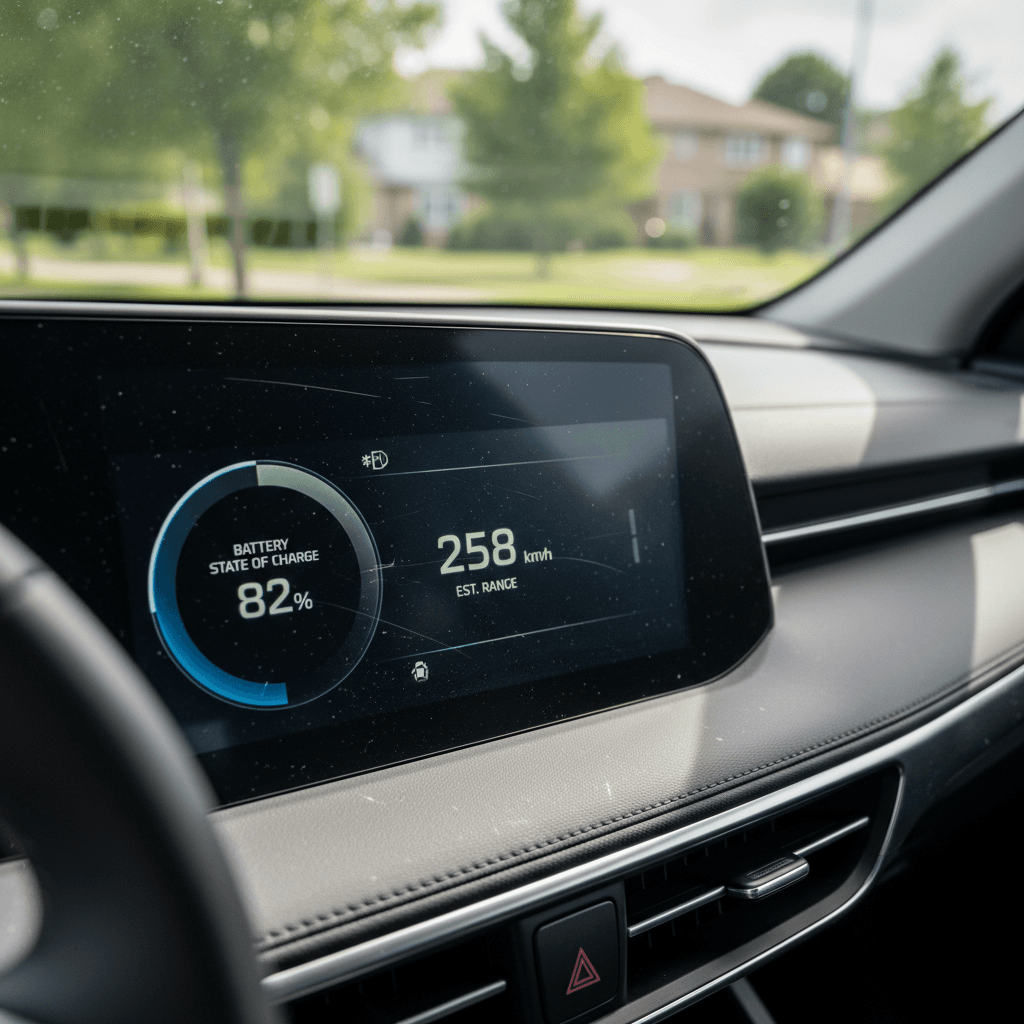
2. Compare indicated range to EPA rating
With the battery near 90–100%, note the indicated range and compare it to the original EPA or WLTP figure for that trim. A modest gap can be normal; a huge gap could warrant deeper inspection.
3. Test drive on your real routes
Range estimates are just estimates. Drive the EV9 on your typical commute or highway loop and see how many miles of actual driving correspond to miles of range used.
4. Get an independent battery health report
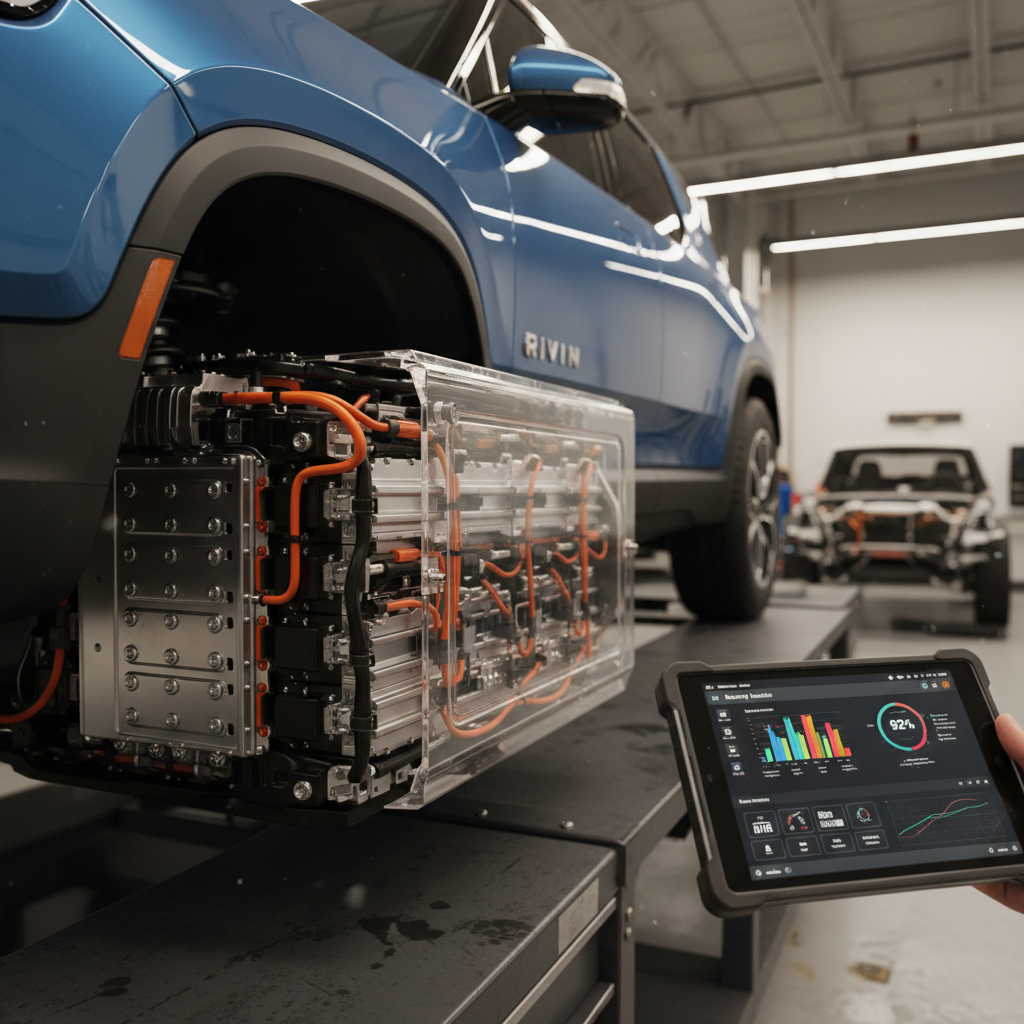
For higher‑value used EV9s, or if you’re especially cautious, consider a professional battery diagnostic. At Recharged, every vehicle includes a Recharged Score battery health report so you’re not guessing about pack condition.
How Recharged helps with used EV9s
Ready to find your next EV?
Browse VehiclesKia EV9 battery degradation FAQ
Frequently asked questions about Kia EV9 battery degradation
Bottom line: will a Kia EV9 battery last?
When you cut through the speculation, the picture that emerges is straightforward: the Kia EV9’s battery is engineered to be a long‑life component, not a disposable part. Based on what we’ve seen from Hyundai–Kia’s E‑GMP platform and large‑scale EV studies, an EV9 owner who charges mostly at home, avoids long stints at 100% in extreme heat, and keeps software up to date can reasonably expect decade‑plus usefulness with moderate degradation, often in the 1.5–2.5% per‑year range over the long haul.
If you’re shopping used, that means an older EV9 with some miles on the clock can still be an excellent buy, especially if you have independent confirmation of battery health. That’s exactly why every used EV at Recharged comes with a transparent Recharged Score report, financing options, and EV‑specialist support, from browsing online to delivery at your door, so you can choose your next electric SUV with your eyes wide open, not crossed fingers.