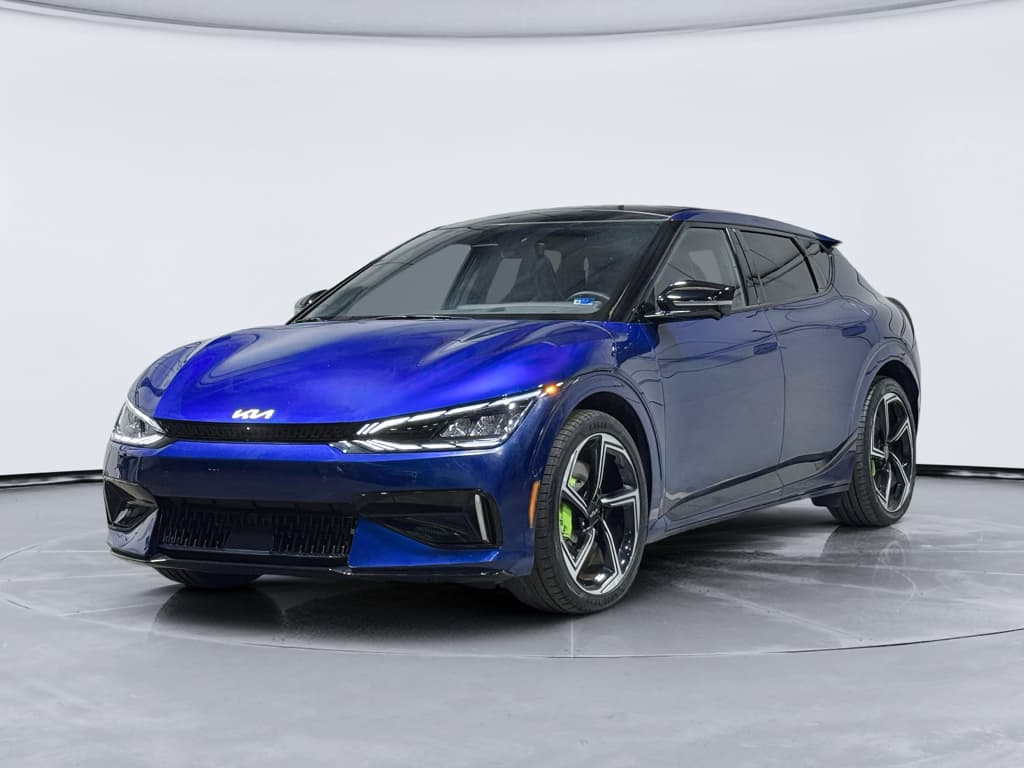
If you’re cross‑shopping a Kia EV6 against a similar gas SUV, the real question isn’t just sticker price. It’s total cost of ownership: fuel (or electricity), maintenance, insurance, depreciation, and taxes over several years. This guide breaks down the Kia EV6 total cost vs a gas car equivalent using current 2025–2026 energy prices and realistic ownership scenarios, so you can see where the EV6 saves you money, and where it doesn’t.
Quick takeaway
Why compare the Kia EV6 to a gas SUV?
The Kia EV6 competes directly with compact and midsize crossovers, think Hyundai Tucson, Kia Sportage, Honda CR‑V, Toyota RAV4, or even a Hyundai Santa Fe in higher trims. When shoppers ask whether the EV6 is “worth it,” they’re usually comparing it to something like a gas AWD compact SUV they could buy for a similar monthly payment.
What counts as a “gas car equivalent”?
We’ll benchmark against a well‑equipped compact AWD SUV
Vehicle type
Compact/midsize crossover SUV with similar interior space to the Kia EV6.
Performance
2.0–2.5L turbo or V6, around 190–250 hp, comparable 0–60 to most EV6 trims.
Fuel economy
Combined 27–30 mpg in real‑world driving for an AWD gas SUV.
To keep this practical, we’ll use a notional gas SUV that averages 28 mpg combined and has a transaction price in the same ballpark as an EV6 Wind or GT‑Line, then run side‑by‑side cost estimates.
Key assumptions for this cost comparison
No two drivers have the same commute, energy rates, or insurance profile. To make a fair comparison, we’ll state our assumptions clearly so you can adjust the math to your own situation.
Baseline 5‑year ownership assumptions
These inputs drive the cost comparison between the Kia EV6 and a comparable gas SUV.
| Category | Assumption | Notes |
|---|---|---|
| Ownership period | 5 years / 60,000 miles | 12,000 miles per year |
| Gas price | $4.00 per gallon | Near early‑2026 U.S. average during current price spike |
| Residential electricity price | $0.17 per kWh | Close to recent national residential average |
| Kia EV6 efficiency | 29 kWh / 100 miles | Based on EPA figures for long‑range RWD; AWD slightly higher |
| Gas SUV efficiency | 28 mpg combined | Typical real‑world for compact AWD SUV |
| Public DC fast charging | 10% of EV6 miles | Most charging done at home in this scenario |
Adjust these assumptions, especially energy prices and annual miles, to mirror your household and see how the gap changes.
Energy prices are moving targets
Fuel vs electricity: cost per mile
Let’s start with the simplest question: what does it cost to move each vehicle one mile under our baseline assumptions?
Energy cost per mile: Kia EV6 vs gas SUV
Blended together, 90% of EV6 miles charged at home and 10% on road‑trip DC fast chargers, the EV6 comes out to about $0.055 per mile in electricity. That’s less than half the ~$0.14 per mile for our gas SUV at $4.00 a gallon.
How to plug in your own numbers
5‑year total cost: Kia EV6 vs gas SUV
With per‑mile costs in hand, we can build a simple 5‑year ownership model. This isn’t meant to replace a full financial plan; it’s a directional snapshot using today’s prices and typical assumptions.
Illustrative 5‑year cost of ownership (new purchase)
Approximate 5‑year costs for a new Kia EV6 vs a comparable new gas SUV, assuming similar purchase price and 12,000 miles per year.
| Cost category (5 yrs) | Kia EV6 | Gas SUV | Notes |
|---|---|---|---|
| Fuel / electricity | ~$3,300 | ~$8,600 | EV6: 60,000 mi × $0.055/mi; Gas: 60,000 mi × $0.143/mi |
| Routine maintenance | ~$2,000 | ~$3,500 | EV6: tires, brakes, cabin filters; Gas: plus oil, belts, exhaust, more fluids |
| Repairs out of warranty | ~$1,000 | ~$1,500 | Highly variable; assumes both are relatively trouble‑free |
| Insurance (incremental) | +~$500 | +~$0 | EV6 may run slightly higher premiums in some markets |
| Depreciation | $18,000–$22,000 | $17,000–$21,000 | Depends heavily on trim, incentives, and used‑market demand |
| Total 5‑yr operating costs (ex‑depreciation) | ~$6,300 | ~$13,600 | What you actually spend to keep it running |
| Total incl. depreciation | ~$24,300–$28,300 | ~$30,600–$34,600 | Biggest swing factor is resale value at year five |
Purchase price and depreciation will vary by trim, discount, and market. We’re focusing on major operating costs.
Where the EV6 clearly pulls ahead
Scenario: Cheaper gas at $3.00/gal
If gas falls back toward $3, the gas SUV’s fuel cost drops to roughly $0.11/mi. Over 60,000 miles, that’s about $6,600 in fuel instead of $8,600, narrowing the EV6’s fuel advantage from ~$5,300 to around $3,300.
Scenario: High electricity at $0.25/kWh
If your home rate is closer to $0.25/kWh, EV6 home charging rises to ~$0.07/mi. The blended rate might land near $0.08/mi, or about $4,800 over 60,000 miles. The EV6 still wins vs $0.14/mi gas at $4/gal, but with a smaller margin.
Maintenance and repairs: EV6 vs gas
On maintenance, electric vehicles tend to come out ahead because they simply have fewer moving parts. There’s no engine oil, no spark plugs, no multi‑speed transmission, and fewer fluids to change. Over 5 years, that usually shows up in your service bills.
Typical maintenance differences over 5 years
Exact numbers depend on brand, dealer pricing, and how hard you drive.
Kia EV6
- No oil changes or timing belt service
- Regenerative braking reduces pad/rotor wear
- Service mostly tires, cabin filter, brake fluid, inspections
- High‑voltage battery covered by long warranty
Estimate: roughly $400/year, or ~$2,000 over 5 years for routine work.
Gas compact SUV
- Oil and filter changes 2–3× per year
- More frequent brake service (no regen)
- Transmission service and additional fluids
- More emissions system components to maintain
Estimate: $600–$800/year, or ~$3,000–$4,000 over 5 years.
What about expensive EV repairs?
Depreciation and used EV6 pricing
Depreciation has been the wild card for EVs over the last few years. Generous federal tax credits on new models, rapid tech updates, and shifting demand have pushed used EV prices down faster than many used gas SUVs. That can hurt if you bought new, but it’s good news if you’re shopping used.
- A new Kia EV6 that sells in the mid‑$40,000s today might be worth somewhere in the low‑ to mid‑$20,000s after five years, depending on mileage, trim, and battery condition.
- A comparable gas SUV in the same price band could retain slightly more value, or not, depending on fuel prices, brand reputation, and how aggressive future EV incentives get.
- Local supply matters: in EV‑heavy markets like California or parts of the Northeast, used EV6 pricing can be more volatile than in states where EV adoption is just ramping up.
How Recharged approaches EV6 depreciation
Insurance, taxes, and fees
Insurance and government fees don’t swing the EV6 vs gas math as dramatically as fuel or maintenance, but they’re worth a look.
Insurance
In many markets, a Kia EV6 will cost slightly more to insure than an equivalent gas SUV. Reasons include higher MSRP, costlier collision repairs on some EVs, and limited historical claims data.
On the flip side, advanced driver‑assistance systems (ADAS) and strong crash ratings can help keep premiums in line with top‑safety‑rated gas crossovers.
Taxes and registration
Some states offset EV incentives with annual EV registration fees meant to replace lost gas‑tax revenue. Others still offer state‑level purchase rebates or tax credits on top of federal incentives (when available).
Across five years, these line items might add or subtract a few hundred dollars either way, not usually enough to overturn the fuel and maintenance advantages.
When the gas SUV can still win
There are realistic scenarios where a gas SUV can match or even beat the Kia EV6 on total cost, especially in the short term. Understanding those edge cases keeps this comparison honest.
Situations that favor a gas SUV
1. Very cheap gas, expensive electricity
If your local gas price regularly sits near $3.00/gal while your residential electricity tops $0.25–$0.30/kWh, the EV6’s per‑mile fuel advantage can shrink dramatically.
2. Heavy reliance on DC fast charging
If you live in an apartment with no home charging and depend on DC fast chargers at $0.40–$0.60/kWh for most of your miles, the EV6’s energy cost can approach, or even exceed, a thrifty gas SUV.
3. Very low annual mileage
If you only drive 5,000–6,000 miles a year, fuel is a smaller share of your total cost. In that case, purchase price and depreciation matter more than energy savings.
4. Unfavorable incentives and resale
If tax credits on new EV6 models are rich and used values are still settling, a lightly used gas SUV might hold its value better in your market, at least for the next few years.
Think about charging convenience, not just cost
How buying a used Kia EV6 changes the math
Where the Kia EV6 really gets interesting is on the used market. Because early‑generation EVs have already taken the steepest depreciation hit, a 2‑ to 3‑year‑old EV6 can offer a lot of car for the money, and magnify the operating‑cost advantage over gas.
Why a used EV6 often beats a used gas SUV
Same driving experience, lower entry price, and the same cheap electricity.
Lower purchase price
Early‑life depreciation is already “baked in,” so you’re not the one absorbing the big first‑owner drop in value.
Battery health transparency
With a Recharged Score battery diagnostic, you can see how much usable capacity remains, something you simply don’t get with an engine’s internal wear.
Stronger payback window
If you buy a 2‑year‑old EV6 and keep it another 5–7 years, you combine a lower upfront price with years of lower fuel and maintenance costs.
How Recharged can help with a used EV6

How to estimate your own EV6 total cost
The examples above are based on national averages, but your life doesn’t happen at the national average. Here’s a simple way to plug in your own commute, energy prices, and vehicle choices.
5 steps to compare your EV6 vs gas costs
1. Capture your real mileage
Look at your last year of driving, odometer readings, app‑tracked trips, or fuel receipts, to get a realistic annual mileage. Don’t guess; this number drives everything else.
2. Use your actual gas and electricity prices
Pull your latest utility bill for your exact rate (including taxes and fees) and note current gas prices you’re paying locally, not what’s posted in national headlines.
3. Grab real‑world efficiency numbers
For the EV6, use the car’s long‑term kWh/100‑mi display or EPA figures as a backup. For the gas SUV, use your actual mpg from receipts or trip computers, not window‑sticker ratings.
4. Estimate annual maintenance
Call a trusted mechanic or dealer for typical maintenance schedules and costs for your gas SUV equivalent. Compare that to Kia’s EV6 maintenance schedule (which is lighter).
5. Run a simple 5‑year spreadsheet
Multiply your per‑mile energy cost by your mileage, then add maintenance, insurance estimates, and a rough guess at depreciation. You don’t need perfection, just enough precision to see which way the scales tip.
Want help running the numbers?
FAQ: Kia EV6 total cost vs gas car
Frequently asked questions
Bottom line: Is the Kia EV6 cheaper to own?
When you roll in fuel or electricity, maintenance, and a realistic view of depreciation, the Kia EV6 is often cheaper to own over five years than a similarly priced gas SUV, especially if you can charge at home and drive at least average U.S. mileage. The higher your gas prices and annual miles, the more the EV6 pulls ahead. Where the math is closer is in regions with cheap gasoline, expensive electricity, or for low‑mileage drivers who trade often.
The smarter play for many shoppers in 2026 is to focus on total cost of ownership, not just monthly payment. If a used Kia EV6 with a solid battery score and transparent pricing slots into your budget, it can deliver SUV practicality with significantly lower day‑to‑day running costs. And if you want help benchmarking specific EV6s against gas alternatives, a Recharged specialist can walk you through the numbers before you ever sign a contract.