If you’re looking at a Kia EV6, especially on the used market, you’re probably asking a simple question with a surprisingly complicated answer: what does the Kia EV6 battery warranty actually cover? You’ll see “10‑year/100,000‑mile battery warranty” in big print, but the details around capacity loss, exclusions, and second‑owner coverage really matter when you’re betting on an EV for the long haul.
Quick EV6 battery warranty snapshot
Kia EV6 battery warranty at a glance
Kia EV6 battery & EV system warranty highlights
Those headline numbers, 10 years/100,000 miles down to about 70% capacity, are very solid in today’s EV market. But the real value for you as an owner or shopper comes from understanding what’s inside the “EV System” umbrella, what’s not included, and how Kia decides whether your battery qualifies for a repair or replacement.
Kia EV6 battery warranty basics in the U.S.
Official wording can vary slightly by model year and region, so always read the warranty and consumer information manual that came with your car or is posted for your model year. That said, U.S.‑market Kia EV6 coverage generally breaks down into four key buckets:
- Basic limited warranty: 5 years or 60,000 miles, covering most components against defects in materials or workmanship (not wear‑and‑tear).
- Powertrain limited warranty: 10 years or 100,000 miles for original owners on traditional engines and drivetrains; with EVs, much of what matters is shifted into the EV System warranty.
- EV System warranty: 10 years or 100,000 miles on key electric‑drive components, including the high‑voltage battery, electric motor(s), power control unit, onboard charger, and related EV hardware.
- Roadside assistance: usually 5 years or 60,000 miles, which can help if you run the battery flat and need a tow to a charger (the tow is covered, not recharging itself).
Don’t rely on a dealer brochure alone
What the EV6 battery warranty actually covers
When people say “battery warranty,” they usually mean just the big pack under the floor. In Kia’s documentation, that’s part of the broader EV System warranty. For the EV6, that typically includes three main areas:
Core parts usually covered by the EV6 EV System warranty
These are the components most relevant to your long‑term costs.
High‑voltage battery pack
The main traction battery that stores energy for driving. The warranty covers defects in materials or workmanship and, in U.S. documentation, protects against abnormal capacity loss below about 70% during the 10‑year/100,000‑mile term under normal use.
Key EV drive hardware
Typically includes the electric motor(s), power electronics (inverter/power control unit), and often the onboard charger that handles AC charging. Failure of these components due to defects generally falls under the same 10‑year/100,000‑mile EV System umbrella.
Battery management & related components
Elements like the Battery Management System (BMS) and high‑voltage wiring harnesses are usually included when they’re part of the defined EV System. These are critical for monitoring temperature, voltage and maintaining battery health.
If a covered component fails during the warranty period under normal use, Kia’s standard remedy is to repair or replace it at no charge for parts and labor. For the high‑voltage battery, that might mean replacing individual modules or, in some cases, installing a new or remanufactured pack that meets Kia’s capacity standards.
Good news for long‑term owners
Capacity coverage: the 70% rule explained
Kia, like most automakers, does not promise your EV6 battery will stay close to 100% forever. Instead, the warranty is built around a minimum capacity threshold over time, typically about 70% of the original usable capacity in the U.S. market.
- When new, an EV6 long‑range pack offers roughly 70–77 kWh of usable energy, depending on variant and model year.
- Over years of charging and driving, some gradual capacity loss, say, single‑digit to low‑double‑digit percent over a decade, is considered normal wear.
- If capacity falls below about 70% of the original level during the 10‑year/100,000‑mile window under normal conditions, Kia may repair or replace the pack to bring it back up to at least that threshold.
Capacity warranty isn’t a performance guarantee
What 70% capacity looks like in miles
If your EV6 had an EPA‑rated range of about 310 miles when new, 70% capacity would translate to roughly 215–220 miles of rated range under similar conditions. You’d definitely notice the difference, but the car would still be very usable for many drivers’ daily needs.
You may feel loss long before a claim
Many owners are sensitive to a 10–15% drop in range, especially if they road‑trip often, but that’s still comfortably above Kia’s capacity floor. In practice, only a small share of packs will degrade enough, within 10 years/100,000 miles, to trigger a capacity‑based warranty claim.
What’s not covered: exclusions and fine print
Every warranty has guardrails, and the EV6 battery warranty is no different. Understanding what isn’t covered is just as important as knowing what is.
Common EV6 battery warranty exclusions
Patterns we see repeatedly in Kia and other OEM EV battery warranties.
Physical damage & improper use
- Collision damage, off‑roading impacts to the battery tray, or road debris punctures.
- Improper lifting or jacking that damages the pack or high‑voltage cables.
- Unauthorized modifications (aftermarket high‑voltage wiring, tampering with the pack or BMS).
Abuse, neglect, or extreme conditions
- Ignoring warning lights or continuing to drive with known high‑voltage faults.
- Documented misuse such as frequent operation far outside temperature limits or severe water ingress not associated with normal weather.
- Using non‑approved charging equipment or methods that cause damage.
Maintenance items & wear parts
- 12‑volt auxiliary battery, tires, brake pads, and other wear‑and‑tear items.
- Routine maintenance or inspections (unless part of a separate prepaid plan).
Out‑of‑warranty claims & missing records
- Anything that happens after the time or mileage limit is exceeded.
- Situations where maintenance or recall work was repeatedly skipped and contributes directly to the failure.
Warranty ≠ insurance against all bad outcomes
New vs. used EV6: how the warranty transfers
If you’re buying a new EV6 from a Kia dealer, the coverage clock starts on the Date of First Service, the day the vehicle is first sold or put into use as a demo. If you’re buying a used EV6, you step into the remaining portion of that clock.
How the EV6 warranty typically works for first vs. later owners
Always verify coverage by VIN with a Kia dealer for your exact model year.
| Coverage type | Typical term (U.S.) | Original owner | Second owner / beyond |
|---|---|---|---|
| Basic limited warranty | 5 yrs / 60,000 mi | Full term from in‑service date | Fully transferable for the unused remainder |
| EV System (incl. HV battery) | 10 yrs / 100,000 mi | Full term from in‑service date | Generally transferable for the unused remainder |
| Powertrain (ICE models) | 10 yrs / 100,000 mi | Full term, original owner only | Often reduced for subsequent owners (less relevant to EV6 but worth noting across Kia’s lineup) |
Battery and EV System coverage often transfer, while some powertrain benefits are original‑owner only.
How to confirm remaining warranty on a used EV6
How Kia evaluates an EV6 battery warranty claim
Let’s say your range has dropped sharply or you’re seeing high‑voltage warnings. What happens if you bring an EV6 to a Kia dealer and ask whether the battery warranty applies?
Typical steps in an EV6 battery warranty evaluation
1. Dealer verifies basic warranty eligibility
They’ll confirm your EV6’s mileage and in‑service date to make sure the car is still within the 10‑year/100,000‑mile EV System window, and check for any obvious exclusions like collision or flood damage.
2. Diagnostic scan and road test
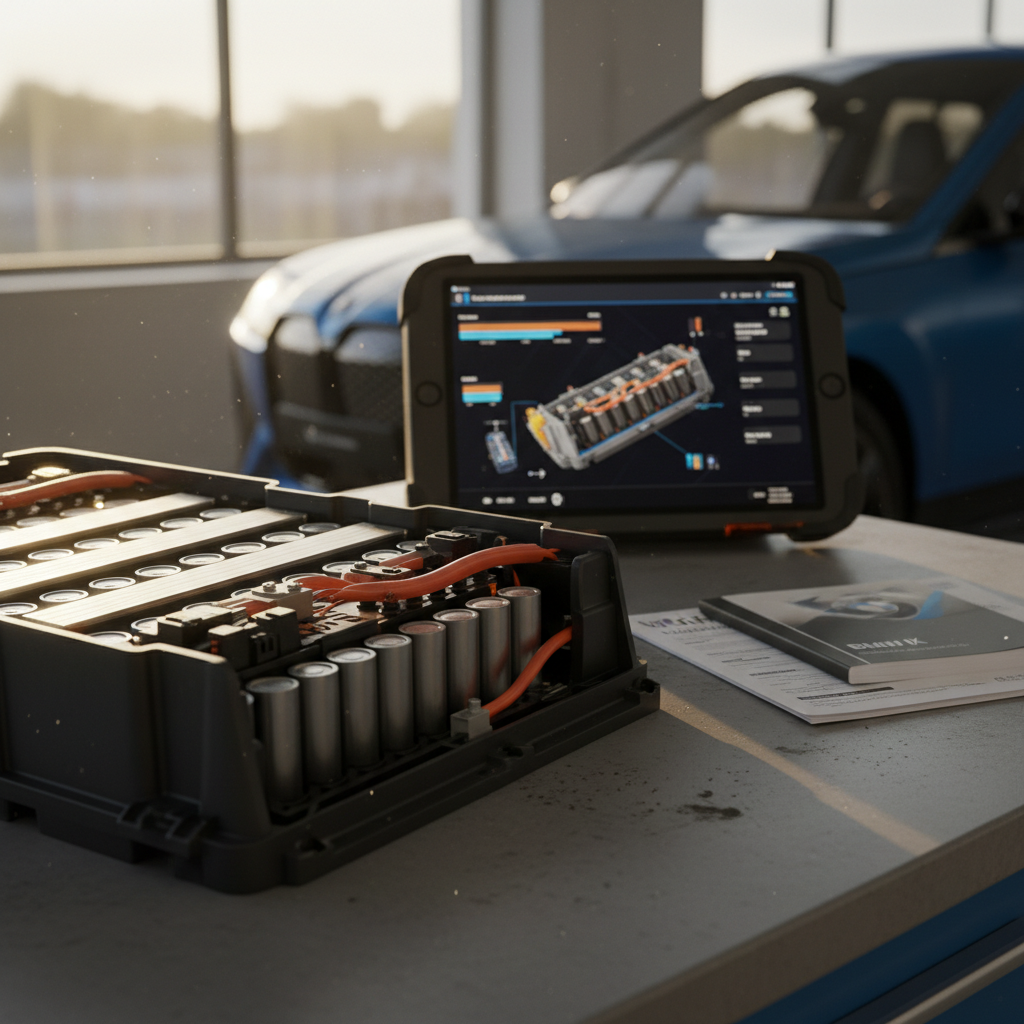
Technicians will scan for fault codes, check high‑voltage system data, and often perform a road test or controlled charge/discharge cycle to see how the pack behaves under load.
3. Battery capacity and health assessment
Using Kia’s diagnostic tools, the dealer or regional engineer will estimate usable capacity and compare it to the original spec. If it’s <strong>well above the 70% threshold</strong>, it’s unlikely to qualify for a warranty replacement.
4. Review of usage patterns & history
Telematics data (if enabled), DC fast‑charging frequency, and maintenance records may be reviewed to distinguish normal degradation from a genuine defect or abuse.
5. Repair or replacement decision
If the battery or related EV system component is found to be defective or below capacity spec, Kia may authorize <strong>module repair, partial pack work, or a full pack replacement</strong> with a new or remanufactured unit.
What can sink a claim
Real-world EV6 battery degradation vs. warranty limits
Warranty fine print is one thing; how EV6 packs hold up in the real world is another. Early owner data and independent analyses suggest the EV6’s 77.4 kWh pack has been aging gently for most drivers, especially with reasonable charging habits.
What owners are actually seeing from EV6 batteries
Real‑world experience vs. what the warranty promises.
First 30–60k miles
Many EV6 owners tracking battery health report only low single‑digit percent capacity loss in the first 2–4 years and 30,000–60,000 miles, assuming mixed home and public charging.
Up to 10 years / 100k miles
Most modern packs are expected to stay well above 70% capacity over this period in normal use. The warranty threshold is intentionally conservative to catch outliers, not typical cars.
Warranty is the safety net
The EV6’s 10‑year/100,000‑mile warranty down to ~70% functions like a backstop. In day‑to‑day life, you’ll experience range as a spectrum, not a cliff where the car suddenly becomes unusable.
Habits that help your EV6 battery age gracefully
Shopping for a used EV6? Warranty checklist
The EV6’s battery warranty is a big reason the car is attractive on the used market, but only if you know how much coverage is left and what kind of life the battery has already lived. This is exactly the kind of homework Recharged was built to simplify.
Used EV6 battery & warranty due‑diligence checklist
1. Confirm in‑service date and mileage
Ask for service records or a printout from a Kia dealer to see when the car was first put into service. Subtract that date from today and check the odometer to see how much of the 10‑year/100,000‑mile term remains.
2. Look for salvage, flood, or major accident history
A branded title or water damage can void battery coverage. Pull a vehicle history report and inspect underbody areas for unusual corrosion or signs of impact around the battery tray.
3. Review charging and usage patterns
Heavy DC fast‑charging and frequent 0–100% cycles aren’t automatic deal‑breakers, but they can accelerate degradation. Ask the seller how they typically charge and how often the car road‑trips.
4. Get an objective battery health reading
At Recharged, every EV6 we list receives a <strong>Recharged Score battery health report</strong>, using data and diagnostics to estimate remaining capacity. If you’re buying privately, consider a pre‑purchase inspection with an EV‑savvy shop that can read pack health data.
5. Verify open recalls and software updates
Some updates adjust how the BMS manages the pack. Make sure all recalls and recommended software updates have been performed; they can improve both reliability and accuracy of range estimates.
6. Ask explicitly about battery warranty transfer
Have a Kia service advisor confirm, by VIN, that the EV System and battery warranty are intact and transferable. Get names, dates, and ideally something in writing or via email for your records.
How Recharged helps de‑risk a used EV6
Ready to find your next EV?
Browse VehiclesFAQ: Kia EV6 battery warranty questions answered
Kia EV6 battery warranty: common questions
Bottom line: should the EV6 battery warranty reassure you?
When you peel back the marketing, the Kia EV6 battery warranty is both pretty straightforward and genuinely robust. You’re getting 10 years or 100,000 miles of coverage on the high‑voltage battery and core EV components, with protection down to around 70% of original capacity, and early owner data suggests most packs won’t even approach that floor under normal use.
Is it a promise that your EV6 will feel brand‑new forever? No. You’ll see some range loss over time, just as you’d expect from any lithium‑ion pack. But it is a strong backstop against rare, abnormal failures, and it makes the EV6 one of the less risky choices if you’re stepping into an EV for the first time or buying used.
If you’re shopping for a used EV6 and want clarity on both battery health and warranty status, a transparent inspection and data‑driven report are worth their weight in lithium. That’s exactly what you get with a Recharged Score Report, plus expert EV‑specialist support, financing options, trade‑in or consignment, and nationwide delivery. Put together, the EV6’s factory warranty and Recharged’s diagnostics give you something every EV shopper deserves: confidence that the battery can go the distance.