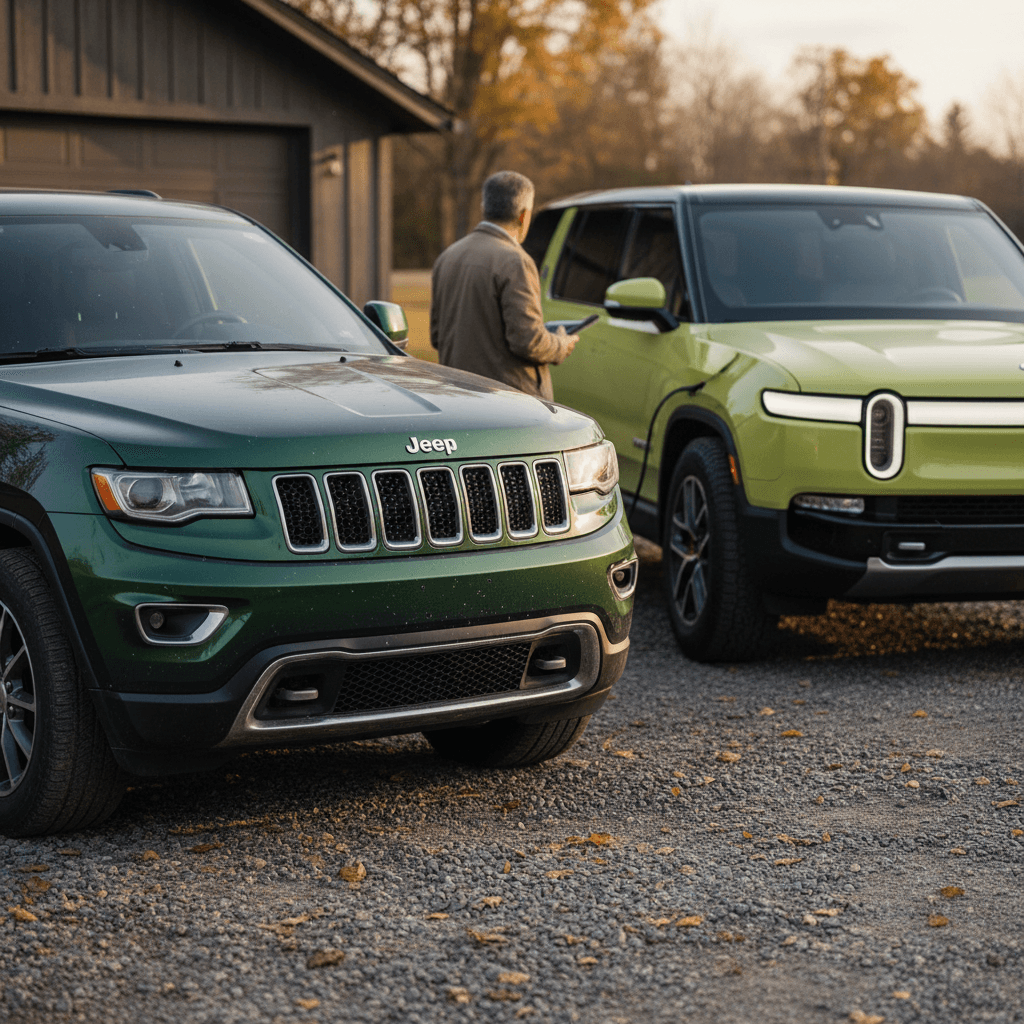
If you’ve driven a Jeep Grand Cherokee for years, the idea of trading it for a Rivian R1S can feel like jumping into another universe. Same basic mission, three-row SUV with real off‑road chops, but one burns gas, the other runs on electrons and software. This Jeep Grand Cherokee owner switch to Rivian R1S review walks through how the change really feels, using real‑world owner impressions plus market data to help you decide if the R1S is an upgrade, a compromise, or both.
A shared design DNA
Why Jeep Grand Cherokee Owners Look at the Rivian R1S
Top reasons Jeep Grand Cherokee owners cross‑shop the Rivian R1S
Same spirit, very different powertrain
Instant electric performance
Fuel and maintenance savings
Serious off‑road credentials
Beyond the spec sheet, many former Jeep owners say the R1S simply feels like the natural evolution of what they loved about their Grand Cherokee: big‑shouldered styling, family‑friendly space, and the confidence that comes from a vehicle built for bad weather and rough roads, not just mall parking lots.
Quick Specs: Jeep Grand Cherokee vs. Rivian R1S
Jeep Grand Cherokee vs. Rivian R1S at a Glance
High‑level comparison for a recent Grand Cherokee (including 4xe) vs. Rivian R1S. Exact numbers vary by year and trim, but this gives you the broad shape of the trade‑off.
| Spec | Jeep Grand Cherokee (recent gen) | Rivian R1S |
|---|---|---|
| Powertrain | Gas V6 / V8 or 4xe plug‑in hybrid | Dual‑ or quad‑motor all‑electric |
| 0–60 mph | ~6–7.5 seconds (most trims) | ~3–4.5 seconds, depending on motor setup |
| Drivetrain | 4x2 or 4x4 | Standard AWD (one motor per axle or per wheel) |
| Seating | 2 or 3 rows (Grand Cherokee L) | Standard 3 rows |
| Ground clearance | Up to ~10.9 in with air suspension | Up to ~14–15 in with air suspension |
| Fuel/energy | Gasoline (plus limited EV range on 4xe) | Battery electric, 300+ miles depending on configuration |
| Towing capacity | Up to ~6,000–7,200 lbs (trim‑dependent) | Up to 7,700 lbs in many configurations |
| Energy/fuel cost | Varies with gas prices; 15–25 mpg common | Lower per‑mile cost when charging at home, higher at fast chargers |
Performance and capability tilt toward the R1S, while the Jeep keeps advantages in towing with certain trims and in some interior dimensions.
Specs are a starting point, not the verdict
Real-World Driving Feel and Ride Quality
How the Grand Cherokee feels
Most Jeep Grand Cherokee owners know the script: a solid, traditional SUV ride. You feel the road, but the suspension is tuned to keep things comfortable on long highway runs and composed on broken pavement. There’s some body roll in corners and squat under hard acceleration, but it’s familiar, almost old‑school SUV behavior.
If you have air suspension, you can soften things further and raise the body for off‑road use, but the underlying feel is still very much a body‑on‑frame‑inspired SUV, especially if you’ve spent time in earlier Jeeps.
How the Rivian R1S feels
The R1S lands in a different place. Owners often describe the ride as firm but planted. The battery low in the chassis keeps the center of gravity down, so the big SUV doesn’t lean nearly as much in corners as a Grand Cherokee. Acceleration is immediate, and even in its more relaxed drive modes, the R1S feels eager.
Where opinions split is rough pavement. On smooth highways the Rivian can feel almost luxurious; on patched‑up city streets, some former Jeep owners say they feel more sharp impacts than they expected until they dial in the suspension mode and tire choice that works best for their roads.
Dialing in your Rivian ride
Some former Grand Cherokee drivers say the R1S reminds them more of a European SUV, firmer, more controlled, and faster to respond, than of a softly sprung American truck‑based SUV. If your current Jeep is already on larger wheels with low‑profile tires, the Rivian’s firmness may not bother you. If you’re used to a cushy, floaty ride, plan on a longer test drive before you commit.
Space, Practicality, and Family Use
Everyday usability: Jeep Grand Cherokee vs. Rivian R1S
Both do family duty; the R1S sneaks in extra EV tricks.
Seating and comfort
Cargo and storage
Kid and pet friendliness
Where the R1S clearly beats the Jeep
Off-Road Capability: Jeep Tradition vs. Rivian Tech
Jeep has spent decades building its reputation off‑road, and the Grand Cherokee, especially in Trailhawk or Off‑Road packages, earns that badge. Still, when you line up a well‑equipped Grand Cherokee against a Rivian R1S, the numbers increasingly favor the EV for ground clearance and approach/departure angles. Owners who’ve switched describe the R1S as feeling less mechanical but more precise on the trail.
Off-Road Highlights When Switching from Jeep to Rivian R1S
Trail feel: mechanical levers vs. software brains
Charging vs. Gas: Living With an Electric SUV
Swapping a Jeep Grand Cherokee for a Rivian R1S changes where and how you “fuel.” Instead of gas stations, your default becomes home charging. Public fast charging and Tesla Superchargers, using the adapter Rivian has offered many owners, fill in the gaps on road trips. That’s a massive lifestyle shift, and it’s where would‑be Jeep converts have the most questions.
Jeep gas tank vs. Rivian battery: day‑to‑day reality
Think in terms of routines, not just range numbers.
Daily driving and commuting
Road trips and long drives
Make home charging your first project
If you live in an apartment or rely mostly on public charging, be honest with yourself. A Grand Cherokee with a 4xe plug‑in hybrid system plus gas backup may still be simpler than an R1S if charging options are thin in your area. On the other hand, if you have a garage or driveway and decent power available, the R1S can make the day‑to‑day driving routine easier, not harder.
Ownership Costs, Maintenance, and Reliability
Grand Cherokee costs and care
Owning a Jeep Grand Cherokee means a predictable pattern: oil changes, transmission and differential service, spark plugs, exhaust components, and the usual wear items like brakes and tires. If you tow or off‑road a lot, you might see extra suspension and brake work over time.
Fuel is the wild card. A V6 or V8 Jeep can easily live in the mid‑teens for mpg when driven hard or used for towing, and rising gas prices make those weekend trail runs and long commutes more expensive every year.
Rivian R1S costs and care
With no engine or traditional transmission, the R1S eliminates a long list of service items. Most routine visits center on tire rotations, brake inspections, and software updates. Electricity, especially at home off‑peak rates, tends to be cheaper per mile than gas.
On the flip side, the R1S is a newer, more complex EV. Owners report that while the powertrain feels bulletproof, early software quirks, occasional trim issues, and the cost of heavy‑duty EV tires can add up. A set of quality tires alone can run well into four figures, especially on the larger wheel packages.
Don’t ignore EV‑specific wear items
For many households, the long‑term math still favors the R1S: lower fuel cost, fewer moving parts, and, if you buy used, someone else has already paid the steepest part of the depreciation curve. The key is planning for bigger‑ticket wear items like tires and being realistic about charging costs if you rely on public fast charging.
Buying Used: Jeep Grand Cherokee vs. Used Rivian R1S
The used market is where a lot of Jeep Grand Cherokee owners seriously consider the Rivian R1S. You might already own your Jeep outright or have equity in it; putting that value toward a used R1S can drop you into EV ownership at a lower price point than buying new. But you’re moving from a long‑established brand to a still‑young EV builder, and that changes how you should shop.
Key used‑market differences: Grand Cherokee vs. R1S
What to watch for when you test‑drive and inspect.
Battery health vs. engine wear
Service history and campaigns
Depreciation and price trends
How Recharged de‑risks a used R1S purchase
Ready to find your next EV?
Browse VehiclesChecklist: Should You Trade Your Jeep for a Rivian R1S?
Key questions before you move from Grand Cherokee to R1S
1. How do you really use your Jeep today?
List your typical week: commuting miles, kid drop‑offs, errands, weekend trips, towing. If most of your miles are under 200 per day, an R1S fits easily. If you regularly drive 400+ miles in a single day with limited stops, you’ll need to be comfortable planning charging into your routine.
2. What’s your home charging situation?
Do you have a garage or driveway and the ability to install a 240‑volt outlet or home charger? If yes, the R1S can actually be more convenient than your Grand Cherokee. If no, research public charging near you before making the leap.
3. How sensitive are you to ride comfort changes?
If you love the cushier, traditional SUV ride of your Grand Cherokee, spend extra time test‑driving the R1S on your worst local roads. Its firm, controlled feel will appeal to some and turn off others. Try different wheel sizes and suspension modes if possible.
4. Do you tow or go off‑road often?
Both vehicles can tow and tackle trails, but the details differ. If you regularly haul close to max tow ratings, compare your exact Jeep trim to the specific R1S configuration you’re considering. For light to moderate off‑roading and snow, the R1S often feels like an upgrade.
5. What’s your appetite for new tech?
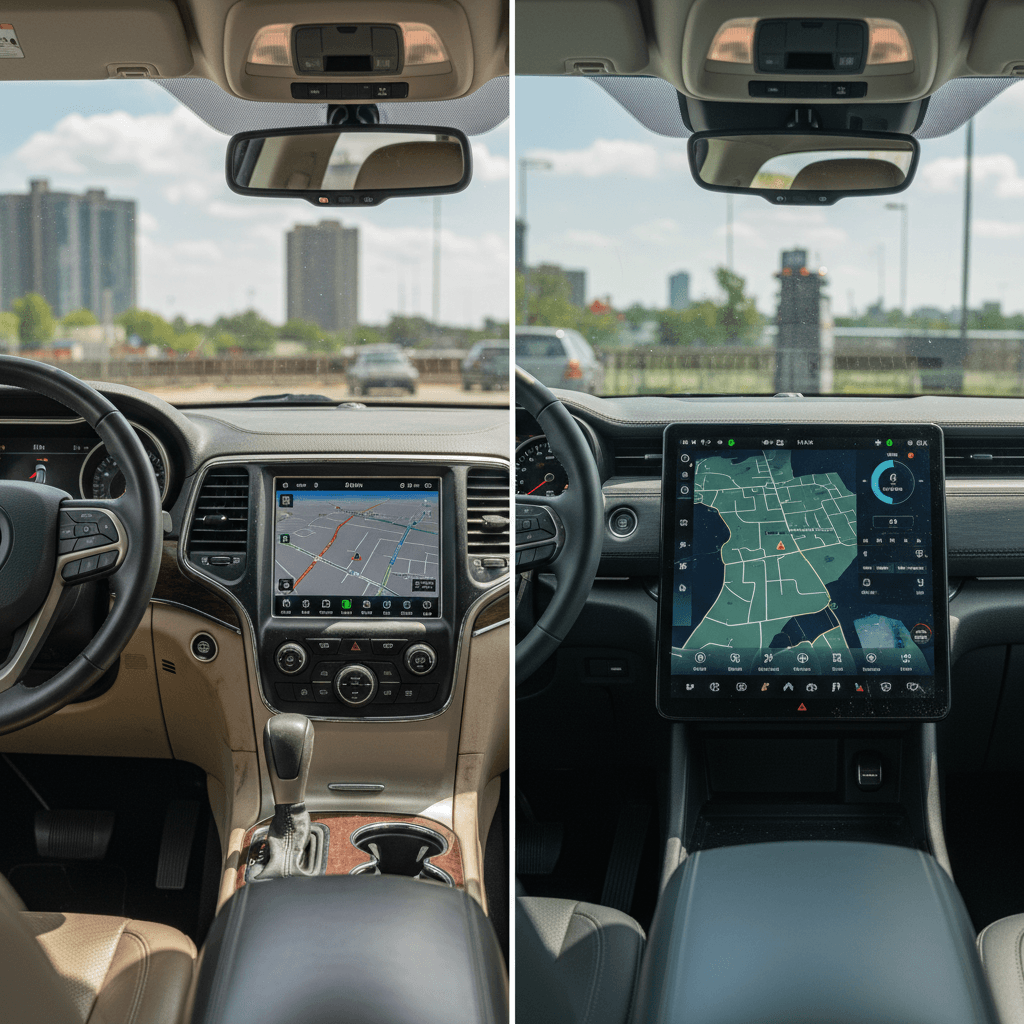
The Grand Cherokee mixes analog controls with screens. The R1S is closer to a rolling smartphone: software‑heavy, over‑the‑air updates, and touch‑first controls. If that sounds exciting, you’ll enjoy the switch. If it sounds exhausting, consider whether a plug‑in hybrid Jeep might be a better intermediate step.
6. How will you use your trade‑in equity?
If you have equity in your Grand Cherokee, get offers from multiple buyers. At Recharged, you can get an <strong>instant offer</strong> for your trade‑in and apply that directly to a used Rivian R1S, keeping your overall payment in check and skipping dealer haggling.
FAQ: Common Jeep-to-Rivian R1S Owner Questions
Jeep Grand Cherokee Owner Switch to Rivian R1S Review: FAQ
Bottom Line: Is the R1S a Good Upgrade From a Grand Cherokee?
For many Jeep Grand Cherokee owners, the Rivian R1S feels like the next logical step: more performance, more off‑road capability on paper, far lower tailpipe emissions, smart storage solutions, and a genuinely modern driving experience. But it’s not a simple trade, ride quality, charging access, and comfort with heavy software all matter more than they do in a traditional Jeep.
If you love the utility, stance, and go‑anywhere attitude of your Grand Cherokee and you’re ready to embrace EV ownership, the R1S belongs at the top of your list. The smartest way to make the jump is to shop the used Rivian R1S market, let tools like the Recharged Score Report de‑risk battery and pricing questions, and use the equity in your Jeep to land in a well‑vetted R1S that fits your budget.
At Recharged, you can browse used R1S listings, get an instant offer for your Grand Cherokee, tap EV‑specialist support, and arrange nationwide delivery, all without an old‑school dealership visit. For the right driver, that makes the switch from Grand Cherokee to Rivian R1S feel less like a leap of faith and more like a planned upgrade.