If you’re asking whether the Rivian R1S is worth buying in 2026, you’re probably torn between its wild capability and nagging questions about reliability, resale value, and whether a young automaker will stick around. That tension is real, and it’s exactly what you should unpack before dropping luxury-SUV money on an adventure EV.
Short Answer
Is the Rivian R1S Worth Buying in 2026? Quick Take
Rivian R1S at a Glance (2025–2026 models)
By 2026 the R1S has matured from a quirky startup SUV into one of the most capable all‑electric family vehicles you can buy. Dual‑motor versions offer long range and strong efficiency, while quad‑motor trims are legitimately outrageous in performance and off‑road control. Where the equation gets tricky is reliability, service access and depreciation: owner surveys and early data still put Rivian below mainstream luxury brands on defect rates and recall frequency, even as most battery and motor hardware holds up well.
Who Should Be Cautious
Rivian R1S Key Specs & What’s New by 2026
Rivian launched the R1S in 2022 and rolled out a major hardware and software refresh around the 2025 model year, sometimes called “Gen 2.” By 2026, you’ll mostly be cross‑shopping that updated generation against 2022–2024 used models and new competitors from Mercedes, Tesla, Kia and others.
Rivian R1S Powertrain & Range Snapshot (2024–2026)
Exact numbers vary by wheel/tire and pack, but this gives a realistic comparison if you’re shopping new vs used in 2026.
| Model years | Typical configuration | Approx. range (EPA est.) | 0–60 mph (approx.) | Notes |
|---|---|---|---|---|
| 2022–2023 | Quad‑motor, Large pack | ~300–320 miles | About 3.0 sec | Earliest builds; amazing performance, more first‑gen bugs. |
| 2023–2024 | Dual‑motor, Large/Max pack | ~350–390 miles | Around 4.0–4.5 sec | Better efficiency, still early software issues. |
| 2025–2026 | Gen 2 Dual‑motor Max | ~380–410 miles | Low‑4s | Refined hardware, improved efficiency and UI. |
| 2025–2026 | Gen 2 Quad‑motor | Lower than Dual | As low as mid‑2s | Range tradeoff for extreme performance. |
Use this as a directional guide; always confirm final EPA estimates and wheel/tire impact on the specific VIN you’re considering.
Charging Standard in 2026
Pricing & Value: New vs Used Rivian R1S in 2026
New R1S pricing has bounced around as Rivian chases volume and profitability, but you should think in rough bands: new dual‑motor models often land in the mid‑to‑high $70,000s before options, with well‑equipped or quad‑motor builds reaching well into the $90,000s. That puts the R1S squarely against Tesla’s Model X, Mercedes EQS SUV, and fully loaded Kia EV9s.
New Rivian R1S in 2026
- Pros: Latest hardware and software, improved efficiency, full warranty coverage, cleaner history.
- Cons: High upfront price, heavier initial depreciation, you’re still a relatively early adopter for long‑term reliability.
- Best for: High‑income buyers who want to spec their own build and can live with some quirks.
Used Rivian R1S in 2026
- Pros: Significant savings vs. new, real‑world reliability history, and in many cases remaining factory warranty.
- Cons: Early‑build issues, varying software update histories, potential unknown battery or collision history.
- Best for: Value‑focused shoppers who use tools like a Recharged Score battery report to de‑risk the purchase.
Used Value Angle
Reliability: Has the Rivian R1S Gotten More Dependable?
Reliability is where the “Is a Rivian R1S worth buying in 2026?” question gets complicated. Owner surveys through 2024–2025 show a clear pattern: Rivian owners tend to love their vehicles but report more problems per car than drivers of established luxury brands. The R1S scores high on satisfaction and low on classic reliability charts at the same time, a recipe for strong emotions either way.
Common R1S Trouble Spots Reported by Owners
Issues are not universal, but they’re frequent enough that you should factor them into your decision.
Software & Infotainment
Glitches with the center screen, Bluetooth, cameras, and drive modes are among the most frequently reported issues. Over‑the‑air updates fix some bugs but can also introduce new ones.
Fit, Finish & Wind Noise
Panel alignment, interior trim clips, rattles and wind noise crop up in many early R1S builds, especially from 2022–2023. Later “Gen 2” hardware improves this but doesn’t eliminate it.
Recalls & Campaigns
From suspension fasteners to accelerator pedal pads and electronic faults, Rivian has issued multiple recalls. Most are fixed quickly, but you’ll want to check that any used R1S is fully up to date.
The good news: there’s little evidence of widespread, systemic failures in the battery pack or drive units. Most serious horror stories involve one‑off component failures, quality‑control misses, or software going badly wrong rather than a design‑level flaw in the EV hardware. The risk you’re really taking is more about inconvenience, service visits, waits for parts, and “my brand‑new six‑figure SUV needed a tow”, than about the vehicle being fundamentally unsound.
Service Access Matters
Battery, Range & Charging: Where the R1S Shines
If you care about long‑distance EV usability, the R1S is one of the standouts of its class. Later dual‑motor, Max‑pack builds are road‑trip monsters, and even large‑pack configurations offer deeply usable range when driven reasonably. Owners who pre‑condition the battery and plan stops well generally report stable long‑term range, with expected degradation but no epidemic of failing packs.
- Long‑range dual‑motor R1S models are among the few three‑row EVs that can realistically road‑trip in cold climates without constant charging anxiety.
- DC fast‑charging peaks are competitive, and charging curves have improved with software updates, trimming dwell times on road trips.
- By 2026, Rivian drivers can access most major CCS networks plus a growing share of NACS (Tesla) Superchargers via adapters or native ports, depending on build year.
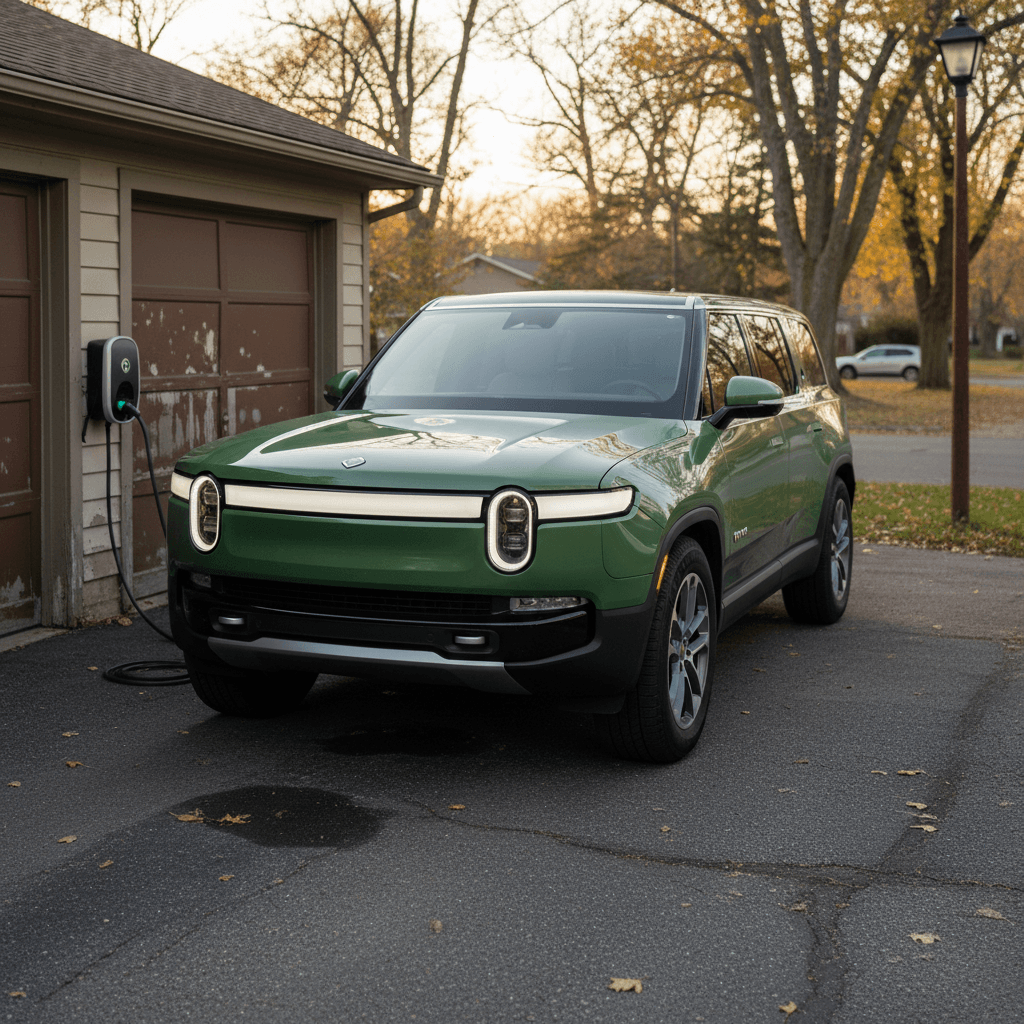
- Level 2 home charging on a 48A or 80A circuit refills even a big pack overnight, provided your electrical service is sized correctly.
Home Charging Reality Check
Daily Use, Space & Capability: What It’s Like to Live With
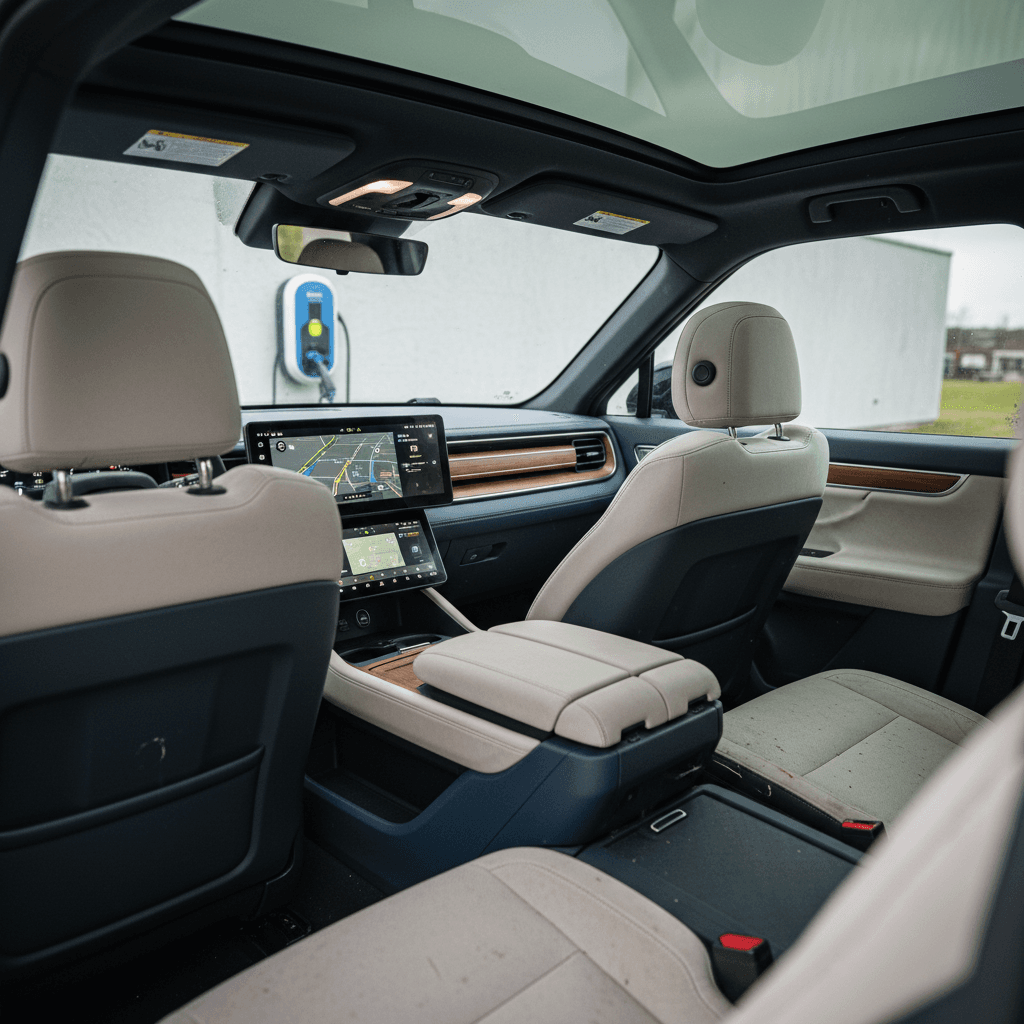
The R1S is not just a powertrain science project, it’s a genuinely useful family and adventure rig. You get a real three‑row layout, a large cargo area with the third row down, and clever storage touches that come from Rivian’s outdoor‑focused design brief.
Living With a Rivian R1S Day to Day
Where it excels, and where it still feels like a first‑generation product.
Space & Flexibility
Adults can actually fit in all three rows for shorter trips, and the second row is comfortable for long drives. The flat floor and generous cargo room make it easy to haul bikes, dogs and gear.
Off‑Road & Weather
Height‑adjustable air suspension, impressive approach and departure angles, and clever traction control make the R1S feel like a modern Land Rover that happens to be electric.
Refinement & Noise
Later builds are quiet and comfortable, but you may still notice more wind noise and small trim buzzes than in a Mercedes or Lexus. It’s adventure‑luxury, not old‑school S‑Class luxury.
Where the R1S Is Genuinely Special
Ownership Costs: Insurance, Maintenance & Depreciation
Luxury EV SUVs are not cheap to own, and the R1S is no exception. But the cost profile is different from a gas SUV like a Tahoe or X5M. You’re trading fuel and some maintenance for higher insurance, tires, and the usual luxury‑car surprises.
Key Cost Factors to Budget For
Insurance Runs High
Between the R1S’s price, repair complexity and parts availability, insurance quotes often land higher than similarly‑priced gas SUVs. Get real quotes with the VIN before you sign anything.
Tires & Wheel Damage
Big, heavy EVs eat through tires faster than lighter crossovers, and 20–22" wheels don’t love potholes. Expect to replace tires more frequently and consider wheel‑and‑tire protection plans carefully.
Low Routine Maintenance
No oil changes, spark plugs or exhaust. Most routine costs are cabin filters, brake fluid, and tire rotations. That said, any out‑of‑warranty electronic fault can get expensive quickly.
Depreciation & Resale
Rivian is still a young brand, and the used market is feeling its way toward stable pricing. Early R1S models have dropped quickly, which hurts first owners but can be a gift for second owners in 2026.
Don’t Ignore Depreciation Risk
Who Should, and Shouldn’t, Buy a Rivian R1S
The R1S is Worth Buying in 2026 If…
- You want a single do‑it‑all EV that can haul family, tow, road‑trip, and go off‑road.
- You value design, performance and capability more than absolute reliability scores.
- You live within a reasonable radius of a Rivian service center or mobile‑service hub.
- You’re comfortable being an early adopter and dealing with occasional software weirdness.
- You’re considering a used R1S with verified battery health and a clear service history.
You Might Want to Look Elsewhere If…
- Your top priority is no‑drama reliability and never seeing a service bay.
- You live far from Rivian support and rely heavily on a single vehicle.
- You dislike being part of the beta test, frequent software updates will not spark joy.
- You plan to stretch your budget just to get into an R1S; depreciation could sting.
- You simply need a three‑row EV and don’t care about off‑road, an EV9 or used Model X may pencil out better.
Buying a Used Rivian R1S in 2026: Smart Shopper Checklist
For many shoppers, the most rational way to say “yes” to the Rivian R1S in 2026 is to buy a carefully‑vetted used example. That way, you pay less, you can see how the specific vehicle has behaved over a few years, and you still get the unique R1S experience, ideally with fewer surprises.
Used Rivian R1S Due Diligence Steps
1. Pull Battery Health & Fast‑Charge History
Battery health is the backbone of any used EV decision. A <strong>Recharged Score Report</strong> gives you objective data on pack health, past DC fast‑charging behavior and estimated remaining usable capacity.
2. Verify Recalls & Campaigns
Check the VIN against NHTSA and Rivian’s own recall lookup. Make sure all campaigns, especially those involving suspension hardware, electronic modules and accelerator pedals, have been completed.
3. Review Service & OTA Update History
Ask for service invoices and check in‑vehicle logs where possible. Frequent visits for the same software or electrical gremlin can be a red flag, especially if the fix was “pending update.”
4. Inspect Fit, Finish & Water Intrusion
Look closely at doors, hatch and hood alignment, window seals, and the interior for signs of leaks. Uneven gaps or water marks in a relatively new SUV suggest quality‑control issues.
5. Test Every Feature Thoroughly
Spend real time with the vehicle. Test driver assistance, cameras, stereo, climate controls, charge scheduling, phone key, and navigation. Plan on a full hour of hands‑on testing before you commit.
6. Consider a Third‑Party or Specialist Inspection
Because Rivian dealers don’t exist in the traditional sense, using an EV‑specialist retailer like <strong>Recharged</strong>, which already runs battery diagnostics and condition checks, can replace some of the due diligence you’d otherwise have to do alone.
How Recharged Helps De‑Risk a Used R1S
FAQ: Rivian R1S Buying Questions for 2026
Rivian R1S 2026 Buyer FAQ
Bottom Line: Is the Rivian R1S Worth It in 2026?
The Rivian R1S is one of the most distinctive EVs on the road in 2026. If you want a three‑row SUV that feels like an overlanding rig, launches like a sports car and cruises quietly on electricity, few alternatives come close. But that ambition comes with trade‑offs: more software bugs, more recalls, a thinner service network and murkier long‑term resale than you’d get from an old‑guard luxury brand.
So, is the Rivian R1S worth buying in 2026? For the right buyer, someone who can tolerate some drama in exchange for genuine capability and character, the answer is yes, especially if you target a well‑specced used example with verified battery health and a clear service history. For risk‑averse shoppers or those stretching to afford one, the smarter move may be to let early adopters keep debugging while you focus on more conservative EV options.
If you’re leaning toward the R1S, consider starting your search with a curated used inventory that includes Recharged Score battery reports, expert EV guidance, financing, trade‑in support and nationwide delivery. You’ll spend less time worrying about what you don’t know, and more time planning where that first adventure road trip will take you.