If you’re wondering “is it worth switching to an electric car in 2026?”, you’re not alone. Between changing tax rules, cheaper used EVs, and a still‑evolving charging network, the math isn’t as simple as “EVs are always cheaper” or “gas is always safer.” The right answer depends on how you drive, where you live, and how long you plan to keep the car.
Where we’re starting from in 2026
Is it worth switching to an electric car in 2026?
When it’s usually worth it
- You drive at least 10,000–15,000 miles per year
- You can charge at home or work most of the time
- You plan to keep the car 5–8 years or more
- You’re open to a used EV to avoid steep new‑car depreciation
When it might not be (yet)
- You drive very low miles (under 7,500 per year)
- You can’t install home charging and rely on pricey DC fast charging
- You swap cars every 2–3 years and care most about resale
- You live where public charging is sparse and mostly do long highway trips
In 2026, for a typical American driver who logs around 12,000–15,000 miles a year and can charge at home, an EV often delivers lower total ownership cost over five to seven years than a comparable gas car, even without federal tax credits. But it’s no longer a guaranteed win for every household or every model. Let’s unpack why.
Quick answer: when an EV makes sense in 2026
EV vs gas: 2026 snapshot for a typical U.S. driver
If you’re driving a lot, paying high local gas prices, and can plug in at home, the fuel and maintenance savings from an EV in 2026 are still very real. Where things have shifted is on the purchase side: new EVs generally cost more up front than equivalent gas cars, and federal tax credits that helped close that gap largely disappeared at the end of September 2025.
Shortcut to your personal answer
How the 2025–2026 tax changes affect EV affordability
From January 2023 through September 30, 2025, many U.S. buyers could claim up to $7,500 in federal tax credits on new EVs and up to $4,000 on used EVs, often applied instantly at the dealership. Those credits, along with a popular leasing “loophole,” ended for most buyers on October 1, 2025. That means shoppers in 2026 are looking at EV prices that are effectively $4,000–$7,500 higher than buyers saw just a year or two ago, unless their state or utility offers its own incentives.
- Some states still offer $1,000–$4,000 EV rebates or tax credits, plus perks like HOV‑lane access or reduced registration fees.
- A separate federal tax credit for installing home charging equipment is scheduled to end on June 30, 2026, so waiting too long could cost you there as well.
- New 2025 tax rules add a potential car‑loan interest deduction that may apply to EVs and gas cars alike, but that doesn’t change the EV vs gas comparison, only your overall cost of financing.
Don’t assume the old incentives still exist
EV vs gas ownership costs in 2026
To decide if switching to an electric car is worth it in 2026, you need to think in total cost of ownership, not just sticker price. That means looking at purchase price, fuel or electricity, maintenance and repairs, insurance, and what the car is likely to be worth when you’re ready to sell or trade it.
Illustrative 5‑year cost comparison: compact SUV bought in 2026
Approximate national‑average numbers for a mainstream gas compact SUV vs a similar electric SUV, assuming 12,000 miles per year and mostly home charging. Your local results will vary.
| Cost category | Gas SUV (5 years) | Electric SUV (5 years) | What to know in 2026 |
|---|---|---|---|
| Purchase price (out the door) | $34,000 | $40,000 | New EVs often cost $5,000–$8,000 more than comparable gas models. |
| Fuel / electricity | $10,000 | $4,500 | Assumes ~$3.75/gal gas vs home charging at ~$0.15–$0.17/kWh. |
| Maintenance & repairs | $4,500 | $1,500 | EVs avoid oil changes and many wear items; tires similar for both. |
| Insurance | $6,000 | $6,500 | EVs can cost slightly more to insure, depending on model and area. |
| Resale value / depreciation | -$16,000 | -$22,000 | EVs have depreciated faster in recent years as prices fall. |
| Estimated 5‑year total spent | ≈$38,500 | ≈$30,500 | In this scenario, the EV still comes out ahead, mainly on energy and maintenance. |
The EV still wins on operating cost in 2026, but higher purchase price and depreciation narrow the advantage versus a few years ago.
This example is simplified, but it captures the main trade‑offs. You’re likely to pay more up front and lose more on resale with a new EV in 2026, but you also spend far less to power and maintain it. For many drivers, those savings still outweigh the higher purchase price over a normal ownership period. For low‑mileage drivers or those who can’t home charge, the equation gets murkier.
Where an EV can be a bad deal

Charging reality: do you have a good way to plug in?
Nothing affects whether an EV is worth it in 2026 more than how and where you’ll charge. The public charging network keeps improving, but it still isn’t as seamless as gas stations, particularly away from major metro areas and interstate corridors.
Three common charging situations in 2026
Your charging reality can make or break the EV value proposition.
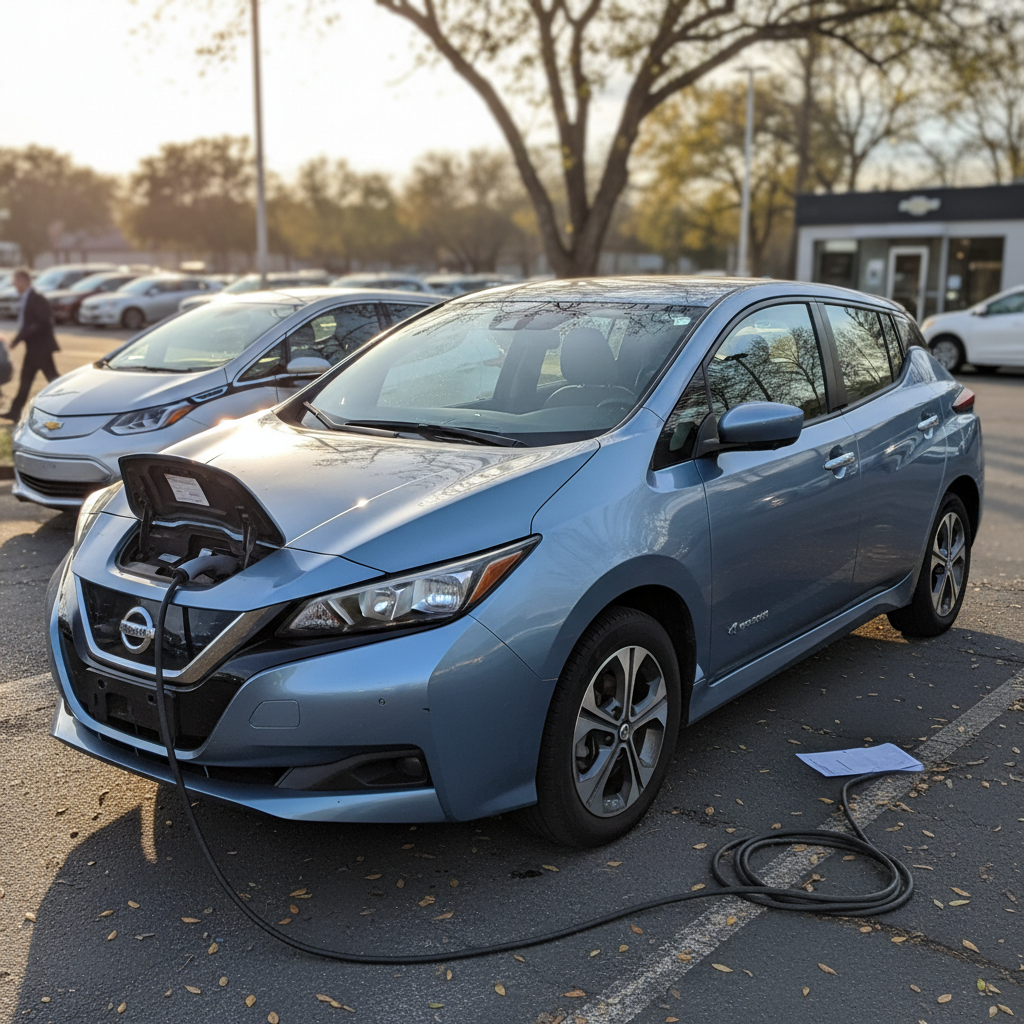
Home charging (best case)
If you can install a Level 2 home charger or use a 240V outlet, you’ll typically:
- Charge overnight at low residential rates
- Wake up with a "full tank" daily
- See the largest fuel‑cost savings
Workplace or apartment charging
If your employer or building offers reliable charging:
- You may still pay less than gas per mile
- Convenience depends on station availability
- Mix with occasional public fast charging for trips
Mostly public fast charging
If you have to rely on DC fast chargers:
- Energy costs can be similar to gas
- You spend more time waiting to charge
- EV may only be worth it if you drive a lot and value the driving experience and lower maintenance.
Charging readiness checklist before you switch
1. Confirm you can safely install home charging
Talk to a licensed electrician about adding a 240V circuit for a Level 2 charger, especially in older homes. Don’t assume your panel can handle it until a pro checks.
2. Check your real parking situation
If you park on the street or in a shared lot without outlets, your plan can’t hinge on home charging. Look honestly at whether dependable daily charging is realistic.
3. Map nearby public chargers
Use PlugShare, ChargePoint, Tesla, or your local utility’s map to see how many chargers are near your usual routes, and how busy they are at peak times.
4. Understand your utility’s EV rates
Many utilities offer special off‑peak or EV‑only rates that make overnight charging much cheaper. Call or check your provider’s website before you decide.
5. Think about your longest regular trips
If you often do 300‑ to 500‑mile drives, look at the DC fast‑charging options along those routes for your specific EV model’s plug type and speed.
Home charging is the unlock
Battery life and used EVs: should you worry?
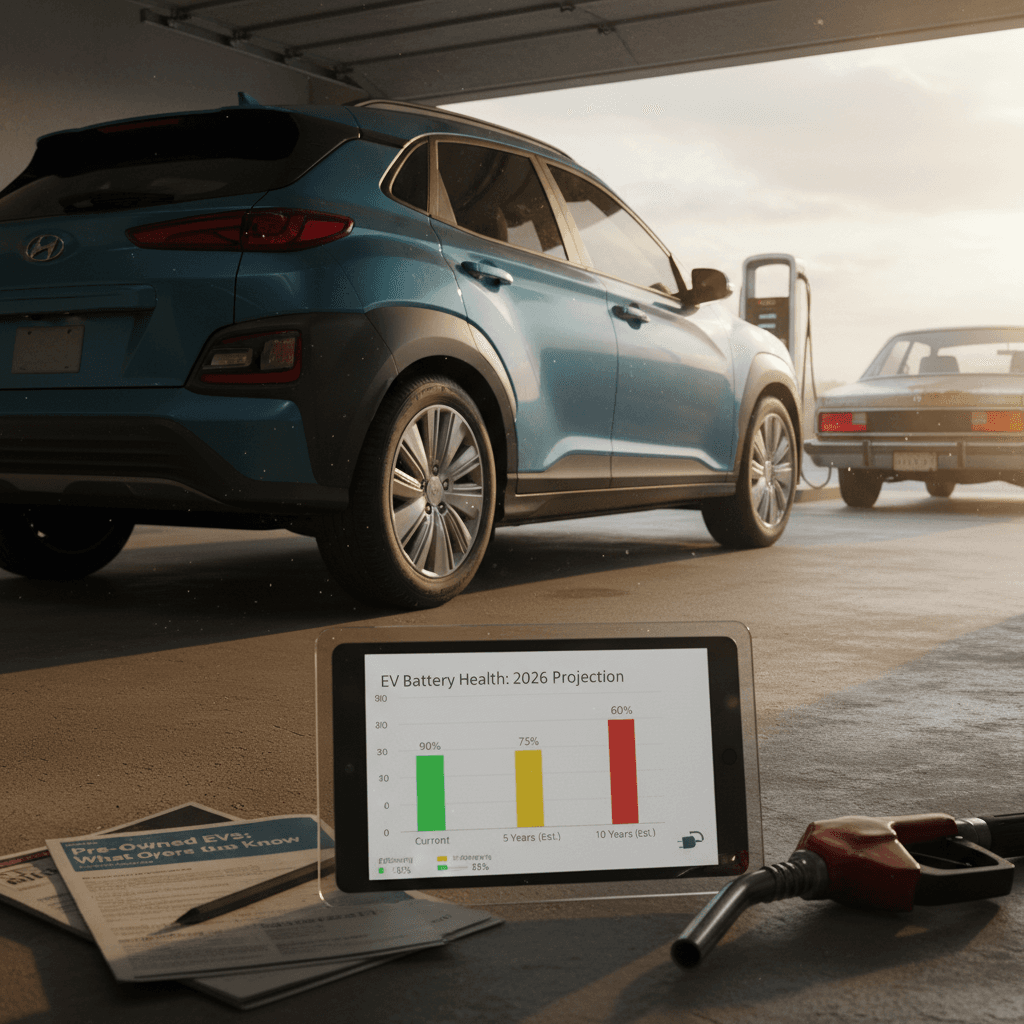
Early on, a lot of shoppers worried EV batteries would be “used up” in a few years. Real‑world data now paints a calmer picture: most modern EVs keep the majority of their range well past 100,000 miles, and many owners are seeing 10 years or more of useful life from the original pack. That’s opened the door for the used EV market to become one of the best values in 2026, if you know how to evaluate battery health.
- Most EV batteries are covered by an 8‑year / 100,000‑mile (or longer) warranty against major capacity loss.
- Independent studies of thousands of used EVs show slower degradation than many early forecasts feared, especially for newer designs.
- Fast charging, extreme heat, and high mileage can still accelerate wear, so vehicle history matters more than just the odometer.
Why battery reports matter more than ever
Who should switch to an EV by 2026 – and who should wait
Great candidates to switch in 2026
- You drive 12,000–20,000 miles a year and keep cars at least 5 years.
- You have a garage or dedicated driveway where you can install Level 2 charging.
- Your current gas car needs major work (engine, transmission, or emissions) in the next 12–24 months.
- Your daily driving fits within the realistic range of most EVs, under 200 miles even in bad weather.
- You’re open to a used EV to offset higher new‑EV prices and weaker incentives.
People who might want to wait
- You drive very little (under 7,500 miles per year) and your current car is paid off and reliable.
- You cannot reliably charge at home or work and your area has limited public infrastructure.
- You trade out of vehicles every 2–3 years and prioritize resale value over long‑term savings.
- You tow heavy loads or drive off‑grid often, and current EV options don’t yet fit your use case.
- Your budget is tight and the higher upfront cost of an EV would strain your monthly payment, even with lower operating costs.
Think of it as an ownership swap, not just a payment swap
New vs used EV in 2026: which is worth it?
One of the biggest changes in 2026 versus just a few years ago is how attractive used EVs have become. As early adopters trade up and manufacturers cut new EV prices, many 2‑ to 5‑year‑old electric cars now sell for less than comparable new gas models, without the waiting lists and markups we saw earlier in the decade.
New vs used EV: pros and cons in 2026
You don’t have to buy brand‑new to go electric.
Buying a new EV in 2026
- Pros: Latest tech and range, full factory warranty, often better DC fast‑charging speeds, easier financing.
- Cons: Higher purchase price, faster early‑year depreciation, federal tax credits no longer softening the blow for most buyers.
Buying a used EV in 2026
- Pros: Lower upfront cost, much of the early depreciation already absorbed, strong remaining battery warranty on many 3‑ to 5‑year‑old models.
- Cons: Battery health varies, fast‑charging performance may be lower on older designs, shorter remaining warranty.
The used‑EV trap to avoid
How Recharged helps you make the switch smarter
If you decide that switching to an electric car in 2026 might be worth it, the next question is how to do it without guessing on battery health, overpaying, or getting stuck with a car that doesn’t fit your lifestyle. That’s exactly the gap Recharged is built to close.
- Every EV on Recharged comes with a Recharged Score Report that includes verified battery health, real‑world range estimates, and fair‑market pricing, so you’re not taking a blind leap.
- You can trade in or get an instant offer on your current vehicle, whether it’s gas, hybrid, or electric, and roll that value into your next EV.
- Financing is built around EVs, with experts who understand how lower running costs and battery warranties affect the real risk profile.
- Recharged offers nationwide delivery and an Experience Center in Richmond, VA, where you can get EV‑specialist support in person.
- If you’re unsure whether a particular model fits your range and charging needs, Recharged advisors can walk through your daily routes, home situation, and budget to find a better match.
Make the switch on your terms
FAQ: switching to an electric car in 2026
Common questions about switching to an EV in 2026
Bottom line: is it worth switching to electric in 2026?
For a typical U.S. driver in 2026 who can charge at home, drives at least 10,000–15,000 miles per year, and plans to keep the vehicle 5–8 years, yes, switching to an electric car is usually worth it, even without the old federal tax credits. You’ll likely spend less on energy, far less on routine maintenance, and enjoy a quieter, smoother daily drive.
Where the answer tilts toward “not yet” is for low‑mileage drivers, shoppers who can’t realistically plug in at home or work, and anyone whose budget or lifestyle doesn’t line up with the current crop of EVs. In those cases, it can make sense to wait a bit longer, or to look for a well‑priced used EV with verified battery health so you’re not overpaying for range you won’t use.
If you’re ready to seriously run the numbers, explore detailed EV vs gas cost breakdowns and browse Recharged’s inventory of used EVs with Recharged Score battery reports. With transparent data on battery health, pricing, and total cost of ownership, and the option to trade in your current car, making the switch in 2026 doesn’t have to be a leap of faith.