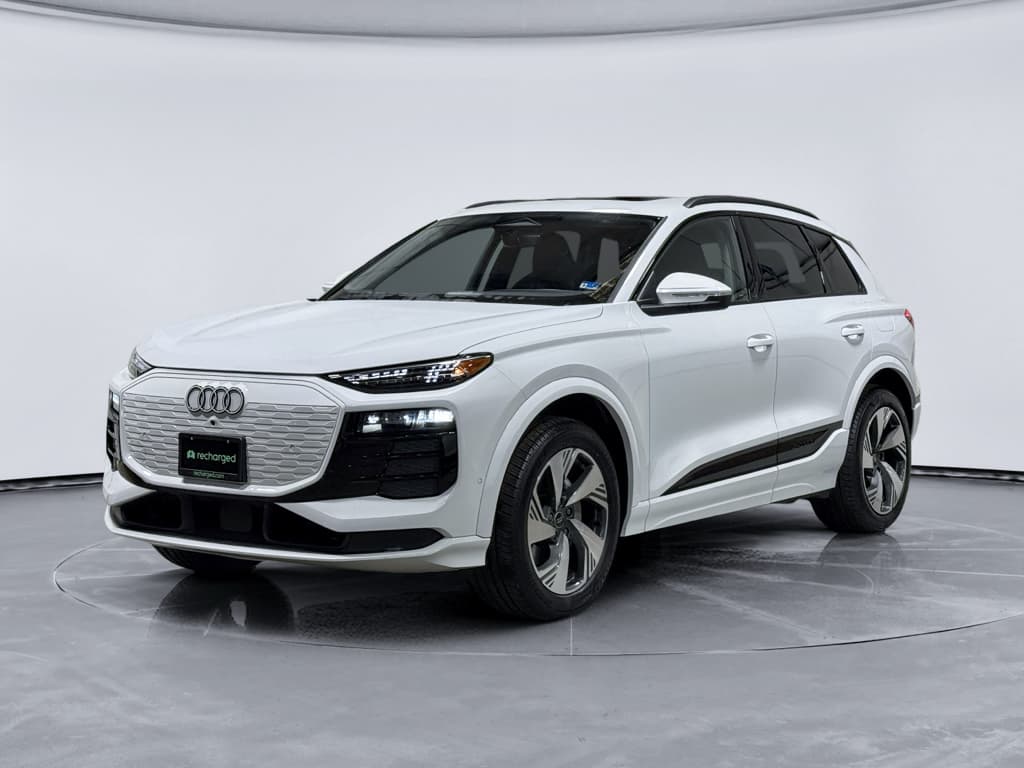
If you’re eyeing a compact luxury EV SUV in 2026, the question on your mind is simple: is the Audi Q4 e-tron worth buying compared with a Tesla Model Y, Hyundai Ioniq 5, or a Volvo XC40 Recharge? The short answer is that the Q4 e-tron can be a smart buy, especially used, if you understand its strengths, the known trouble spots, and how its depreciation works to your advantage.
What this guide covers
Quick answer: is the Audi Q4 e-tron worth it in 2026?
When it is worth buying
- You want a quiet, refined luxury EV SUV with a more traditional feel than a Tesla.
- You do most of your charging at home and drive under ~200 miles a day.
- You’re shopping used and want to let the first owner eat the biggest chunk of depreciation.
- You value cabin quality and comfort over maximum range or charging speed.
When you should think twice
- You regularly do long highway road trips and want the absolute fastest charging and longest range in class.
- You’re nervous about early-production software and charging hardware issues and don’t want to watch recall notices.
- You expect Tesla-level infotainment polish or over‑the‑air update cadence.
- You plan to keep the car for a decade and are very sensitive to luxury-EV resale swings.
Our overall 2026 verdict
Audi Q4 e-tron at a glance in 2026
Audi Q4 e-tron key numbers (US, 2024–2025 models)
Under the skin, the Q4 e-tron rides on the Volkswagen Group’s MEB platform. In the US that typically means a single battery pack around 77–82 kWh usable, rear‑wheel‑drive and dual‑motor quattro variants, and DC fast‑charging peaking around 150–175 kW as software and chemistry improved for 2024–2025. Most owners in Recharged testing see about 210–240 miles of real-world range from the larger pack in mixed driving, less in winter or at high speeds.
Model years to focus on
Range and charging: what living with a Q4 e-tron feels like
Range and charging strengths and tradeoffs
Strong enough for most daily use, but not class‑leading
Everyday range
Most drivers report around 210–240 miles per charge in mixed city/highway use with the larger pack. Cold weather or high speeds can pull that closer to the high‑100s.
DC fast charging
Updated Q4 55 models can hit up to ~175 kW on a capable DC fast charger, restoring roughly 10–80% in about 30–35 minutes in good conditions.
Home charging
On a 240V Level 2 charger at home, expect roughly 25–35 miles of range per hour of charging, topping up overnight without drama.
On paper, the Q4 e-tron’s range and charging specs sit in the middle of the pack for 2026. It won’t match a long‑range Tesla Model Y on highway efficiency, but for typical US commuting, say, 30–60 miles a day with weekend errands, it’s more than adequate. Where some owners have voiced frustration is during back‑to‑back DC fast‑charge sessions, where power can taper more aggressively than in the best Korean or Tesla setups.
Mind your wheel size and trim
- If you mostly charge at home and take a few regional trips a year, Q4 range and charging are likely enough.
- If you road‑trip often and rely heavily on DC fast charging, you may prefer rivals with 250–300+ miles of real‑world range and more robust fast‑charge curves.
- Audi includes a portable charging cable, but many owners upgrade to a dedicated 40–48A Level 2 home charger for more consistent overnight refills.
Reliability and recalls: what we know so far
Because the Audi Q4 e-tron only arrived for the 2022 model year, its long‑term reliability story is still forming in 2026. Early data and owner feedback paint a mixed but not disastrous picture: many owners report trouble‑free driving for 10,000–20,000 miles, while others have hit frustrating software bugs or charging‑system failures that have led to service visits and, in some cases, recalls.
Common Audi Q4 e-tron complaints reported so far
What owners and safety databases most often mention
| Issue type | Model years mostly affected | What it looks like | What to check when buying |
|---|---|---|---|
| Software & infotainment glitches | 2022–2024 | Freezing screens, buggy navigation, slow startup, occasional resets needed. | Confirm latest software is installed; test all screens and driver-assistance functions on your test drive. |
| On-board charger / DC-DC converter problems | 2024–2025 | Warning lights, "safety system fault" messages, potential loss of drive power tied to recall campaigns. | Verify recall work for the onboard charger/DC-DC converter has been completed; ask for paperwork. |
| Charging quirks at some DC fast chargers | 2022–2023 | Inconsistent charging speeds, session drops, more sensitive to station issues than some rivals. | Test fast charging at least once prior to purchase if possible; read owner reviews for your region. |
| Interior fit-and-finish concerns | 2022–2023 | Some owners report plastics or trim that feel less "Audi‑like" than expected. | Inspect interior for rattles, loose trim, and wear. Later years tend to be better dialed in. |
Not every Q4 will see these problems, but they’re the patterns to watch for when buying used.
Don’t ignore recall history
The emerging pattern is similar to other early‑run EVs from legacy brands: the electric drivetrain itself is generally robust, but software, charging electronics and some supplier components have needed running fixes. That doesn’t make the Q4 e-tron a bad buy, but it does mean you should be picky about model year, recall status and warranty coverage, especially if you’re buying a 2024–2025 example at a discount in 2026.
Depreciation and resale value in 2026
Luxury EVs as a group saw steeper early depreciation in the first half of the 2020s, and the Audi Q4 e-tron was no exception. Third‑party analysts estimate that some early Q4s retained under 50% of their original value after three years, which stings if you bought new, but can look attractive if you’re shopping used in 2026.
Audi Q4 e-tron value snapshot
Recharged’s own market data shows that the Q4 e-tron’s depreciation curve has started to normalize: the massive swings of 2022–2023 have cooled, but miles, options, and especially battery health still create big price spreads between otherwise similar vehicles. A low‑mileage, Prestige‑trim Q4 with a strong battery may sit thousands higher than a high‑mileage base model with a heavily fast‑charged pack.
How to use depreciation to your advantage
How the Q4 e-tron compares to rivals in 2026
Audi Q4 e-tron vs key rivals (used market, 2026)
High-level comparison of what you trade off when you pick a Q4 over other popular compact EV SUVs.
| Model | Typical real-world range | Charging strengths | Interior & tech feel | Where Q4 wins / loses |
|---|---|---|---|---|
| Audi Q4 e-tron | ≈210–240 mi | Up to ~175 kW DC; solid but not class‑leading. | Traditional luxury cockpit, quiet, comfortable, MMI interface. | Wins: refinement, brand cachet. Loses: ultimate range/charging speed vs top rivals. |
| Tesla Model Y | ≈250–300+ mi | Excellent Supercharger access, efficient at highway speeds. | Minimalist, big screen, strongest app and OTA support. | Wins: range, network, software. Loses: build quality variance, firmer ride, less traditional feel. |
| Hyundai Ioniq 5 | ≈230–270 mi | Excellent 800V-based fast charging, strong road-trip credentials. | Modern, airy interior, good tech, strong value used. | Wins: DC charging, warranty. Loses: brand cachet vs Audi, dealer experience varies. |
| Volvo XC40/C40 Recharge | ≈200–230 mi | Average DC charging, smaller pack than some rivals. | Scandinavian design, supportive seats, high safety focus. | Wins: design, safety image. Loses: efficiency and range vs Q4 in some trims. |
Specs and impressions vary by exact trim and model year; use this as a directional guide, not a spec sheet.
The Q4’s niche in 2026
Who the Audi Q4 e-tron is (and isn’t) for
Is the Q4 e-tron a good fit for you?
Match your use case before you sign
Great fit if…
- You want a compact luxury SUV feel with EV running costs.
- You typically stay under 200 miles a day and can charge at home or work.
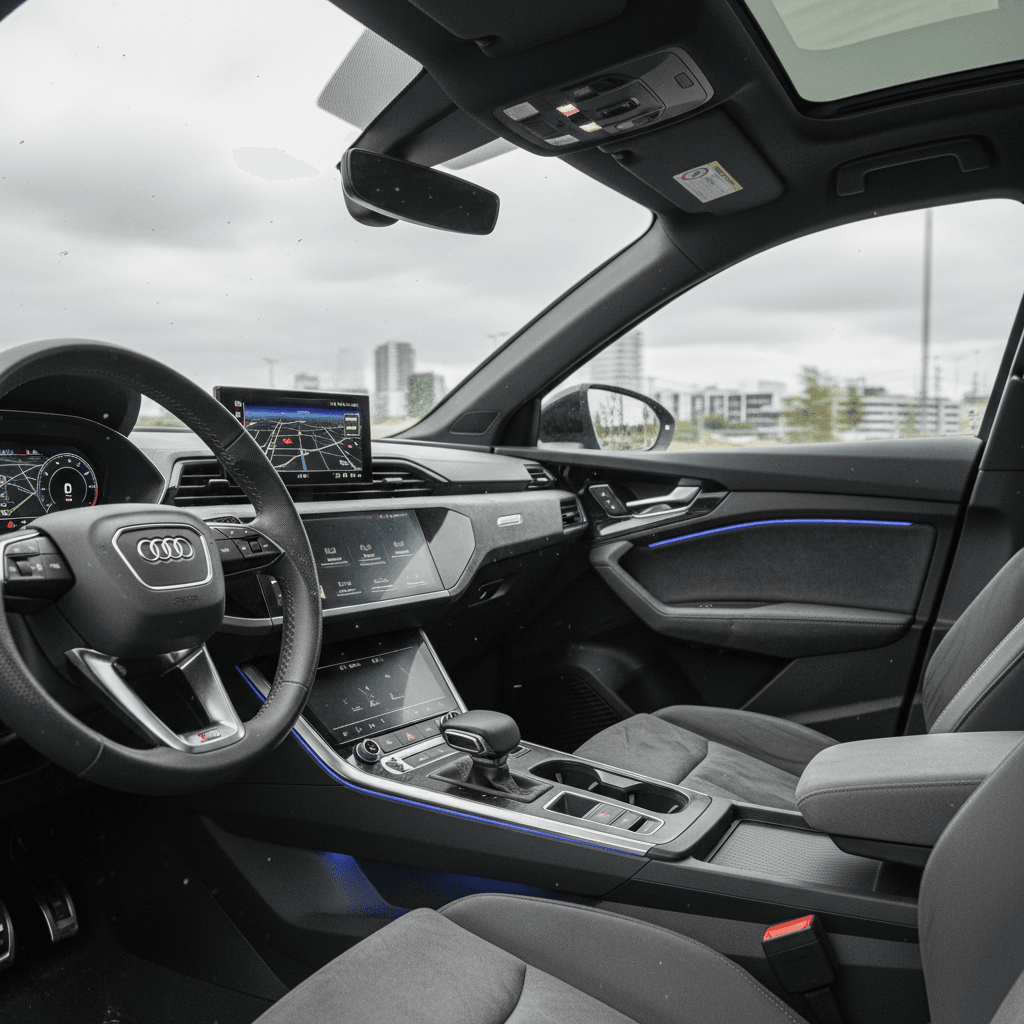
- You prefer a more conventional cockpit with physical controls over a tablet‑only layout.
- You’re shopping used and are comfortable leveraging depreciation to get more car for the money.
Look elsewhere if…
- You need ~300 miles of real‑world range and the very fastest DC charging.
- You’re expecting a rock‑solid first‑gen reliability record with no software or charging hiccups.
- You’re extremely sensitive to resale risk beyond 7–8 years, when EV values are harder to predict.
- You want the most advanced driver‑assist and infotainment ecosystem today (Tesla, Hyundai/Kia may suit you better).
Buying checklist for a used Audi Q4 e-tron
Essential checks before you buy a Q4 e-tron in 2026
1. Target the right model years and trims
Prioritize <strong>2024–2025 Q4 e-tron 55</strong> models for improved range and charging. If you’re considering 2022–2023, adjust your price expectations and lean harder on warranty coverage and service history.
2. Pull a full recall and service history
Ask the seller or dealer for a complete <strong>recall and repair printout</strong>. Confirm onboard charger/DC‑DC converter recalls and any high‑voltage system work have been done, and that any warning messages have been resolved, not just cleared.
3. Verify battery health, not just range estimate
The in‑dash range guess is not a health report. Use a <strong>third‑party battery diagnostic</strong> or a Recharged Score Report to see usable capacity, fast‑charging history, and how that pack compares with other Q4s of the same age.
4. Test DC fast charging at least once
If possible, plug into a reputable DC fast charger during your test drive. Watch for <strong>error messages, session drops, or very low peak speeds</strong> compared with what you’d expect for a warm battery at a low state of charge.
5. Stress‑test infotainment and driver aids
Spend time with the <strong>MMI system, digital cluster, adaptive cruise, lane assist and parking aids</strong>. Look for freezes, random reboots, or features that refuse to activate, issues that can point to unresolved software bugs.
6. Inspect interior fit and noise
Drive on rough pavement to check for <strong>rattles, buzzing trim, or wind noise</strong>. Early Q4s drew some criticism for interior quality that didn’t fully match Audi expectations; later builds and well‑cared‑for cars tend to be better.
7. Understand remaining warranty coverage
Clarify how much <strong>factory bumper‑to‑bumper and battery warranty</strong> remains, and whether the car was sold as a certified pre‑owned Audi with added coverage. This matters a lot given evolving EV electronics and software.
8. Compare total cost of ownership
Factor in <strong>home charging installation, insurance, taxes and expected depreciation</strong>. Use tools like Recharged’s value guides to see how Q4 values are trending versus comparable EV SUVs.
Be cautious with auction or no‑history cars
How Recharged helps if you’re shopping a Q4 e-tron
Because the Q4 e-tron’s long‑term value is so tied to battery health and how it’s been used, the way you buy one matters almost as much as which one you buy. That’s where a marketplace built specifically for EVs, like Recharged, can tilt the odds in your favor.
Why shop an Audi Q4 e-tron through Recharged
What’s different versus a typical used‑car listing
Recharged Score battery diagnostics
Fair, data‑backed pricing
Financing, trade‑in & delivery
Ready to find your next EV?
Browse VehiclesIf you’re near Richmond, VA, you can also visit the Recharged Experience Center to get hands‑on with EVs, compare vehicles, and talk through whether a Q4 e-tron or another model better fits your driving pattern and budget.
FAQ: Is the Audi Q4 e-tron worth buying in 2026?
Audi Q4 e-tron 2026 buying FAQ
Bottom line: should you buy an Audi Q4 e-tron in 2026?
In 2026, the Audi Q4 e-tron is not the perfect EV for everyone, but it is a compelling used buy for the right driver. If you want a compact luxury SUV that feels familiar, do most of your charging at home, and value comfort and refinement over spec‑sheet bragging rights, a well‑chosen Q4, especially a 2024–2025 55 model, can be a smart move.
The key is to shop intentionally: lean into the car’s early depreciation, insist on documented recall and service history, and treat battery health as a first‑class metric, not an afterthought. Tools like Recharged’s Score Report, financing and trade‑in options, and EV‑savvy support can simplify that process and help you avoid the problem cars.
If you read this far and the Q4 e-tron still sounds like your kind of EV, your next step is straightforward: compare a few Q4s on Recharged, line them up against rivals like the Model Y and Ioniq 5, and let the numbers, range, battery health and total cost, tell you whether an Audi Q4 e-tron is worth buying for you in 2026.