If you’re wondering whether the 2025 Mercedes EQS is a good buy, you’re not alone. Mercedes has updated its flagship electric sedan for 2025 with more range and a fresher look, but the market has also shifted under its feet: prices, incentives, and competitors have all changed. This guide breaks down where the 2025 EQS is brilliant, where it falls short, and when it makes sense to buy new, or wait and shop used instead.
Context: A fast‑moving EV market
Quick answer: Is the 2025 EQS a good buy?
Yes, if you prioritize comfort and serenity
The 2025 EQS is a fantastic buy if you want an ultra‑quiet, ultra‑comfortable luxury EV with big range, S‑Class levels of refinement, and you plan to keep it for several years. The 118 kWh battery and revised suspension make it a better car than earlier EQS models, and heavy early depreciation means smart shoppers can find strong value, especially slightly used.
Maybe not, if you chase tech or resale value
It’s a tougher sell if you care most about cutting‑edge software, sharp handling, or bulletproof resale value. The EQS still trails Tesla and some newer rivals in charging network integration and in‑car software polish, and its resale values have taken a hit as Mercedes has discounted new EQ models and announced further price cuts.
Bottom‑line verdict
What’s new for the 2025 Mercedes EQS?
The 2025 refresh focuses on fixing core criticisms of earlier EQS sedans rather than reinventing the car. The headline change is a larger usable battery (about 118 kWh), which boosts EPA‑rated range into the high‑300‑mile territory depending on trim. Mercedes also tweaks the front fascia and grille treatment, refines the suspension tuning, and improves brake feel so the car feels more natural when transitioning between regen and friction braking.
Key 2025 Mercedes EQS numbers (sedan)
Don’t ignore the software updates
Strengths: Where the 2025 EQS really shines
EQS strengths that make it a compelling buy
If these matter to you, the 2025 EQS deserves a close look.
S‑Class‑level comfort
The EQS rides like a true flagship: quiet, supple, and composed. Air suspension and careful sound insulation soak up rough pavement, and the cocoon‑like cabin makes long trips feel easy.
Exceptional refinement
Everything from wind noise to powertrain whine is hushed. Electric torque is smooth and immediate, and with the latest brake tuning, transitions between regen and friction are much harder to notice.
Real‑world range
With a larger battery, many drivers report high‑300‑mile real‑world range at highway speeds when driven sensibly. That puts the EQS in true road‑trip territory for most owners.
Hyperscreen wow factor
The optional MBUX Hyperscreen still has massive driveway appeal. Three displays under one glass panel deliver a futuristic look and give passengers their own space to interact with navigation and media.
Safety and driver assists
The EQS offers a full suite of advanced driver‑assistance features, from adaptive cruise with lane‑centering to automatic lane changes where allowed. It’s engineered to be a stress‑reducer on long drives.
Interior design & materials
The EQS cabin uses high‑quality leathers, trims, and lighting. If you value visual drama and comfort over minimalist design, it’s a very satisfying place to spend time.
Weak spots and ownership complaints
No EV is perfect, and the EQS is no exception. While most owners praise comfort and refinement, a few recurring complaints show up in long‑term reviews and owner forums. You should weigh these carefully before deciding if the 2025 EQS is a good buy for your situation.
- Depreciation: Early EQS sedans lost value quickly as Mercedes discounted new EQ models and adjusted pricing. That’s painful for first owners but a potential win if you’re buying used.
- Infotainment complexity: The MBUX interface is beautiful but busy. Some owners find the menus deep and voice commands inconsistent compared with Tesla or newer Hyundai/Kia systems.
- Software polish: OTA updates are improving things, but bugs with apps, digital keys, and updates have frustrated some drivers.
- Rear‑seat headroom (sedan): The swoopy “jellybean” roofline cuts into headroom and makes the EQS feel less airy in back than an S‑Class or some rivals.
- Charging network reliance: The car itself is excellent, but your experience depends heavily on public DC fast‑charging networks, which remain inconsistent in some regions.
Watch the warranty and software history
Range, charging, and road‑trip ability
On paper, the 2025 EQS is one of the stronger long‑range luxury EVs. With the updated battery, the most efficient trims offer around 390 miles of EPA‑rated range, and even dual‑motor models still clear 350 miles. Owners who drive at U.S. freeway speeds report real‑world numbers that track well with the official ratings when temperatures cooperate.
Charging speeds and networks
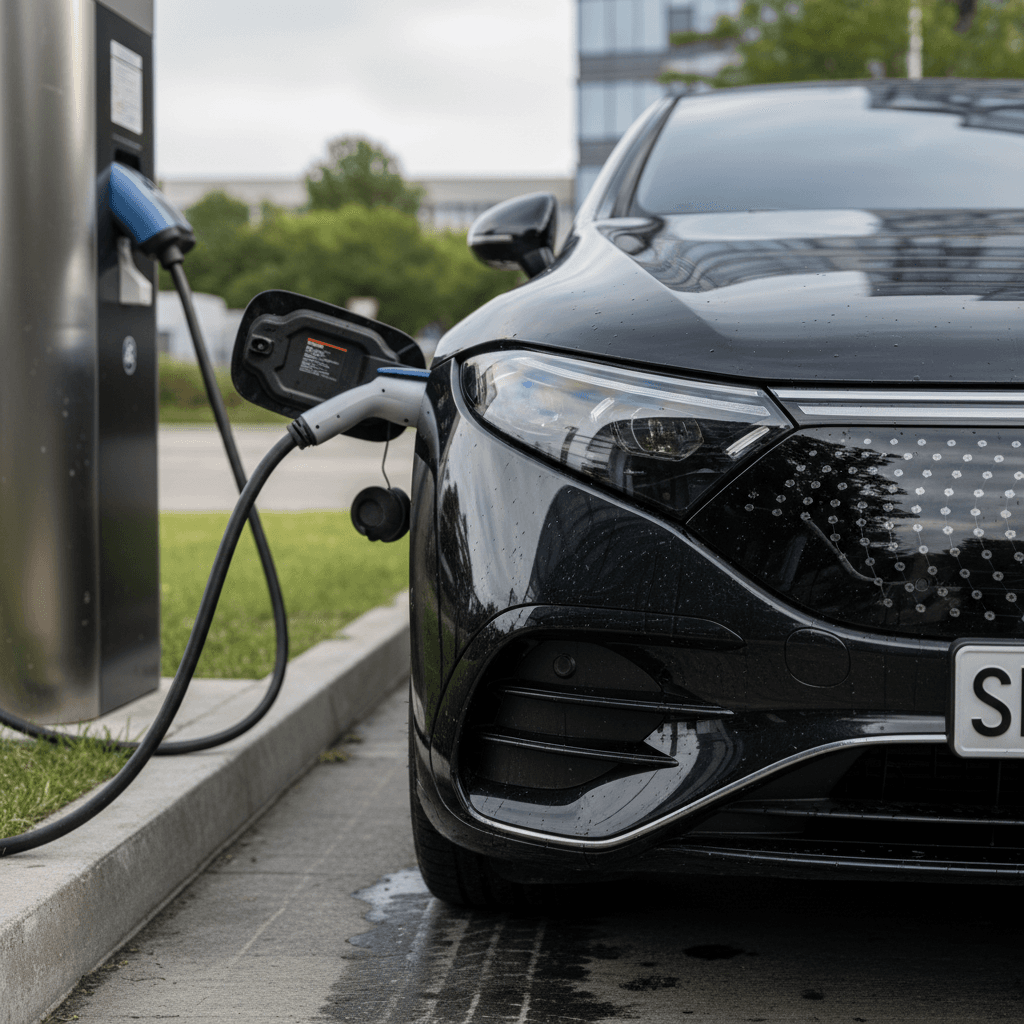
- DC fast charging: Up to about 200 kW on compatible chargers, typically taking the car from 10% to 80% in roughly 30 minutes in ideal conditions.
- AC (Level 2) charging: A robust onboard charger means overnight home charging on a 240‑volt circuit is easy and predictable.
- Network access: Newer EQS models can use adapters to access Tesla’s Supercharger network where supported, on top of Electrify America, ChargePoint, and others.
Real‑world considerations
- Cold weather: Like any EV, winter temps will temporarily reduce range. Pre‑conditioning and planning a wider buffer help.
- Charging curve: The EQS’s strength isn’t peak kW but how long it can sustain higher rates. On road trips this matters more than the headline number.
- Route planning: Third‑party apps plus the built‑in nav work best together. Many owners rely on both for redundancy.
Road‑tripper’s tip
Costs, depreciation, and incentives
Sticker prices for new 2025 EQS sedans remain solidly in six‑figure territory when well equipped, but the market reality is that transaction prices and lease deals have softened as luxury EV demand cooled and Mercedes adjusted its strategy. That’s led to two key outcomes: painful paper losses for early adopters and appealing deals for second owners.
How the money side looks for EQS buyers
Why depreciation can actually work in your favor, if you play it right.
Heavy early depreciation
Like many high‑end EVs, the EQS has depreciated faster than comparable gas S‑Class sedans. That makes it risky to buy new if you plan to sell in 2–3 years, but a fantastic candidate to buy used.
Incentives and credits
Depending on when and how you buy, you may not get full federal tax credits on a new EQS. But a used EQS might qualify for the used EV tax credit if price and income caps are met.
Operating costs
Electricity is typically cheaper per mile than premium gasoline, especially if you can charge at home off‑peak. Routine maintenance is modest, but budget for tires, this is a heavy, powerful luxury sedan.
Lease vs. finance vs. buy used
New vs used 2025 EQS: What makes more sense?
2025 EQS: New vs. used buying angles
How your priorities steer you toward the right purchase strategy.
| Buyer type | New 2025 EQS makes sense if… | Used EQS makes more sense if… |
|---|---|---|
| Value‑seeker | You find a heavily discounted new car or aggressive lease that undercuts comparable used examples. | You want to avoid the steepest part of the depreciation curve and don’t need the very latest options bundle. |
| Tech‑focused | You specifically want the newest software build, feature mix, and any 2025‑only hardware changes. | You’re comfortable trading a small tech gap for thousands in savings and still get OTA updates. |
| Low‑mileage driver | You plan to keep the car for 6–8+ years and don’t mind early depreciation as long as you extract full value. | You drive fewer miles and can live with a 2–3‑year‑old car that still feels essentially new. |
| Payment‑sensitive | A subsidized lease keeps monthly payments predictable and limits resale risk. | Long‑term financing on a well‑priced used EQS keeps total cost of ownership lower. |
Use this table as a starting point; actual pricing and incentives change quickly, especially in today’s EV market.
How Recharged can help
How the 2025 EQS compares to key rivals
You shouldn’t decide if the 2025 EQS is a good buy in a vacuum. It competes directly with the Tesla Model S, BMW i5/i7, Lucid Air, and high‑spec versions of the Hyundai Ioniq 6 and Kia EV6 for some buyers. Each plays a different game.
2025 EQS vs. major luxury EV rivals (high‑level view)
Generalized comparison; exact specs and pricing vary by trim and options.
| Model | Strengths vs EQS | Where EQS has the edge |
|---|---|---|
| Tesla Model S | Supercharger network integration, faster charging in many scenarios, simpler software, stronger performance in Plaid form. | Quieter, more refined ride; richer interior materials; more traditional luxury feel. |
| BMW i7 / i5 | Sharper handling, excellent build quality, strong dealer network, more conventional sedan profile with better rear headroom. | EQS generally delivers more EV‑specific range and a more futuristic interior experience. |
| Lucid Air | Segment‑leading range in some trims, very efficient powertrain, roomy cabin. | EQS offers a broader dealer/service footprint and a more established brand image. |
| Hyundai Ioniq 6 / Kia EV6 (upper trims) | Lower purchase price, outstanding 800‑V fast‑charging architecture, simple user experience. | EQS counters with ultra‑luxury comfort, materials, and overall prestige the mainstream brands can’t match. |
Use this as a directional guide, then cross‑shop specific trims and deals in your area.
Don’t shop on specs alone
Checklist when considering a 2025 EQS
10 things to check before you say yes to a 2025 EQS
1. Confirm your charging plan
Make sure you have reliable home Level 2 charging or consistent access to workplace charging. Relying solely on public DC fast charging will make any EV ownership experience more stressful and expensive.
2. Test the ride and seating position
Spend real time behind the wheel and in the back seat. The EQS is extremely comfortable, but its low seating and coupe‑like roofline aren’t for everyone, especially taller rear passengers.
3. Explore the MBUX interface
Play with the Hyperscreen or standard display setup. If you find the menus confusing during a test drive, that frustration won’t improve later. Make sure you’re comfortable with the core functions you’ll use daily.
4. Check DC fast‑charging options near you
Look at the density and reliability of fast‑charging networks where you live and travel. Confirm access to Superchargers via NACS adapter support and ensure activation in the Mercedes app where available.
5. Review service and warranty coverage
Understand bumper‑to‑bumper coverage, battery and high‑voltage system warranties, and what your local Mercedes dealer’s EV expertise looks like. Ask specifically about EQ‑trained technicians.
6. For used: review battery health data
On a used EQS, insist on clearly documented battery health. Recharged’s battery‑health diagnostics and Recharged Score can help you avoid cars with unusual degradation or abuse.
7. For used: verify software update history
Ask for records or screenshots confirming recent OTA updates or dealer‑performed software campaigns. Out‑of‑date software can affect charging, driver assists, and even basic convenience features.
8. Compare total cost of ownership
Don’t just look at the monthly payment. Compare projected depreciation, insurance, electricity vs. fuel, and maintenance over 5–8 years against an S‑Class or rival EVs.
9. Cross‑shop at least two rivals
Drive at least one other luxury EV, Tesla Model S, BMW i7/i5, or Lucid Air, back‑to‑back. The contrast in ride, noise, and user interface will clarify quickly whether the EQS speaks your language.
10. Decide how long you’ll keep it
If you tend to swap cars every 2–3 years, lean toward leasing. If you’re a 7–10‑year keeper, a discounted new or carefully vetted used EQS may offer outsized long‑term value.
Who should, and shouldn’t, buy a 2025 EQS
Is the 2025 EQS aligned with your priorities?
The buyer it suits best
You want S‑Class levels of comfort and quiet in an EV wrapper.
You value long highway range more than maximum DC charging speed on a spec sheet.
You plan to keep the car long enough to benefit from today’s lower transaction prices.
You’re comfortable with a rich but complex infotainment system once you learn it.
The buyer who should think twice
You’re extremely sensitive to depreciation and like to swap cars every 2–3 years.
You prioritize the absolute best fast‑charging experience and simplest software above all else.
You regularly carry tall adults in the rear seat and need maximum headroom.
You live in an area with weak EV service support or sparse fast‑charging infrastructure.
FAQ: 2025 Mercedes EQS buying questions
Frequently asked questions about the 2025 EQS
Bottom line: Is the 2025 EQS right for you?
The 2025 Mercedes EQS is a better car than the early EQS sedans that launched the nameplate. With a bigger battery, refined suspension and braking, and continuing software updates, it finally feels as resolved as a six‑figure electric Mercedes flagship should. It’s not the sharpest‑handling or most tech‑seamless luxury EV you can buy, and depreciation remains a real concern, but for drivers who prize quiet comfort, long range, and a genuinely luxurious cabin, it can be an excellent buy, especially if you’re smart about when and how you step in.
If you decide the EQS fits your needs, consider using Recharged to shop carefully vetted used examples. Every car comes with a Recharged Score Report, verified battery‑health data, fair‑market pricing, and expert EV guidance from first click to delivery. That combination of transparency and support can turn a complex decision about a high‑end EV into a confident, informed purchase.