If you’re considering a Chevy Blazer EV, you’re probably asking a very reasonable question: how safe is it, really? Safety ratings and crash tests can be confusing, especially for a newer electric SUV where data is still rolling in. This guide pulls together what we currently know about the Chevy Blazer EV safety rating and crash tests, how its structure and tech protect you, and what to look for if you’re shopping used.
Quick safety takeaway
Chevy Blazer EV safety overview
The Blazer EV rides on GM’s Ultium electric platform, the same basic architecture under vehicles like the Cadillac Lyriq and Chevy Equinox EV. That matters for safety, because Ultium-based vehicles share a low-mounted battery pack, strong crash structures, and space-efficient packaging that generally perform well in collisions. Even before you get to the official ratings, there are a few high-level positives:
- A heavy, low-mounted battery pack that helps reduce rollover risk and improve stability.
- Multiple programmable crash load paths in the front structure to manage high-speed impacts.
- A rigid central battery enclosure designed to protect against punctures and intrusion.
- Standard active safety features on most trims, including automatic emergency braking and lane-keeping support.
- Available GM “hands-free” driving tech (Super Cruise on certain trims) that can reduce fatigue on long trips.
Why EV crash safety looks different
Remember the weight factor
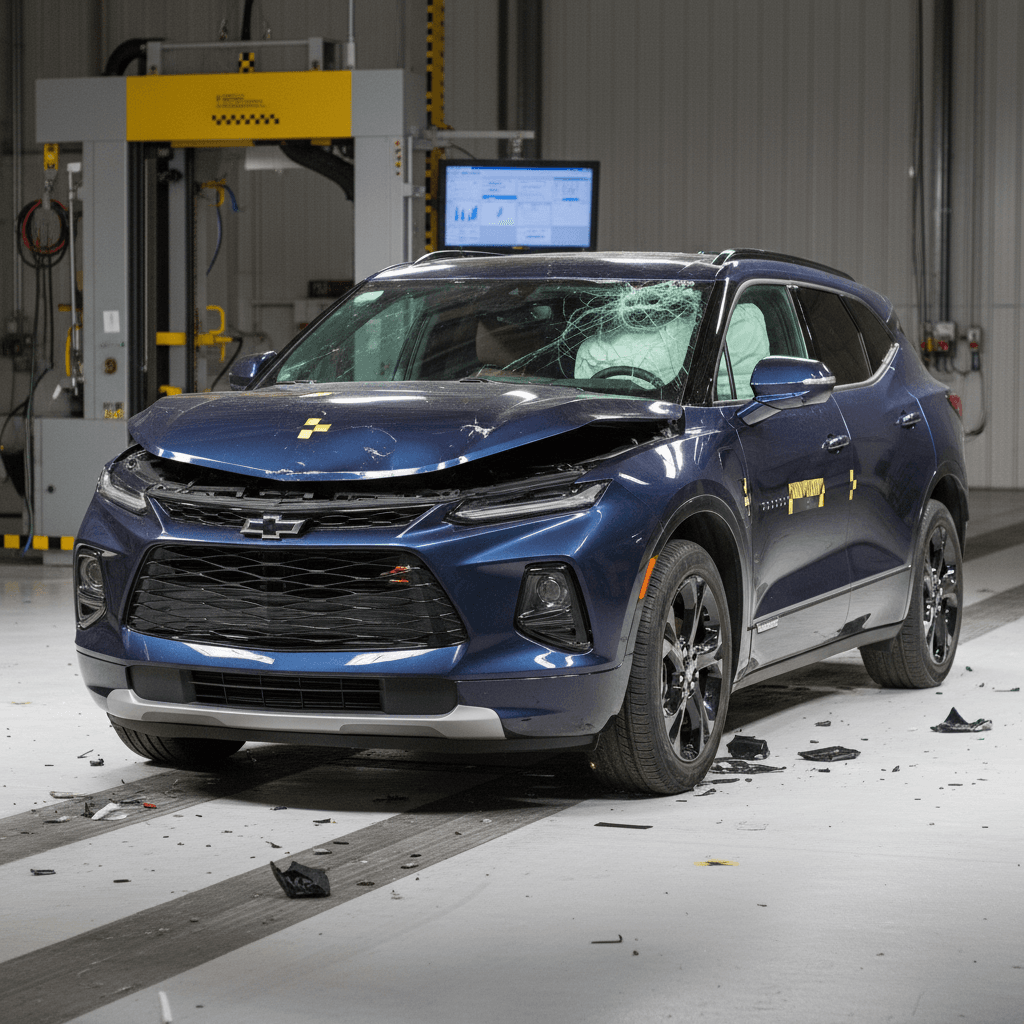
Current crash-test ratings: IIHS & NHTSA status
As of early 2026, the Chevy Blazer EV is still relatively new, and official crash-test data from major U.S. testing bodies is limited. Here’s where things generally stand for shoppers in the United States:
Chevy Blazer EV crash-test status (US)
High-level snapshot of where formal safety ratings typically appear for a new model like the Blazer EV.
| Organization | Test Type | Status for Blazer EV* | What It Measures |
|---|---|---|---|
| IIHS (Insurance Institute for Highway Safety) | Moderate & small overlap front, side impact, roof strength, head restraints, headlights, crash-avoidance tech | Ratings may still be pending or partially published for Blazer EV depending on trim and year. | How well the vehicle protects occupants and avoids or mitigates crashes. |
| NHTSA (National Highway Traffic Safety Administration) | Frontal, side, rollover – combined 5-star rating | Overall star rating may not yet be published for every Blazer EV configuration. | Government 5-star safety scores used on window stickers and shopping sites. |
| Euro NCAP / other regions | Varies by launch timing and region | Not directly relevant to U.S. shoppers, but can give clues about structural performance. | Independent regional bodies often test similar vehicles on the same platform. |
Always confirm the latest ratings directly with IIHS and NHTSA, as test schedules and results change over time.
Why ratings lag for new EVs
So if you plug “Chevy Blazer EV safety rating crash test” into Google today and don’t see the neat grid of stars and letter grades you expect, that’s not unusual. The absence of a published score doesn’t automatically mean the vehicle is unsafe, it usually means the testing agencies haven’t gotten to that specific configuration yet.
How the Blazer EV is engineered for safety
Even before independent crash tests, you can learn a lot by looking at the engineering under the skin. GM has been building safety-focused crossovers for decades, and many of those lessons carry forward into the Blazer EV.
Blazer EV safety building blocks
Key design choices that influence crash performance and fire safety.
Rigid passenger cell
Protected Ultium battery
Thermal & electrical safeguards
Front & side impact protection
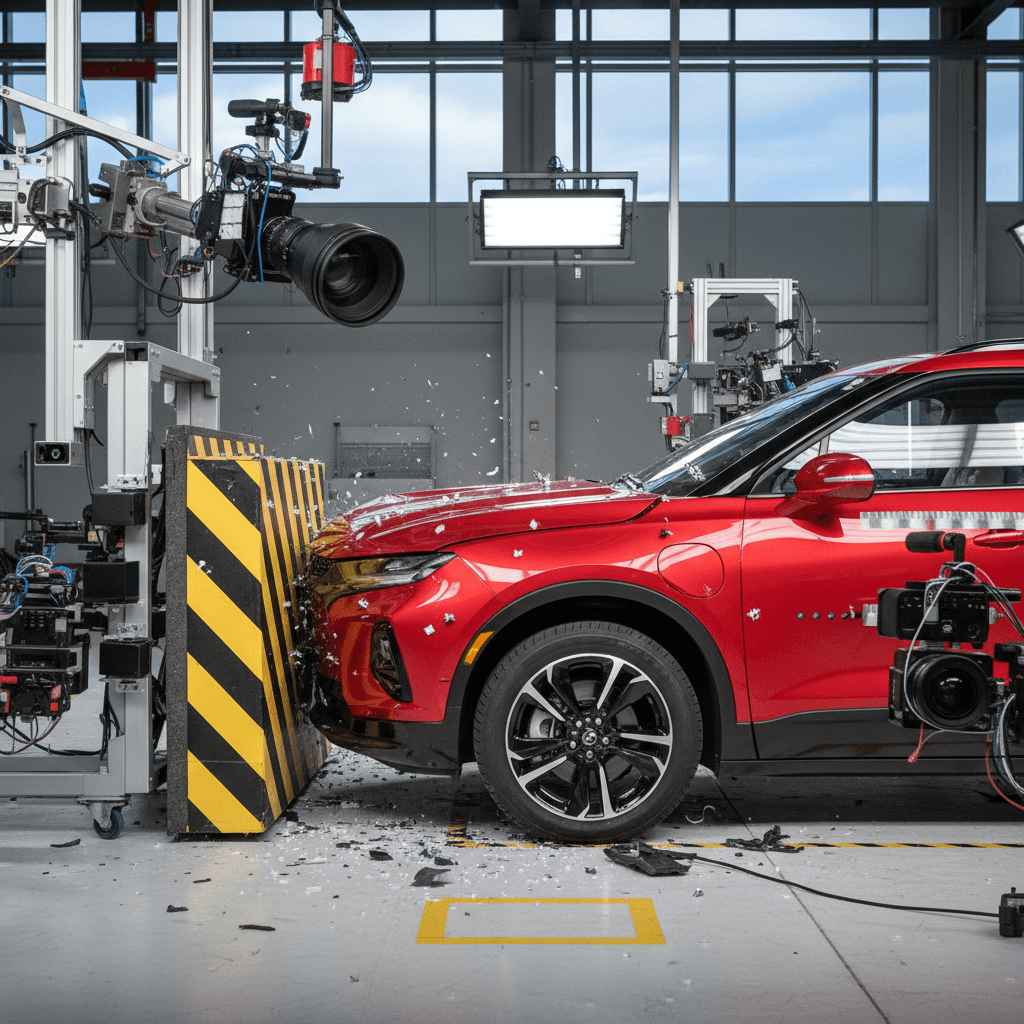
The Blazer EV uses multi-stage crumple zones up front to absorb energy before it reaches the cabin. Side-impact door beams and reinforced B-pillars are engineered to keep the occupant cell intact, while strategically placed airbags help prevent head and chest injuries in a wide range of crash angles.
Rollover and roof strength
The heavy battery pack lowers the center of gravity, which helps resist rollovers in the first place. If one does occur, for example after a curb trip or high-speed maneuver, the roof structure is designed to meet or exceed modern rollover standards so it can support the vehicle’s weight and protect occupants.
Look past the badges
Standard vs. optional Blazer EV safety features
When shoppers talk about “safety,” they often mix two things together: crashworthiness (how the body and restraints behave in a collision) and crash avoidance (the tech that helps prevent the crash in the first place). The Chevy Blazer EV leans on both.
Key Chevy Blazer EV safety and driver-assistance features
Feature availability varies by trim and model year. Always verify equipment on the specific vehicle you’re considering, especially in the used market.
| Feature | Type | Typically Standard? | What It Does |
|---|---|---|---|
| Automatic Emergency Braking w/ Pedestrian Detection | Crash avoidance | Yes on most trims | Warns of frontal collisions and can apply brakes to avoid or reduce impact. |
| Lane Keep Assist / Lane Departure Warning | Crash avoidance | Commonly standard | Gently steers or alerts you if you drift out of your lane without signaling. |
| Forward Collision Alert | Crash avoidance | Standard on most trims | Provides visual and audible alerts when you’re closing too fast on a vehicle ahead. |
| Blind Zone / Rear Cross-Traffic Alerts | Crash avoidance | Trim-dependent | Warns you of vehicles in your blind spot or crossing behind you while reversing. |
| Adaptive Cruise Control | Comfort & safety | Available/trim-dependent | Maintains a set distance from the vehicle ahead in stop-and-go traffic. |
| Hands-free driving (Super Cruise or similar) | Advanced assist | Available on select trims | Allows supervised hands-free driving on mapped highways, helping reduce fatigue. |
| Airbags (front, side, curtain, knee where equipped) | Occupant protection | Standard | Deploys to cushion occupants in frontal, side, and rollover events. |
| Teen Driver & drive-mode settings | Behavior shaping | Often included | Let you configure speed warnings, audio limits, and get driving reports for secondary drivers. |
On a used Blazer EV, don’t assume every feature that appeared in marketing materials is actually installed, check the window sticker or build sheet.
Don’t trust assumptions, verify equipment
Chevy Blazer EV safety vs. other electric SUVs
If you’re cross-shopping, you’re probably comparing the Blazer EV with vehicles like the Tesla Model Y, Ford Mustang Mach‑E, Hyundai Ioniq 5, Kia EV6, or VW ID.4. Many of these already have full IIHS Top Safety Pick or NHTSA 5-star ratings, which sets a high bar.
Where Blazer EV likely fits among rivals
Positioning the Blazer EV in the broader mid-size electric SUV safety landscape.
Structural & crash performance
Driver-assistance & software
Potential advantages
- Solid structural pedigree: GM has decades of experience engineering SUVs and crossovers to meet strict U.S. crash standards.
- Hands-free capability on certain trims, which rivals or beats some competitors for reduced fatigue on well-mapped highways.
- Good visibility and seating height compared with some more coupe-like EVs, which helps you see and be seen.
Potential drawbacks
- Weight & wheel size: Big wheels and heavy curb weight can lengthen stopping distances compared with lighter, smaller EVs.
- Newer software stack: Early model years tend to see more over-the-air updates and tweaks as real-world data comes in.
- Availability of top ratings: If you want a vehicle with an existing IIHS Top Safety Pick+ label today, some rivals may be easier to shop.
How to read and compare crash-test scores
When official Blazer EV crash-test results are fully available, you’ll want to understand what those numbers and letters actually mean. Here’s a quick decoder, using common IIHS and NHTSA terminology you’ll see for any modern SUV:
Crash-test score decoding checklist
1. Look for top marks in core crash tests
For IIHS, that means "Good" ratings in small-overlap and moderate-overlap front tests plus side impact. For NHTSA, aim for 5 stars overall and strong sub-scores in front and side categories.
2. Check head restraints & seat ratings
Neck injuries are common in rear-end collisions. IIHS grades seats and head restraints separately; you want a "Good" rating here, not just strong frontal scores.
3. Don’t ignore headlight ratings
Headlights graded as "Good" or "Acceptable" make night driving safer. Poor headlight ratings can be a red flag if you do lots of rural or unlit highway driving.
4. Pay attention to crash-avoidance tech grades
IIHS now scores automatic emergency braking and other assist features. Better ratings here mean the vehicle is more likely to help you avoid a crash altogether.
5. Compare within segment, not across everything
A mid-size Blazer EV is playing in a different weight and size class than tiny hatchbacks or huge body-on-frame SUVs. Compare it to similar crossovers for a realistic picture.
Use ratings as a filter, not a tie-breaker
Safety checklist for buying a used Blazer EV
A brand-new Blazer EV leaves the factory with carefully tuned airbags, sensors, and structure. A used one may have lived through potholes, minor fender-benders, or even major repairs. That’s why your own inspection, and any third-party report you use, matters just as much as lab ratings.
Used Chevy Blazer EV safety inspection checklist
1. Run the VIN for accidents and recalls
Pull a vehicle history report and check for any structural repairs, airbag deployments, or open safety recalls. Multiple accidents or unresolved recalls are big red flags.
2. Inspect panel gaps and paint around crash zones
Uneven panel gaps, mismatched paint, or overspray around the front rails, A‑pillars, or rear quarters can indicate repaired crash damage. Quality repairs can be safe, but poor ones can compromise crash performance.
3. Confirm all airbags and seatbelts work
Turn the key or press start and verify that the airbag warning light cycles off. Check for seatbelt fraying, latching issues, or any non-factory modifications.
4. Test driver-assistance features yourself
On a safe test drive, confirm that lane-keeping alerts, adaptive cruise (if equipped), and automatic emergency braking warnings work as expected, no unexplained error messages.
5. Check tires, brakes, and wheel condition
Heavy EVs like the Blazer wear tires and brakes hard. Worn tires or warped rotors don’t change the crash rating, but they absolutely change your real-world stopping and stability.
6. Request software and update history
Ask whether the vehicle has received recent software updates, especially for driver-assistance systems or safety recalls. Out-of-date firmware can limit performance or bug fixes.
How Recharged evaluates EV safety and battery health
If you’re looking at a used Chevy Blazer EV, the lab crash tests are just the starting point. At Recharged, every vehicle on our platform comes with a Recharged Score Report designed to translate those ratings, and the vehicle’s individual history, into something you can actually act on.
What the Recharged Score looks at beyond lab tests
Turning raw safety data and EV diagnostics into an easier shopping decision.
Structural & safety history
Battery health & thermal safety
Feature verification & recalls
Ready to find your next EV?
Browse VehiclesFrom research to keys in hand
Chevy Blazer EV safety FAQ
Frequently asked questions about Chevy Blazer EV safety
Bottom line: Is the Chevy Blazer EV safe?
Putting it all together, the Chevy Blazer EV is clearly engineered to compete with the safest mid-size electric SUVs on the market. It benefits from a modern Ultium platform, a low center of gravity, robust crash structures, and a full menu of active-safety tech. The main caveat today is timing: official crash-test ratings may still be rolling out, so you’ll want to confirm the latest IIHS and NHTSA data for the exact year and trim you’re considering.
If you’re shopping used, combine those lab scores with a careful look at the vehicle’s history, repairs, and driver-assistance functionality. That’s exactly the gap the Recharged Score Report is designed to fill, factoring battery health, accidents, and safety equipment into one transparent view. Do that, and the Blazer EV can be a compelling, confidence-inspiring choice in a segment where safety expectations are already very high.