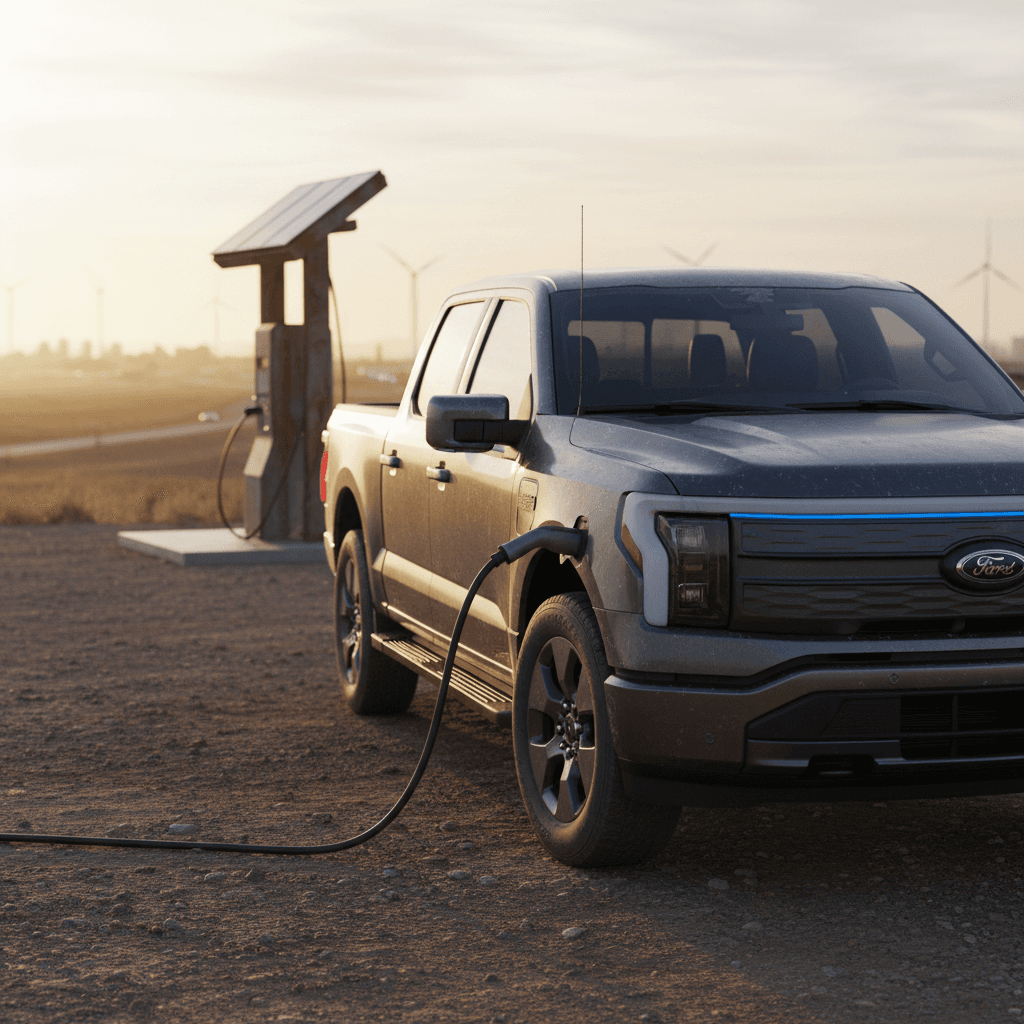
If you’re asking whether the 2025 Ford F-150 Lightning is a good buy, you’re really asking two questions: is this truck good at being an EV, and is it good at being a truck. The answer depends heavily on what you tow, how far you drive, and whether you’re open to buying used.
Key takeaway up front
Should you buy a 2025 Ford F-150 Lightning?
Situations where the 2025 Lightning is a good buy
- You mainly drive under 120 miles per day and can install Level 2 home charging.
- You want a full-size pickup with quiet, effortless torque and a huge front trunk.
- Your towing is occasional or mostly short-distance (boats, utility trailers, weekend campers).
- You can take advantage of federal or state EV incentives before they phase down.
- You value tech features like BlueCruise hands-free driving and over-the-air updates.
Situations where it’s not the best buy
- You tow heavy (7,000+ lb) trailers long distances multiple times per month.
- You depend on fast charging on road trips rather than home charging.
- You need proven, long-term reliability more than cutting-edge tech.
- Your budget is tight and you’re choosing between a Lightning and a cheaper hybrid truck.
- You plan to keep the truck well past warranty and are risk-averse.
Before we call the 2025 Lightning a slam-dunk or a pass, let’s look at what actually changed for 2025, where pricing and incentives land, and what early reliability data from 2022–2024 trucks can tell you about long‑term ownership.
What changed for the 2025 F-150 Lightning?
2025 F-150 Lightning at a glance
For 2025, Ford didn’t reinvent the Lightning; it refined it. XLT trims pick up new standard 18-inch gloss‑black wheels, and Flash models swap cloth for more upscale ActiveX seating. All trims now include SiriusXM with 360L, and driver-assistance has been quietly upgraded: AEB Oncoming, Road Edge Detection, and Predictive Speed Assist are bundled into existing safety and cruise systems. BlueCruise hands‑free driving is standard on Platinum and offered as a one‑year plan starting on Flash and Lariat rather than the earlier short trial approach.
On the flip side, some content has been reshuffled. The Interior Work Surface disappears from XLT and Flash and is limited to Lariat and Platinum. Ford has also continued to tweak option packages like Max Trailer Tow and Tow Technology, moving features such as On‑Board Scales into different packages. None of these changes radically alter the truck’s core capability, but they do affect which trims feel like the best value.
Pricing, incentives, and where the 2025 Lightning fits the market
Ford kept 2025 F-150 Lightning MSRPs broadly in line with 2024, while competitors like the Ram 1500 REV and Silverado EV remain limited or delayed. That means the Lightning is still the most established full‑size electric pickup you can actually buy today, but it’s no longer alone in the segment.
2025 F-150 Lightning: where it typically lands on price
Approximate MSRP ranges for 2025 F-150 Lightning trims before incentives. Exact pricing varies by configuration and options.
| Trim | Battery | Typical MSRP (approx.) | Positioning |
|---|---|---|---|
| XLT | Standard | Mid-$60,000s | Work-oriented but still well equipped |
| Flash | Standard / Extended (varies by build) | High-$60,000s to low-$70,000s | Value sweet spot with tech and comfort |
| Lariat | Standard or Extended | Low-to-mid-$70,000s | Luxury and tech focus |
| Platinum | Extended | $80,000+ | Loaded flagship, lower value per dollar |
Always check current Ford pricing and local dealer offers; EV pricing has been volatile since 2022.
About federal EV tax credits in 2025
Layer in state and local incentives, plus aggressive dealer discounts on EV trucks in late 2024 and 2025, and a new Lightning has often been transacting well below MSRP. The open question is depreciation: early‑build Lightnings dropped quickly in value, and used prices on 2022–2023 trucks have already undercut some well‑equipped gas and hybrid F‑150s. If you’re payment‑sensitive more than tech‑sensitive, that used market matters a lot, and we’ll come back to it.
Watch the incentive end dates
Range, towing, and real-world usability
On paper, the 2025 F-150 Lightning continues to offer roughly 240–320 miles of EPA‑rated range depending on trim, battery, and wheel/tire setup. In real life, your experience will vary with speed, temperature, load, and especially towing. The Lightning is brilliant at short‑ to medium‑distance work, but physics still applies.
How the 2025 Lightning behaves in the real world
Strengths and compromises you should plan around
Everyday commuting & errands
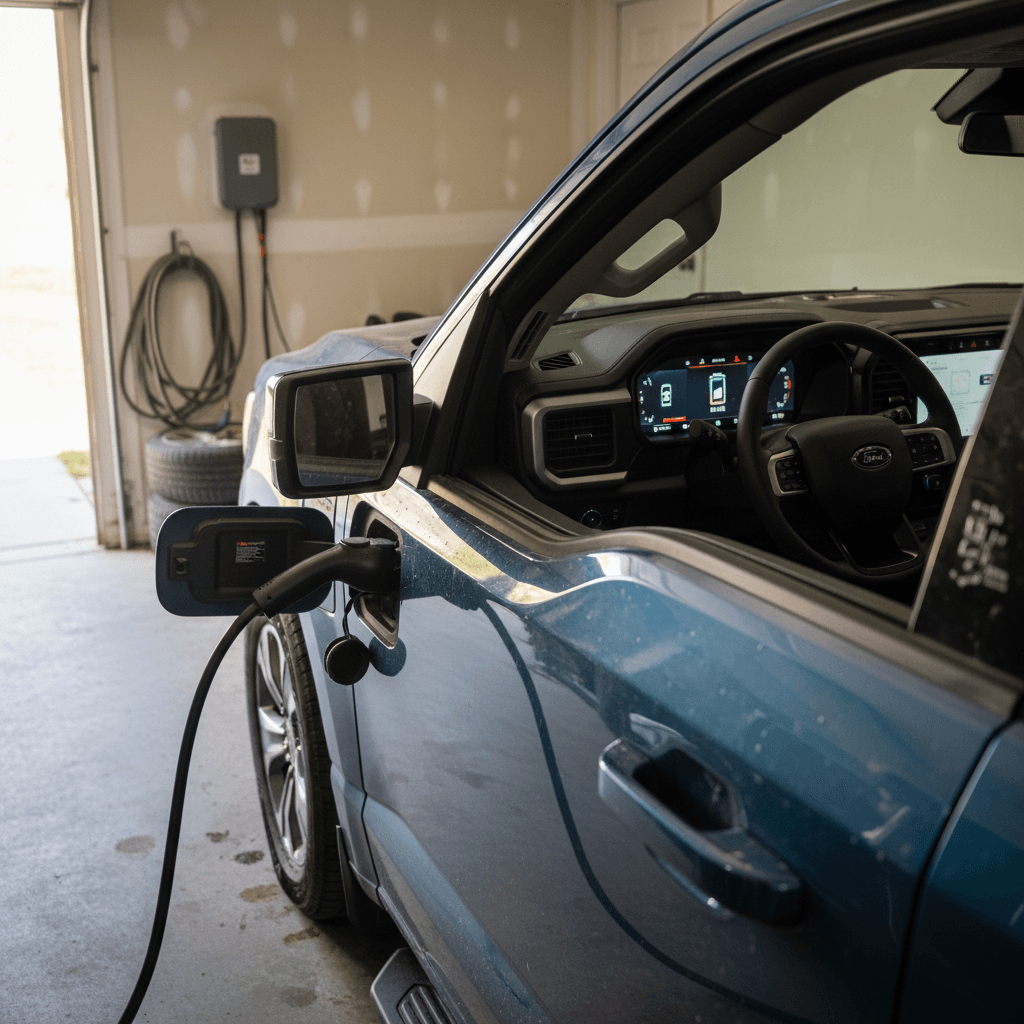
For a typical 30–80 mile daily commute, the Lightning is almost overkill, in a good way. You’ll plug in at home, wake up to a full “tank,” and rarely think about range.
- Comfortable margin even with HVAC blasting
- Home charging turns every night into a fill‑up
- Instant torque makes city driving effortless
Towing and hauling
Hook up a 6,000–8,000 lb trailer and range can drop by roughly half. That’s true of any truck, but in an EV the shorter absolute range means more planning.
- Outstanding control and torque at low speeds
- Smart trailer assist and integrated scales (on the right package)
- Best for shorter tows or known charging corridors
Road trips and charging
With home charging, you’ll love the Lightning. As a road tripper on public DC fast charging, you’ll need to be a planner, not a gambler.
- Fast charging speeds are solid but not class‑leading
- Network reliability still varies by region
- Plan charging stops around meals, not the other way around
Plan around your longest regular trip, not the EPA number
If your life involves lots of 30–120 mile days with the occasional weekend tow, the Lightning feels like the future: quiet, powerful, and cheaper to run than a comparable gas F‑150 when you charge at home. If you haul a big trailer across multiple states every month, a hybrid or efficient gas truck will still be easier to live with in 2025.
Reliability, recalls, and ownership experience so far
Because the 2025 F-150 Lightning is fundamentally the same truck that launched for 2022, we can lean on several model years of data instead of guessing. Third‑party surveys and our own owner feedback at Recharged consistently put the Lightning at below‑average to average reliability, not catastrophic, but not bulletproof either.
What’s actually going wrong on earlier F-150 Lightnings?
Patterns we’ve seen in 2022–2024 trucks that matter if you’re eyeing a 2025
Software & electronics gremlins
- Glitches during over‑the‑air updates, occasionally bricking the truck until the dealer reflashes it.
- Infotainment bugs, random warning lights, and phantom error messages.
- Hands‑free driving features that require dealer visits to sort out calibration issues.
Most of these are fixable under warranty, but downtime and inconvenience add up.
Hardware, recalls, and wear items
- Recalls around high‑voltage battery components and 12V systems on early builds.
- Minor but annoying issues like tail lamp cracks or water leaks in specific production batches.
- Typical truck wear items (tires, suspension) that go faster when you use all that torque.
So far, large‑scale catastrophic battery failures have been rare, but long‑term data is still developing.
First‑generation rule still applies
The good news is that Ford has been willing to pause production, issue recalls, and update software to chase problems, painful in the headlines, but generally positive for owners. The bad news is that dealer EV expertise is still uneven. In some markets you’ll find shops that understand Lightning diagnostics and high‑voltage systems; in others, you’ll be the guinea pig. This is where a thorough pre‑purchase inspection and verified battery‑health data matter, especially on used examples.
Who is the 2025 F-150 Lightning a good buy for?
1. Suburban contractor or small business owner
If most of your jobs are within a 50–80 mile radius and you can charge at your shop or home, the Lightning is a terrific rolling power source.
- Pro Power Onboard outlets let you run tools without a generator.
- The frunk keeps valuable gear secure and dry.
- Fuel savings add up quickly if you’re coming out of a thirsty V8.
2. Tech‑forward truck owner with light towing
Maybe you used to daily a half‑ton truck but only tow a boat or small camper a few times a year. You’ll appreciate the quiet cabin, instant torque, and hands‑free driving features more than the last 200 miles of range.
- Daily use feels more like a luxury EV than a farm truck.
- Charging at home simplifies life; public charging is backup, not primary.
3. Fleet or government buyers with defined routes
For fleets that know their duty cycles and can install depot charging, the Lightning can pencil out.
- Predictable routes and loads mean predictable energy costs.
- Lower maintenance burden than a comparable gas fleet over time.
- Helps hit sustainability targets without sacrificing capability.
In these use cases, it’s an easy “yes”
Used F-150 Lightning vs. 2025 new: Which is the smarter buy?
Because new‑EV incentives are time‑limited and early‑build Lightnings have already taken a big depreciation hit, many shoppers will get more truck for the money in the used market. The right answer comes down to how you value tax credits, warranty coverage, and known build changes between years.
New 2025 F-150 Lightning vs. used 2022–2024 Lightning
High‑level comparison of pros and cons when deciding between a new 2025 truck and a used earlier build.
| Factor | New 2025 Lightning | Used 2022–2024 Lightning |
|---|---|---|
| Purchase price | Higher sticker, but may be offset by remaining 2025 tax incentives and low‑APR financing. | Lower up‑front price, especially on higher‑trim trucks that have already depreciated. |
| Warranty | Full new‑vehicle coverage plus 8‑year/100,000‑mile EV components warranty starting at 0 miles. | Remaining factory warranty varies by mileage and in‑service date; EV component warranty may still have years left. |
| Software & hardware updates | Latest safety features and tuning, plus incremental quality improvements from early‑build lessons. | More variability; some early trucks may have more recalls completed, others may still be pending updates. |
| Battery health | Brand‑new pack, but still subject to your usage patterns over time. | Real‑world degradation becomes visible, if you have a credible battery‑health report. |
| Incentives | Potentially eligible for remaining federal and state incentives if you buy before cut‑offs. | Typically not eligible for new‑EV credits, but some states offer used‑EV rebates or sales‑tax breaks. |
Individual trucks vary widely; always compare specific VINs, options, and battery‑health reports.
If you can stack a federal credit, a state incentive, and a solid dealer discount on a 2025 truck before the September 30, 2025 federal deadline, new starts to look compelling. If those incentives are gone or you’re shopping in 2026 and beyond, a well‑vetted used Lightning with strong battery health and completed recall work may offer far better value.
How Recharged helps you shop used F-150 Lightnings with confidence
Buying an electric truck isn’t just about odometer mileage; it’s about how the high‑voltage battery has been treated, whether software and recalls are up to date, and how honestly the seller has priced the truck relative to its real‑world capability. That’s exactly the gap Recharged was built to close.
Why a Recharged F-150 Lightning is different from a typical used truck
Battery health, fair pricing, and EV‑specialist support built in
Recharged Score battery health diagnostics
Every Lightning on Recharged comes with a Recharged Score Report that includes verified battery health, charging history patterns, and range expectations so you can compare trucks by more than just trim and mileage.
Transparent pricing & financing
We benchmark each truck against the broader used‑EV market and Lightning‑specific trends to surface fair market pricing. You can also arrange financing, trade‑in, or consignment and handle the entire purchase digitally.
EV‑specialist support, not generic sales talk
Recharged’s team lives and breathes EVs. We’ll talk through your towing plans, daily mileage, charging options, and whether a Lightning actually fits your life, or if another EV or hybrid truck is a better call.
Ready to find your next EV?
Browse VehiclesNot sure whether to go new or used?
Checklist: Before you buy any F-150 Lightning
F-150 Lightning pre‑purchase checklist
1. Map your real daily and towing needs
Write down your typical weekday mileage, your longest regular trip, and how often you tow or haul. A Lightning that’s perfect for 60‑mile days may feel compromised on regular 250‑mile towing runs.
2. Confirm home or workplace charging
If you own your home, get a quote for a 240V (Level 2) circuit in your parking spot. If you rent, talk to your landlord or confirm reliable workplace/public charging before you depend on the truck.
3. Decide on standard vs. extended‑range battery
Standard‑range models cost less and may be enough for shorter daily use. Extended‑range trucks cost more but give you a bigger buffer for winter, towing, and resale value. Choose based on your longest realistic day, not the best‑case scenario.
4. Check incentives and total cost of ownership
Run the numbers with and without federal and state incentives, including estimated fuel savings versus your current truck. Use conservative assumptions for electricity rates and don’t rely on incentives that might expire before you buy.
5. Scrutinize battery health on used trucks
On a used Lightning, never accept hand‑waving about battery condition. Look for a <strong>verified battery‑health report</strong> like the Recharged Score, service records, and proof that relevant recalls and software updates have been completed.
6. Evaluate your dealer or seller’s EV competence
Ask pointed questions about EV‑specific service: who works on Lightnings, how many they’ve sold, and typical turnaround times for high‑voltage work. If they can’t answer confidently, consider another seller, or lean on a marketplace like Recharged that specializes in EVs.
FAQ: 2025 Ford F-150 Lightning buying questions
Frequently asked questions about buying a 2025 F-150 Lightning
Bottom line: Is the 2025 F-150 Lightning a good buy?
Viewed in isolation, the 2025 Ford F-150 Lightning is a deeply impressive truck: quiet, brutally quick when you need it to be, packed with clever features, and capable of replacing a gas half‑ton for a large share of owners. Its weaknesses, towing range, charging‑network dependence, and first‑generation complexity, are real but very use‑case‑specific.
If you have home charging, most of your life fits inside a 150‑mile daily envelope, and you’re comfortable with the idea that early‑generation EVs require the occasional software update or recall visit, the 2025 Lightning is indeed a good buy, especially if you can still pair it with federal and state incentives before they phase down.
If you’re on the fence, widen your lens. Compare a new 2025 Lightning to a carefully inspected used 2022–2024 truck with a Recharged Score battery health report, and stack both against a hybrid F‑150 on total cost of ownership, not just MSRP. The right answer isn’t “EV vs. gas”, it’s which truck actually fits your life with the least compromise.
And if you decide a used Lightning, or another used EV truck, is the better path, Recharged can help you navigate battery health, pricing, trade‑ins, financing, and nationwide delivery so you get the benefits of electrification without guessing about what’s under the floor.