If you’re asking yourself, “Is the 2024 Volkswagen ID. Buzz a good buy in 2026?”, you’re not alone. The electric reboot of VW’s classic Bus has huge emotional appeal, three rows, retro styling, and full EV power, but it also enters a brutally competitive market where buyers are comparing it to Kia’s EV9, Tesla’s three-row options, and good old gasoline minivans that cost a lot less.
The short answer
Overview: Is the 2024 ID. Buzz a Good Buy?
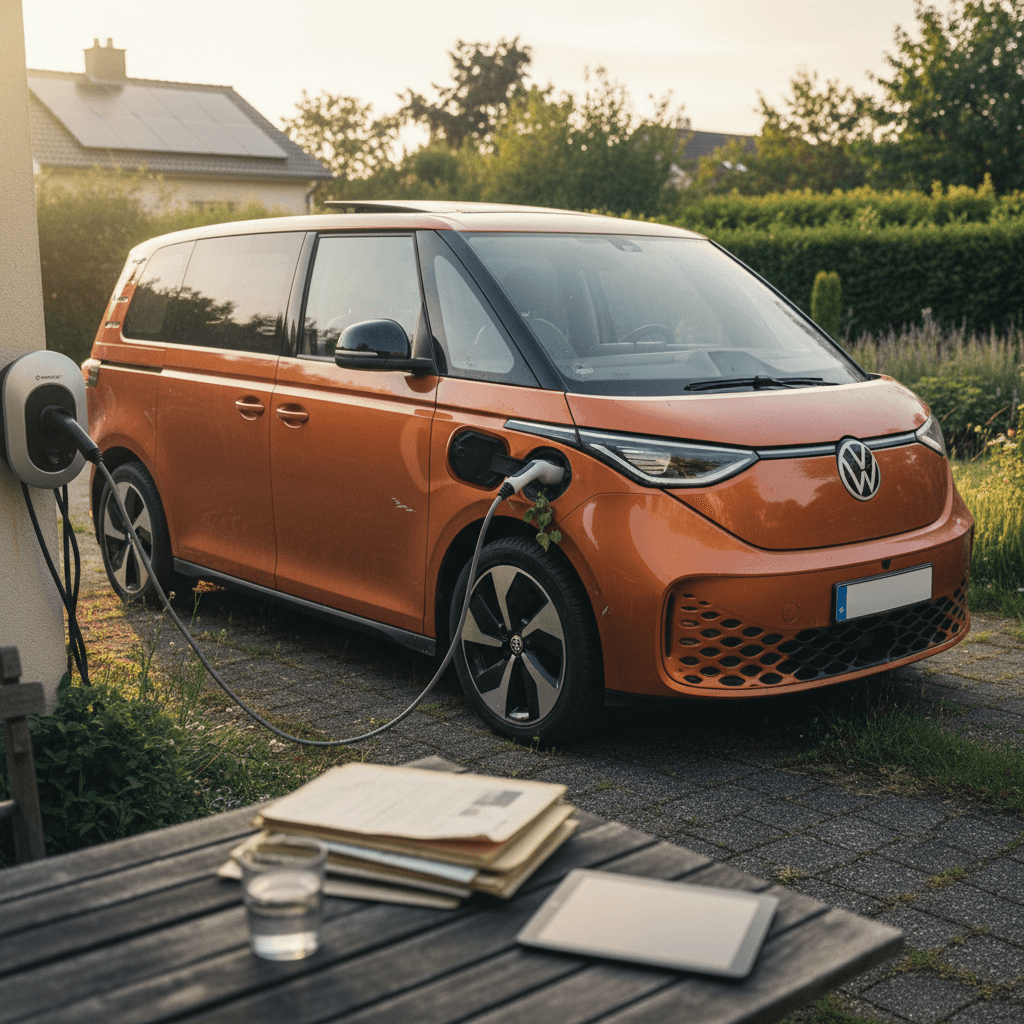
The North American-spec ID. Buzz finally reached U.S. roads in mid‑2024 as a 2025 model year vehicle, but mechanically it’s the same basic package Europeans have had since 2022. You get a three-row, long‑wheelbase electric van with about 250 miles of real‑world range in most trims, lots of glass, and a driving experience that’s much more refined than an old air‑cooled Bus ever was.
- Strengths: distinctive design, three-row space, smooth EV power, quiet ride, usable cargo room with seats up.
- Weaknesses: high price for the range, so‑so charging performance compared with newer rivals, and software that still isn’t class‑leading.
- Wild card: demand is niche and production is limited, which can help used values but also keeps new prices firm.
In other words, the 2024 ID. Buzz is not a slam‑dunk value play. It’s a lifestyle EV: fantastic if you’re buying with your heart and your use case matches its limits, but easy to criticize if you view it purely through dollars‑per‑mile or kilowatt‑hours.
Key Specs and What Matters in 2026
2024 ID. Buzz: Key Numbers (U.S. Long-Wheelbase)
By 2026, those numbers no longer look cutting‑edge. Kia’s EV9, for example, offers similar or better range, quicker charging, and a lower starting price. That means the question isn’t whether the ID. Buzz is a *good* EV; it’s whether it’s good enough for the price and your specific needs.
Pricing, Value and Incentives
Early U.S. pricing for the three‑row ID. Buzz landed around the low‑to‑mid $60,000s before destination, with well‑equipped or 1st Edition models stretching into the $70,000 range. That puts it squarely in premium territory, even before you compare range or features.
How the 2024 ID. Buzz Stacks Up on Value
Think in terms of what else you could buy for the same money.
Vs. Gas Minivans
A well‑equipped Toyota Sienna or Honda Odyssey typically undercuts a comparable ID. Buzz by $15,000–$25,000. You’ll spend less upfront but more on fuel and maintenance over time.
Vs. EV SUVs
Kia EV9, Hyundai Ioniq 7 (by 2026), and upper trims of Tesla’s 3‑row offerings give you similar or better range and faster fast‑charging at equal or lower prices.
Vs. Other Vans
As of 2026, the ID. Buzz is effectively the only mainstream electric passenger van in the U.S. That uniqueness is a big part of what you’re paying for.
Don’t count on federal tax credits
On the used side, high MSRPs mean steep early depreciation, especially if demand doesn’t match VW’s ambitions. That can actually be good news if you’re shopping pre‑owned in 2026 or beyond: you may find low‑mileage 2024 ID. Buzz vans priced closer to upper‑trim gas minivans than to new EV9s.
Range, Charging and Road-Trip Viability
For a three‑row family EV, range and charging speed are where the 2024 ID. Buzz feels most dated by 2026 standards. In real‑world mixed driving, owner reports tend to land close to VW’s estimates: around 230–260 miles of usable range on a full charge, depending on wheels, climate, and whether you have AWD.
Everyday driving
- Commuting and errands: For families doing 30–60 miles per day, the ID. Buzz is easy to live with. Overnight Level 2 charging at home will comfortably cover daily use.
- Weekend trips: 200+ miles of realistic range means a lot of regional getaways with a single fast‑charge stop if you plan ahead.
- Cold weather: Expect range to drop noticeably in winter, especially if you lean on cabin heat rather than preconditioning.
Road‑trip reality
- Charging speed: While the ID. Buzz supports DC fast charging, its peak and sustained rates trail the best of 2026’s big‑battery EVs.
- Network reality: You’re mainly using CCS fast‑charging networks. Reliability and coverage vary by region more than with Tesla’s Superchargers.
- Planning burden: For frequent long‑distance family road trips, you’ll do more route planning and more, longer stops than in some rivals.
Range expectations to use
If your life is mostly school drop‑offs, commuting and regional outings, the ID. Buzz works fine. If your vision is cross‑country summer road trips with a full crew and cargo, other EVs, or even a hybrid minivan, may fit your use case better.
Space, Practicality and Family Usability
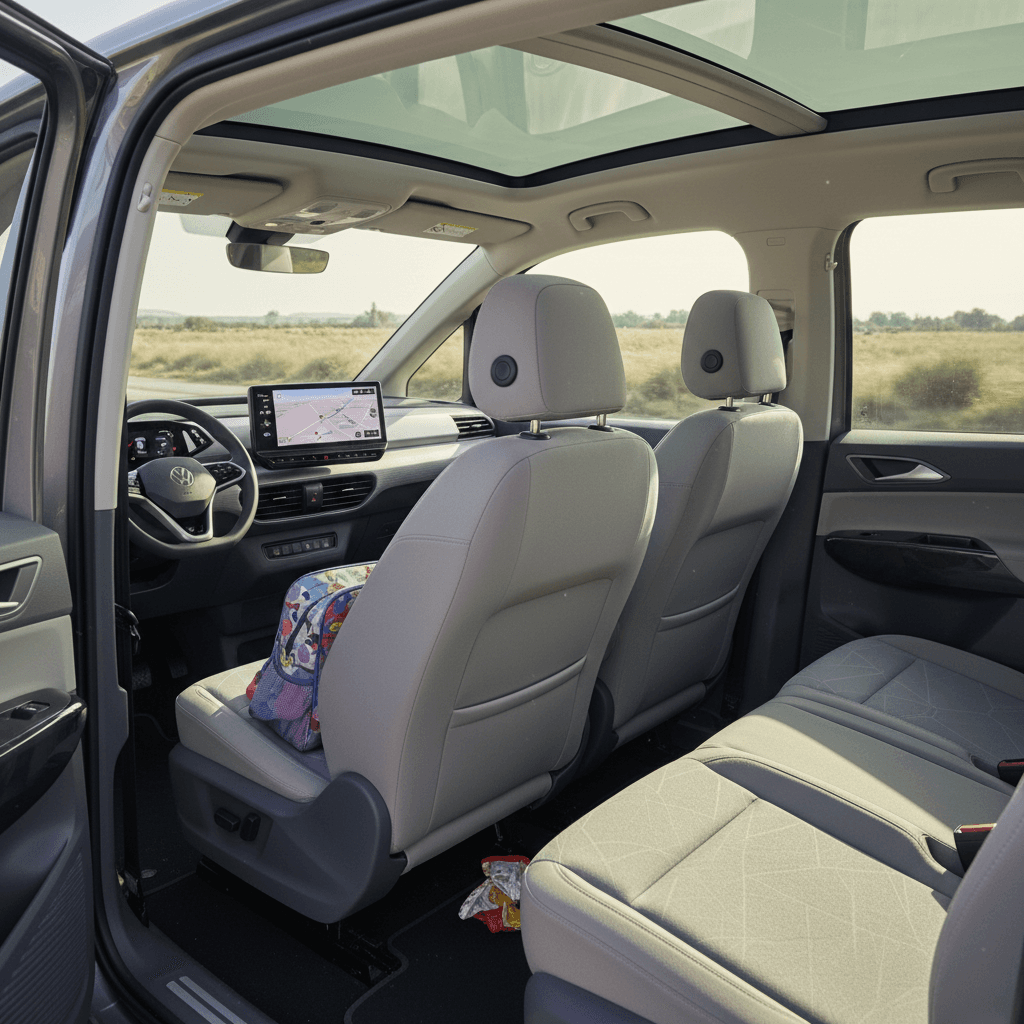
Space is where the ID. Buzz finally feels like it delivers on the promise of an electric Bus. The U.S. long‑wheelbase version is about 192 inches long with a stretched wheelbase and standard three‑row seating. The upright body gives you headroom and visibility that crossovers can’t match.
Practical Wins and Tradeoffs Inside the ID. Buzz
It’s a van first, an EV second, and that’s mostly a good thing.
Three-Row Flexibility
Standard 2‑3‑2 seating gives you room for up to seven. Most families of 4–5 will appreciate the spare row for kids’ friends or grandparents.
Cargo and Storage
The squared‑off rear and low load floor make it easy to pack strollers, bikes, and camping gear, even with some seats up. It’s more honest cargo space than most three‑row SUVs.
Packaging Quirks
Some owners criticize fixed second‑row seats on certain configurations and the lack of the totally flat, modular interior that made classic VW buses legendary for camping.
Check ergonomics carefully
For school‑run and family‑shuttle duty, the Buzz’s sliding doors, tall greenhouse, and friendly styling are a hit. For hardcore van‑life or people used to the flexibility of a Sienna or Odyssey, the lack of configurable seats and built‑in camping features may disappoint.
Driving Experience and In-Car Tech
On the road, the 2024 ID. Buzz is pleasantly normal in the best way. Rear‑drive versions have enough punch for on‑ramps and passing; dual‑motor models feel genuinely quick for a big box on wheels. The low center of gravity from the battery helps stability, and most reviews describe it as comfortable and composed, not sporty.
How it drives
- Acceleration: RWD feels more than adequate; AWD is genuinely brisk, especially around town.
- Ride and noise: Generally quiet, with some reports of wind noise from that big frontal area at highway speeds.
- Handling: Light steering and good visibility make it easy to place in traffic despite the size.
The tech experience
- Infotainment: The large central screen looks modern but inherits many of VW’s software quirks: occasional lag, unintuitive menus, and fussy touch controls.
- Driver assists: VW’s lane‑keeping, adaptive cruise, and parking assists are competitive on paper but not class‑leading in smoothness.
- Updates: Over‑the‑air software updates have addressed some bugs, but you shouldn’t expect Tesla‑grade iteration speed.
Know your tolerance for bad UX
The good news is that most of the ID. Buzz’s frustrations are software and interface issues, not fundamental hardware flaws. But that doesn’t mean they’re trivial if you spend hours a day in the car.
Reliability and Known Issues So Far
By 2026 we have a few years of global experience with the ID. Buzz platform, plus a lot of data from the closely related ID.4. The headline: there’s no single catastrophic failure pattern, but there are recurring themes you need to be aware of.
- Software gremlins: intermittent infotainment freezes, random warning lights, and buggy driver‑assist behavior that usually resolve with software updates or module resets.
- Charging quirks: scheduled charging and DC fast‑charging behavior can be inconsistent until the vehicle has the latest software. Always check that a used Buzz has had those updates.
- Build niggles: reports of wind noise, trim rattles, and occasional water ingress or condensation in lights, more annoyance than danger, but still worth checking carefully on a test drive.
- ID.4 carry‑over concerns: because much of the electronics architecture is shared, some of the ID.4’s teething issues (like 12‑V battery or charging errors) can appear here too, though less frequently in newer builds.
Why a good inspection matters more than the badge
Ready to find your next EV?
Browse VehiclesReliability is trending better as software matures, but you should go in expecting some glitches and the need to build a relationship with a dealer or independent EV‑savvy shop, especially if you’re far from a major metro area.
Resale Value and Used ID. Buzz Outlook
Used EV values have been volatile across the board, and the ID. Buzz adds another twist: it’s a niche product with a cult following, priced like a premium family hauler but competing with more capable EVs. That pushes its resale prospects in two competing directions.
What helps ID. Buzz resale
- Uniqueness: It’s the only mainstream electric van in the U.S., and the styling has genuine emotional pull.
- Limited supply: VW isn’t flooding the market, which can support used prices if demand holds.
- Use case fit: For families and small businesses that really need a van‑shaped EV, there aren’t many alternatives.
What hurts ID. Buzz resale
- Rapid EV improvement: Newer EVs in 2026–2028 will likely offer better range and charging for the same money.
- High MSRP: The higher the new price, the more room there is for depreciation in years 1–3.
- Software reputation: If VW’s software story doesn’t visibly improve, that perception will weigh on used values.
If you’re buying a 2024 ID. Buzz new in 2026, plan for above‑average depreciation versus gas vans and roughly in line with other high‑MSRP EVs. If you’re shopping used, the sweet spot is likely a 1–3‑year‑old Buzz with documented software updates and clean battery health, exactly the kind of vehicle Recharged specializes in vetting.
Who the 2024 ID. Buzz Is (and Isn’t) For
The surest way to decide if the 2024 ID. Buzz is a good buy is to be brutally honest about what problem you’re trying to solve. Viewed as a tool, it makes sense for a surprisingly narrow set of buyers. Viewed as a lifestyle object, it can be fantastic, if you know what you’re signing up for.
Best and Worst-Fit Buyers for the 2024 ID. Buzz
Match the van to the job, not the poster on your wall.
Great Buy If…
- You want a spacious, three‑row EV with sliding doors and easy kid access.
- Your driving is mostly local, with only occasional 200–300‑mile trips.
- You value design, comfort, and vibe over squeezing out every mile of range.
- You can charge at home and don’t mind learning your local fast‑charging network.
Probably Not For You If…
- You road‑trip frequently across regions with sparse CCS fast charging.
- You’re extremely sensitive to infotainment quirks or demand the best software UX.
- You’re simply chasing the lowest cost per mile in a family hauler.
- You need heavy towing or true off‑road ability (this isn’t a truck replacement).
Buying Checklist for a 2024 VW ID. Buzz
Pre‑Purchase Checklist: 2024 Volkswagen ID. Buzz
1. Clarify your usage pattern
Write down your typical weekly mileage, how often you take 200–300‑mile trips, and whether you have reliable home charging. The ID. Buzz shines for local use, less so for constant highway marathons.
2. Compare total cost of ownership
Cross‑shop against a gas minivan and a three‑row EV SUV. Factor in fuel or electricity, maintenance, insurance, and likely depreciation, not just the monthly payment.
3. Inspect software version and update history
On a used Buzz, confirm it has the latest infotainment and charging‑system updates. Ask for service records showing prior fixes for charging or warning‑light issues.
4. Get a battery health report
A proper battery diagnostic, like the Recharged Score report included with every vehicle sold on Recharged, shows you real degradation, DC fast‑charge history flags, and any stored high‑voltage errors.
5. Test all doors, seats, and cargo layouts
Open and close both sliding doors repeatedly, fold and slide all rows, and actually load your stroller, bikes, or work gear. You’re buying a van; usability matters more than 0–60 specs.
6. Stress‑test the infotainment
Pair your phone, run navigation, use CarPlay or Android Auto, and try the climate and driver‑assist controls. If you’re annoyed after 30 minutes in the lot, it won’t get better on year three of ownership.
7. Confirm warranty transfer and coverage
Make sure the high‑voltage battery and electric‑drive warranties are intact, and understand what your local VW dealer network can and can’t do for EV support.
FAQ: 2024 Volkswagen ID. Buzz
Frequently Asked Questions About the 2024 VW ID. Buzz
Bottom Line: Is the 2024 ID. Buzz a Good Buy?
The 2024 Volkswagen ID. Buzz is one of the few EVs that people genuinely fall in love with before they ever sit in it, and that cuts both ways. If you buy it purely because it looks cool and has three rows, you may be disappointed by the price‑to‑range ratio and VW’s still‑maturing software. But if you walk in with clear eyes, understand its limitations, and make sure the specific van you’re buying has a healthy battery and up‑to‑date software, it can be a deeply satisfying, practical electric family hauler.
So is the 2024 ID. Buzz a good buy in 2026? For the right buyer, yes, but it’s a niche solution, not a universal answer. The more your life looks like school runs, local adventures, and occasional regional trips, the better it fits. The closer your reality is to multi‑state road‑trips and ruthless spreadsheet‑driven cost analysis, the more you should cross‑shop alternatives before letting nostalgia make the decision for you.
If you decide the Buzz is your kind of weird, consider starting your search with a used 2024 ID. Buzz that’s already taken the first‑year depreciation hit. On Recharged, every van comes with a Recharged Score report, EV‑savvy support, and nationwide delivery, so you can focus on whether this electric Bus actually fits your life, not whether its battery and software are hiding surprises.