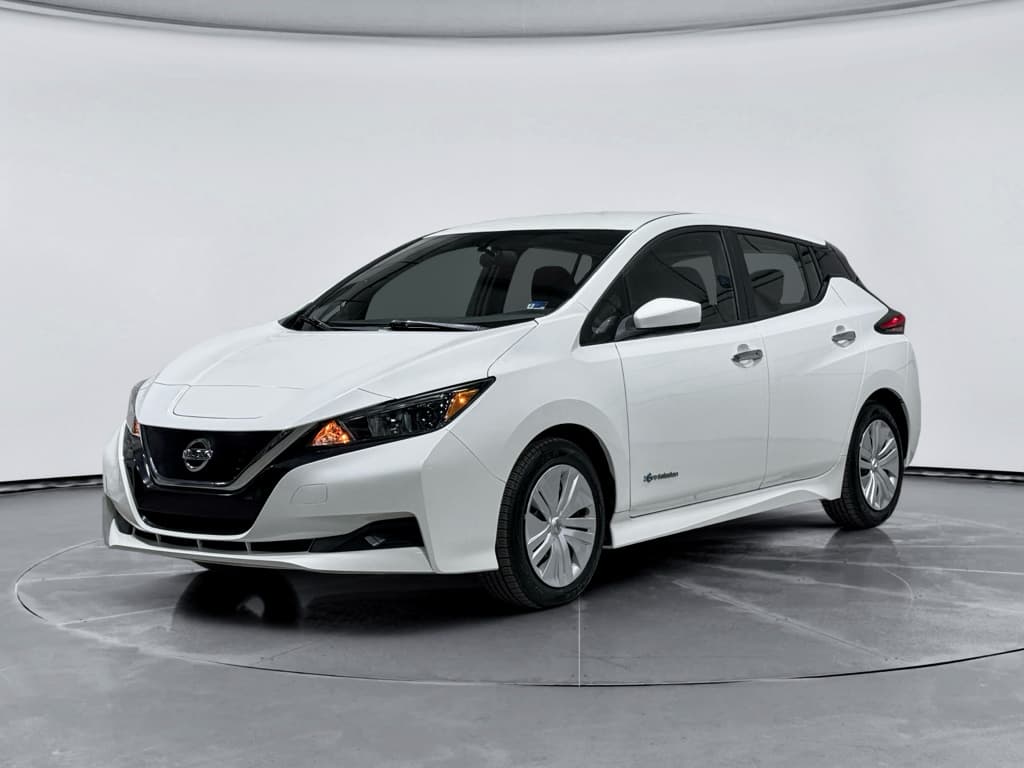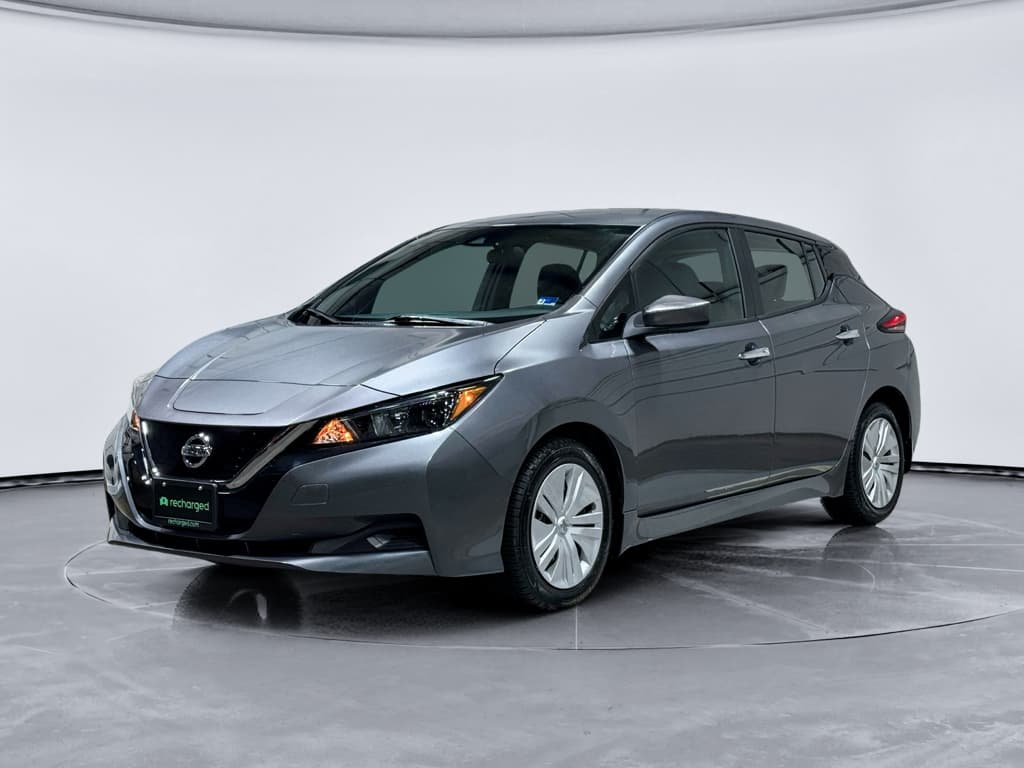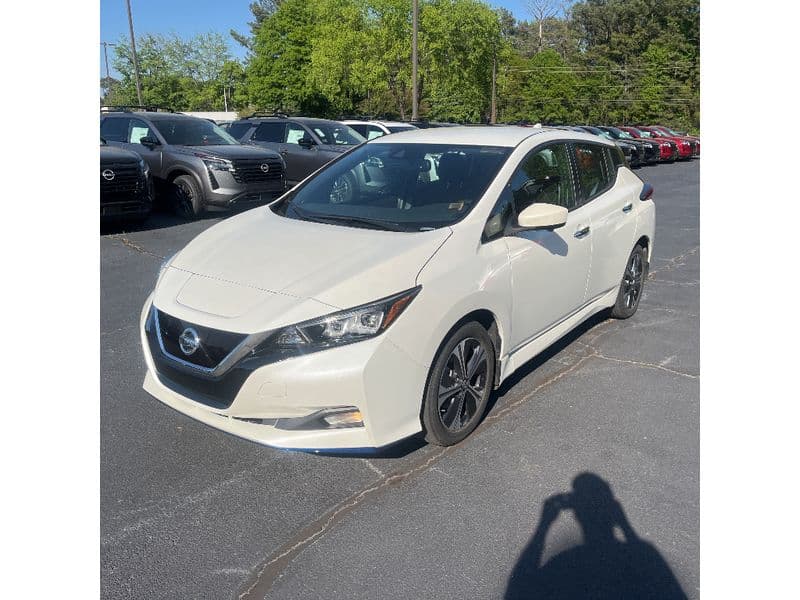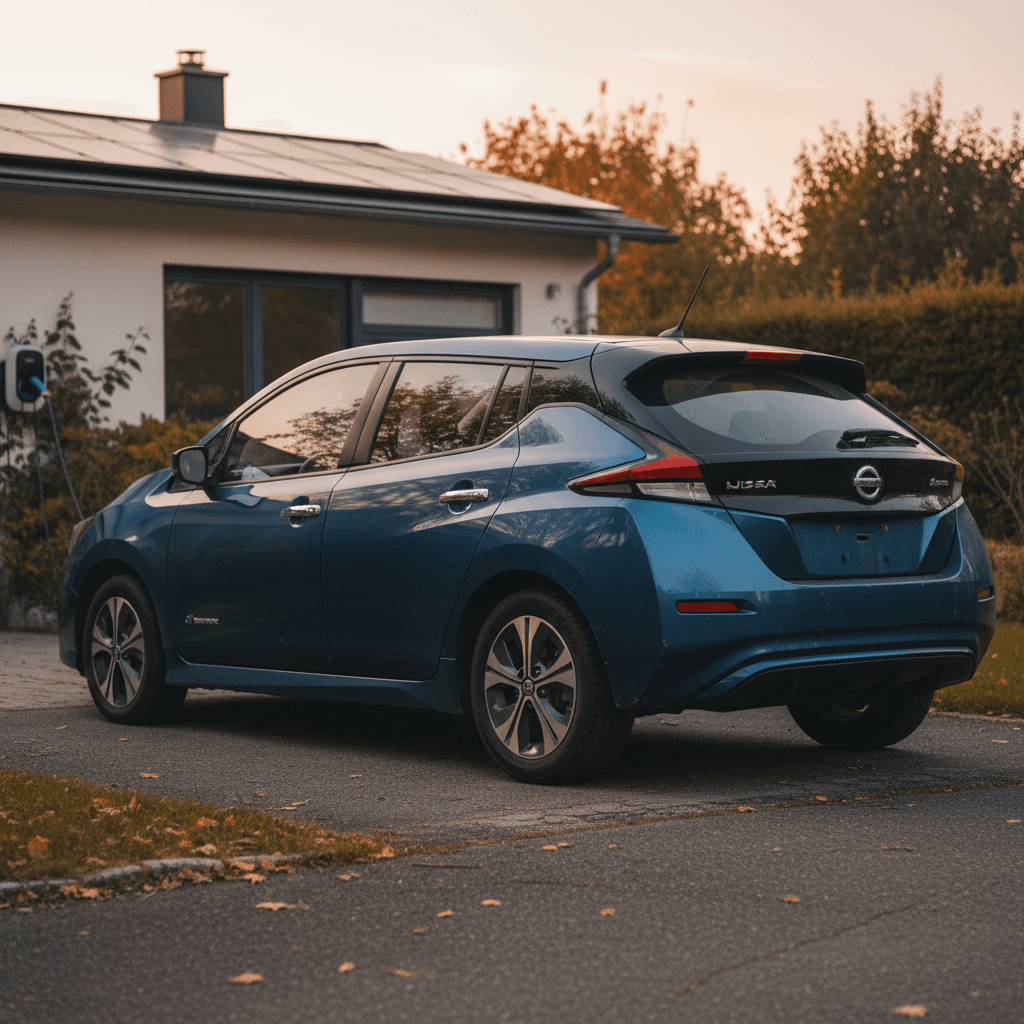
If you’re hunting for a budget-friendly used EV, you’ve probably wondered: is a 2023 Nissan Leaf a good buy in 2026? The answer is a qualified “yes”, for the right kind of driver. The 2023 Leaf delivers low prices, simple tech, and solid reliability, but it also carries serious limitations in range and fast-charging that you can’t afford to ignore.
Short answer
Quick answer: Is a 2023 Nissan Leaf a good buy?
2023 Nissan Leaf at a glance
- Big positives: low purchase price, simple and proven powertrain, generous remaining battery warranty, quiet and comfortable around town, and cheap to run.
- Big negatives: relatively short range versus newer EVs, an obsolete CHAdeMO fast‑charging plug, and steeper depreciation if you buy high and sell in a few years.
2023 Nissan Leaf specs at a glance
2023 Nissan Leaf S vs SV Plus key specs
The 2023 Leaf lineup was simplified to two trims. Here’s how they differ in ways that matter to a used buyer.
| Spec | 2023 Leaf S | 2023 Leaf SV Plus |
|---|---|---|
| Battery capacity | 40 kWh | 60 kWh |
| EPA range | 149 miles | 212 miles |
| Motor output | 147 hp / 236 lb‑ft | 214 hp / 250 lb‑ft |
| 0–60 mph (approx.) | ~7.9 seconds | ~7.0 seconds |
| Onboard AC charger | 6.6 kW | 6.6 kW |
| Fast‑charge connector | CHAdeMO | CHAdeMO |
| Wheels | 16-inch | 17-inch |
| Typical 2026 used price | Lower | Higher |
Battery size and range are the biggest reasons to favor an SV Plus over the base S.
Trim choice tip
Used pricing and depreciation in 2026
Nissan Leafs have a reputation for heavy depreciation for original owners, which is exactly why they can be such bargains used. Market data in 2025–2026 shows 2023 Leafs typically advertised in the mid‑teens to around $20,000 depending on trim, mileage, and local demand. Many cars are still on their first owner and well within the original battery warranty window.
How the 2023 Leaf’s value stacks up
What you can expect to pay, and how it may hold up.
Purchase price
As of early 2026, many 2023 Leaf S models list around $13,500–$17,000, with SV Plus examples often landing a few thousand higher due to their larger battery and better equipment.
Depreciation profile
Historically, Leafs lose a large chunk of value in the first 3–5 years. That’s painful for the first owner, but it means you’re buying after the steepest drop.
Value vs newer EVs
Compared with a newer long‑range EV, the Leaf may be $8,000–$15,000 cheaper. You’re trading modern charging standards and extra range for a much lower payment.
Watch your exit strategy
Range and day-to-day usability
The 2023 Leaf S with the 40 kWh battery is EPA‑rated at about 149 miles of range. The SV Plus with the 60 kWh pack steps up to roughly 212 miles. In the real world, most owners see something like 120–130 miles (S) and 180–190 miles (SV Plus) in mixed driving, less in cold weather or at 75+ mph.
Where the 2023 Leaf shines
- Short commutes: A 30–40‑mile round trip is easy even for the 40 kWh S, with plenty of buffer.
- Suburban errands: Quiet, smooth, and easy to park; one or two charges a week can cover a lot of local miles.
- Two‑car households: Perfect as the “city car” while a gas vehicle or longer‑range EV handles road‑trip duty.
Where the 2023 Leaf struggles
- Frequent highway road trips: Limited range plus slow CHAdeMO infrastructure makes long‑distance travel tedious.
- Heavy winter use: Cold temps and heater use can significantly cut effective range.
- Single‑car households that road‑trip: If this will be your only car and you leave town often, you’ll likely be frustrated.
Cold‑weather reality check
Battery health and warranty on a 2023 Leaf
Battery concerns are the number‑one reason shoppers hesitate on a used Leaf. The good news: 2023 models use Nissan’s later‑generation pack with active thermal improvements and come with an 8‑year / 100,000‑mile warranty from the original in‑service date covering both defects and significant capacity loss (typically defined as dropping below 9 of 12 capacity bars on the dash gauge). In 2026, most 2023 Leafs still have 5–7 years of coverage left, depending on when they were first sold.
How to evaluate a 2023 Leaf’s battery
1. Check the capacity bars
On the right side of the instrument cluster you’ll see 12 small bars showing battery capacity. <strong>Walk away from any 2023 Leaf with fewer than 11 bars</strong> unless it’s deeply discounted and you fully understand the risk.
2. Compare odometer and usage
A 2023 Leaf with 15,000–25,000 miles that still has 12 bars is normal. High mileage plus missing bars may indicate faster‑than‑average degradation or heavy DC fast‑charging use.
3. Confirm remaining warranty
Ask for the original in‑service date (when the car was first sold new). Warranty runs 8 years/100,000 miles from that date. A Recharged Score Report surfaces this context alongside battery diagnostics so you aren’t guessing.
4. Use third‑party scan data when possible
Apps and tools that read the car’s battery management system can provide estimated State of Health (SOH). It’s not perfect science, but it’s another data point beyond the simple bar display.
5. Review charging history
If you can, find out whether the car was fast‑charged daily or mostly charged slowly at home. Frequent DC fast charging, especially in hot climates, can accelerate degradation.
Warranty fine print matters
Charging: the 2023 Leaf’s biggest catch
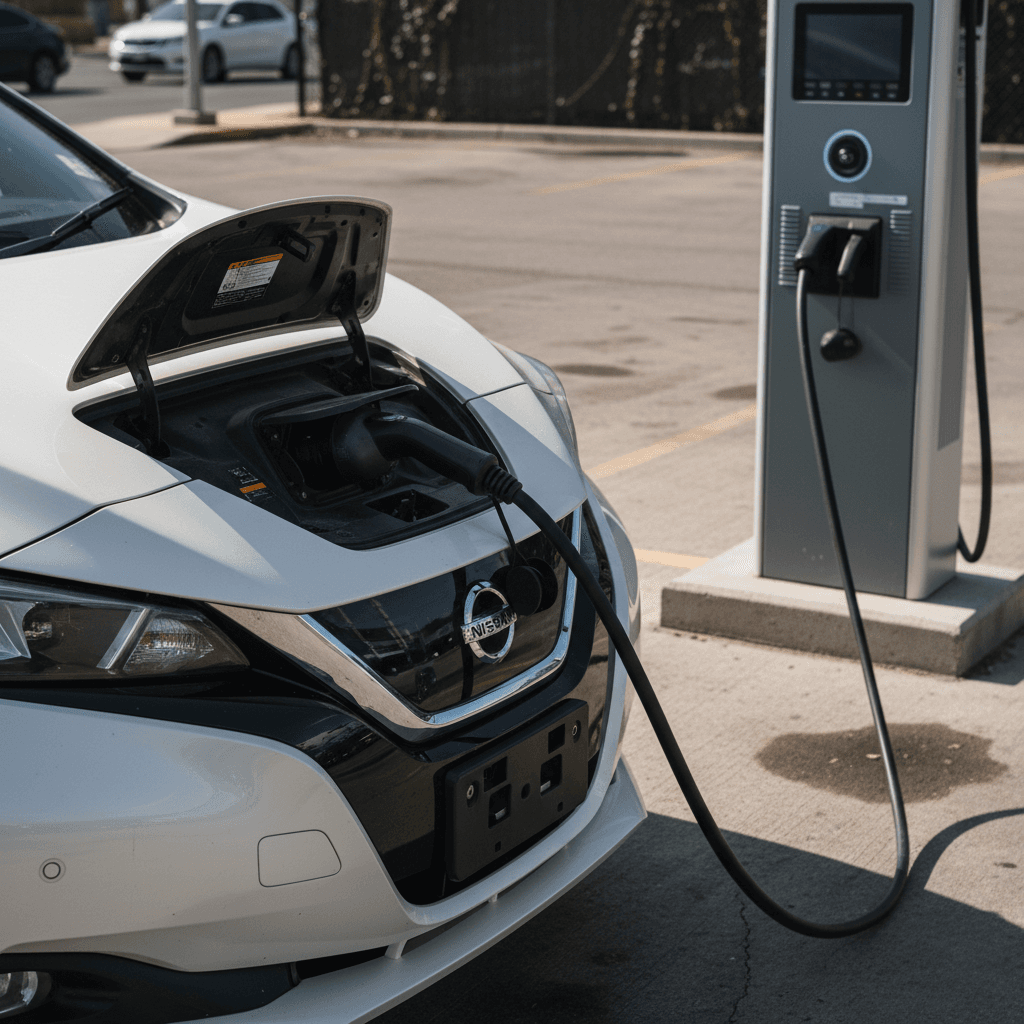
Charging is where the 2023 Leaf falls furthest behind newer EVs. On AC power, it uses a standard J1772 connector and a 6.6 kW onboard charger, good for adding roughly 25–30 miles of range per hour on a 240‑volt home charger. That’s fine for overnight top‑ups. The challenge is DC fast charging.
Charging strengths and weaknesses of the 2023 Leaf
Understand this section before you buy.
Home charging (strong)
A 2023 Leaf is an easy car to live with if you can install or already have a Level 2 home charger. Plug in at night, wake up full, no drama.
Public Level 2 (ok)
At workplaces, apartments, and public lots, J1772 Level 2 stations are common. The Leaf works fine here; you’ll just need several hours for a big top‑up.
CHAdeMO fast charging (weak link)
All 2023 Leafs use the older CHAdeMO fast‑charge standard. Networks are shrinking, many new sites don’t support it, and future availability will likely decline further.
Why CHAdeMO is a red flag for some buyers
If you already own another road‑trip‑ready vehicle or rarely drive beyond your metro area, CHAdeMO’s decline may not affect you much. But if this Leaf will be your only car in a large rural state with sparse charging, you’ll want to study local CHAdeMO coverage in detail before signing anything.
Reliability, known issues, and ownership costs
Mechanically, the 2023 Leaf is a simple, mature design. No engine, no transmission, and relatively few complex systems compared with some newer EVs. That’s a big part of its appeal as a low‑drama commuter.
- Most owners report few major mechanical problems in the first 3–5 years beyond routine wear items (tires, brakes, cabin air filters).
- As with all Leafs, there’s a small conventional 12‑volt battery that can cause quirky electrical issues when it weakens, easy to test and replace.
- Software and infotainment are basic but generally stable; you’re not dealing with over‑the‑air update drama like some newer EVs.
- Brake wear is usually light thanks to regenerative braking, reducing long‑term maintenance costs.
Budgeting for ownership
Who should buy a 2023 Leaf, and who should skip it
Great fit for
- Budget‑focused commuters who want a reliable, low‑payment EV and drive under ~60 miles most days.
- Two‑car households that already have a gas vehicle or long‑range EV for road trips.
- Homeowners or renters with guaranteed overnight charging (driveway or garage) where Level 2 charging is practical.
- First‑time EV drivers who want a simple, easy‑to‑use electric car without cutting‑edge complexity.
Poor fit for
- Frequent road‑trippers who depend on DC fast charging along interstates.
- Drivers in CHAdeMO‑sparse regions where the remaining network is thin or shrinking.
- Single‑car households in rural areas with long daily drives and harsh winters.
- Buyers planning to resell in 2–3 years who are very sensitive to future depreciation.
When the 2023 Leaf is a slam‑dunk
How to shop a used 2023 Leaf like a pro
Finding the right 2023 Leaf is about matching the car’s limitations to your lifestyle, then verifying battery health and price realism. Here’s a simple process you can follow.
Step‑by‑step used 2023 Leaf buying checklist
1. Define your daily use case
Write down your typical weekday and weekend miles, how often you leave town, and whether you’ll have a backup vehicle. If your routine regularly exceeds 70–80 miles a day, focus on the SV Plus, or consider a different EV.
2. Decide on S vs SV Plus
If your budget is tight and your driving is light, the S can work. Otherwise, the <strong>extra range and power of the SV Plus</strong> are usually worth the premium, especially for highway comfort and future resale.
3. Check charging options at home
Confirm you can safely install or access Level 2 charging (a 240‑volt circuit) where you park. If you’re in an apartment, talk with management or look for existing shared chargers before committing to a short‑range EV.
4. Get a battery health report
Ask for a professional battery assessment, not just a photo of the dash. A <strong>Recharged Score Report</strong> includes verified battery data, range projections, and fair‑market pricing so you know exactly what you’re buying.
5. Inspect for prior damage
As with any used car, check for accident history, flood damage, and poor repairs. Pay special attention to underbody and cooling components that could affect the battery’s long‑term health.
6. Test‑drive your real routes
If possible, drive a route that mirrors your commute or typical weekend loop. Watch energy use at your normal speed and see how comfortable you feel with the remaining range buffer.
How Recharged can help
FAQ: 2023 Nissan Leaf used buyers
Common questions about buying a 2023 Nissan Leaf used
Bottom line: Is the 2023 Nissan Leaf a good buy?
Viewed through the lens of everyday transportation rather than road‑trip fantasy, the 2023 Nissan Leaf is absolutely a good buy, and in many cases, a great one. You’re trading cutting‑edge charging standards and long‑range bragging rights for one of the lowest entry prices in the EV world, a straightforward ownership experience, and meaningful remaining battery warranty coverage.
If you’re honest about your needs, lock in a fair price, verify the battery’s health, and set yourself up with solid home charging, a 2023 Leaf, especially an SV Plus, can deliver years of quiet, low‑cost electric miles. And if you’d like help finding a well‑vetted example, Recharged was built to make exactly this kind of used‑EV purchase simple, transparent, and confidence‑inspiring.