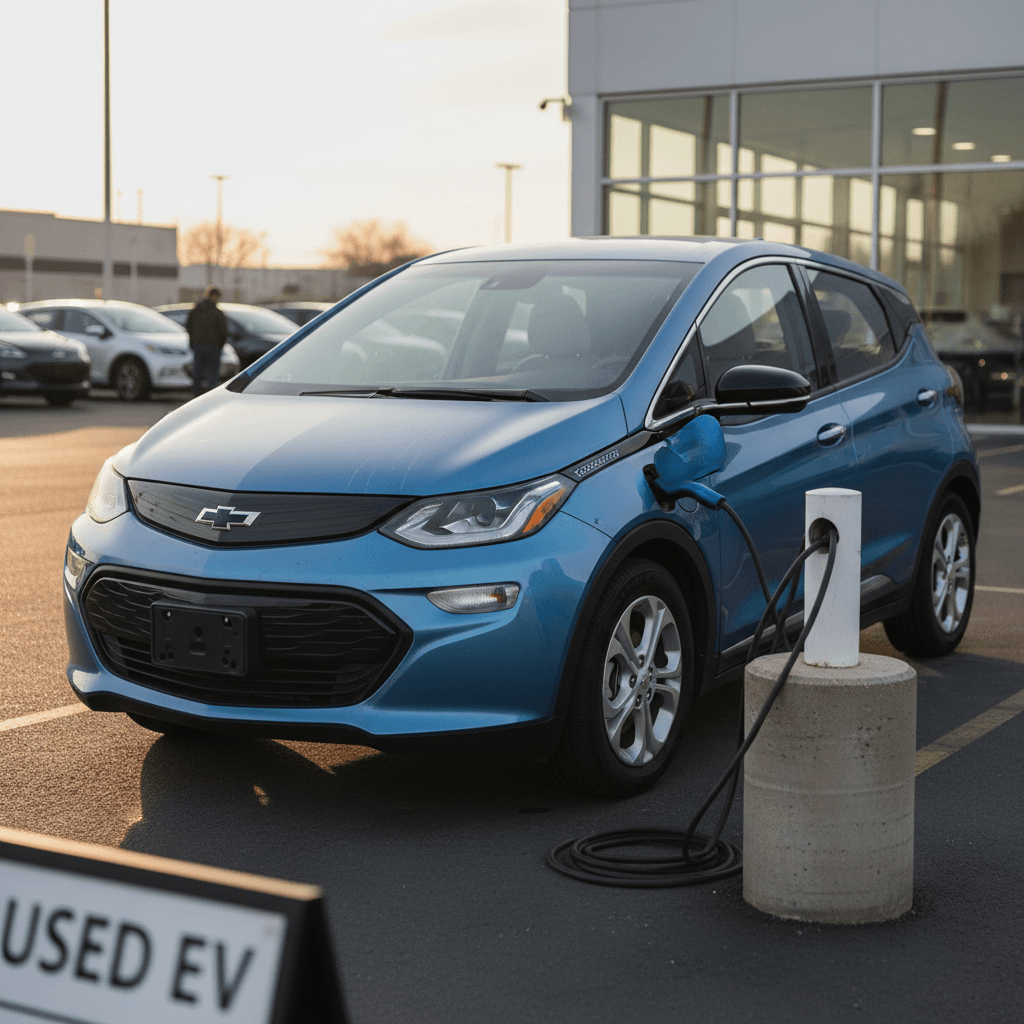
If you’re eyeing a used electric hatchback, the question naturally comes up: is the 2023 Chevrolet Bolt EV a good buy in 2026? With GM ending first‑gen Bolt production after 2023 and planning a rebooted model for 2027, the last-year cars sit in a unique sweet spot for value, but they also carry the baggage of earlier Bolt battery headlines.
Context: last year of the first‑gen Bolt
Quick answer: Is the 2023 Bolt EV a good buy?
Short answer
For many buyers, yes, the 2023 Chevrolet Bolt EV is one of the best value used EVs you can buy in 2026, especially if you want:
- ~259 miles of EPA-rated range
- A small hatchback that’s easy to park
- Simple, low operating costs
- Modern tech without a luxury price tag
But it’s not perfect
It may not be the right buy if you:
- Do frequent 400+ mile road trips
- Need AWD or lots of cargo space
- Rely heavily on ultra-fast DC charging
- Are uncomfortable with any past battery‑recall history, even though 2023 packs are new‑generation designs
Recharged’s take
Ready to find your next EV?
Browse Vehicles2023 Chevrolet Bolt EV at a glance
Core 2023 Bolt EV specs
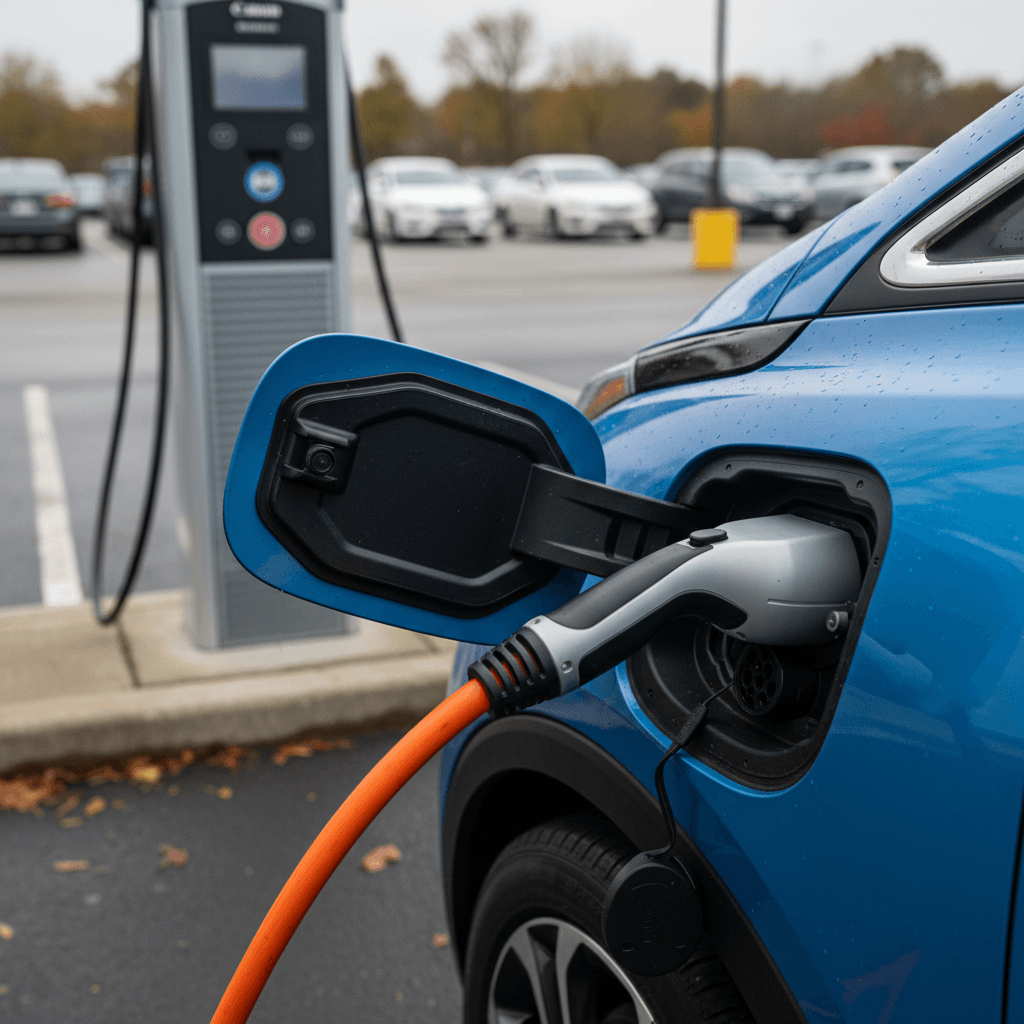
For 2023, Chevy kept the Bolt EV formula simple: a compact hatchback with a ~65 kWh battery, 259 miles of EPA-rated range, front‑wheel drive and a single trim ladder (1LT and 2LT). DC fast charging via CCS is standard, as is 11.5 kW Level 2 AC charging capability when paired with a 48‑amp home charger. The car uses the familiar J1772 connector for AC charging and CCS1 for DC fast charging, not the newer NACS plug that GM is adopting starting with later models.
Used pricing & depreciation for 2023 Bolt EV
Because the 2023 Bolt EV launched with one of the lowest new‑EV MSRPs in the U.S. and then faced aggressive discounts and incentives, used prices in 2026 are typically well below what you’d pay for most comparable‑range EVs.
Typical 2023 Bolt EV used prices (U.S., early 2026)
Approximate transaction ranges assuming clean titles, no major accidents and average mileage. Local markets vary.
| Odometer | Typical Price Range | Notes |
|---|---|---|
| Under 20,000 miles | $17,000 – $20,000 | Low‑mileage one‑owner cars, often off‑lease |
| 20,000 – 40,000 miles | $15,000 – $18,000 | Most common sweet spot for value vs. warranty left |
| 40,000 – 60,000 miles | $13,000 – $16,000 | More wear but still well within battery warranty |
| 60,000+ miles | $11,000 – $14,000 | Heavier use; battery evaluation becomes more important |
These are broad market ballparks; Recharged listings include a Recharged Score and market‑based pricing for more precise, car‑specific values.
Watch pricing vs. the used EV tax credit
Depreciation on earlier Bolt model years was accelerated by the well‑publicized battery recall and by rapid EV price cuts in 2023–2024. By 2026, prices on 2023 cars have mostly flattened into a stable used range, which can make them less risky from a resale‑value standpoint than buying some newer, still‑falling models. The flip side: you should not expect dramatic future appreciation; the Bolt is a pragmatic value play, not a collector car.
Range, charging and real-world usability
How the 2023 Bolt EV fits your daily driving
Balance your real‑world range needs with how and where you’ll charge.
Daily commuting
With an EPA range around 259 miles, most commuters can go several days between charges. Even if cold weather trims that by 20–30%, you’re still in comfortable one‑week‑per‑charge territory for typical suburban use.
Weekend trips
For 150–250 mile weekend trips, the Bolt works well if you’re willing to add a 30–45 minute DC fast‑charge stop each way. Planning around CCS chargers is key, especially outside major corridors.
Long road trips
For 400+ mile days, the Bolt EV is usable but not ideal. Its ~55 kW DC fast‑charge ceiling and relatively slow above ~60–70% state of charge mean stops are longer and more frequent than in newer 800‑volt EVs.
Charging basics for the 2023 Bolt EV
Road‑trip expectations check
Battery health, recalls and remaining warranty
Most shoppers asking whether the 2023 Chevrolet Bolt EV is a good buy are really asking a deeper question: “Did GM finally get the battery right?” That’s fair, given the earlier‑generation recall on 2017–2022 cars. The good news is that 2023 cars use the updated pack design and software that grew out of that saga, and to date they have not shown the same pattern of thermal incidents that tarnished the Bolt’s reputation.
- Battery: ~65 kWh lithium‑ion pack, updated chemistry and monitoring vs. early years
- High‑voltage battery warranty: typically 8 years / 100,000 miles from original in‑service date (check the specific VIN for exact terms and start date)
- Powertrain: often covered under a longer drivetrain warranty window than the basic bumper‑to‑bumper coverage
- Bumper‑to‑bumper: around 3 years / 36,000 miles from original sale, which will be expiring or already expired on many 2023 cars by 2026
How to verify battery peace of mind
Given the age window, a used 2023 Bolt EV you’re shopping in 2026 should still have 5–7 years of factory battery coverage left, depending on when it was first sold and how many miles it’s accumulated. That remaining warranty is one of the main reasons these cars stand out among used EVs: you get mature hardware, a long tail of battery protection, and heavy early‑life depreciation already baked in.
Reliability track record & common issues
Broadly, the Bolt EV is a mechanically simple car: no multi‑speed transmission, no turbo plumbing, no engine oil system. Most owner reports on 2021–2023 cars point to solid day‑to‑day dependability, especially once the battery recall work on older model years settled out. That said, there are patterns you should know about before you buy.
Known 2023 Bolt EV pain points (and how serious they are)
Most issues are manageable if you know what to look for.
HVAC & sensors
Some owners report occasional HVAC quirks, A/C performance issues, or sensor warnings. These are usually annoying rather than catastrophic but can mean dealer visits and diagnosis time.
DC fast‑charge performance
The Bolt’s charging curve tapers early and can feel slow vs. newer EVs. That’s a design trait rather than a defect, but it matters if you road‑trip often or rely heavily on CCS stations.
Dealer experience
As with most brands, EV‑savvy service departments vary by location. A good local Chevy dealer with Bolt experience is a plus; a weak one can turn minor concerns into headaches.
Don’t ignore warning lights
“In a used‑EV world where some models are still finding their footing, late‑run Bolt EVs stand out for doing exactly what they promise: quiet, cheap miles with very little drama, as long as you buy a well‑cared‑for example.”
Ownership costs vs. other used EVs
What you’ll likely spend to own one
- Electricity: Often the equivalent of paying $1–$2 per gallon of gasoline, depending on your local kWh rates and whether you use off‑peak charging.
- Routine maintenance: Cabin filters, tires, brake fluid, and occasional software updates, no oil changes and very little under‑hood drama.
- Insurance: Usually comparable to a small gasoline hatchback or compact crossover, though it varies by state and carrier.
How the 2023 Bolt compares to rivals
- Vs. early Nissan Leaf: Much more range and DC fast charging that’s still well supported in North America.
- Vs. older Teslas: Cheaper to buy, but slower road‑trip charging and no direct Supercharger access without adapters and network support.
- Vs. newer small EVs: Lacks NACS and ultra‑fast charging, but often thousands less up front.
Biggest cost wildcard: battery health
Who is the 2023 Bolt EV a good buy for?
Best and worst fits for a 2023 Bolt EV
Match the car to your life, not the other way around.
Great buy if…
- You mostly drive short to medium distances and can charge at home or work.
- You value low operating costs more than flashy performance.
- You’re comfortable using CCS fast chargers on the road when needed.
- You want a compact car that’s easy to park in urban or suburban settings.
Maybe not the right fit if…
- You do frequent, time‑sensitive 500+ mile road trips.
- You need all‑wheel drive, towing, or a lot of cargo space.
- You’re counting on reliable access to Tesla’s NACS Supercharger network without adapters.
- You want cutting‑edge driver‑assist systems the Bolt simply doesn’t offer.
How to shop a used 2023 Bolt EV the smart way
Key steps when evaluating a 2023 Chevy Bolt EV
1. Confirm warranty start date
Ask for documentation showing the original in‑service date so you can calculate how much of the 8‑year/100,000‑mile battery warranty remains. A later sale date often means more coverage left for you.
2. Review recall and service history
Request a VIN‑based service printout from a Chevy dealer or trusted retailer. You’re looking for completed recall campaigns, especially anything battery‑related, and for patterns of repeated high‑voltage system complaints.
3. Inspect and test the charging hardware
Physically inspect the charge port, cables and charge‑port door. On a test drive, plug into a known Level 2 or DC fast charger if possible to confirm normal charging behavior, port latch operation and indicator lights.
4. Evaluate battery health beyond the dash gauge
The on‑screen range estimate is helpful but not definitive. A <strong>professional battery health test</strong> can measure usable capacity and degradation more accurately. Every Recharged vehicle includes a Recharged Score report summarizing this data.
5. Check tires, brakes and suspension
EVs are heavier than equivalent gas cars, and that can affect tire and suspension wear. Look for even tire wear, smooth braking, and quiet operation over bumps.
6. Drive it the way you’ll actually use it
If you plan to use the Bolt on the highway, take a sustained freeway test drive. Listen for wind noise, feel for stability at speed, and watch how quickly the state of charge drops in your typical driving conditions.
How Recharged can help you shop smarter
- A Recharged Score with verified battery health and range estimates.
- Transparent, market‑based pricing and financing options.
- EV‑specialist support that can walk you through range planning, home charging and ownership costs.
- Nationwide delivery and the option to sell or trade your current vehicle.
FAQ: Buying a 2023 Chevy Bolt EV used
Frequently asked questions about the 2023 Bolt EV
Bottom line: Is the 2023 Bolt EV worth it?
For the right driver, the answer is yes: the 2023 Chevrolet Bolt EV is a very good buy in 2026. It combines real‑world range, mature hardware, low running costs and significant remaining battery warranty in a package that’s often thousands cheaper than newer rivals. The trade‑offs, slower DC fast charging, compact interior space and a lingering association with earlier‑year recalls, are manageable if you understand them going in.
If your life is built around daily commuting, local errands and the occasional road trip, a well‑vetted 2023 Bolt EV can quietly chew through miles for years with minimal fuss. Just be choosy about the specific car you buy: verify battery health, confirm remaining warranty, and scrutinize service history. Working with a specialized used‑EV retailer like Recharged, where every Bolt includes a Recharged Score battery report, transparent pricing and EV‑savvy support, can turn a good theoretical deal into a smart, confident purchase.