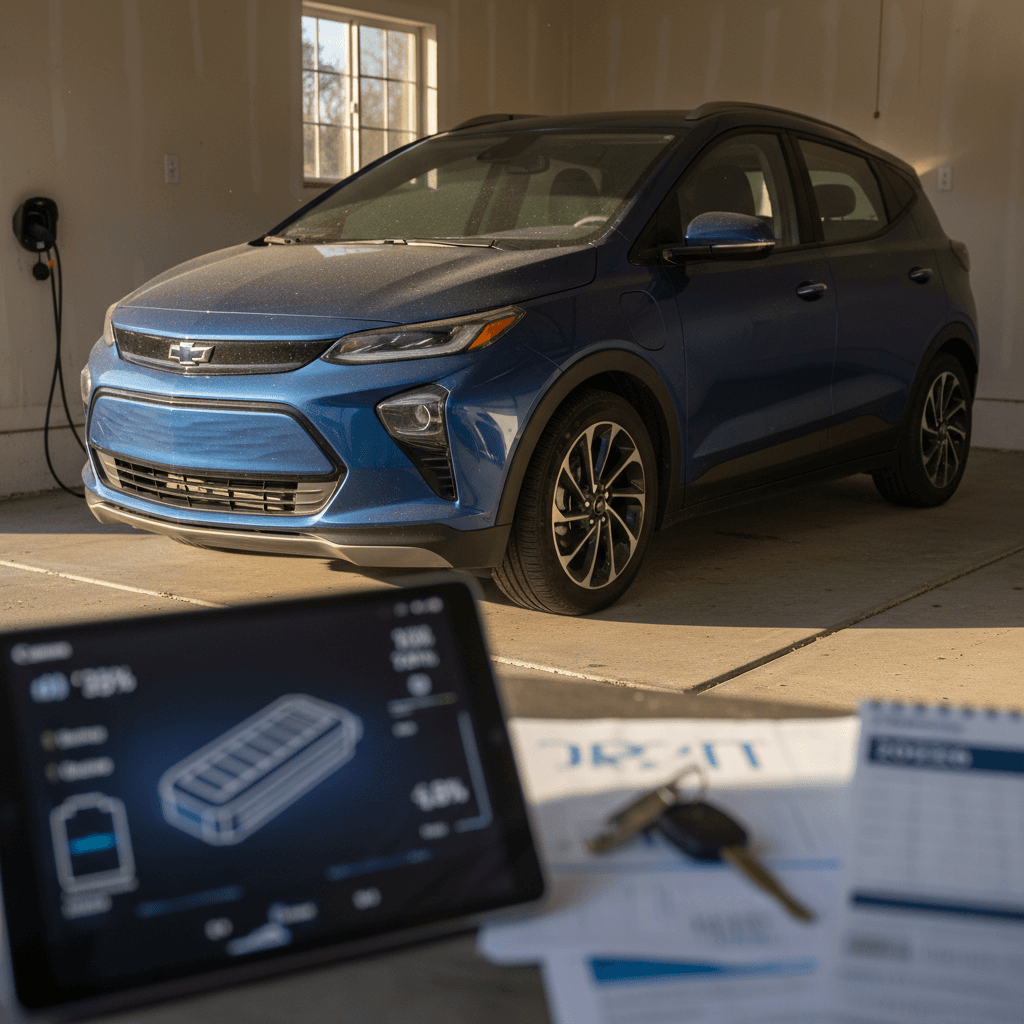
If you’re staring at a listing for a 2023 Chevrolet Bolt EUV and wondering, “Is this actually a good buy in 2026, or am I signing up for headache and slow charging?” you’re asking exactly the right question. The 2023 Bolt EUV is discontinued, affordable, and a little misunderstood. Let’s unpack whether it fits your life, your budget, and your tolerance for road trips.
The short story
Quick answer: Is the 2023 Bolt EUV a good buy?
Why it’s a great buy
- Low used prices: Many 2023 Bolt EUVs now appraise in the mid-teens to high-teens, depending on trim, miles, and condition.
- Solid range: About 247 miles EPA on a full charge when new, with excellent efficiency.
- Standard DC fast charging: Every EUV can quick‑charge, even if it’s not the fastest kid on the block.
- Long battery warranty: 8 years/100,000 miles on the high‑voltage battery from original in‑service date.
- Roomier than the Bolt EV: More rear legroom and available Super Cruise driver-assist on higher trims.
Where it falls short
- Slow DC fast charging: Peaks around 55 kW; plan on 60–75 minutes for a 10–80% session.
- Discontinued model: GM ended Bolt EUV production after 2023, which can spook some buyers.
- Past recall baggage: Earlier Bolt batteries had fire‑risk recalls (though 2023 packs are post‑fix).
- No all-wheel drive: Front‑drive only, which matters for some climates and driveways.
- Not a road‑trip monster: It can do it, but you’ll stop more often and for longer than newer EVs.
Verdict in one line
2023 Bolt EUV specs that matter for used buyers
Core 2023 Chevrolet Bolt EUV specs
Every 2023 Chevy Bolt EUV uses the same 65 kWh battery, single 200 hp front‑drive motor, and CCS fast‑charging hardware. That consistency makes shopping used simpler: you’re mostly choosing mileage, condition, and trim (LT vs. Premier, plus options like Super Cruise), not different drivetrains.
Spec to prioritize
Pricing, depreciation, and value in 2026
The 2023 Bolt EUV launched as one of the most affordable new EVs on the market. Three model years later, depreciation has done its work, and that’s good news if you’re buying used.
2023 Chevrolet Bolt EUV price snapshot (U.S., 2026)
Approximate used price ranges you’re likely to see in the U.S. as of early 2026. Exact pricing depends heavily on trim, mileage, options, and regional demand.
| Condition | Miles | Typical Price Range | Notes |
|---|---|---|---|
| Clean LT, base options | 20,000–40,000 | $13,000–$16,000 | Good commuter value; make sure DC fast charging works properly. |
| Premier / well‑optioned | 20,000–40,000 | $15,000–$19,000 | Adds luxuries like leather, Bose audio, and available Super Cruise. |
| Ultra‑low miles (<10k) | Under 10,000 | $18,000–$22,000 | You’re paying a premium for miles; weigh against newer alternatives. |
| High miles (60k+) | 60,000+ | $11,000–$14,000 | Could be a bargain if battery health checks out. |
Use these numbers as a sanity check against any individual listing.
Why depreciation is your friend here
When you compare a 2023 Bolt EUV in the mid‑teens to newer small EV crossovers that still sit in the high‑20s or 30s used, the value equation is hard to ignore, especially if you don’t need blazing‑fast DC charging or all‑wheel drive.
Range and real-world efficiency
On paper, the 2023 Bolt EUV is rated at about 247 miles of EPA range from its 65 kWh pack. In Recharged’s own testing, it proves to be an extremely efficient commuter: drive it like a normal car and it quietly sips electrons while you sip your coffee.
What range you can realistically expect
Your climate, speed, and driving style all matter more than the spec sheet.
City & suburban driving
At moderate speeds with lots of regen, many drivers see efficiency that translates to 230–260 miles on a full charge in mild weather.
Highway at 70–75 mph
Sustained interstate speeds and headwinds take a bite. Expect more like 180–210 miles per charge, depending on conditions.
Cold‑weather driving
Winter is tough on every EV. With cabin heat running and cold batteries, it’s realistic to see 20–30% less range than the EPA number on bad days.
Cold‑climate reality check
For typical U.S. commuting, under 60 miles a day, home at night, the 2023 Bolt EUV’s range is more than enough. Where it starts to feel small is back‑to‑back highway legs without great charging options, especially in extreme weather.
Charging speed: home and road-trip realities
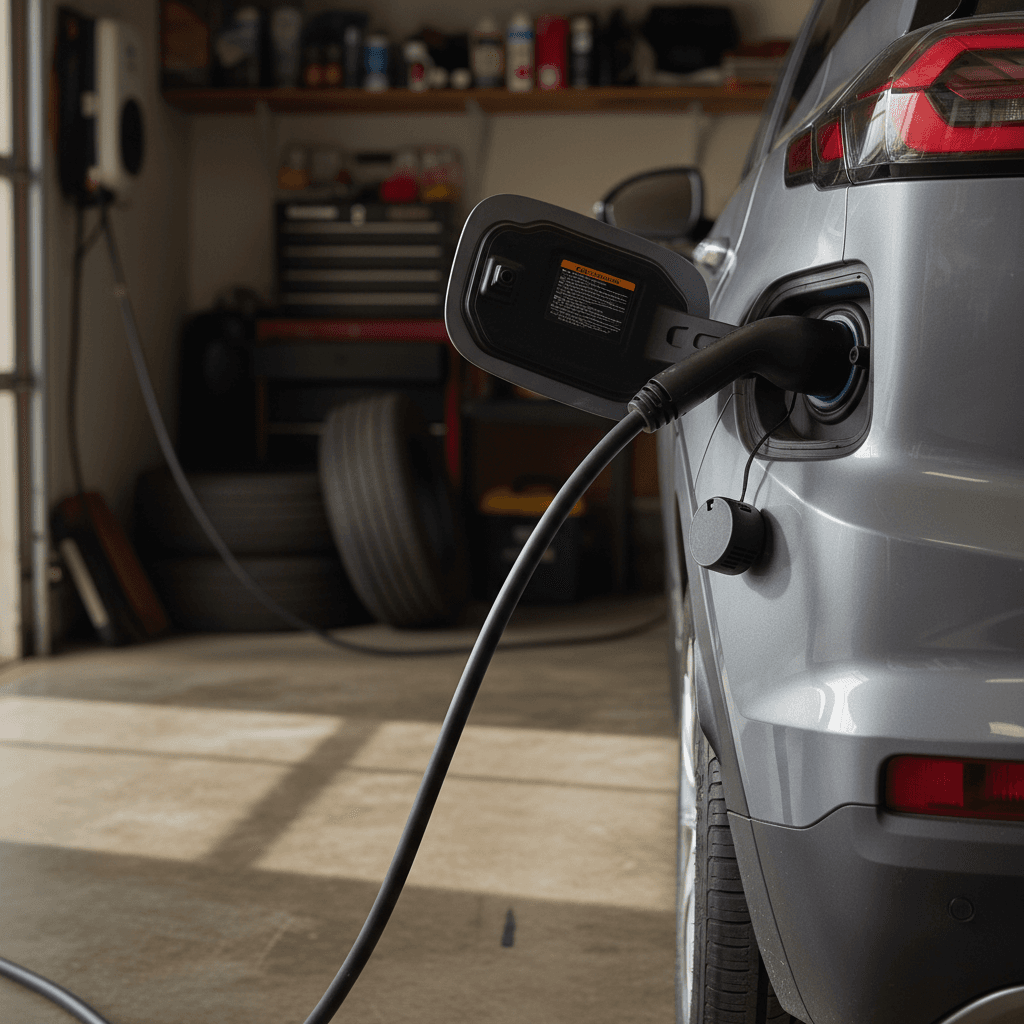
Here’s where you need to be honest with yourself. The 2023 Bolt EUV’s charging story is split in two: easy at home, slower than newer EVs on the highway.
2023 Bolt EUV charging overview
Approximate times on healthy equipment and a healthy battery.
| Charging type | Power | Typical use | Approx. time |
|---|---|---|---|
| Level 1 (120V) | 1–1.4 kW | Emergency / occasional use | 0–100% in 2–3 days; 3–5 miles of range per hour |
| Level 2 (240V, up to 11.5 kW) | 7–11 kW | Home / workplace | 0–100% in about 7–8 hours; perfect for overnight |
| DC fast charging (CCS, up to ~55 kW) | 30–55 kW typical | Road trips | Roughly 10–80% in 60–75 minutes under good conditions |
Actual times vary with temperature, state of charge, and the quality of the charger you’re using.
How to road‑trip a Bolt EUV happily
At home on a solid Level 2 setup, the Bolt EUV is a dream: plug in when you get home, wake up full, and rarely think about public charging. On road trips, you trade low purchase price against the patience to sit a bit longer at CCS stations than the driver in the shiny new 800‑volt crossover.
Know your fast‑charging expectations
Reliability, battery warranty, and recall history
No used Bolt discussion is complete without talking about battery fires and recalls. Earlier Bolt EV and EUV model years (2017–2022) were caught up in a high‑profile battery recall for potential fire risk. Those cars received new packs or software fixes. By 2023, GM was building Bolts with the updated battery hardware and monitoring in place.
- High‑voltage battery warranty: 8 years/100,000 miles from original in‑service date (whichever comes first).
- Basic bumper‑to‑bumper warranty: 3 years/36,000 miles new, so many 2023s still have at least a slice of coverage left in 2026.
- No widespread, confirmed pattern of battery fires on 2023‑build Bolts with the updated pack, though any EV pack can fail in rare cases.
- A handful of owners report issues like "reduced propulsion" warnings, onboard charger failures, or 12‑volt battery problems, good reasons to buy from a seller who can document warranty work and service history.
Don’t ignore recall and service history
In everyday use, the 2023 Bolt EUV’s underlying hardware is simple and well‑understood. Owner forums are full of cars piling on miles with few complaints, especially when the battery is treated kindly (avoiding constant 100% charges in extreme heat, for example). But as with any EV, your specific car’s story, how it was charged, stored, and serviced, matters as much as the badge on the hood.
Comfort, space, and tech inside the Bolt EUV
Chevy calls the Bolt EUV an "electric utility vehicle," but think of it more as a tall hatchback with bonus legroom. It’s not a big SUV, but it is noticeably roomier in back than the standard Bolt EV, which your rear‑seat passengers will appreciate.
Living with a 2023 Bolt EUV day to day
Where it shines, and where it still feels like a budget EV.
Space and seating
Comfortable front seats, generous rear legroom for adults, and a hatch that’ll swallow a Costco run. If you’re coming from a compact sedan, it’ll feel downright airy.
Infotainment & controls
Big central touchscreen with wired and wireless Apple CarPlay/Android Auto, physical climate knobs, and straightforward menus. It’s easy to live with, not futuristic or fussy.
Safety & driver assists
Standard Chevy Safety Assist brings automatic emergency braking, lane‑keeping, and more. Higher‑trim EUVs offer Super Cruise, GM’s hands‑free highway assist, which is still a rare feature at this price point.
Where the "budget" shows
Who the 2023 Bolt EUV is perfect for, and who should skip it
Great buy if this is you
- Daily mileage under ~120 miles, with predictable routes.
- Access to Level 2 charging at home, at work, or both.
- Budget-conscious and more interested in low running costs than prestige.
- First EV buyer who wants something easy to drive and park.
- Two‑car household where the other car can handle rare mega‑road‑trips.
Probably not your car if…
- You do frequent 300–600 mile days and care deeply about minimizing stop time.
- You live in an area with thin CCS fast‑charging coverage.
- You absolutely need all‑wheel drive or towing.
- You want the latest 800‑volt, 200+ kW DC fast‑charging experience.
- You’re allergic to any vehicle with a public recall history, even if fixed.
One of the best commuter EV deals going
Used 2023 Bolt EUV buyer’s checklist
10 things to check before you buy a 2023 Bolt EUV
1. Confirm recall and software status
Ask for documentation that all open recalls and campaigns have been completed. A Recharged Score Report will spell this out clearly so you’re not guessing.
2. Review battery warranty window
Verify the original in‑service date so you know exactly how much of the 8‑year/100,000‑mile battery warranty remains. A 2023 first sold in late 2023 may still have many years of coverage left.
3. Check battery health and range
Look at real‑world range at 80–90% and any battery health data available. Recharged vehicles include a <strong>Recharged Score Report</strong> with independent battery diagnostics, so you can see how the pack is aging.
4. Test DC fast charging
If possible, do a short DC fast‑charge session. Confirm the car reaches expected power levels for its state of charge and doesn’t immediately throw errors or drop to very low speeds.
5. Inspect the charge ports and cables
Check the CCS and J1772 ports for damage or corrosion. Make sure the charge door operates smoothly and that any included portable cord or wallbox is in good condition.
6. Scan for warning lights and messages
During your test drive, watch for "reduced propulsion" or battery/charging warnings. Have a qualified EV shop or Recharged technician scan for stored trouble codes if anything feels off.
7. Evaluate tires and brakes
EVs are heavy; worn tires or uneven brake wear can tell you how the previous owner drove. Regenerative braking means pads often last a long time, but they can still age out.
8. Check options and features
Verify that features like Super Cruise, heated seats, and surround‑view cameras (if equipped) work as expected. Replacing advanced driver‑assist hardware out of warranty can get pricey.
9. Look at charging history
If the seller has records or app screenshots, note how often the car was fast‑charged and how often it lived at 100%. A mix of Level 2 and modest DC fast charging is ideal.
10. Compare price to similar listings
Use appraisal tools and other listings to sanity‑check the asking price. If a car is priced well above similar 2023 EUVs, it needs to be ultra‑low‑miles and well‑optioned to justify it.
How Recharged helps you buy a 2023 Bolt EUV the smart way
A used EV is only as good as its battery and charging story. That’s exactly what Recharged was built to surface. Instead of squinting at a generic Carfax and hoping for the best, you get a Recharged Score Report that goes deep on what matters for a Bolt EUV.
What you get when you shop a 2023 Bolt EUV with Recharged
Less guesswork, more confidence.
Verified battery health
Our Recharged Score battery diagnostics give you an objective view of pack health and expected range, so you’re not buying blind.
Transparent, fair pricing
We benchmark each vehicle against the broader market, factoring in mileage, options, and battery condition. No mystery markups.
Nationwide, EV‑savvy support
From EV‑specialist advisors to financing, trade‑in options, consignment, and nationwide delivery, you can handle the entire purchase digitally, or visit our Experience Center in Richmond, VA.
Ready to find your next EV?
Browse VehiclesThinking about selling or trading a Bolt EUV?
2023 Bolt EUV FAQ
Frequently asked questions about the 2023 Chevrolet Bolt EUV
Bottom line: Should you buy a 2023 Bolt EUV?
Viewed clearly for what it is, not what the marketing department tried to turn it into, the 2023 Chevrolet Bolt EUV is one of the best bargains in the used EV world right now. It’s efficient, easy to park, practical for small families, and cheap to run. Its sins are forgivable: modest fast‑charging speed, front‑drive only, and the lingering shadow of earlier‑generation recalls that didn’t actually involve 2023 packs.
If your life is mostly commuting, errands, school runs, and the occasional weekend away within a few hundred miles, a well‑vetted 2023 Bolt EUV, with good battery health and clear service history, is absolutely a good buy in 2026. If your heart belongs to brutal cross‑country cannonball runs and 250 kW charging, you already know you need something else.
Either way, go in with open eyes: check the battery, confirm the recalls, and line up the numbers. And if you’d like a team of EV nerds to do that homework with you, that’s exactly what Recharged is here for.