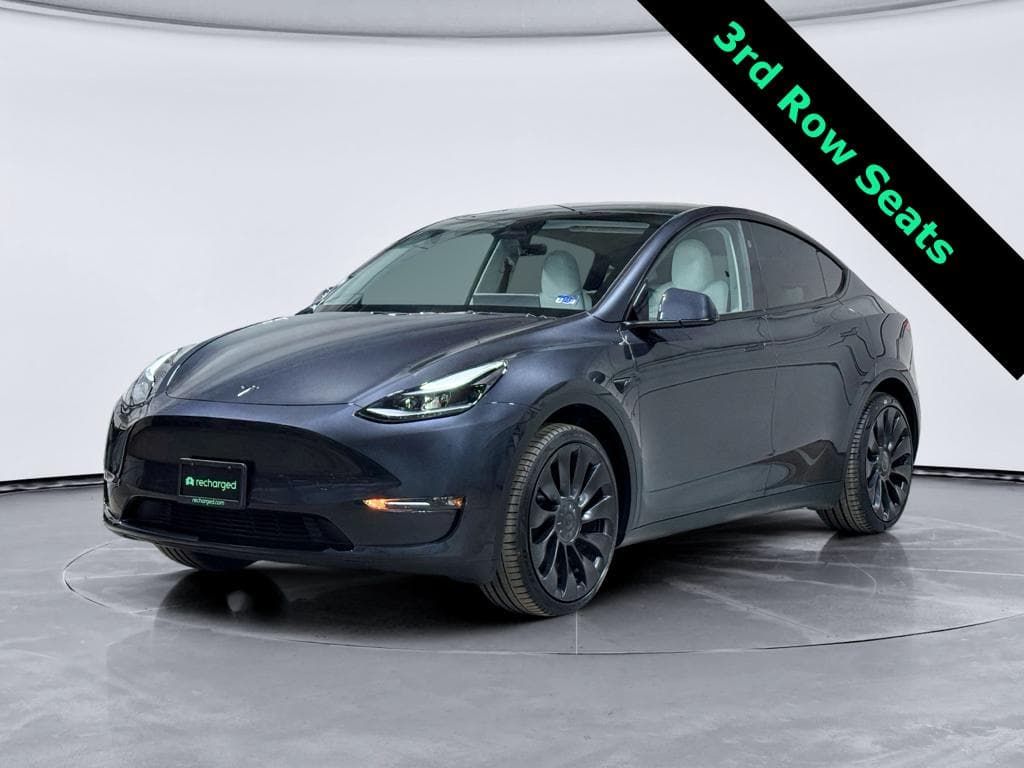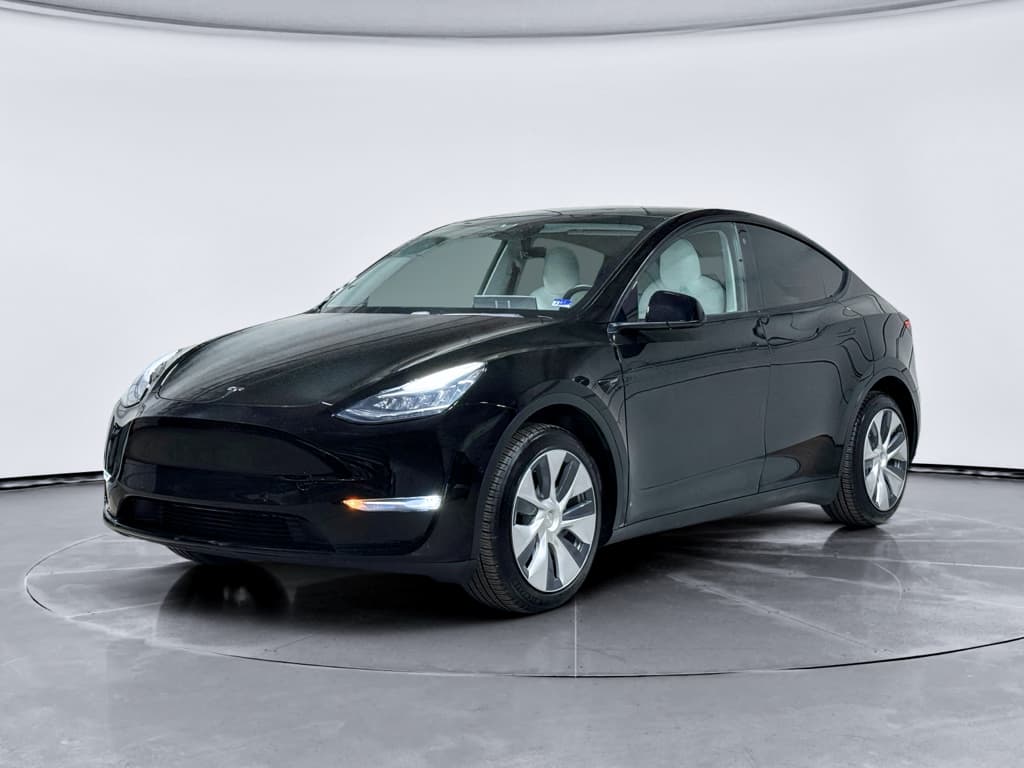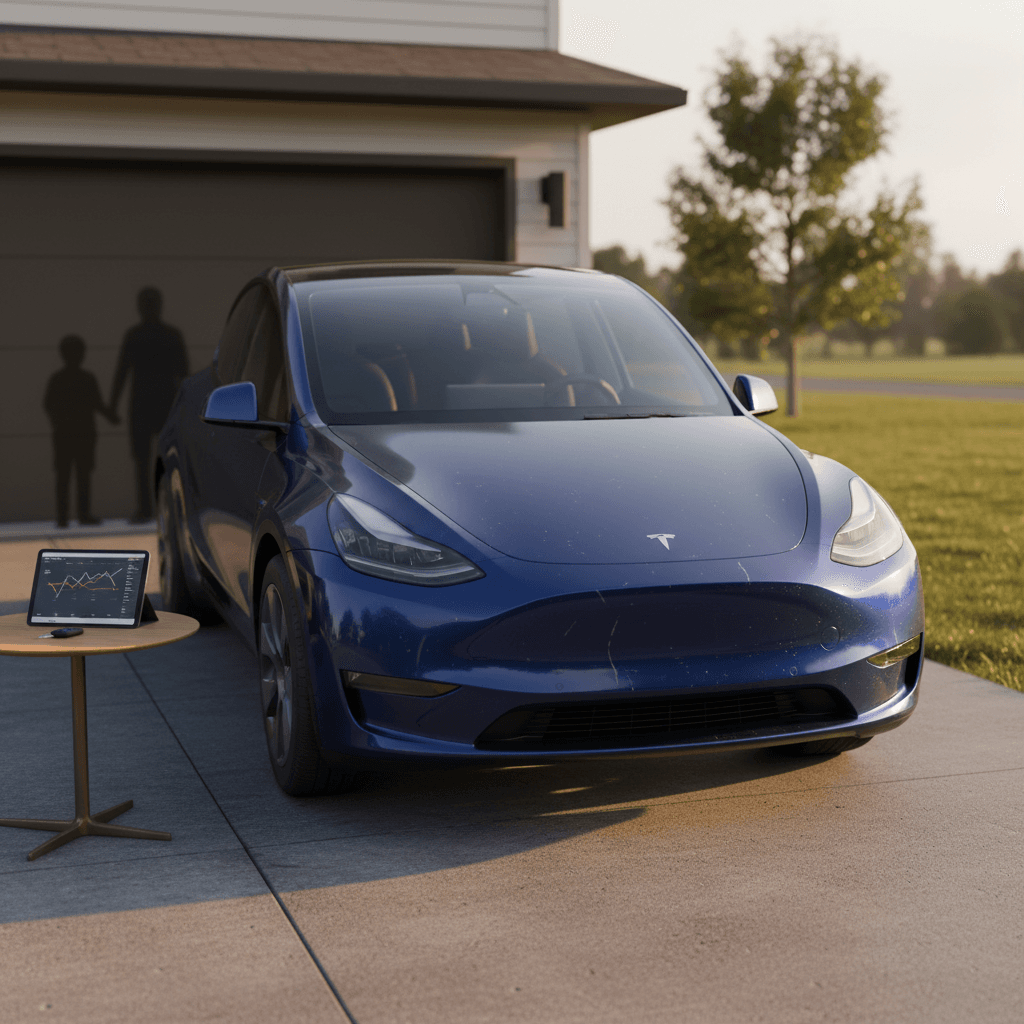
If you’re wondering whether a 2021 Tesla Model Y is a good buy in 2026, you’re not alone. The Model Y has become the default EV crossover in the U.S., and 2021 models now sit in a sweet spot: old enough to be affordable, but new enough to have modern range, software, and safety tech. The catch is that 2021 was also one of Tesla’s more controversial years for build quality and reliability. Let’s unpack what that means for you as a used buyer.
The bottom line in one sentence
Quick answer: Is the 2021 Tesla Model Y a good buy?
When it is a good buy
- Price is in line with current used market (typically low- to mid-$30,000s for normal mileage and clean history).
- Battery and high-voltage system check out on a professional health report such as a Recharged Score.
- Most or all open recalls have been completed, and there’s documentation of software and hardware updates.
- Build quality issues (panel gaps, trim, rattles) are minimal or already repaired.
- You have access to home or reliable Level 2 charging and will actually use the range and tech advantages.
When it’s not a good buy
- The price is only a few thousand below a newer Model Y or a similar non-Tesla EV with a stronger warranty.
- There’s evidence of serious accident damage, water intrusion, or unresolved high-voltage/battery faults.
- The car shows multiple electronics or fit-and-finish issues and has a history of frequent service visits.
- You live far from a Tesla Service Center and don’t want to deal with mobile service or longer repair queues.
- You’re extremely sensitive to squeaks, rattles, or wind noise; early Ys can be noisier than rivals.
A quick rule of thumb
Where the 2021 Model Y fits in today’s used EV market
By 2026, the 2021 Model Y sits right in the heart of the used EV market. It’s old enough to have taken the steepest depreciation hit, but young enough that most examples haven’t exhausted their battery warranty or fallen hopelessly behind on tech.
2021 Model Y in the 2025–2026 used EV landscape
The punchline: the 2021 Model Y is no longer priced like a status symbol. It’s priced like a mainstream compact SUV with an unusually strong performance, software, and fast-charging story, if you’re willing to live with some rough edges.
Pricing and depreciation: What should you pay?
Tesla has cut new-vehicle prices repeatedly since 2023, which pulled used values down with them. Studies of used EVs show Model Y list prices dropping into the low-$30,000 range on average by 2025, with 2021 examples often priced a bit below newer years. That’s good news for you, but it also means you shouldn’t overpay out of habit from the 2021 boom times.
Typical 2021 Tesla Model Y asking ranges in early 2026
Approximate retail asking prices in the U.S. as of 2025–2026. Actual pricing varies by mileage, condition, options, and region.
| Trim / condition | Rough mileage guide | Ballpark asking price | Notes |
|---|---|---|---|
| Long Range, higher miles | 70,000–90,000 mi | $26,000–$30,000 | Good value if battery tests healthy and service history is clean. |
| Long Range, average miles | 40,000–70,000 mi | $30,000–$34,000 | Core of the market; compare carefully against 2022–2023 Ys. |
| Long Range, low miles | Under 40,000 mi | $34,000–$38,000 | Only makes sense if condition is excellent and options are desirable. |
| Performance, average miles | 40,000–70,000 mi | $32,000–$37,000 | Extra performance and bigger wheels; check tires and suspension wear. |
| Performance, low miles | Under 40,000 mi | $36,000–$40,000+ | Niche buy; consider if you really need the speed and firmer ride. |
Use this as a sanity check, not a substitute for checking local listings and condition reports.
Watch the gap to newer models
Battery, range, and charging expectations in 2026
One reason a 2021 Model Y still makes sense in 2026 is that its core EV hardware aged better than its panel gaps. The battery packs in Long Range and Performance models are large enough that even moderate degradation usually leaves you with very usable real‑world range.
- EPA-rated range when new was roughly 316–326 miles for the Long Range and around 291 miles for the Performance, depending on wheel size and specific build.
- In typical use, many owners report 5–15% range loss after 4–5 years. That often still leaves 250+ miles of usable highway range for a Long Range variant.
- Tesla’s battery warranty on the Model Y covers 8 years or 120,000 miles (Long Range/Performance) with at least 70% capacity retention, so most 2021 cars still have warranty runway left in 2026.
What “good” battery health looks like on a 2021 Y
Charging is still a major advantage. A 2021 Model Y can use Tesla’s Supercharger network, still the gold standard for reliability in North America, and home Level 2 charging at 240V. In practice, that means you can road trip with much less planning than in many non‑Tesla EVs, and daily driving is a simple plug‑in‑overnight experience if you have home charging.
Reliability and common 2021 Model Y issues
Here’s where the 2021 Model Y is more complicated. Powertrain and battery durability have generally been solid, but overall reliability scores from third‑party surveys skew below average, largely because of build quality, electronics, and a heavy recall load. The good news is that many of the worst issues are either cosmetic or already addressed by now, if the previous owner actually followed through on repairs.
Most common 2021 Model Y trouble spots
What to look for, and how serious it really is
Fit and finish
Early Ys, including 2021 builds, are notorious for uneven panel gaps, paint defects, and squeaks or rattles.
These are annoying but usually not mechanically serious. They do matter for resale value and perceived quality.
Electronics & software
Owners report screen glitches, sensor errors, phantom warnings, and occasional infotainment reboots.
Frequent OTA updates fix many bugs, but a car that’s constantly in for electronic issues can be frustrating.
Door and latch concerns
Some 2021 Ys have had issues with power door handles and latches, and there’s ongoing regulatory scrutiny around failures in low‑voltage conditions.
Verify recall and repair history; check that all doors open and close reliably on both battery and 12V power.
- Multiple recalls: software and hardware campaigns have targeted everything from Autopilot behavior to latches and camera wiring. A responsible prior owner should have most of these completed.
- Suspension and tire wear: Performance models on 20"–21" wheels are more prone to accelerated tire wear and a harsher ride, especially on rough roads.
- Wind and road noise: Even by EV standards, some 2021 Ys are noisier at highway speeds than rivals from Hyundai, Kia, or Ford. This won’t strand you, but it affects perceived refinement.
Don’t ignore safety-related faults
Safety ratings and driver-assistance tech
From a crashworthiness standpoint, the 2021 Model Y is a star performer. It earned top scores from both the IIHS and NHTSA when new, with strong occupant protection and a robust suite of active safety features. Where you need to be more critical is how much you personally value Tesla’s driver-assistance approach.
Safety strengths and caveats
Excellent crash safety, polarizing automation
What the 2021 Y does well
- 5-star overall crash rating and strong IIHS performance.
- Standard active safety: automatic emergency braking, lane departure warnings, and blind-spot monitoring via cameras.
- Low rollover risk thanks to a low center of gravity from the battery pack.
Where to be cautious
- Autopilot and Full Self-Driving are driver aids, not autonomy. Treat them as advanced cruise control, not a chauffeur.
- Behavior and capabilities change via software updates; don’t assume the system you test-drive will behave the same forever.
- Regulators continue to scrutinize Tesla’s driver-assistance features, which can lead to mandatory updates or behavior changes over time.
Which 2021 Model Y builds and trims are best?
Not all 2021 Model Ys are created equal. Production quality improved over the year, and different trims come with real trade-offs in range, performance, and comfort. Knowing what you’re looking at helps you avoid paying extra for specs you don’t actually need.
2021 Tesla Model Y trim comparison for used buyers
High-level overview of the main 2021 Model Y variants you’ll see on the used market.
| Trim | Key strengths | Potential drawbacks | Best for |
|---|---|---|---|
| Long Range AWD | Best mix of range, performance, and efficiency; most common trim, making it easier to find a good one. | Ride can be firm, especially on larger wheels; quality varies more on early 2021 builds. | Daily drivers who want 250+ real‑world miles and access to Superchargers without caring about 0–60 bragging rights. |
| Performance AWD | Significantly quicker acceleration; sportier wheels and brakes; often better-equipped. | Harsher ride, especially on 21" wheels; higher tire costs; slightly less range. | Enthusiasts and short‑commute drivers who value acceleration over maximum efficiency. |
| 7-seat Long Range | Extra seating flexibility; useful for families who occasionally need third-row seats. | Third row is tight; added weight and complexity; can be harder to find in good condition. | Families who occasionally carry more than five people but don’t want a larger SUV. |
Exact specs vary by wheel choice and options, but this table captures the big-picture differences.
Production date matters
Inspection checklist before you buy a 2021 Model Y
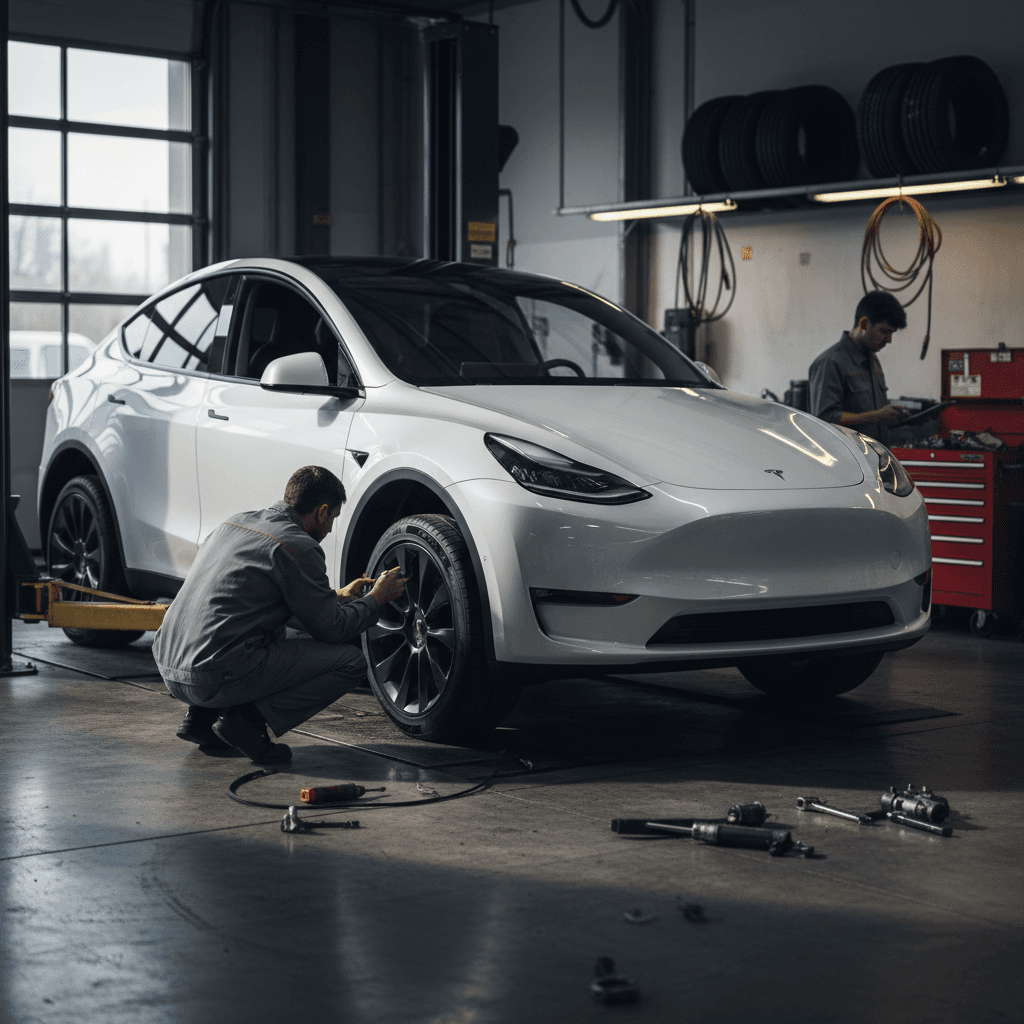
Shopping for a used Tesla isn’t like buying a used Corolla. You’re evaluating software history, fast‑charging behavior, and over‑the‑air updates as much as mechanical wear. Here’s a practical checklist to bring to any 2021 Model Y test drive or pre‑purchase inspection.
2021 Tesla Model Y pre-purchase checklist
1. Pull a detailed battery health report
Ask for a third‑party diagnostic like a <strong>Recharged Score Report</strong> or, at minimum, have an EV‑savvy shop read battery metrics. You’re looking for state of health, cell balance, and fast‑charge history, not just the dash range estimate.
2. Verify recall and service history
Use the VIN to check Tesla’s recall database and ask for service invoices. You want proof that safety‑related recalls and common camera or latch campaigns have been completed, not just claimed verbally.
3. Inspect exterior panels and paint
Walk the car in good light. Look for mismatched paint shades, overspray (which can indicate bodywork), large panel gaps, or doors that don’t sit flush. These can point to both build quality issues and prior accident repairs.
4. Check doors, windows, and hatch operation
Open and close every door, the liftgate, and windows multiple times. They should latch cleanly without odd noises or hesitation. On the test drive, listen for excessive wind noise around the doors and mirrors.
5. Stress-test electronics and infotainment
Cycle the center screen, HVAC, Bluetooth, cameras, and all stalk and wheel controls. Load the navigation, stream audio, and check that the backup and side repeaters display cleanly without glitches or fogging.
6. Drive at both city and highway speeds
On the test drive, note steering feel, suspension noise, and alignment. At highway speed, listen for rattles or whistling. Test one‑pedal driving, and try a few strong braking events to check for shudder or pulls.
7. Evaluate charging behavior (if possible)
If the seller allows, plug into a Level 2 or DC fast charger to confirm that the car charges normally. Watch for unusual noises from the thermal system and make sure charge rates are in a reasonable range for state of charge and conditions.
8. Confirm software status and connectivity
Check that the car is on a current software version, that the Tesla app pairs properly, and that there are no persistent Autopilot or camera warnings on the dash. A neglected software stack can signal broader owner neglect.
Don’t skip a professional EV inspection
When a 2021 Model Y is a smart buy vs. a bad idea
Great purchase scenarios
- You find a one‑owner 2021 Long Range with 50,000 miles, clean history, documented recall work, and a strong battery report, priced a few thousand below comparable 2022s.
- You’re moving from a gas SUV and value access to the Supercharger network, low running costs, and over‑the‑air feature updates more than soft‑touch plastics.
- You plan to keep the car 5+ years, so current resale volatility matters less than long‑term fuel and maintenance savings.
Risky or poor‑value scenarios
- The car is a high‑mileage, early‑2021 build with visible panel issues and a history of repeated electronic glitches, but it’s only marginally cheaper than cleaner examples.
- Accident and title history are murky, with signs of repainting or misaligned structure, and no clear documentation of who did the repairs.
- You’re extremely noise‑sensitive, drive mostly on rough pavement, and haven’t seriously cross‑shopped quieter non‑Tesla EVs or hybrids that might fit your life better.
What a “sweet spot” 2021 Model Y looks like
How Recharged can help you buy a better 2021 Model Y
Because the 2021 Model Y combines cutting‑edge EV tech with uneven build quality, it’s exactly the kind of car where transparency matters. That’s where Recharged comes in.
Why shop for a 2021 Model Y through Recharged?
More visibility, less guesswork
Recharged Score battery health report
Fair market pricing & financing
Nationwide delivery & trade-in options
Ready to find your next EV?
Browse VehiclesIf you’re near Richmond, VA, you can also visit the Recharged Experience Center to see vehicles in person, talk through battery reports, and compare a 2021 Model Y against other used EVs before you commit.
FAQ: Buying a used 2021 Tesla Model Y
Frequently asked questions about the 2021 Model Y
So, is a 2021 Tesla Model Y a good buy? For many shoppers in 2026, the answer is yes, but only if you’re buying the right car, not just the right badge. A sorted 2021 Model Y delivers range, charging convenience, and software features that still rival brand‑new EVs, at a price that finally looks like reality instead of hype. Combine sensible pricing with a rigorous battery and condition check, whether through Recharged or another EV‑savvy source, and this once‑scarce crossover can make a very rational used‑car choice.