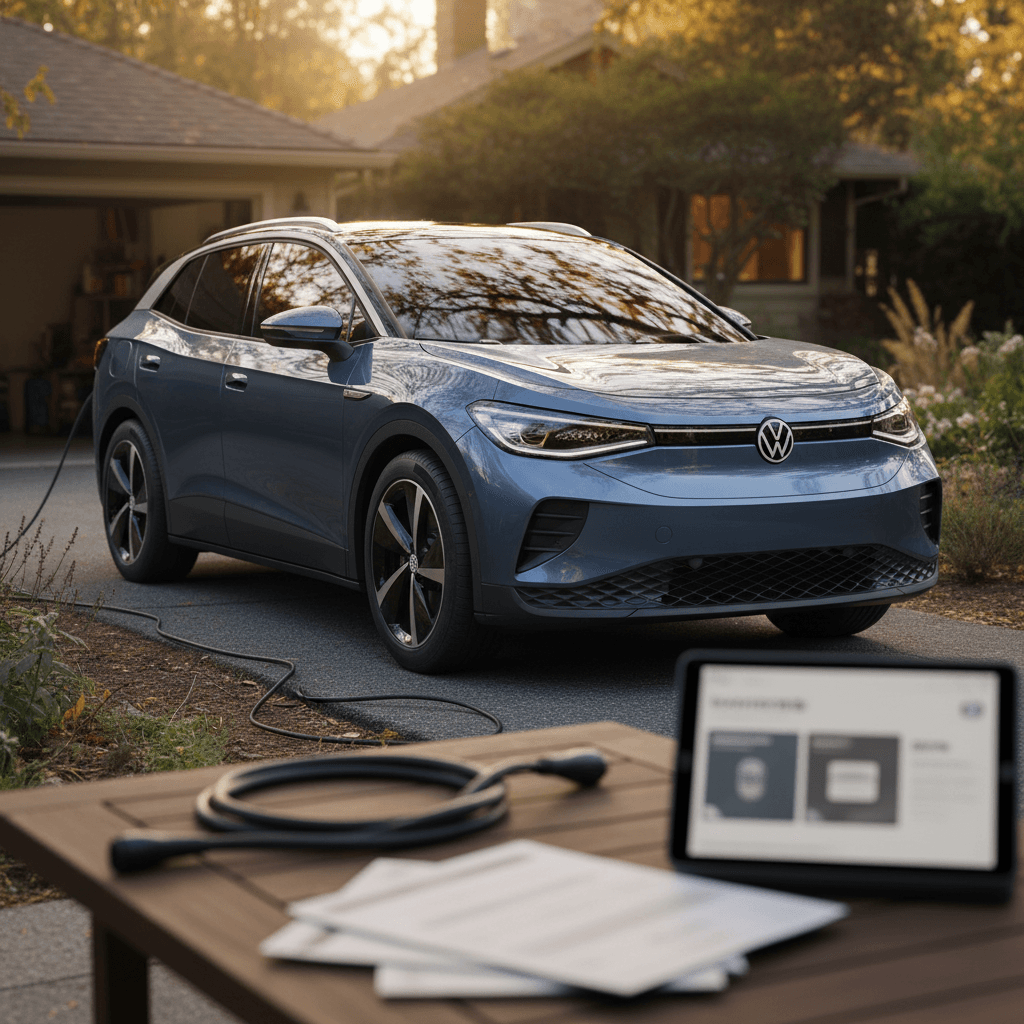
You keep seeing the name Volkswagen ID.4 pop up while you shop for an electric SUV, but most search results feel like press releases. This guide is a plain‑spoken look at the ID.4 car: what it really is, how far it goes, what it’s like to live with, and what you should watch for, especially if you’re considering a used one from a retailer like Recharged.
Quick takeaway
What the VW ID.4 car is, and who it suits
The Volkswagen ID.4 is a fully electric, compact-to‑midsize crossover SUV, roughly the size of a Toyota RAV4 or Honda CR‑V. It’s built on VW’s dedicated EV platform, with a flat battery pack in the floor and either rear‑wheel drive or all‑wheel drive. Inside, it feels more like a European family wagon in hiking boots than a tech bro gadget, upright seating, generous headroom, big windows, and a calm, unhurried driving character.
- Drivers coming out of a Tiguan, RAV4, CR‑V, or Forester who want to go electric without losing practicality.
- Families who value comfort, quiet, and cargo space over drag‑strip acceleration figures.
- Commuters with access to home or workplace charging who want a known brand badge and a conservative design.
- Used‑EV shoppers looking for solid value, especially on 2021–2024 models that have already absorbed the big depreciation hit.
Who should probably skip it
2025 Volkswagen ID.4 car pricing and trims
As of early 2025, U.S.‑market ID.4 production has refocused on the larger‑battery models built in Chattanooga, Tennessee. The 62‑kWh versions are slated to return later in the model year, but at the moment the lineup centers on the 82‑kWh pack with three main trims.
2025 VW ID.4 82‑kWh pricing snapshot (MSRP, before destination)
Those are manufacturer prices for new ID.4 cars. On the used market, especially for 2021–2023 examples, transaction prices can land thousands lower. That’s where a marketplace like Recharged becomes interesting: you’re letting the first owner pay the steepest depreciation while you focus on the battery’s real health and fair pricing.
About incentives
ID.4 range, battery options, and charging
Volkswagen has shuffled battery sizes and power outputs a bit since launch, but the core story is simple: a smaller pack with modest range and a bigger pack that’s competitive, if not class‑leading.
Typical Volkswagen ID.4 battery and range figures (U.S.)
Approximate EPA ratings; exact numbers vary by model year, wheels, and options.
| Battery pack | Drive | Approx. EPA range | Use case |
|---|---|---|---|
| ~62 kWh (a.k.a. 58–62 kWh | RWD | ~200–215 miles | Shorter commutes, second cars, urban use |
| ~77–82 kWh | RWD | ~280–291 miles | Best mix of price and range for most drivers |
| ~77–82 kWh | AWD | ~255–265 miles | More traction, quicker acceleration, slightly less range |
Always check the window sticker or Recharged Score report for the exact car you’re considering.
In independent testing, an AWD ID.4 with the larger battery has delivered around 240 miles of real‑world highway range at 75 mph, respectable, though rivals from Hyundai and Tesla tend to go farther on a charge.
Charging speeds in the real world
What you need to charge an ID.4 comfortably
1. A 240‑V outlet or hard‑wired Level 2
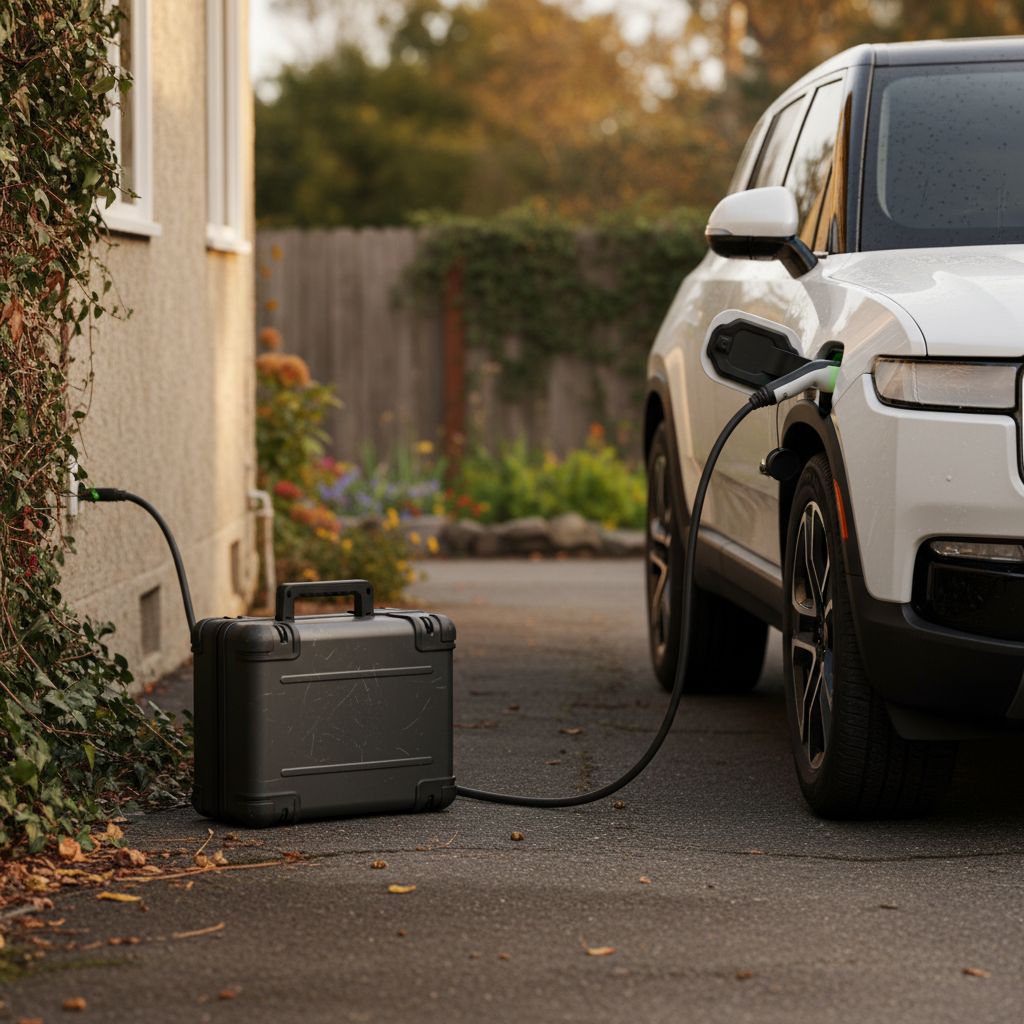
A 40‑ or 48‑amp circuit in your garage or driveway turns the ID.4 into a plug‑in appliance, charge while you sleep, wake up with a full “tank.”
2. A reliable home charger
Look for a 40‑amp or higher Level 2 charger with Wi‑Fi or app control. If you buy used through Recharged, ask an EV specialist which chargers pair best with your car and home panel.
3. Two public networks you trust
Install at least two apps (for example Electrify America and ChargePoint) and test nearby stations before you depend on them for road trips.
4. A clear plan for road trips
Understand that smaller‑battery early ID.4s charge slower and may require more frequent, longer stops. If you road‑trip often, the 82‑kWh pack is the safer bet.
How the ID.4 car drives in the real world
On paper, the ID.4 doesn’t grab headlines. In practice, it’s exactly what many people secretly want: quiet, secure, and unflappable. Even the more powerful dual‑motor versions are less about theatrics and more about medium‑hot briskness, think hot‑sauce‑mild rather than Carolina Reaper.
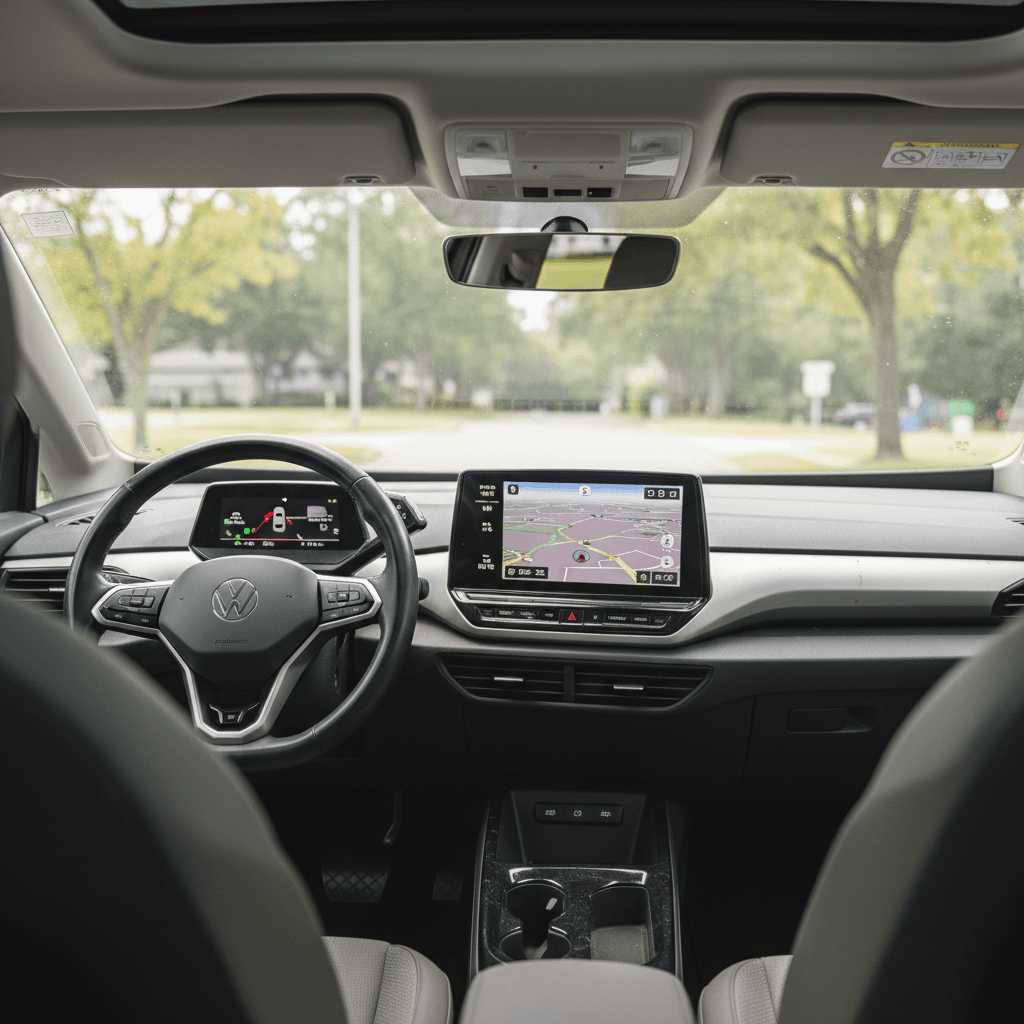
Behind the wheel of the VW ID.4 car
Less video game, more comfy sweater.
Ride & refinement
The ID.4 rides with a distinctly European calm. It shrugs off broken pavement better than many rivals, and wind and road noise are well contained. It feels heavy, because it is, but in a planted, reassuring way.
Acceleration
Single‑motor cars feel perfectly adequate around town. Dual‑motor AWD models, with up to the mid‑300s in horsepower, can sprint to 60 mph in under 5 seconds, quick enough to surprise passengers, if not terrify them.
Handling
With the battery pack under the floor, the ID.4 has a low center of gravity and predictable balance. Steering is light but accurate. You won’t confuse it with a GTI, but you also won’t dread an on‑ramp.
The touch‑slider problem
Volkswagen ID.4 pros and cons at a glance
What the ID.4 gets right
- Space and practicality: Adult‑friendly back seat, big cargo hold, flat load floor.
- Comfort‑first tuning: Quiet cabin and compliant ride make it a relaxing commuter.
- Safety: Strong crash‑test results and plenty of standard driver‑assist tech.
- Value on the used market: Earlier model years can undercut rival EVs by thousands.
- Conservative styling: Reads like a slightly futuristic VW, not a science project, great if you don’t want to shout “new EV owner.”
Where the ID.4 lags
- Charging and range: Early small‑battery cars charge slowly and don’t go as far as some rivals.
- Infotainment UX: Touch sliders and menus can frustrate; software has been a moving target.
- Incentives: The loss of federal tax credits in 2025 makes new ID.4s effectively more expensive.
- Brand perception: Some shoppers still remember VW’s diesel‑emissions saga and are wary.
- Occasional recalls: Like many first‑wave EVs, the ID.4 has seen several software and hardware recalls that require visits to the dealer.
Safety ratings, recalls, and reliability notes
If you’re looking for a family EV, safety is non‑negotiable. Here the ID.4 acquits itself well. The Insurance Institute for Highway Safety (IIHS) has awarded the ID.4 strong crash ratings, including Top Safety Pick or better in recent years for its structure and crash‑avoidance tech. The updated side‑impact tests show a robust safety cage and good protection for both front and rear passengers across 2021–2025 model years.
A note on recalls
Safety checklist for a used ID.4 car
Confirm recall completion
Ask for a VIN‑based recall report showing all open items addressed. At Recharged, this is part of the standard intake and inspection process.
Review crash‑test ratings by year
IIHS ratings can change as tests evolve. The good news: the ID.4 has maintained strong scores through the mid‑2020s.
Test driver‑assist features
On the test drive, deliberately trigger lane‑keeping, adaptive cruise, and forward‑collision warnings in a safe environment to be sure everything behaves as it should.
Buying a used ID.4 car: What to look for
Early ID.4s are now firmly in the sweet spot of the used‑EV market: modern enough to feel current, old enough that depreciation has done you some favors. But like any EV, the battery and software story matters more than the odometer alone.
Key questions for a used ID.4
This is where a Recharged Score report earns its keep.
1. How healthy is the battery?
EV batteries age with time and mileage, but not always predictably. A Recharged Score battery health report uses diagnostics to estimate usable capacity so you know whether that “82‑kWh” pack still behaves like one.
2. What software is it running?
Volkswagen has rolled out numerous over‑the‑air and dealer updates that affect charging curves, infotainment, and driver‑assist systems. Confirm the car is on current software; a Recharged‑inspected car will have this verified.
3. Has it been fast‑charged heavily?
Occasional DC fast charging is fine; a life of daily 150‑kW sessions at 5% state of charge is less ideal. Detailed charging history is rare, but you can infer some of this from prior use and battery health diagnostics.
4. Any accident or flood history?
Standard used‑car rules still apply. You don’t want a compromised high‑voltage system hiding behind a shiny detail job. Marketplace providers like Recharged pull history reports and perform high‑voltage safety checks as part of their process.
Where Recharged fits in
Ready to find your next EV?
Browse VehiclesID.4 vs competitors: Model Y, Ioniq 5, and more
The ID.4 doesn’t live in a vacuum. If you’re searching “id 4 car” you’re probably also cross‑shopping a Tesla Model Y, Hyundai Ioniq 5, Kia EV6, maybe a Ford Mustang Mach‑E. Here’s how the VW generally stacks up.
Volkswagen ID.4 vs key electric SUV rivals (high level)
Representative figures for mid‑2020s models; exact numbers vary by year and spec.
| Model | Character | Typical EPA range | Charging feel | Cabin vibe |
|---|---|---|---|---|
| VW ID.4 | Comfort‑first, understated, practical | ~200–215 mi (small pack); ~255–291 mi (big pack) | Adequate; newer big‑pack cars are much better than early small‑pack ones | Minimalist but sometimes fussy controls; spacious, airy |
| Tesla Model Y | Tech‑forward and fast, lots of software perks | Up to ~310+ mi depending on trim | Strong Supercharger network; fast, simple road‑tripping | Very minimalist, lots of screen dependence |
| Hyundai Ioniq 5 | Design‑led, very quick charging | ~220–303 mi | Among the fastest fast‑chargers in class | Retro‑futurist, airy, clever use of space |
| Kia EV6 | Sportier, lower, more driver‑focused | ~220–310 mi | Excellent charging, similar to Ioniq 5 | Sportier cockpit, more conventional controls |
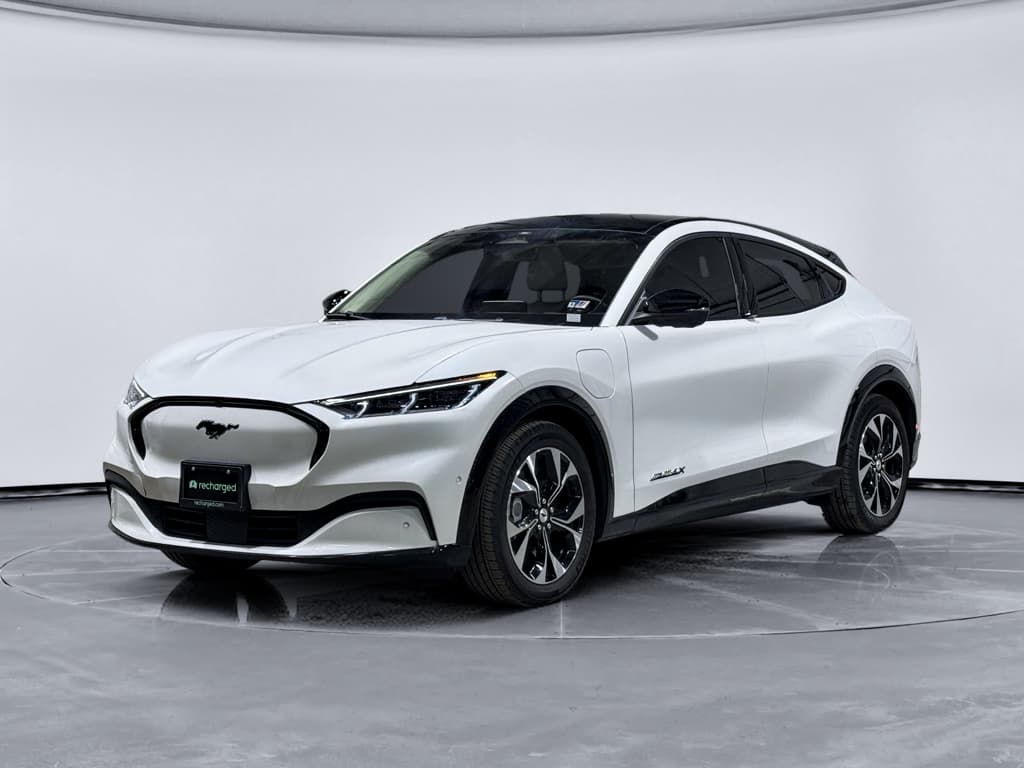
| Ford Mustang Mach‑E | Fun styling, mixed charging story | ~230–320 mi | Improving but inconsistent early‑network experiences | Blend of muscle‑car cues and EV modernity |
Use this as a directional guide, then compare specific VINs and battery health reports when you shop.
How to compare honestly
Charging the ID.4: CCS today, Tesla Superchargers tomorrow
For most of its life, the ID.4 has used the CCS fast‑charging standard in the U.S., relying on networks like Electrify America for road‑trip juice. That’s changing. As of November 18, 2025, Volkswagen EV owners in the U.S., including ID.4 drivers, can start accessing Tesla’s Supercharger network using a VW‑approved adapter and a software update.
- Volkswagen is adopting the North American Charging Standard (NACS), the Tesla‑style plug, for future models.
- Current ID.4 cars will use a VW‑approved adapter to plug into existing Superchargers.
- The adapter is priced around $200, with a limited rebate for original owners of some 2025 models; used‑car buyers should assume full price unless stated otherwise.
- A software update is required so the car and charger can talk properly, plan a dealer visit or over‑the‑air update before your first big Supercharger road trip.
Don’t rely on a future adapter you don’t yet have
Volkswagen ID.4 car: Frequently asked questions
Common questions about the VW ID.4 car
Bottom line: Is the ID.4 the right EV for you?
The Volkswagen ID.4 car is the EV for people who don’t necessarily want to talk about EVs all the time. It’s roomy, safe, quiet, and, especially on the used market, often very good value. Its sins are mostly of temperament: under‑the‑radar styling, an occasionally clumsy interface, and charging specs that trail the segment’s overachievers rather than lead them.
If you want an electric SUV that feels like a normal, well‑sorted family car that just happens to run on electrons, the ID.4 belongs near the top of your list. And if you’re shopping used, pairing an ID.4 with a Recharged Score battery‑health report, fair‑market pricing, and EV‑specialist guidance can turn a speculative experiment into a confident long‑term choice. From financing and trade‑in to nationwide delivery, Recharged is built to make that first, or next, electric SUV purchase as straightforward as the car itself.