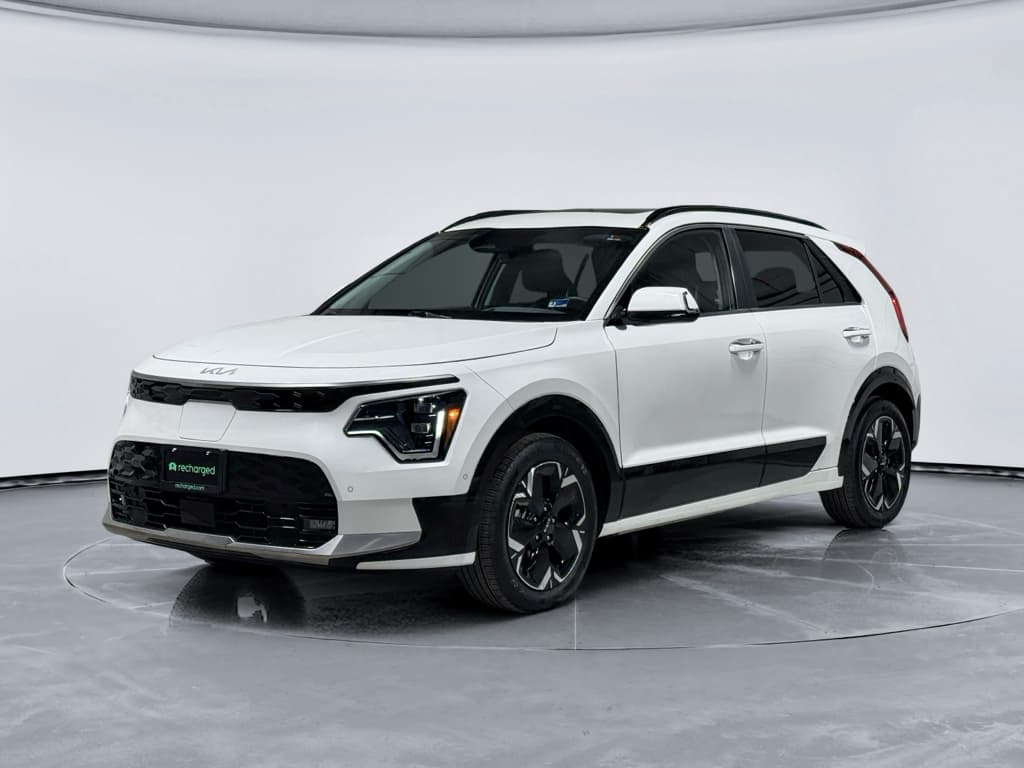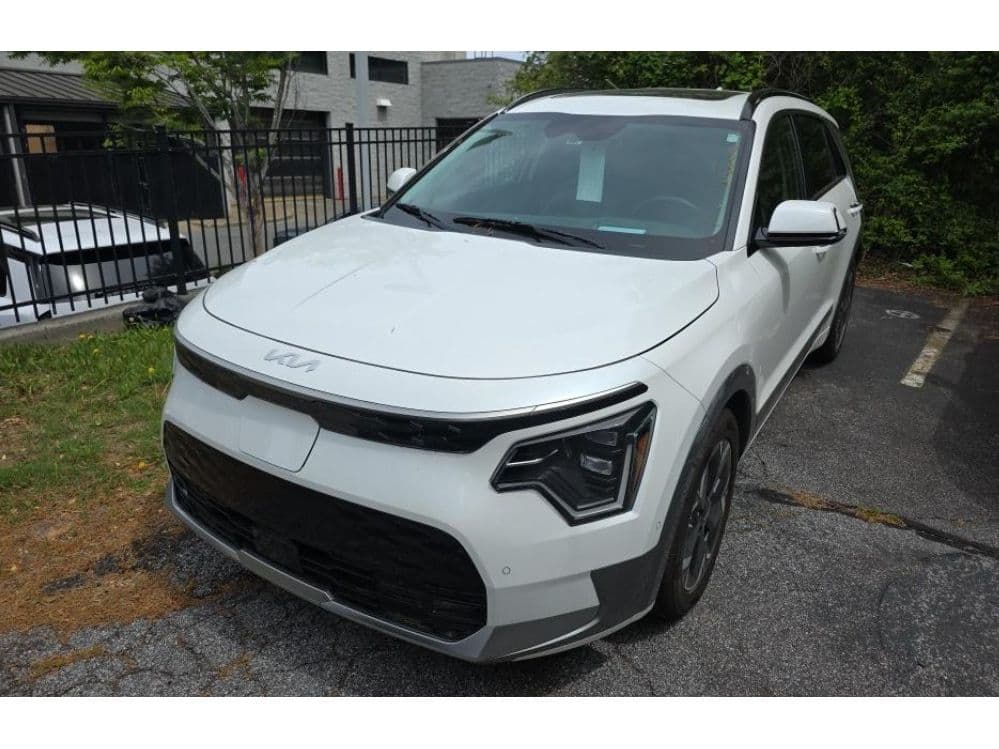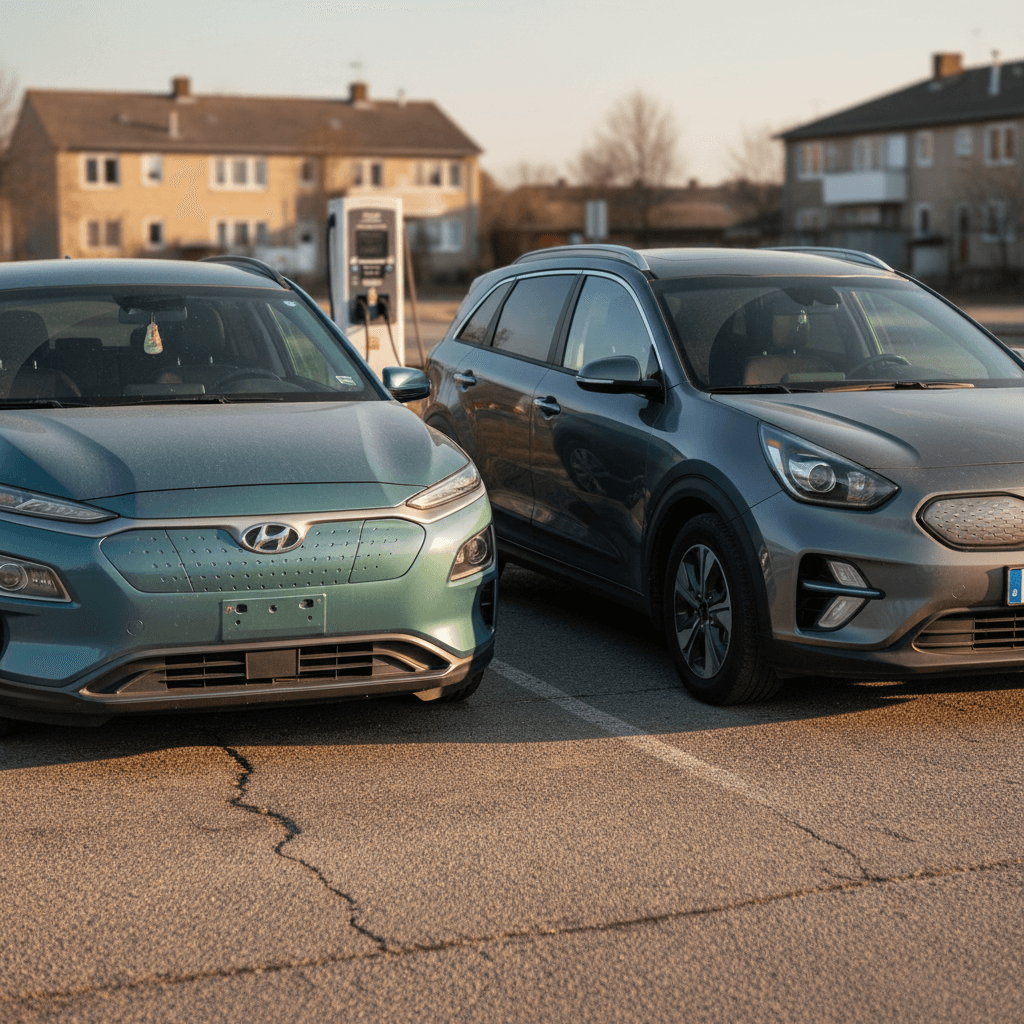
You’re comparing the Hyundai Kona Electric vs Kia Niro EV because you want a practical, efficient electric SUV that doesn’t cost luxury money, especially on the used market. Both are closely related under the skin, both come from brands with strong EV experience, and both can be smart buys when you understand their tradeoffs.
Platform twins, different personalities
Kona Electric vs Niro EV: Quick Take
How the Kona Electric and Niro EV differ at a glance
Same basic recipe, different emphasis on space, comfort, and price
Hyundai Kona Electric
Best for efficiency and price.
- Often slightly cheaper on the used market.
- Excellent real-world efficiency; small battery goes far.
- More playful, hatchback-like feel.
- Rear seat and cargo space are adequate but not generous.
Kia Niro EV
Best for comfort and space.
- Roomier back seat and easier cargo area.
- Ride quality tuned a bit softer, better for families.
- More mature, wagon-like profile and cabin.
- Typically a bit more expensive used than an equivalent Kona Electric.
Bottom line
- Kona Electric: If you prioritize value, efficiency, and city maneuverability.
- Niro EV: If you care more about rear-seat comfort, cargo usability, and a calmer ride.
Both can be excellent used buys when you verify battery health, charging performance, and prior use.
Core specs that matter for most U.S. buyers (typical 2019–2024 models)
Key Specs: Hyundai Kona Electric vs Kia Niro EV
Exact numbers vary by model year and market, but if you’re shopping used in the U.S., you’re most likely looking at 2019–2022 Kona Electric and 2020–2023 Niro EV, with early U.S. examples using a broadly similar 64 kWh-class battery and ~200 hp motor. Here’s how they compare in the areas most shoppers care about.
Hyundai Kona Electric vs Kia Niro EV: headline specs (typical long-range variants)
Approximate U.S.-market specs; always confirm exact figures for the specific year and trim you’re considering.
| Spec | Hyundai Kona Electric (long-range) | Kia Niro EV (long-range) | What it means for you |
|---|---|---|---|
| Battery capacity | ~64 kWh usable | ~64 kWh usable | Very similar energy storage; efficiency and aero drive real-world range differences. |
| Rated range (EPA / typical) | ~258 mi (earlier U.S. Kona Electric); newer U.S. models around 230 mi | ~239–253 mi depending on year | Both offer more than enough range for normal commuting; Kona’s efficiency helps it punch above its rating in many tests. |
| Power / torque | ~201 hp / ~290 lb-ft | ~201 hp / similar torque | Similar straight-line performance; both feel quick around town. |
| 0–60 mph (approx.) | ~6.4–7.5 seconds depending on year/trim | ~6.5–7.5 seconds | Neither is a performance EV, but both feel faster than their specs suggest. |
| DC fast-charging peak | Roughly 70–100 kW depending on generation and conditions | Roughly 70–85 kW depending on charger and conditions | You’re looking at ~40–45 minutes from ~10–80% when the battery is warm and SOC is low. |
| Onboard AC charger | ~7.2–11 kW depending on year/trim | ~7.2–11 kW depending on year | Level 2 home charging from empty to full usually takes overnight for both. |
| Drivetrain | FWD only | FWD only | Good traction in the wet thanks to instant torque, but no AWD option in these generations. |
Battery size and range values are rounded; real-world range depends heavily on climate, driving style, and tires.
Model years matter
Space, Comfort & Usability
Kona Electric: City-friendly, tighter inside
The Kona Electric is essentially a subcompact hatchback raised up into SUV territory. That gives you nimble dimensions and easy parking, but it also means:
- Rear seat space is workable for adults on shorter trips, but taller passengers will notice limited knee and head room.
- Cargo space is fine for grocery runs and a couple of suitcases, but bulky strollers or large dogs will feel like a tight fit.
- The driving position is slightly more upright than a hatchback, yet still feels more car-like than SUV-like.
If you rarely carry more than one passenger and live in a dense city, the smaller footprint is more a feature than a bug.
Niro EV: More wagon than hatchback
The Niro EV rides on a stretched footprint with a longer wheelbase. In practice, you get:
- Noticeably more rear legroom, especially for adults or growing kids.
- A more squared-off cargo area with a lower load floor and wider opening, loading suitcases or camping gear is easier.
- A slightly softer ride and more relaxed driving position that feels more like a compact wagon or small SUV.
If you’re carpooling, ridesharing, or using your EV as the family car, the Niro’s packaging is simply more forgiving.
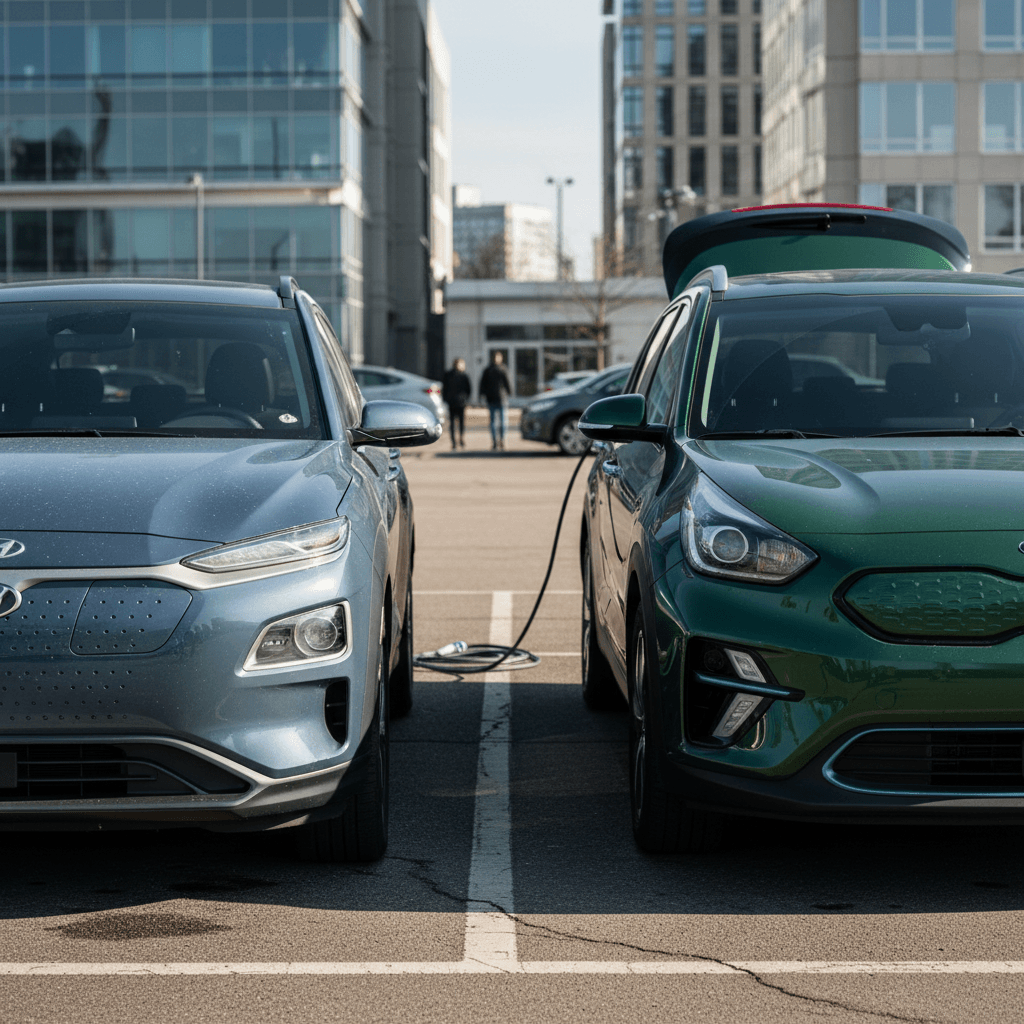
Test with your actual stuff
Range, Efficiency & Long-Term Battery Health
On paper, the Kona Electric and Niro EV deliver similar rated range because they share like-for-like battery packs in many model years. In practice, the Kona Electric tends to be more efficient thanks to its smaller frontal area and slightly lighter body, while the Niro’s extra space and comfort don’t cost much in day-to-day driving.
- Typical long-range Kona Electric models are rated around 258 miles in earlier U.S. years and roughly 230 miles in newer EPA cycles, yet real-world testing regularly shows 4.0+ mi/kWh efficiency, enabling surprisingly long legs on a charge.
- Typical long-range Niro EV models land in the ~239–253 mile ballpark depending on year and test cycle, and they’re only slightly less efficient in mixed driving.
- Because both use liquid-cooled batteries, they’ve generally held up well so far, but usage pattern (lots of DC fast charging vs mostly Level 2) has a much bigger impact than the badge on the hood.
Real-world vs rated range
How to compare battery health on a used Kona Electric vs Niro EV
1. Look at state-of-charge vs range estimate
On a test drive, note the % charge and the projected miles. Divide miles by % (×100) to sanity-check whether the estimate aligns with original EPA numbers, keeping temperature and recent driving style in mind.
2. Ask about DC fast-charging history
Frequent high-power DC fast charging isn’t automatically bad, but a car that lived on road trips and rarely saw Level 2 home charging deserves closer inspection.
3. Check software and recall history
Both Hyundai and Kia have issued software updates and, in some regions, battery-related recalls. Verify that the car’s campaigns are up to date before you sign anything.
4. Get a third-party battery health report
A <strong>Recharged Score battery health report</strong> uses data from the car itself to quantify usable capacity and degradation. This is much more reliable than guessing from a dash estimate.
Charging Speed & Road-Trip Ability
Neither the Kona Electric nor the Niro EV is a DC fast-charging champion by 2026 standards, but both are perfectly workable for occasional road trips if you plan your stops. Their charging profiles are broadly similar, especially in first-generation U.S. models.
Charging comparison: Kona Electric vs Niro EV
Approximate values for long-range variants on a capable DC fast charger with a warm battery.
| Charging scenario | Hyundai Kona Electric | Kia Niro EV | Takeaway |
|---|---|---|---|
| Home Level 2 (240V) | ~7–11 kW onboard charger, 8–10 hours from near empty to full | Similar 7–11 kW hardware and overnight full charge | For home use, they’re effectively the same, install a 40A Level 2 and either car is an overnight refill. |
| Public Level 2 (work, parking garages) | ~25–30 miles of range added per hour | Similar | You’ll top up meaningfully during a workday or shopping trip in either EV. |
| DC fast charge 10–80% | Roughly 40–45 minutes in ideal conditions; newer Kona can briefly peak near 100 kW but often averages lower | Typically similar 40–45 minutes with peaks around 70–85 kW | Plan to spend 30–45 minutes per stop on highway trips; not Ioniq 5–fast, but acceptable for a couple of long days per year. |
Charging times assume starting from a low state of charge (around 10–20%) and a properly functioning fast charger.
Charging speed is temperature-sensitive
Tech, Safety & Driving Experience
How Kona Electric and Niro EV feel on the road
Same powertrain DNA, different personalities behind the wheel
Hyundai Kona Electric
- More playful handling: Shorter wheelbase and firm tuning make it feel eager and tossable, especially around town.
- Ride quality: A bit busier on broken pavement; larger wheels on some trims can make impacts sharper.
- Cabin ambiance: Sportier, more youthful dash design; early models feel more like an econo-hatch inside than a true SUV.
- Noise: Fairly quiet at city speeds; at 70+ mph you’ll hear more wind and tire noise than in larger EVs, but it’s not out of line for the class.
Kia Niro EV
- Calmer, more grown-up ride: Slightly softer tuning smooths out bad roads better than the Kona.
- Steering feel: Light and easy; not sporty, but consistent and predictable.
- Cabin ambiance: More mature, wagon-like vibe, great visibility and a straightforward layout.
- NVH: The extra mass and tuning help keep the cabin composed on longer highway drives.
Advanced driver-assistance on both
Ownership Costs, Incentives & Used-EV Value
Because these two EVs are so mechanically similar, ownership costs end up being driven more by purchase price, incentives, and how you use them than by big differences in reliability or maintenance. That’s especially true now that early depreciation has already hit many 2019–2022 examples.
Where Kona Electric and Niro EV differ on the cost side
Think in terms of total cost per mile, not just sticker price.
Purchase price & depreciation
On the used market, you’ll often find:
- Kona Electric listings slightly cheaper for the same year and mileage, in part because the Kona nameplate isn’t as space-focused.
- Niro EV holding value a bit better thanks to its roomier packaging and family-friendly image.
If your budget is tight, a Kona Electric with good battery health can be an unusually strong value.
Incentives & tax credits
In 2026, U.S. incentives skew heavily by final assembly location, battery sourcing, and price caps.
- Most earlier used Konas and Niros won’t qualify for new-vehicle federal credits, but some may be eligible for used EV tax credits depending on price and your income.
- State and utility rebates can meaningfully lower your effective cost per mile.
Check current rules or talk to a tax professional for your specific situation.
Maintenance & repairs
- Shared componentry means similar maintenance costs: tires, brake fluid, cabin filters, and the occasional software update.
- EV-specific repairs (onboard charger, high-voltage components) are rare but expensive; a clear history and strong battery health report are worth real money.
- Both brands have offered strong EV warranties, but years and mileage terms differ, verify remaining coverage on any used example you’re considering.
Shop total monthly cost, not just price
Hyundai Kona Electric vs Kia Niro EV: Which Fits You?
There’s no universal winner in the Hyundai Kona Electric vs Kia Niro EV debate, only a better fit for your life. Because the hardware overlap is so strong, you’re really choosing between packaging, personality, and price more than between two completely different EV platforms.
Choose your path: Kona Electric or Niro EV?
Choose the Kona Electric if…
You mostly drive solo or with one passenger and don’t need huge rear-seat space.
You want the <strong>lowest possible entry price</strong> into a capable long-range EV.
You value <strong>efficiency and nimble size</strong> for city driving and tight parking.
You’re okay with a firmer ride and slightly noisier highway manners in exchange for a fun-to-drive feel.
You find a Kona with an excellent <strong>battery health report</strong> and clean service history at a compelling price.
Choose the Niro EV if…
You regularly carry adults or kids in the back seat and want more knee and head room.
You haul <strong>bulky cargo</strong>, strollers, camping gear, sports equipment, and appreciate a squarer opening and lower floor.
You prioritize <strong>ride comfort</strong> and a calmer driving experience for long trips.
You’re okay paying a bit more up front for the extra space and slightly more upscale cabin feel.
You find a Niro EV that combines strong battery health with the trim and features you want (e.g., heat pump, advanced driver-assistance).
Don’t ignore charging behavior on your test drive
Buying a Used Kona Electric or Niro EV With Confidence
Because these EVs are early mass-market entries from Hyundai and Kia, they sit right in the sweet spot of today’s used EV market: mature enough that common issues are well understood, but new enough that many examples still have meaningful warranty coverage. The key is separating the great cars from the ones that have had a harder life than their odometers suggest.
Used Kona Electric & Niro EV buyer’s checklist
Verify battery health objectively
Ask for a <strong>battery health report</strong> rather than relying on a salesperson’s word or a dash estimate. At Recharged, every vehicle comes with a <strong>Recharged Score</strong> that quantifies remaining capacity and flags anomalies.
Look for a clean fast-charging history
A few road trips a year are normal. A car that lived on high-power DC fast chargers every day deserves a careful look at thermal management behavior and pack health.
Confirm software updates and recalls
Hyundai and Kia have issued important EV software updates over the years. A car that’s behind on updates may charge more slowly, show odd range estimates, or miss newer safety refinements.
Inspect tires, brakes, and suspension
Instant torque and heavy curb weight are hard on tires and suspension bushings. Uneven tire wear or clunks over bumps are negotiation points or reasons to walk away.
Test all charging options
If possible, plug into Level 2 and a DC fast charger during your evaluation. Verify that maximum current draw and charging behavior match what you’d expect for the model year.
Evaluate digital retail support
A platform like <strong>Recharged</strong> can streamline everything: transparent pricing, trade-in options, <strong>EV-specialist support</strong>, and nationwide delivery, plus the battery health transparency that matters most with used EVs.
Hyundai Kona Electric vs Kia Niro EV: FAQ
Frequently Asked Questions
If you strip away the badges, the Hyundai Kona Electric and Kia Niro EV are two takes on the same basic idea: a practical, long-range electric runabout with mainstream pricing. The Kona Electric leans toward efficiency, agility, and value; the Niro EV leans toward space, comfort, and versatility. When you layer in verified battery health, transparent pricing, and expert EV support from a retailer like Recharged, either one can be a deeply rational, and unexpectedly enjoyable, way into electric ownership.