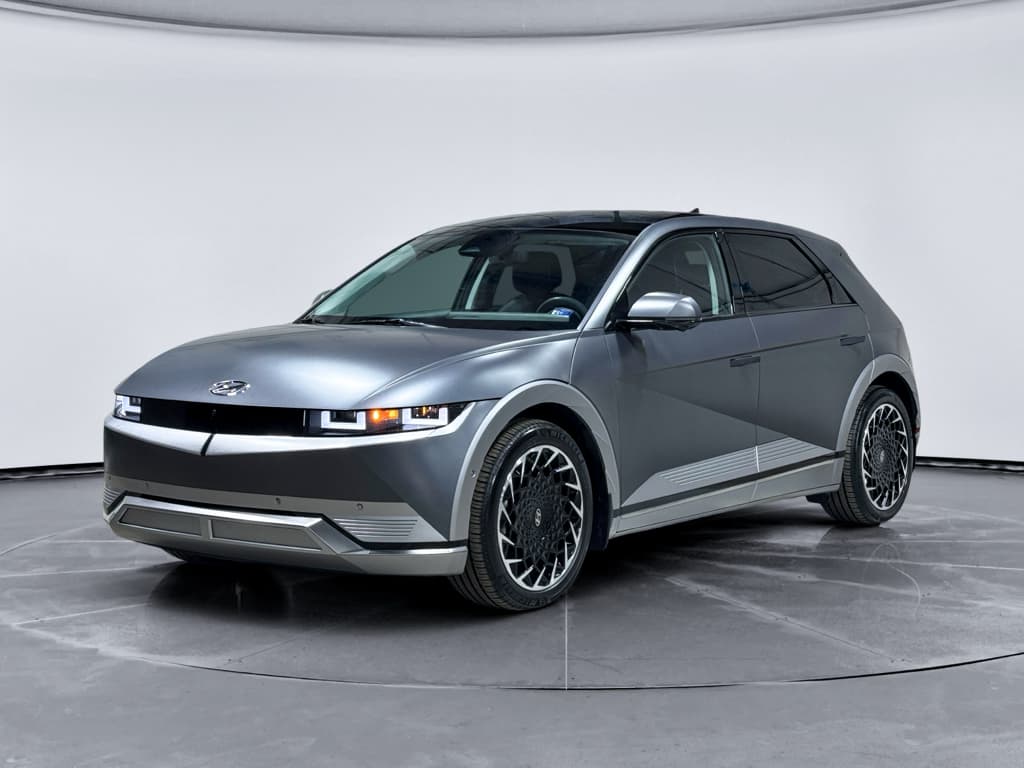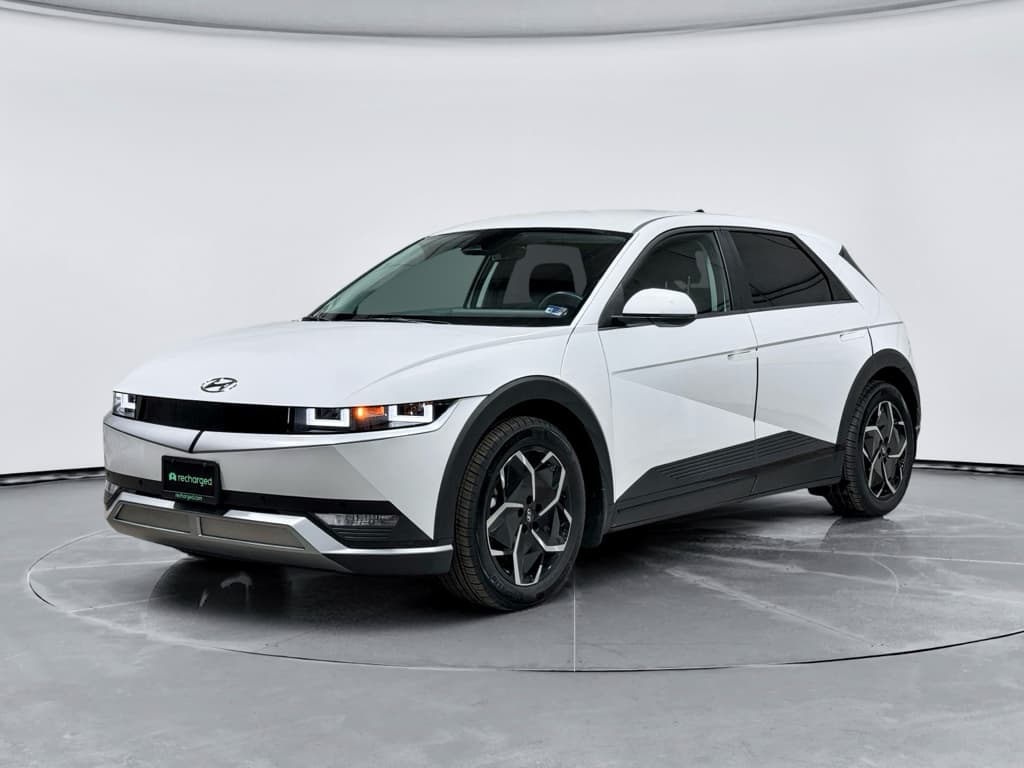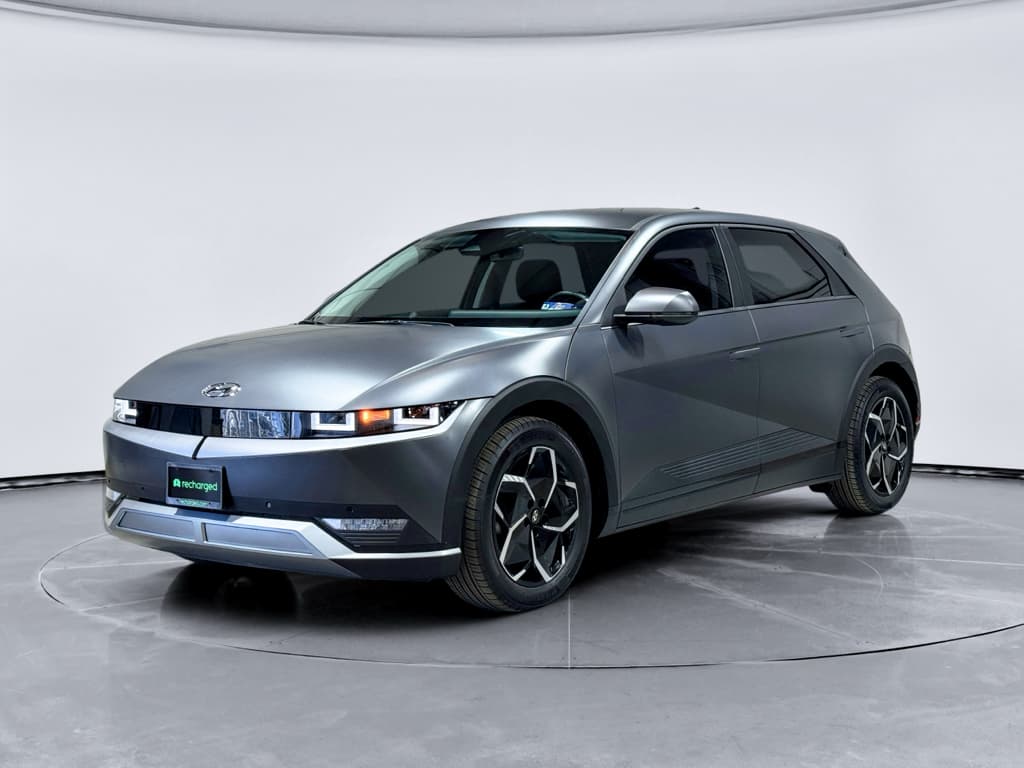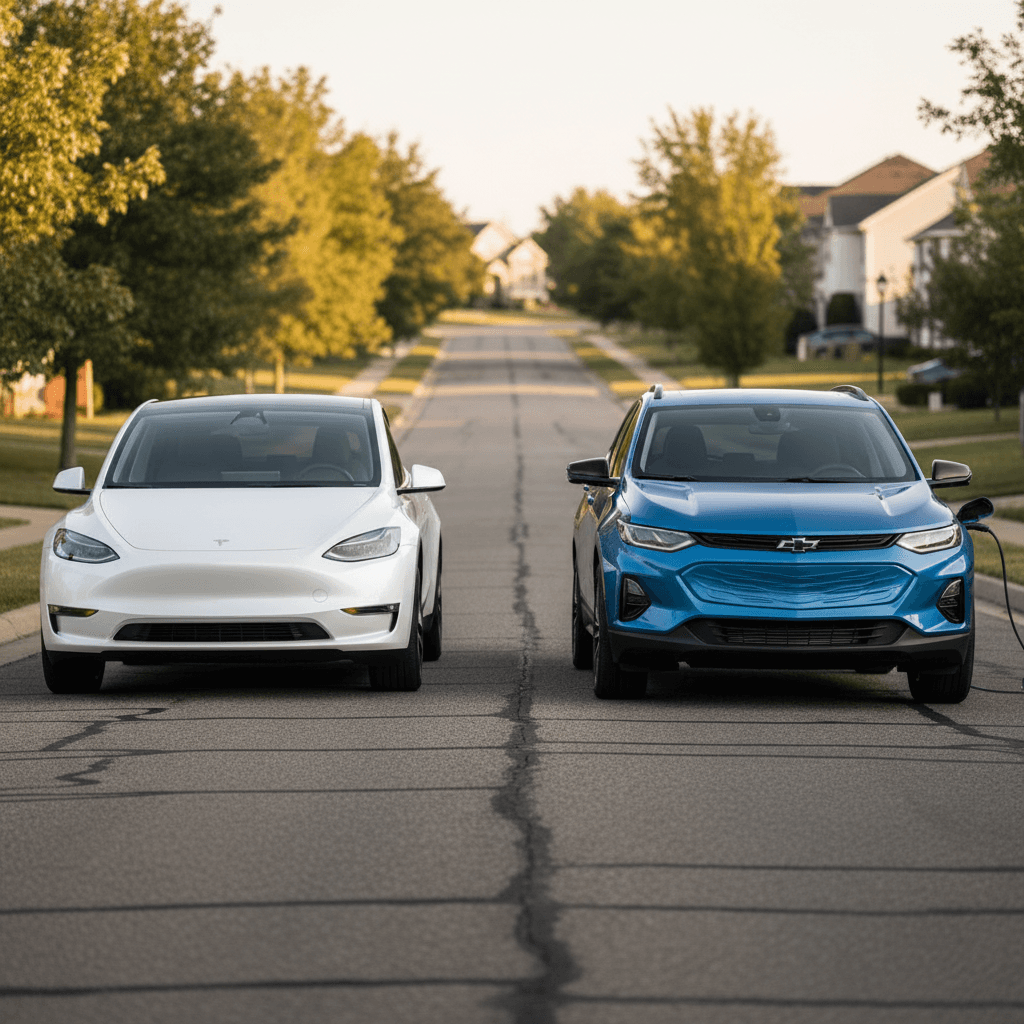
If you’re cross-shopping the Hyundai IONIQ 5 vs Chevy Equinox EV, you’re looking at two of the most compelling electric compact SUVs on the market. They promise similar space and range, but they take very different paths on price, charging speed, tech, and long-term ownership. This guide breaks down those trade-offs in plain language, especially helpful if you’re thinking about buying a used IONIQ 5 through a transparent marketplace like Recharged.
Two EVs, Two Philosophies
Hyundai IONIQ 5 vs Chevy Equinox EV: Quick Overview
At-a-Glance Comparison
Where each electric SUV quietly wins
Hyundai IONIQ 5 Highlights
- Faster DC charging: 800V architecture, 10–80% in roughly 18–20 minutes on a 250–350 kW charger.
- Upscale design & ride: Futuristic styling and roomy, lounge-like interior.
- Excellent warranty: 5 yr/60k-mile basic, 10 yr/100k-mile powertrain and battery.
- Performance options: Available dual-motor AWD and the high-performance IONIQ 5 N.
Chevy Equinox EV Highlights
- Lower starting price: Around mid-$30Ks new, undercutting most rivals.
- Strong range: Up to about 319 miles estimated on FWD trims.
- Hands-free driving: Available Super Cruise for geofenced highway autonomy.
- Traditional SUV feel: More conventional styling and layout than the IONIQ 5.
Used EV Angle
Pricing, Incentives, and Value for Money
On sticker price alone, the Chevy Equinox EV is the budget play. Recent estimates and early pricing show FWD LT models starting just under $35,000, with better-equipped trims in the low-to-mid $40Ks. By contrast, recent Hyundai IONIQ 5s have typically started higher, 2025 models were in the mid-$40Ks, but Hyundai responded to post-tax-credit market pressure by aggressively cutting 2026 prices, bringing some trims into the mid- to high-$30Ks while keeping higher trims near or just above $50,000.
Typical New MSRP Ranges (Recent Model Years)
Approximate manufacturer pricing before destination, taxes, and local incentives. Always confirm current offers in your area.
| Model | Lower-End Trims (approx.) | Upper Trims / Performance (approx.) | Notes |
|---|---|---|---|
| Hyundai IONIQ 5 | Mid–$30Ks to low–$40Ks (post-2026 price cuts) | Upper $40Ks to low–$50Ks | Aggressive discounting after federal tax credit sunset; generous warranty adds value. |
| Chevy Equinox EV | Just under $35K (LT FWD) | Low–$40Ks for better-equipped trims | Targets value buyers with long range and mainstream SUV feel. |
The Equinox EV generally undercuts the IONIQ 5 at the base level, but Hyundai’s recent price cuts narrow the gap.
About Federal Incentives
If you’re shopping used, the math changes again. Early IONIQ 5s from 2022–2023 are now firmly in the used market, often at substantial discounts versus new and with much of that 10-year/100,000-mile powertrain and battery warranty still intact. The Equinox EV is only just entering the market, so used inventory and real-world depreciation data are thin for now.
Where Recharged Fits In
Ready to find your next EV?
Browse VehiclesRange and Efficiency: How Far Will They Really Go?
Headline Range Figures (Recent EPA / OEM Estimates)
On paper, the Equinox EV often posts the slightly higher range figure: around 319 miles estimated for some front-wheel-drive models. The IONIQ 5’s long-range rear-wheel-drive trims land in the low 300s to just over 310 miles depending on model year, with AWD trims closer to the mid‑ to high‑200s. In normal driving, that gap is modest, think a few minutes’ difference between fast-charging stops rather than a night-and-day experience.
When Range Matters Most
- Long highway commutes or rural driving make the Equinox EV’s slightly higher range appealing.
- Drivers in cold climates will see winter range drops on both models; the one with better charging access may matter more than the EPA number.
- If you tend to charge at home nightly, anything over ~260–280 miles is already more than enough for most U.S. drivers.
Efficiency View
- The IONIQ 5 is generally more efficient, especially in RWD form, which helps lower energy costs over time.
- The Equinox EV uses a larger battery to hit its numbers, which is good for range but not always for efficiency.
- For used shoppers, higher efficiency can help offset slightly smaller usable capacity as the pack ages.
Realistic Road-Trip Planning
Charging Speed and Network Access
This is the biggest philosophical difference between these two EVs. The Hyundai IONIQ 5 sits on an 800‑volt platform that supports extremely fast DC charging, among the quickest of any non-luxury EV. Under ideal conditions on a 250–350 kW charger, you’re looking at roughly 10–80% in about 18–20 minutes. The Chevy Equinox EV caps DC power at around 150 kW, which translates to roughly 40 minutes for a deep fast charge and about 77 miles of added range in 10 minutes.
Charging Comparison: IONIQ 5 vs Equinox EV
Approximate values under ideal conditions; real-world results depend heavily on temperature, charger quality, and state of charge.
| Metric | Hyundai IONIQ 5 | Chevy Equinox EV |
|---|---|---|
| Max DC fast-charge power | ~230–250+ kW (on 800V CCS; NACS support rolling in) | Up to ~150 kW |
| 10–80% DC fast charge time | About 18–20 minutes | Roughly 40 minutes |
| Approx. range added in 10 min DC | Up to ~135–170 miles (best-case, RWD) | Around 70–80 miles |
| Level 2 home charging | About 6–7.5 hours (10–100% depending on battery) | Around 9 hours (10–100% on 240V) |
The IONIQ 5’s ultra-fast charging can save meaningful time on road trips, even if the Equinox EV has similar total range.
Access to Tesla Superchargers
If you plan frequent road trips or live in a region where CCS networks are patchy, the IONIQ 5’s combination of fast charging + widening NACS access is a strong differentiator. If most of your miles are local and you only DC fast charge a few times a year, the Equinox EV’s slower charging will feel like a minor compromise in exchange for its lower purchase price.
Interior Space, Comfort, and Everyday Usability
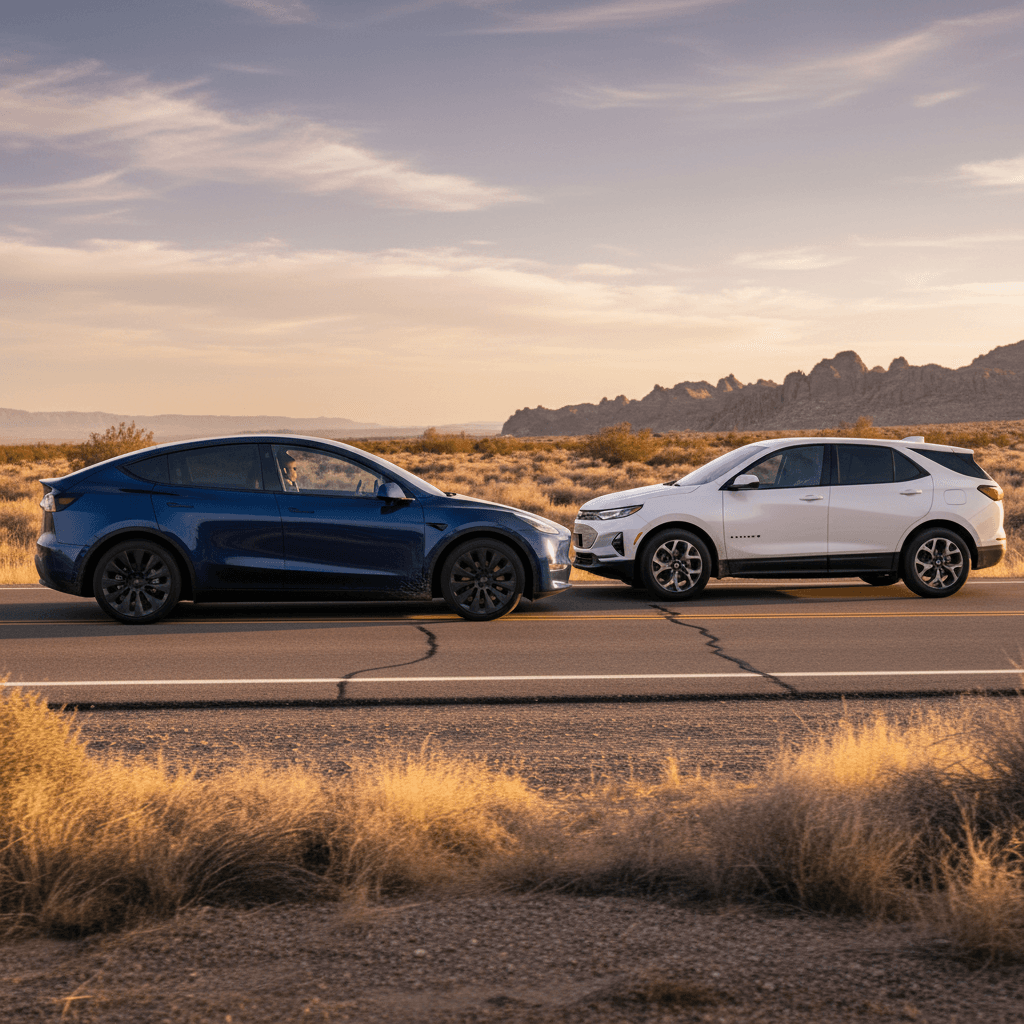
On paper, the Hyundai IONIQ 5 and Chevy Equinox EV are both compact SUVs with two rows of seats and space for five. In practice, they feel quite different. The IONIQ 5 rides on an unusually long wheelbase for this segment, which translates into excellent rear-seat legroom and an airy, almost lounge-like cabin. The Equinox EV, by contrast, feels more like a traditional compact SUV, taller, a bit narrower, and more familiar if you’re coming out of a gasoline Equinox or similar crossover.
Practical Space Comparison
Both are roomy, but in slightly different ways
Passenger Space
- IONIQ 5: Great rear legroom, flat floor, sliding rear bench in some trims.
- Equinox EV: Competitive space, but less "living room" feel than the Hyundai.
Cargo Room
- Both offer mid‑20s cubic feet behind the rear seats and mid‑ to high‑50s with seats folded.
- Neither is a cargo monster, but both handle strollers, groceries, and luggage without drama.
Comfort & Materials
- IONIQ 5: More design-forward interior, available reclining front seats, and higher perceived quality.
- Equinox EV: Simple, functional, and easy to live with; more conventional ergonomics.
Test-Drive Tip
Tech, Safety, and Driving Experience
Both vehicles come well-equipped with modern active-safety suites, automatic emergency braking, lane-keeping assist, adaptive cruise, blind-spot monitoring, and more. Where they diverge is in the feel behind the wheel and the level of driver assistance tech available.
Hyundai IONIQ 5 Driving Experience
- Available in single-motor RWD and dual-motor AWD with brisk acceleration, especially on higher-output trims.
- Ride quality trends comfortable but slightly firm; the off-road-themed XRT trades a bit of range for more rugged capability.
- Cabin tech is polished: dual widescreens, intuitive EV-specific displays, and available head-up display.
- The IONIQ 5 N adds seriously quick performance for enthusiasts, far beyond anything in the Equinox EV lineup.
Chevy Equinox EV Driving Experience
- Likewise available in FWD and AWD, with performance oriented toward smooth, predictable daily driving rather than sportiness.
- The big story is optional Super Cruise: GM’s hands-free highway driving system on pre-mapped roads.
- Interior tech is modern but more straightforward, with GM’s latest infotainment software and strong phone integration.
- Steering and suspension tuning prioritize familiarity for drivers moving out of gasoline compact SUVs.
Hands-Free vs Fast Charging
Ownership Costs, Battery Warranty, and Used EV Considerations
EVs shift a lot of your total cost of ownership from fuel and maintenance toward purchase price and depreciation. That makes warranty coverage and long-term battery health especially important, areas where Hyundai has been unusually aggressive.
Warranty and Ownership Basics
Factory coverage can meaningfully affect peace of mind if you’re planning to keep the vehicle a long time, or buy it used in a few years.
| Item | Hyundai IONIQ 5 | Chevy Equinox EV |
|---|---|---|
| Basic warranty | 5 years / 60,000 miles | 3 years / 36,000 miles |
| Powertrain warranty | 10 years / 100,000 miles | Typically 5 years / 60,000 miles (check exact year/trim) |
| Battery warranty | 10 years / 100,000 miles | 8 years / 100,000 miles |
| Production history | On sale in U.S. since 2022 | Newer entry; limited used data so far |
| Used market today | Robust selection, falling prices, lots of warranty runway | Very limited inventory; pricing still emerging |
Hyundai’s long warranty and early production history make the IONIQ 5 a safer bet for used buyers today.
Battery Health Matters More Than Odometer
For used buyers, the IONIQ 5 looks particularly compelling: generous remaining warranty, strong efficiency, and a fast-charging architecture that won’t feel obsolete in a few years. The Equinox EV could still become a great used buy, but today there simply isn’t much data or inventory. If you want an affordable, well-understood EV with transparent condition reporting, a used IONIQ 5 sold through a specialist like Recharged is the lower-risk play.
Hyundai IONIQ 5 vs Chevy Equinox EV: Key Specs Compared
Core Specs Snapshot
Representative figures from recent model years; always confirm exact specs for the trim and year you’re considering.
| Spec | Hyundai IONIQ 5 (recent) | Chevy Equinox EV (recent) |
|---|---|---|
| Drivetrain options | RWD or AWD | FWD or AWD |
| Max EPA-estimated range | ~303–318 miles (RWD long range) | Up to ~319 miles (FWD) |
| Typical AWD range | Mid‑ to high‑200s miles | Upper‑200s to low‑300s miles |
| Battery capacity | Roughly 58–84 kWh depending on trim/year | Around mid‑80 kWh (est.) |
| Max DC fast-charge rate | ~230–250+ kW (800V architecture) | Up to ~150 kW |
| 10–80% DC fast charge | ≈18–20 minutes | ≈40 minutes |
| Level 2 charge time | ≈6–7.5 hours (10–100%) | ≈9 hours (10–100%) |
| Seating / rows | 5 / 2 rows | 5 / 2 rows |
| Cargo behind 2nd row | Mid‑20s cu ft | Mid‑20s cu ft |
| Cargo max (seats folded) | High‑50s cu ft | High‑50s cu ft |
| Basic warranty | 5 yr / 60k mi | 3 yr / 36k mi |
| Powertrain / battery | 10 yr / 100k mi | Battery ~8 yr / 100k mi |
The IONIQ 5 brings ultra-fast charging and a stronger warranty; the Equinox EV counters with range and price.
Which EV Is Right For You?
Match the EV to Your Priorities
You prioritize fast charging and road trips
If you routinely drive long distances or want the least downtime at DC fast chargers, the IONIQ 5’s 800V platform and shorter 10–80% times make it the better choice, even if peak range numbers are similar.
You want the lowest upfront price
If budget is the primary constraint and you’re okay with slower fast charging, the Equinox EV’s lower starting MSRP and solid range are compelling. Just remember that used IONIQ 5 pricing is getting very competitive too.
You’re thinking about buying used
The IONIQ 5 is the only one with a well-developed used market today. Buying through a marketplace like Recharged lets you see verified battery health, fair-market pricing, and detailed condition reports at a glance.
You care about hands-free highway driving
If you do lots of interstate miles and prefer a more relaxed drive, the Equinox EV’s available Super Cruise is a major plus, provided you live in an area with good mapped coverage and don’t mind GM’s subscription model.
You plan to keep the car 8–10+ years
Hyundai’s longer basic, powertrain, and battery warranties give the IONIQ 5 a clear edge for long-term peace of mind, especially if you might be the second owner of an early build.
Viewed strictly as new vehicles, the Chevy Equinox EV is the value and range champ, while the Hyundai IONIQ 5 is the fast-charging, design-forward option with a stronger warranty story. But if you zoom out to the reality of today’s market, waning incentives, aggressive discounting, and a growing pool of used EVs, the IONIQ 5’s head start and robust warranty make it uniquely attractive as a pre-owned buy. That’s especially true when you can see its battery health, pricing, and history clearly in a Recharged Score Report, and lean on EV specialists to handle financing, trade-in, and even shipping to your driveway.
FAQ: Hyundai IONIQ 5 vs Chevy Equinox EV
Common Questions About IONIQ 5 vs Equinox EV
If you’ve narrowed your list to the Hyundai IONIQ 5 and Chevy Equinox EV, you’re already making a smart move toward efficient, low-maintenance transportation. The next step is matching the spec sheet to your real life: how often you fast charge, how long you’ll keep the car, and whether a well-vetted used IONIQ 5 might stretch your budget further than a new Equinox EV. That’s exactly the kind of trade-off a transparent, EV-focused marketplace like Recharged is built to help you navigate.