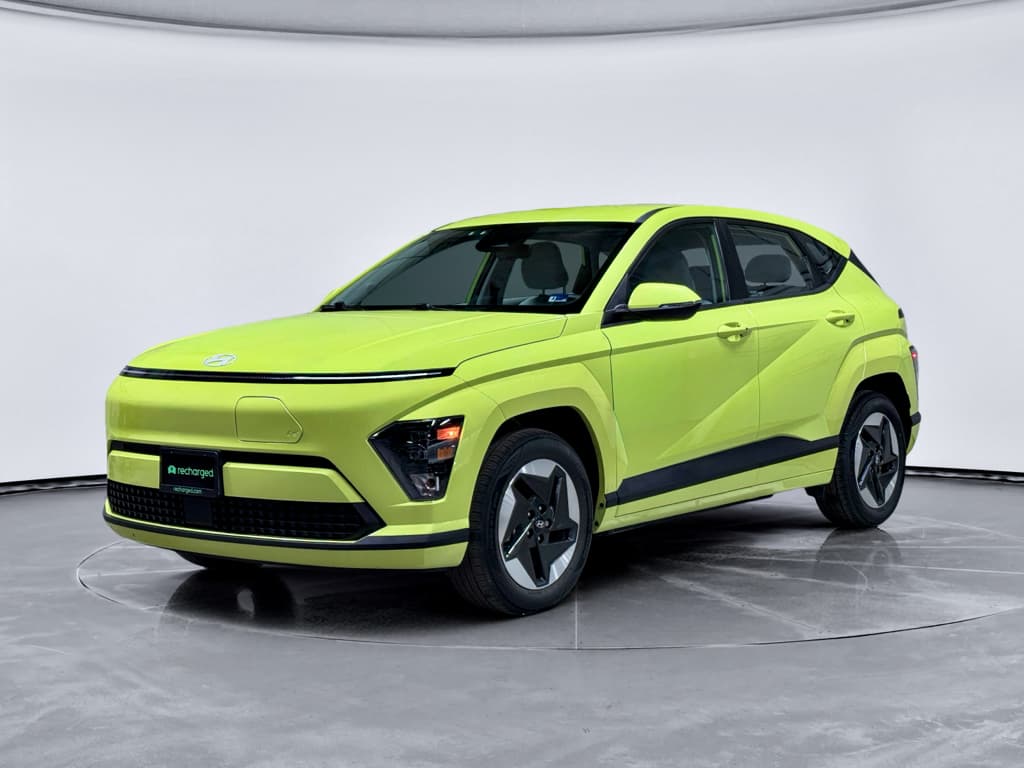
If you own a Hyundai Kona Electric, 2026 is a fascinating moment to think about trading it in. Early cars are getting cheap enough to tempt first-time EV buyers, new-model Konas have won residual value awards, and the broader used-EV market is finally shaking off the 2022–2023 price crash. In other words: your Hyundai Kona Electric trade in value in 2026 might be pleasantly higher, or disappointingly lower, than you expect, depending on how you play it.
Key context for 2026
Hyundai Kona Electric trade-in value in 2026: the quick take
Kona Electric value snapshots going into 2026
Real-world offers will hinge on your model year, miles, trim, and, more than dealers like to admit, battery health. But those benchmarks tell you the ballpark: late-model Konas with normal mileage and no stories are solidly in the high teens to low $20Ks in trade-in value in early 2026, while older 2019–2021 cars live lower in the teens or even below.
A simple 2026 rule of thumb
Typical Kona Electric trade-in ranges by model year
Let’s talk numbers. These are broad, directional 2026 U.S. trade-in value ranges for front-line Kona Electrics in good condition, assuming average mileage (around 12,000 miles per year), no major accidents, and a healthy battery. Think of these as “starting points” before adjustments for options, damage, or bad history.
Indicative Hyundai Kona Electric trade-in ranges in 2026
Approximate wholesale-style value bands for clean, average-mile Kona Electrics in the U.S. market during 2026. Your individual offer can land above or below these bands based on condition, region, and timing.
| Model year | Typical mileage in 2026 | Rough 2026 trade-in range* | Notes |
|---|---|---|---|
| 2025 | 10,000–20,000 | $18,500 – $22,000 | Newest body style, strong efficiency, benefits from residual value award and still-current tech. |
| 2024 | 20,000–30,000 | $17,500 – $21,000 | Early second-gen cars; buyers like the improved interior and range vs earlier years. |
| 2023 | 30,000–40,000 | $15,000 – $18,000 | Last of the first-gen; less fresh styling, but still efficient and affordable. |
| 2021–2022 | 40,000–60,000 | $13,000 – $16,500 | Sweet spot for budget shoppers; values heavily dependent on battery and accident history. |
| 2019–2020 | 60,000–80,000+ | $10,000 – $14,000 | First-wave cars; depreciation has largely happened, but clean examples are in demand as cheap, long-range commuters. |
These figures are directional; always pull live quotes and valuations before making a final decision.
About these numbers
- Above the range: low miles, Limited trim, spotless history, fresh tires, and a clean battery report can easily nudge you higher.
- Below the range: structural accident history, high mileage for age, worn tires, or any hint of battery or charging trouble will drag you down, sometimes dramatically.
- Older Konas: once you drop below about $9,000–$10,000 wholesale, condition and local demand matter more than any book value.
What actually drives your Kona Electric trade-in value
The four big levers on Kona Electric value
Book values are just a starting point; these are what move real offers up or down.
1. Model year & mileage
2. Accident & title history
3. Battery and charging behavior
4. Trim, options & tires
A Kona Electric lives or dies in the used market on one question: Does this feel like an honest, low-drama EV? Efficiency helps (the Kona routinely tops efficiency rankings), but appraisers are trained to see risk. Your mission before trading in is to remove as many question marks as you can.
Battery health: the silent price multiplier

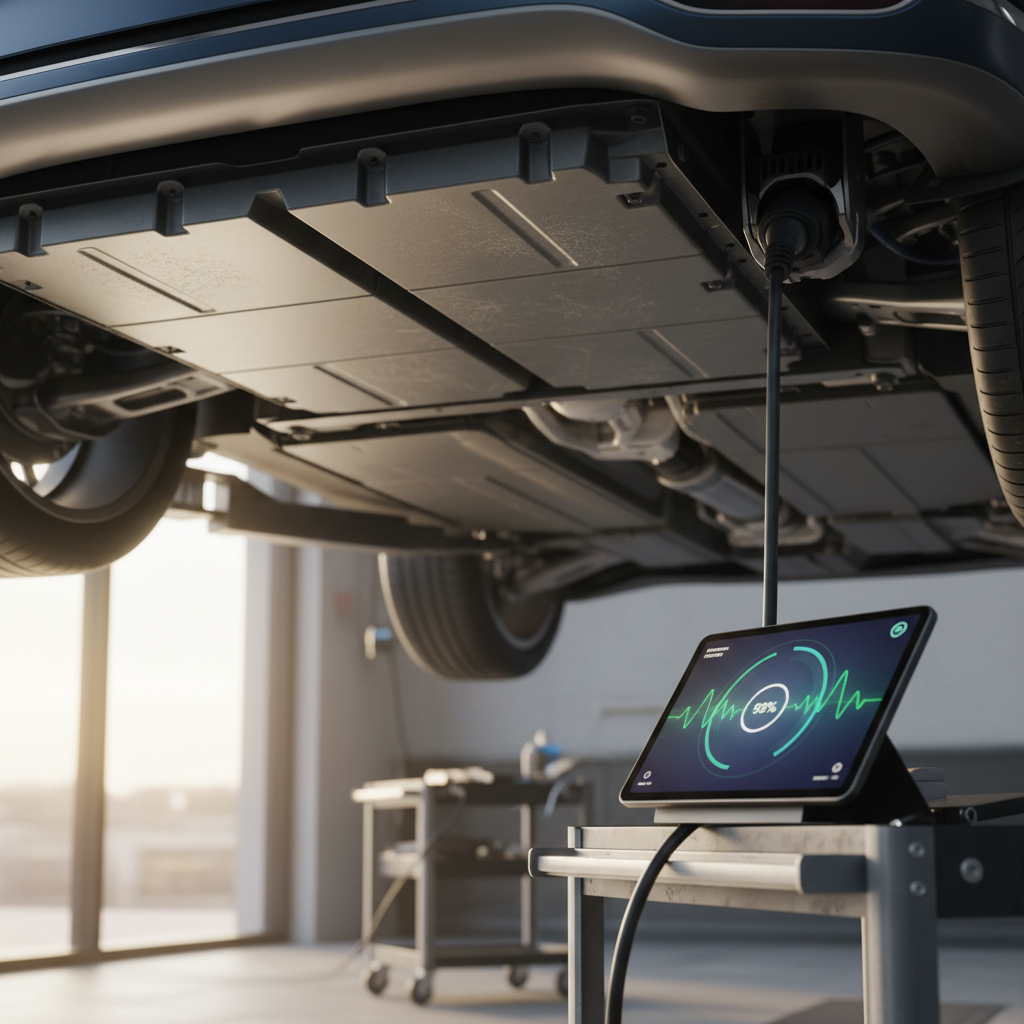
Hyundai gives the Kona Electric’s high-voltage battery a 10‑year/100,000‑mile warranty. That’s not just a mechanic’s promise; it’s a confidence anchor for used buyers. But in 2026, serious shoppers and modern marketplaces are going one step further: they want to see measured battery health, not just a dashboard range estimate.
How battery health shows up in your offer
- Strong SOH (state of health) – If your Kona still has most of its usable capacity, many buyers will happily pay extra for what is effectively a more efficient, longer-range commuter.
- Weak SOH – Noticeably reduced range or evidence of early degradation can turn your car into a lot queen. Dealers respond by lowering offers or sending it straight to auction.
- Charging behavior – Consistent DC fast-charge speeds within the normal curve reassure buyers. Chronic slow charging suggests underlying battery or thermal issues.
Why third-party battery reports matter
Most dealer trade-in tools still don’t plug into your Kona’s battery management system. They rely on age and mileage assumptions that can be wildly wrong in both directions.
- Good pack, bad offer – If your battery is in great shape but you can’t prove it, you’re lumped in with the average, or below-average, cars.
- Bad pack, honest pricing – If your battery is unhealthy, having documentation lets you price realistically upfront instead of getting punished at the last minute.
- Recharged Score – Every vehicle sold through Recharged includes a battery health diagnostic baked into the Recharged Score Report, so both you and the next owner know exactly what they’re buying.
How Recharged uses battery data
Where to sell: trade-in vs private party vs EV marketplace
You’ve got three real choices in 2026: traditional dealer trade-in, private-party sale, or specialized EV marketplace (like Recharged). Each one handles the Kona Electric’s quirks differently.
Three paths for your Kona Electric in 2026
Same car, different work level and different checks at the end.
Dealer trade-in
- Fast and brutally convenient, especially if you’re buying another car.
- Dealers often "book" EVs conservatively due to battery and demand uncertainty.
- Likely the lowest dollar figure you’ll see, but the lowest effort too.
Good if time matters more than money, or your Kona has cosmetic flaws you don’t want to fix.
Private-party sale
- Maximum price potential if you find the right buyer.
- You handle photos, listings, test drives, questions about range and charging.
- Buyers will want reassurance on battery health; be ready with documentation.
Great for patient, hands-on sellers who enjoy the hustle.
EV marketplace (Recharged)
- Built specifically for used EVs like your Kona Electric.
- Provides a Recharged Score Report with verified battery health.
- Options to get an instant offer, trade-in quote, or list on consignment with expert help.
Ideal if you want more than a trade-in but less hassle than DIY selling.
Don’t anchor on the first number
How to prep your Kona Electric before any appraisal
You can’t turn a 2019 Kona into a 2025, but you can absolutely change how appraisers, and buyers, feel when they walk around it. Here’s a practical checklist tailored to EVs that moves real numbers on the page, especially in the $10,000–$20,000 band where most Kona Electrics live in 2026.
Pre-appraisal checklist for Hyundai Kona Electric owners
1. Pull your service & recall history
Gather documents for routine maintenance, recall work (including any battery-related campaigns), and tire rotations. A tidy folder or PDF bundle says "cared for," which lowers perceived risk and can blunt lowball offers.
2. Document real-world range
Reset a trip meter and record a few typical commutes. Note miles driven and percentage of battery used. Being able to say, "I regularly see about X miles per full charge" is more convincing than quoting the original window sticker.
3. Clean it like you’re keeping it
Detail the interior, wipe the touchscreen, clean out the frunk (if equipped) and cargo area, and remove personal items. Used-EV buyers are extra sensitive to smells and stains; they imagine them being "baked in" by heated seats.
4. Fix obvious, cheap stuff
Burned-out bulbs, cracked windshield chips, a missing charge-port dust cap, these are the little things appraisers mark as reconditioning costs. Fix them yourself and you effectively raise the car’s wholesale value before they even open their tablet.
5. Make the tires a non-issue
If your tires are down to the wear bars, get quotes on replacements before the appraisal. Sometimes, putting on a decent midrange set yourself costs less than the hit you’ll take when the dealer prices new rubber into their offer.
6. Arrive with a strong state of charge
Appraisers may take a short drive or snap photos for their online buyers. Showing up with 70–80% charge, with the car estimating a healthy range, subconsciously reassures everyone that the battery is doing what it should.
What NOT to do before trading in
How Recharged can help you maximize Kona Electric value
Recharged was built for exactly this crossroads: you own an EV like the Kona Electric, you know it’s a good car, and you’d like to unlock its value without getting chewed up by a broken used-EV playbook.
What Recharged offers Hyundai Kona Electric sellers
More transparency, less guesswork, and options beyond the usual trade-in script.
Recharged Score battery health diagnostics
Flexible ways to sell or trade
Nationwide reach & delivery
EV-specialist guidance
Ready to find your next EV?
Browse VehiclesStacking the deck in your favor
Hyundai Kona Electric trade-in FAQ (2026)
Frequently asked questions about Kona Electric trade-in value in 2026
Bottom line for Kona Electric owners in 2026
In 2026, the Hyundai Kona Electric occupies an unusual sweet spot: it’s efficient, practical, and finally cheap enough on the used market to make sense for a lot of first‑time EV buyers. That dynamic supports trade-in values better than many early‑adopter EVs that have fallen from grace. If you walk into an appraisal with your paperwork organized, your battery health documented, and at least one competing valuation from an EV specialist like Recharged, you’re in a strong position to decide whether to trade now, sell privately, or hold and enjoy a few more years of nearly silent commuting.
Think of your Kona Electric like any good tool: its value is in what it can still do, and how clearly you can prove it. The used-EV market in 2026 is finally sophisticated enough to reward that proof. Your job is to bring the evidence, and refuse to be priced like just another question mark on a dealer’s lot.