If you’re looking at a Hyundai Kona Electric, you’re probably drawn to its small size, approachable price, and excellent efficiency. But what about towing capacity and range? Can this little EV actually pull a trailer, and how far can it go on a charge if you load it up?
Quick answer
Hyundai Kona Electric at a Glance
Key Kona Electric Range & Battery Specs
In the U.S., most used Hyundai Kona Electrics you’ll see today are the first generation (2019–2023) with a 64 kWh battery and a single 201 hp front motor. They’re EPA‑rated for about 258 miles of range on a full charge. The redesigned 2024+ Kona Electric keeps a similar battery size (64.8 kWh) but nudges EPA range up to about 261 miles in Long Range form while remaining front‑wheel drive only.
Where the Kona Electric really shines is efficiency. Independent testing has repeatedly seen 3.8–4.3 miles per kWh in mixed driving, making it one of the most efficient EVs on the road. That frugal appetite is great for road trips, until you hang a trailer off the back and start fighting physics.
Official Towing Capacity: Can the Kona Electric Tow?
Let’s start with the uncomfortable part: in North America, the Hyundai Kona Electric’s official towing capacity is zero. Hyundai does not rate it for towing, and U.S. owner’s manuals and spec sheets list no approved trailer weight. That puts it in the same camp as many early EVs that were engineered primarily for commuting, not for hauling.
- No factory tow package is offered on U.S.‑market Kona Electrics.
- There is no listed maximum trailer weight or tongue weight in U.S. specs.
- Aftermarket hitches exist, but they are generally sold for bike racks and cargo carriers, not towing.
- Using an aftermarket hitch to tow could affect your warranty if something breaks that Hyundai can reasonably link to towing.
Warranty and liability
In some other markets, small crossovers with the same basic platform may carry modest tow ratings, often in the 1,000–2,000 lb range when properly equipped. But those ratings are based on local regulations, cooling packages, hitches, and brake requirements that aren’t necessarily the same as U.S.‑market Kona Electrics.
How Towing Affects Range on the Kona Electric
Even if you stick to light, occasional towing, it’s essential to understand what extra weight and drag do to an EV’s range. The Kona Electric starts from a strong efficiency baseline, that’s the good news. The bad news is that trailers are range killers, especially tall ones.
Why Trailers Hit Kona Electric Range So Hard
Three forces you can’t see, but will definitely feel at the plug
Aerodynamic drag
EVs like the Kona Electric are shaped to cheat the wind. Add a boxy trailer and you effectively turn your sleek little crossover into a brick.
Highway range can drop 30–50% with a tall camper, even if it’s relatively light.
Extra weight
Every pound the motor has to move eats into your battery. A light utility trailer and lawn equipment can easily add 500–800 lbs.
Expect at least a 15–25% hit to range from weight alone, before aero drag.
Heat & cooling load
Climbing grades and towing forces the drivetrain and battery to work harder, building heat. The Kona’s thermal system may spin up more often, using additional energy.
On hot days or in strong headwinds, plan on another 5–10% range penalty.
A simple rule of thumb
So if your Kona Electric normally delivers 240–260 miles on a charge in highway driving, you might only see 120–150 miles with a small, boxy trailer at 65–70 mph. A low‑slung, narrow trailer running 55–60 mph will be kinder, but you should still assume a substantial range hit.
Kona Electric Batteries, Range, and Efficiency
Hyundai Kona Electric Range by Generation (U.S.)
EPA‑rated ranges and battery sizes for the Kona Electric trims most U.S. shoppers will see, with notes on how they feel in real‑world driving.
| Model years | Battery | Power | EPA range | Real‑world notes |
|---|---|---|---|---|
| 2019–2023 Kona Electric | 64 kWh | 201 hp FWD | 258 mi | Owners and testers often report 230–280 mi depending on speed, weather, and terrain. |
| 2024+ Kona Electric SE | 48.6 kWh | 133 hp FWD | ~200 mi | Better suited to city use; highway road trips require more frequent fast‑charging. |
| 2024+ Kona Electric Long Range (SEL/Limited) | 64.8 kWh | 201 hp FWD | 261 mi | EPA lists 261 mi; testers commonly see mid‑200s in mixed driving and around 240–250 mi at 70 mph. |
Figures are EPA combined range estimates under ideal conditions.
The 2019–2023 Kona Electric and the 2024+ Long Range trims all use roughly a 64 kWh battery and a 201‑hp motor driving the front wheels. That’s a sweet spot: big enough for legitimate road‑trip range, small enough to keep weight and cost down. Real‑world tests have shown the Kona Electric can beat its official numbers in careful driving, with some highway tests approaching 245 miles on a charge and city‑heavy loops exceeding 260 miles.
Why efficiency matters for towing
Real‑World Range vs. EPA Estimates
What you can expect unloaded
- City driving: 4.0–4.3 mi/kWh isn’t unusual in mild weather, especially if you use Eco mode and one‑pedal regen.
- Mixed driving: Many owners report 3.5–4.0 mi/kWh, translating to roughly 225–260 miles on a full battery.
- Highway at 70+ mph: Plan on 3.0–3.4 mi/kWh, or about 190–230 miles before you’re down to a low state of charge.
What happens when you add a trailer
- Low, light trailer at 55–60 mph: 2.3–2.8 mi/kWh is realistic, so perhaps 150–190 miles of usable range.
- Tall, boxy trailer at 65–70 mph: Worst case, you might dip toward 1.8–2.2 mi/kWh, only 115–150 miles before charging.
- Hills, cold, or headwinds: Stack penalties and it’s easy to see another 10–20% shaved off.
If you’re used to a gas crossover pulling 250–300 miles between fuel stops even with a trailer, the Kona Electric will feel different. You’ll stop more often, and you’ll spend more time planning charging stops around fast‑charger locations that are trailer‑friendly to pull into and out of.
Practical Towing Scenarios With a Kona Electric
Let’s imagine how owners actually talk about towing with a Kona Electric. Nobody is shopping one to pull a 20‑foot camper through the Rockies. They’re wondering, “Can I move a small trailer across town? Can I haul bikes and gear out to the campground?” Here’s how those scenarios look in practice.
Common “Should I Tow With My Kona EV?” Scenarios
1. Local hardware‑store run
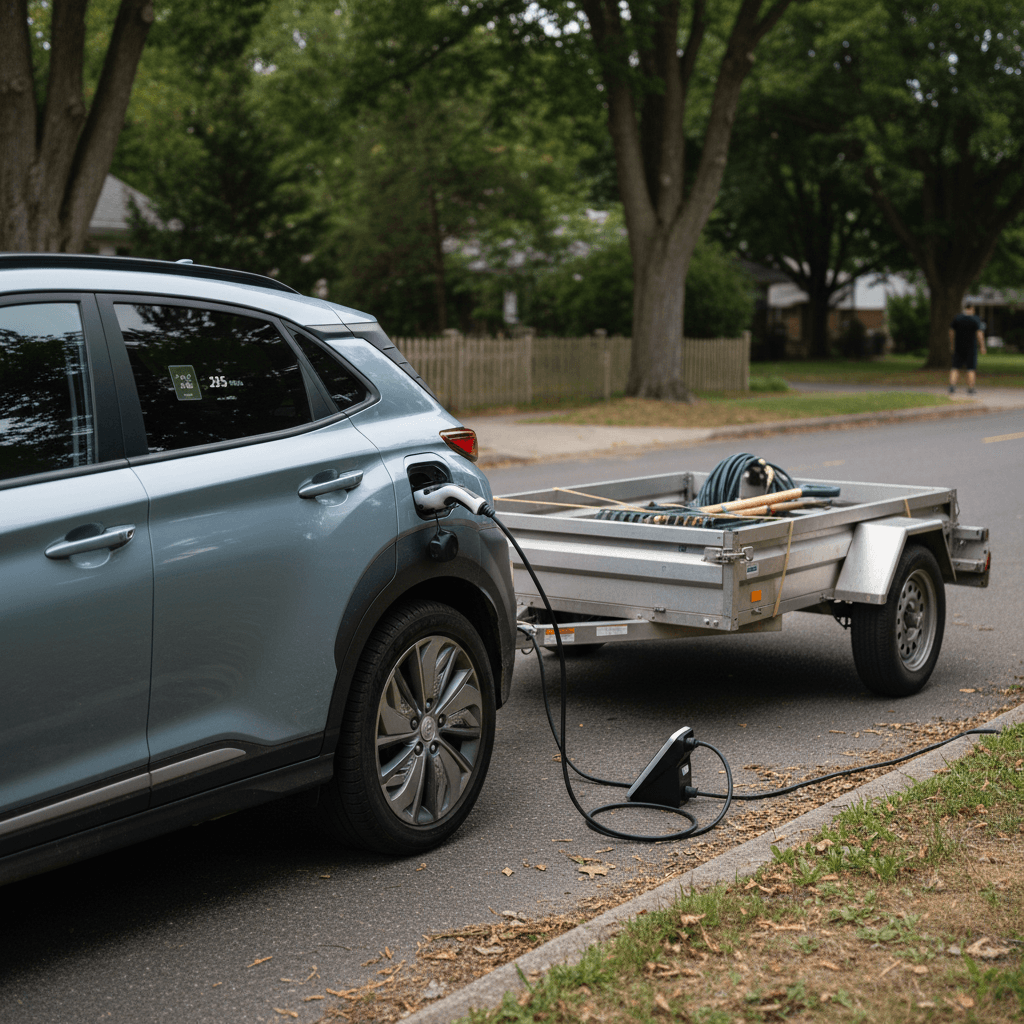
A 4×6 utility trailer with mulch or lumber, total trailer weight 500–800 lbs. The Kona will physically move it just fine at city speeds, but you’re outside Hyundai’s tow rating. Range hit is modest on flat suburban roads, but plan for 20–30% less than usual and keep speeds down.
2. Weekend trip with a lightweight cargo trailer
Think 700–1,200 lbs loaded, mostly highway. Here, aero drag becomes a bigger deal. Cutting your normal highway range in half for planning isn’t crazy. You’ll be stopping often to fast‑charge, and you need stations with easy trailer access.
3. Small pop‑up camper
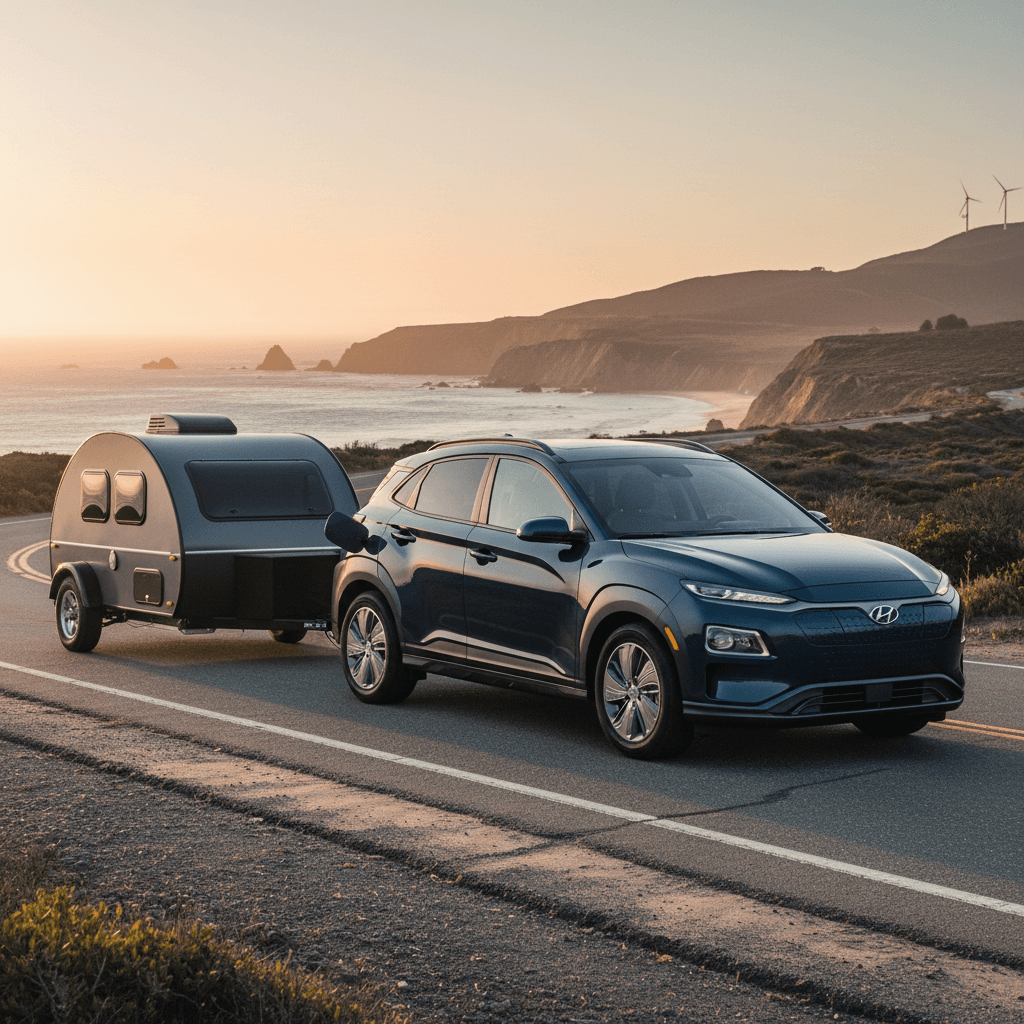
Even a tiny camper can present a big, flat wall to the wind. The Kona’s motor and brakes may cope, but this is really beyond what Hyundai intended. Range can plummet, and emergency braking or crosswinds might get hairy. This is where the 0‑lb official tow rating should give you pause.
4. Bike racks and cargo carriers
The best use of a hitch on a Kona Electric is for non‑towing duty. A two‑bike rack or rear cargo tray hardly moves the efficiency needle but dramatically increases practicality. Just make sure your hitch is properly installed and rated for the load you’re carrying.
When not to tow with a Kona Electric
Battery Health and Used Kona Electric Shopping
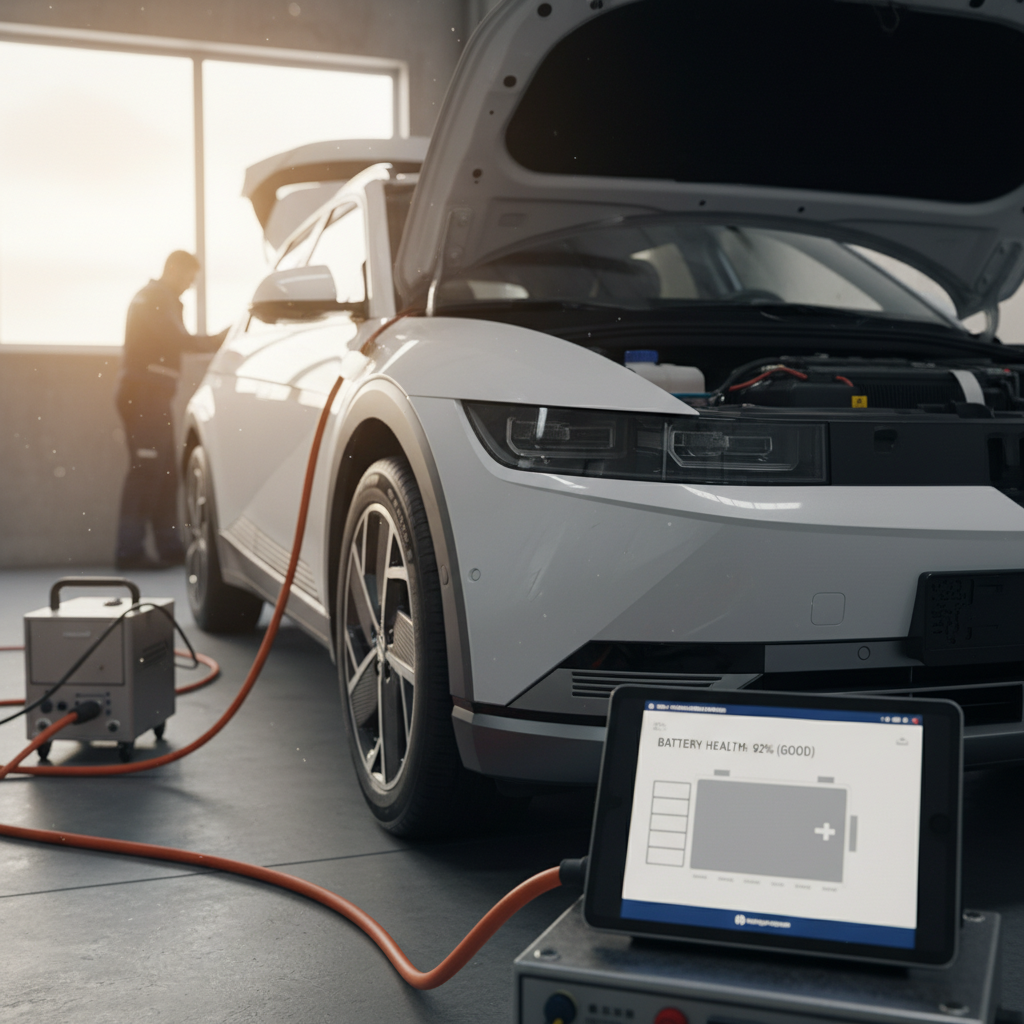
Whether you ever plan to tow or not, the Kona Electric’s range story depends heavily on battery health. A healthy 64 kWh pack behaves very differently from one that’s been fast‑charged hard its whole life, left parked full in desert heat, or run to 0% regularly.
- How much usable capacity the battery still has compared with new.
- Whether previous owners fast‑charged heavily or mostly charged at home.
- How the car’s software estimates range compared with real‑world driving.
How Recharged helps with Kona Electric battery health
Ready to find your next EV?
Browse VehiclesIf you find a used Kona Electric that’s had a hitch on it, don’t panic, but do ask questions. Light, occasional towing probably hasn’t hurt the battery. Abuse, overheated fast‑charging, and neglect are bigger enemies than a couple of Home Depot runs. A thorough battery‑health check, a road test, and a charge‑rate test at a DC fast charger will tell you more than a trailer coupler ever could.
Tips to Maximize Range (With or Without a Trailer)
Six Ways to Stretch Kona Electric Range
These help every day, and matter even more if you ever decide to tow.
1. Slow down a little
The Kona Electric is most efficient in the 55–65 mph window. Every 5 mph above that is like stacking bricks on the roof in terms of aero drag.
On long trips, trimming 5–10 mph from your cruise speed can add dozens of miles of range.
2. Use Eco mode & regen
Eco mode softens throttle response and tones down climate control draw. Combine it with maximum regenerative braking (using the paddle shifters) for efficient stop‑and‑go driving.
You’ll feel the car coast and slow more like a train than a gas SUV, but your range gauge will thank you.
3. Precondition in extreme temps
In very hot or cold weather, preheat or pre‑cool the cabin while plugged in. That way, the battery and HVAC system aren’t burning as much energy once you hit the road.
This is especially important on short trips where climate control can be a big share of your total energy use.
4. Watch your weight
Roof boxes, overstuffed cargo areas, and heavy trailers all tax the Kona’s modest power and efficiency. Pack light and keep bulky gear behind the car, not on top.
If you must use a trailer, keep it as low, narrow, and light as possible.
5. Plan charging smartly
Because the Kona Electric’s DC fast‑charge rate tops out around 100 kW, it pays to arrive at chargers with the battery around 10–20% and unplug in the 60–80% range where charge speeds start to taper.
Shorter, more frequent top‑ups can cut overall travel time compared with 0–100% sessions.
6. Use apps that show trailer‑friendly chargers
Apps and in‑dash navigation that highlight larger plazas, pull‑through spots, and nearby services make life much easier if you’re towing.
Look for chargers in shopping‑center lots or big box stores rather than tight parking garages or cramped urban streets.
FAQ: Kona Electric Towing and Range
Frequently Asked Questions About Kona Electric Towing & Range
Bottom Line: Is the Kona Electric Right for You?
The Hyundai Kona Electric is one of the small‑EV overachievers of the last few years: compact, efficient, and capable of real‑world range that makes daily driving, and even long days on the highway, surprisingly easy. Where it falls short is towing. With an official 0‑lb tow rating in the U.S., it’s better thought of as a nimble commuter and road‑trip companion than a mini workhorse.
If you only imagine the odd light trailer run across town, understand the risks, and are willing to plan your routes around shorter range and careful speeds, the Kona Electric can play along. But if towing a camper, boat, or heavier utility trailer is central to your lifestyle, you’ll be happier in an EV that was engineered and rated for that job from day one.
Thinking about a used Kona Electric or another efficient EV? Recharged is built to make that process simple. Every vehicle comes with a Recharged Score Report, covering battery health, fair market pricing, and expert guidance, plus digital buying, financing, trade‑in options, and nationwide delivery. That way, you can pick the right EV for how you actually drive and tow, not just how it looks on paper.