If you’re eyeing a 2023 Volvo C40 Recharge, you’ve probably heard two very different stories: owners who absolutely love the styling and instant torque, and a few who’ve dealt with software gremlins, charging glitches, or even recall notices. This guide pulls together what we’re seeing in owner forums, early reliability data, and recall information so you understand the real-world 2023 Volvo C40 Recharge problems, and what to watch for if you’re buying used.
Quick take
2023 Volvo C40 Recharge reliability at a glance
Early owner sentiment for the 2023 C40 Recharge
Owner ratings and early data suggest the C40 Recharge is more solid than scary, but you must go in with your eyes open. When an owner gives a car one star and calls it “worst car ever,” it’s almost always due to repeated electronic or starting issues, not the electric motors or battery pack disintegrating. The good news is that Volvo’s strong warranty and over‑the‑air (OTA) updates mean many of the early problems can be corrected, especially if you’re buying used in 2026 and beyond.
Big picture: how worried should you be about problems?
Where the 2023 C40 Recharge is strong
- Powertrain durability: No pattern of motor or inverter failures has emerged so far; most issues are software or peripheral.
- Battery longevity (early data): Many owners with 20,000–40,000 miles report little to no noticeable degradation beyond normal seasonal changes.
- Safety and structure: Volvo’s crash‑safety reputation carries over; the big concerns here are software‑controlled systems, not the structure itself.
Where you should be cautious
- Software stability: Google built‑in (Android Automotive) can lag, freeze, or reboot, and updates sometimes fix one quirk while creating another.
- Charging quirks: A small but real number of owners report intermittent charging errors at home and on public DC fast chargers.
- Brake recall: A serious 2025 recall for certain Volvo EVs, including 2023 C40 BEVs, requires a software update to avoid rare but dangerous brake loss during extended regen.
If you’re buying used
Software and infotainment issues on the 2023 C40 Recharge
Almost every modern EV lives or dies by its software, and the C40 Recharge is no exception. It runs Google’s Android Automotive system with Google Maps, Assistant, and the Play Store baked in. When it works, it’s slick. When it doesn’t, you’re suddenly back in 1998 with a paper map and a radio.
Common software and infotainment complaints
Most are annoying, not catastrophic, but you should still test thoroughly.
Laggy or rebooting center screen
Google Assistant glitches
Volvo app misreporting status
Volvo has been rolling out OTA updates at a steady pace, and many owners say the latest 2.x and 3.x software builds have calmed the worst problems. But software is still the number‑one source of complaints, so you’ll want to see which version a used car is running and whether the previous owner kept up with updates.
How to test software on a test drive
Charging problems: home and DC fast charging
The C40’s charging hardware is pretty conventional for a compact luxury EV, but owners do report some intermittent charging problems. Separating car‑side issues from flaky public chargers can be tricky, yet a few patterns stand out.
- Occasional “charging error” messages at home Level 2 stations that clear after unplugging, locking the car, and plugging back in.
- Intermittent failures to start a DC fast‑charging session, even after multiple attempts and different stations.
- Rare cases where the car had to be towed because it refused to accept a charge at any station, requiring dealer diagnosis and repair.
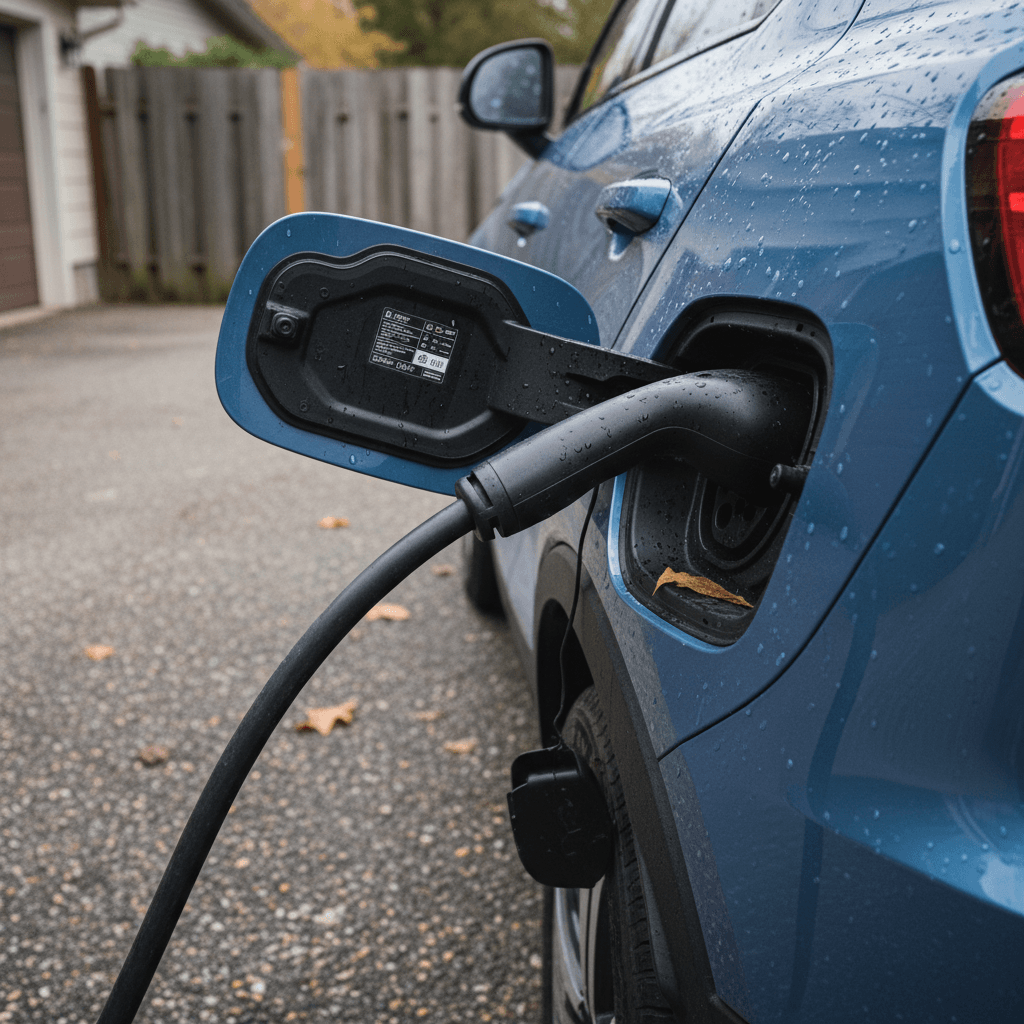
Sometimes the fix is mundane, a dusty charging port, a slightly drooping cable the car’s latch doesn’t like, or a glitchy third‑party charger. Other times, the on‑board charger or charge‑port lock needs attention under warranty. Either way, you want to uncover these behaviors before you sign paperwork.
Charging test you should always do
Battery health, range and degradation concerns
Any EV buyer eventually asks the same question: “How’s the battery holding up?” For the 2023 Volvo C40 Recharge, early owner reports are largely reassuring. Many drivers with 20,000–40,000 miles or more say range is essentially unchanged, aside from expected dips in winter or extreme heat.
What owners are seeing with C40 battery health
Real‑world anecdotes paint a more useful picture than lab numbers.
Seasonal swings are normal
True degradation so far is modest
Volvo’s own guidance on battery care
How to evaluate battery health on a used C40 Recharge
1. Start with the range estimate, but don’t panic
A single low range estimate on the dash doesn’t prove degradation, it may just reflect recent high‑speed or cold‑weather driving. Note the displayed range at 80–90% and ask how the car has typically been driven.
2. Take a long, mixed‑route test drive
Drive at highway speeds and in city traffic. Compare energy use (kWh/100 mi or mi/kWh) with what other C40 owners report. Wildly poor efficiency can hint at tires, alignment, or battery issues.
3. Ask about charging habits
Frequent DC fast charging and repeated 0–100% cycles aren’t instant death, but if the previous owner lived on a DC fast charger, you’ll want extra scrutiny of the battery’s behavior.
4. Use a third‑party health report when you can
Some dealers and marketplaces, including <strong>Recharged</strong>, can provide a <strong>battery health report</strong> that shows usable capacity compared with new. It’s one of the best ways to remove guesswork from a used EV purchase.
Safety recalls: brake warning and other issues
The headline safety story for the 2023 C40 Recharge is a serious brake‑related software recall that surfaced after an earlier over‑the‑air update. Under rare but specific conditions, extended downhill coasting using only regenerative braking, the system could lose hydraulic braking assistance until the driver pressed the pedal or the software reset. That’s the kind of edge‑case bug you never want to discover the hard way on a mountain descent.
Key recall considerations for a 2023 C40 Recharge
This isn’t an exhaustive recall list, but it highlights the brake software issue that matters most for safety.
| Issue | Model years affected | How it’s fixed | What you should do |
|---|---|---|---|
| Brake system software defect (regen braking) | Includes 2023 C40 BEV among several Volvo EV/PHEV models | Over‑the‑air or dealer‑installed software update to correct brake logic | Confirm recall completion using the VIN and ask for documentation of the update. |
| Other software‑related campaigns | 2023 C40 and sibling XC40 Recharge | Various OTA updates for cameras, infotainment, and driver‑assist behavior | Verify the car is on current software and ask about any prior software‑related repairs. |
Always run the VIN through the NHTSA recall lookup tool or a similar service before you buy.
Don’t skip the brake recall check
Other complaints: ride quality, noise and ergonomics
Not every “problem” is a defect, some are just personality traits. The C40’s coupe‑style roofline and sporty tuning give it a distinct feel that not every driver loves.
Non‑mechanical complaints you’ll hear about the C40
These are worth knowing about, especially if comfort is a priority.
Firm ride on rough roads
Road and wind noise
Rear visibility
The flip side: what owners love
Used 2023 C40 Recharge checklist: what to inspect
Shopping used is where doing your homework really pays off. The C40 Recharge doesn’t yet have a long failure‑pattern history, so your best tools are a careful inspection, a thorough test drive, and good documentation.
Essential checks before you buy a used 2023 C40 Recharge
1. Pull a full vehicle history and recall report
Use the VIN to check for accidents, title brands, and open recalls. Make sure the brake software recall and any camera/infotainment campaigns are marked as completed.
2. Verify software level and update history
In the center screen, check the software version and update date. Ask the seller or dealer for records showing that major updates and campaigns have been applied.
3. Inspect and test the charging port
Visually inspect the charge port for damage, corrosion, or excessive dirt. Plug into a Level 2 charger and a DC fast charger if possible; confirm that sessions start quickly and don’t repeatedly error out.
4. Evaluate battery behavior, not just the guess‑o‑meter
Drive at least 20–30 miles on mixed roads, then compare energy consumption with typical C40 numbers. Sudden, unexplained drops in estimated range after a service visit can be a sign to ask more questions.
5. Work every driver‑assist and parking feature
Test adaptive cruise, lane‑keeping, parking sensors and cameras. Intermittent camera outages or inconsistent lane‑keeping behavior should be addressed before you buy.
6. Listen for suspension clunks or rattles
On a rough road, listen for front‑end noises that might indicate worn bushings or loose hardware. EVs are quiet enough that small noises stand out.
7. Take a night drive
Use this to check headlight performance, interior lighting, and any camera‑related glare or visibility quirks. It’s also a good time to judge wind noise at highway speeds.
How Volvo’s warranty and updates handle these problems
One reason the 2023 C40 Recharge can still be a smart buy, even with some known issues, is Volvo’s warranty coverage and software strategy. Like most EVs, it leans heavily on over‑the‑air updates to solve problems that would have required a service bulletin visit a decade ago.
Typical Volvo C40 Recharge warranty coverage
- Basic “bumper‑to‑bumper” warranty: generally 4 years/50,000 miles from original in‑service date.
- High‑voltage battery warranty: typically around 8 years/100,000 miles for capacity and defects.
- Safety recalls: performed free of charge, often via OTA updates or a quick dealer visit.
If you’re buying used, check how much time and mileage remain on both the basic and battery warranties.
What’s realistically covered
- Software bugs & failed modules: Infotainment reboots, camera modules, and faulty sensors are usually covered under the basic warranty.
- Charging hardware defects: Problems with the onboard charger or charge‑port latch, when verified, are typically covered.
- Battery capacity loss: Volvo may step in if the usable capacity falls below a specific threshold within the warranty period, but you’ll need documented evidence.
Why buying from an EV‑focused seller helps
FAQ: 2023 Volvo C40 Recharge problems
Frequently asked questions about 2023 C40 Recharge problems
Should you buy a used 2023 C40 Recharge?
If you’re drawn to the 2023 Volvo C40 Recharge, you’re not wrong. It’s quick, safe, and distinctive in a sea of upright crossovers. The major downsides aren’t blown motors or dying batteries, they’re software rough edges, occasional charging quirks, and a brake‑related recall that you must take seriously. For the right buyer, those are manageable, especially if you’re shopping in 2026 or later when many early bugs have been patched.
Your best move is to treat a used C40 like the connected device it is: check software and recall status, stress‑test the infotainment system, and verify the charging and braking behavior in real‑world driving. If you’d rather not do all that sleuthing yourself, consider finding one through Recharged, where every EV comes with a Recharged Score Report detailing battery health, pricing, and key system checks. Do that, and the 2023 C40 Recharge can be more companion than headache on your daily drives.