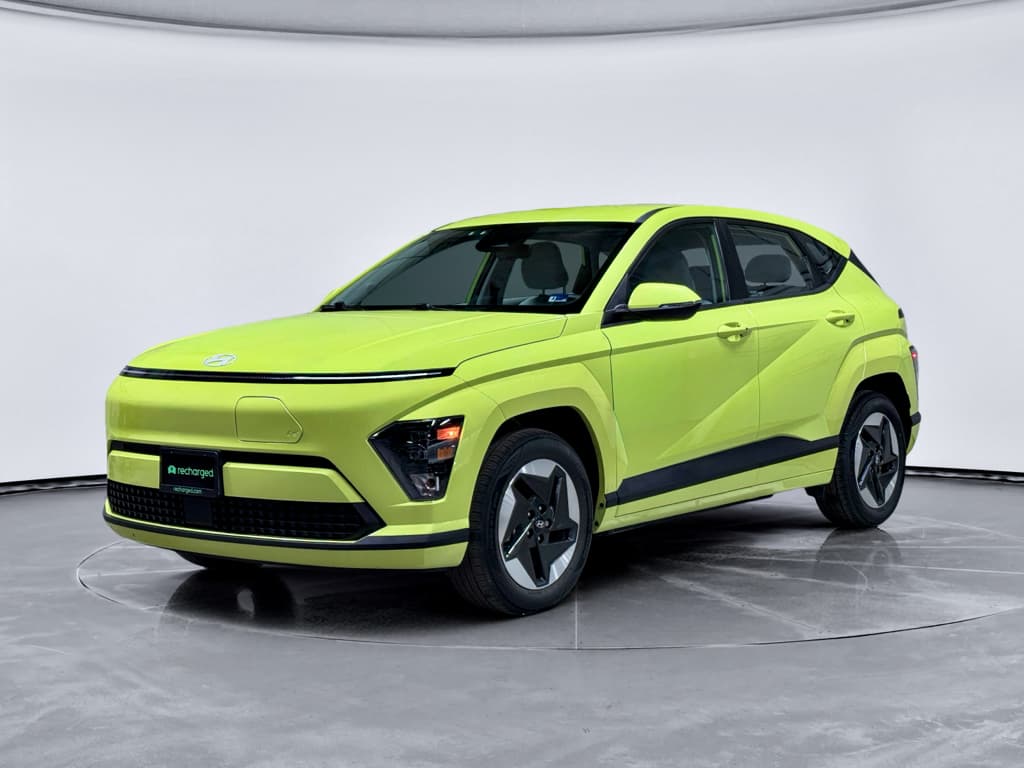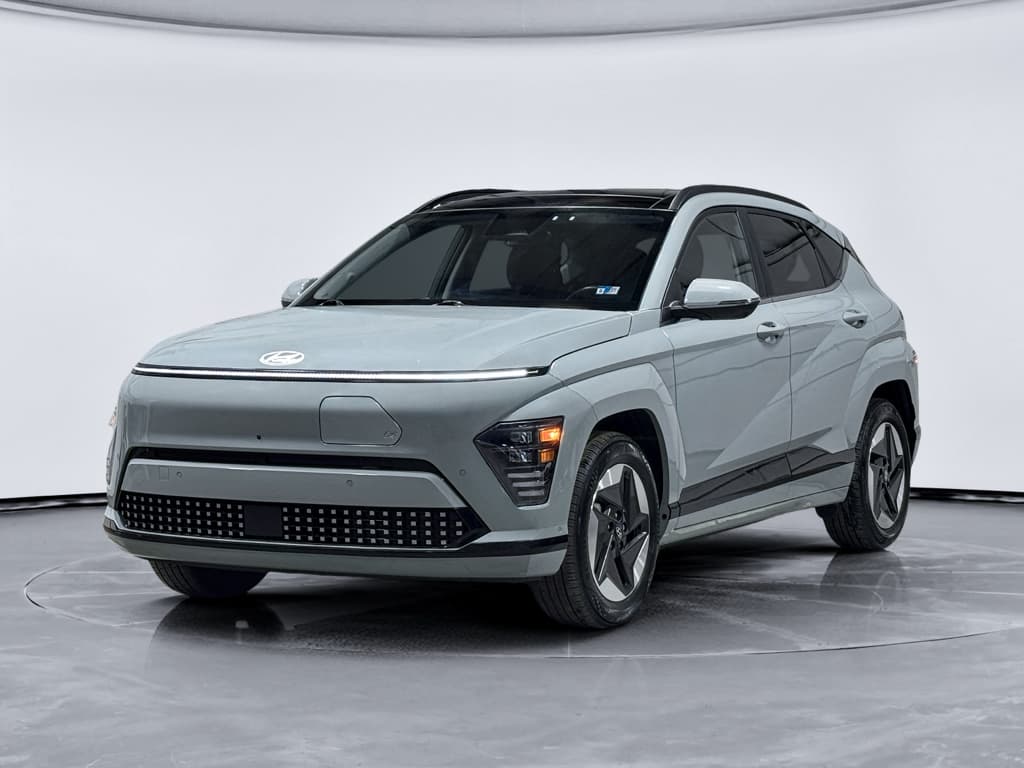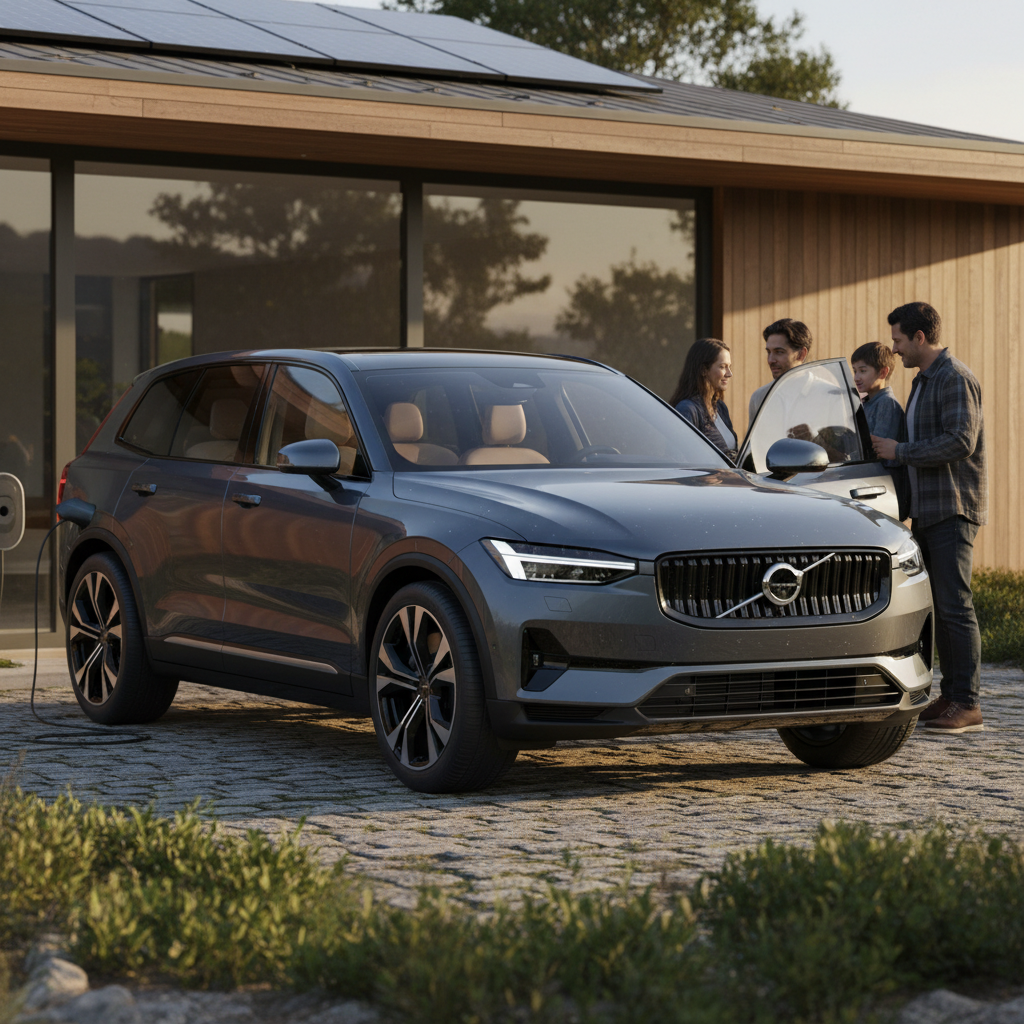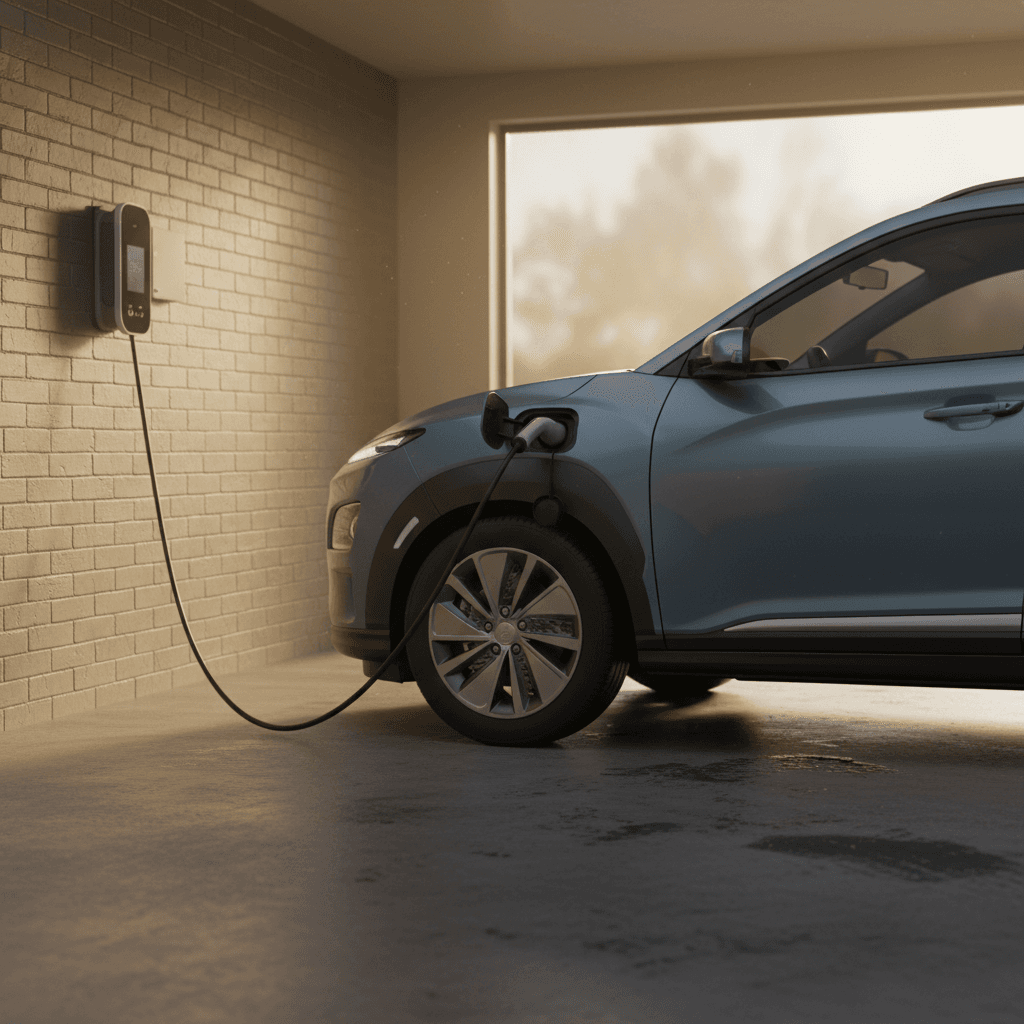
If you own a Hyundai Kona Electric or you’re shopping for a used one, getting the right home charger will matter more to your daily life than almost any other accessory. The Kona’s efficient battery and strong onboard charger mean it can take full advantage of a good Level 2 unit, but that doesn’t mean you should just buy the biggest, baddest box on the wall. This guide walks you through the best home charger options for the Hyundai Kona Electric, how many amps you actually need, and how to avoid over‑spending on hardware or installation.
Quick answer
Why home charging matters for your Kona Electric
Why most EV drivers charge at home
Living with a Kona Electric is night‑and‑day easier once you can plug in where you sleep. Level 1 charging (the portable 120V cord that often comes with the car) works in a pinch, but it adds only a trickle of range. A dedicated Level 2 home charger turns your Kona into a “refill overnight” appliance instead of a weekend chore.
Think in miles, not kilowatts
Hyundai Kona Electric charging basics
Before you pick a home charger, it helps to understand how your Kona Electric actually charges. There are two important pieces: the battery pack, which stores energy, and the onboard AC charger, which converts AC power from your house into DC power for the battery.
Hyundai Kona Electric AC charging specs (typical U.S. models)
These are representative numbers for recent‑model Kona Electric vehicles in North America. Always confirm exact specs in your owner’s manual.
| Model years | Usable battery (approx.) | Onboard AC charger | Max useful Level 2 current | Typical 10–100% time* |
|---|---|---|---|---|
| 2019–2023 Kona Electric | 64 kWh | ~7.2 kW | 32A | ≈9–10 hours |
| 2024–2025+ Kona Electric (U.S.) | ≈48–65 kWh (trim‑dependent) | ≈10.4–10.8 kW | 40–48A | ≈6–7 hours |
Older Kona Electrics have a smaller onboard charger but behave similarly at home, just a bit slower.
What “Level 2” actually means
How many amps does a Kona Electric really need?
When you shop for home chargers, you’ll see ratings like 32A, 40A, 48A, even 60A. Bigger numbers sound better, but your Kona Electric can only use what its onboard charger will swallow. For most Kona owners, a 32A or 40A Level 2 unit is the best balance of cost, speed, and install simplicity.
Choosing the right amperage for your Kona Electric
1. Understand continuous load rules
By electrical code, a charger that runs for hours is a “continuous load,” so the circuit must be sized 25% higher than the charger’s output. A 40A charger needs a 50A breaker; a 32A charger needs a 40A breaker.
2. Match to older Kona (2019–2023)
These cars top out around 7.2 kW AC, about 32A at 240V. A 32A charger already maxes them out. Going to 48A won’t make them charge faster at home.
3. Match to newer Kona (2024+ with ~10–11 kW AC)
Newer Konas can use more power, around 40–48A. A 40A charger on a 50A circuit is a great sweet spot. A 48A unit squeezes out the last bit of speed but may require heavier wiring and a hardwired install.
4. Check your panel capacity
Have an electrician confirm that your main service and breaker panel can support the extra load. In older homes, stepping down from 48A to 32A can turn an expensive panel upgrade into a simple new circuit.
5. Consider future EVs
If you expect to add a second EV that can take 11.5 kW or more, it can be worth installing a 48A charger now, even if your Kona can’t fully exploit it today.
Don’t oversize blindly
Best home charger features for Kona Electric owners
Key features to look for in a Kona Electric home charger
You don’t need every bell and whistle, but a few smart choices pay off every single night.
Connector: J1772 (with adapter if needed)
Most Hyundai Kona Electrics in North America use a J1772 AC charging inlet. Nearly every non‑Tesla Level 2 home charger ships with a J1772 plug.
If you ever add a Tesla with a NACS port, you can use a small adapter rather than replacing the whole charger.
Adjustable amperage
Look for a unit that lets you dial down the amps in software or via dip switches. That gives your electrician flexibility if your panel can’t quite support full power.
It’s especially useful in older homes or shared garages.
Smart app & scheduling
A Wi‑Fi or Bluetooth app isn’t mandatory, but it’s handy for:
- Scheduling charging for off‑peak electric rates
- Tracking kWh and cost per month
- Receiving alerts if a session fails
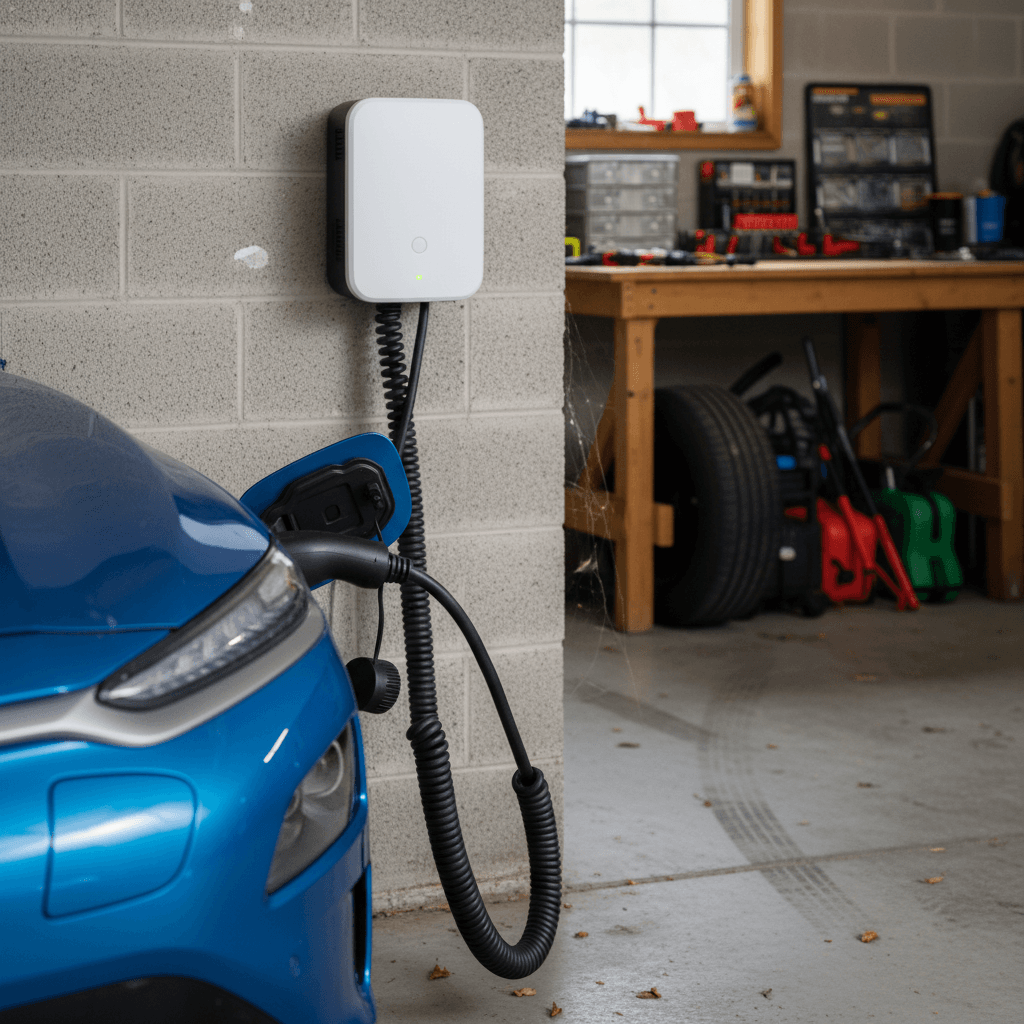
Cable length (20–25 feet)
A 20–25 ft cable lets you reach the Kona’s front‑mounted charge port from different parking spots without stretching. Too short and you’ll regret it every time you nose in the “wrong” way.
Outdoor rating & durability
If your charger will live outside, look for a NEMA 3R or better weather rating, a solid holster for the connector, and a thick, flexible cable that’s easy to coil in cold weather.
Safety listings & warranty
Stick with units that are UL or ETL listed, and ideally ENERGY STAR certified. A 3‑year or longer warranty is a good sign the manufacturer expects it to live a long, hard life on your wall.
Top home charger types for the Hyundai Kona Electric
1. 32A plug-in Level 2 charger (NEMA 14-50 or 6-50)
This is the workhorse option for many Kona owners, especially for 2019–2023 cars.
- Pros: Easy to install where a 240V outlet already exists; often the most cost‑effective; fully utilizes older Kona’s 7.2 kW onboard charger.
- Best for: Daily commuters, renters (you can take it with you), and homes with limited panel capacity.
2. 40–48A hardwired Level 2 charger
Ideal for 2024+ Kona Electric models with ~10–11 kW onboard chargers and for future‑proofing.
- Pros: Faster top‑ups from low state of charge; cleaner installation; better suited to sharing between two EVs.
- Best for: Owners with newer Konas, larger daily mileage, or plans for a second EV.
Which charger style fits your life?
Match your Kona, your driving, and your home’s wiring.
City commuter
If you drive under 60 miles a day, a 32A Level 2 on a 40A circuit is usually plenty. Your Kona will recover your daily miles in just a few hours each night.
High-mileage driver
Put on 100+ miles most days? A 40–48A charger is worth pricing out, especially on newer Konas. Even short evening top‑ups can add big chunks of range.
Apartment & shared parking
Where you can’t permanently mount hardware, a portable 32A Level 2 that plugs into a 240V outlet can be a lifesaver. Verify rules with your landlord or HOA first.
Sample charging times at home
Numbers on paper are one thing; what you really care about is how long the car has to sit before it’s ready to go. These ballpark figures assume mild weather and charging from roughly 10% to near‑full.
Approximate Hyundai Kona Electric home charging times
Real‑world times vary with temperature, battery size, and how full you charge. Think of this as a planning tool, not a stopwatch.
| Charger type | Circuit & charger rating | Older Kona (7.2 kW) | Newer Kona (≈10.8 kW) | Miles added per hour (rough) |
|---|---|---|---|---|
| Level 1 portable | 120V, 12A (~1.4 kW) | 30+ hours | 30+ hours | 3–5 mi/hr |
| Level 2, 16A | 240V, 20A circuit (~3.8 kW) | 17–18 hours | 11–12 hours | 10–15 mi/hr |
| Level 2, 32A | 240V, 40A circuit (~7.7 kW) | 9–10 hours (near max) | 7–8 hours | 22–30 mi/hr |
| Level 2, 40A | 240V, 50A circuit (~9.6 kW) | Still limited to 7.2 kW by car | 6–7 hours | 28–35 mi/hr |
| Level 2, 48A | 240V, 60A circuit (~11.5 kW) | Still limited to 7.2 kW by car | 5½–6½ hours (near max) | 30–38 mi/hr |
For many owners, charging from 30–80% is both faster and easier on the battery than running from nearly empty to totally full.
The practical sweet spot
Installation, safety, and costs
A good home charger is only as good as the wiring behind it. This is where it pays to bring in a licensed electrician rather than treating it as a DIY science project.
Key steps when installing a Kona Electric home charger
1. Get an electrical assessment
Ask an electrician to review your main service size (often 100A, 150A, or 200A), existing large loads (HVAC, range, dryer), and available breaker space. Bring your Kona’s specs and your target charger amps.
2. Choose plug-in vs hardwired
Plug‑in chargers (NEMA 14‑50/6‑50) are flexible and easier to replace, but code or climate may push you toward a hardwired unit, especially for 48A+ chargers or outdoor installs.
3. Plan the charger location
Mount the charger high enough to keep the handle off the ground, close enough that a 20–25 ft cable reaches your Kona’s charge port without tight bends. Think about snow, doors, and kids on bikes.
4. Confirm permits and inspection
Many jurisdictions require a permit and final inspection for a new EV circuit. A good electrician will handle this; ask up front so there are no surprises.
5. Understand total cost
Hardware plus installation can range from a few hundred dollars (outlet nearby, short run) to several thousand (panel upgrade, long trench runs). Get itemized quotes for different amp levels.
Safety first
Charging strategies to protect your battery
The Kona Electric battery is well‑engineered, and normal home charging is one of the kindest things you can do for it. Still, a few habits will help preserve range and keep your Recharged Score, or any battery health report, looking strong if you ever sell the car.
- Use Level 2 as your default and reserve DC fast charging for road trips or genuine time crunches.
- On most days, charge to around 80–90% instead of 100%, unless you need the full range the next morning.
- Try not to let the battery sit near 0% or 100% for days at a time; plug in when you get home and let the car manage the rest.
- In very hot or very cold weather, consider finishing the charge closer to your departure time, charging warms the battery slightly and can improve efficiency.
- Explore your Kona’s in‑car charging settings for charge limits and schedules that line up with your electric utility’s off‑peak hours.
Think resale from day one
How Recharged helps Kona Electric shoppers
If you’re still in the shopping phase, the home charger question is actually a great lens for comparing used Konas, and for planning what your driveway will need. Recharged was built to make that whole process less mysterious.
Why home charging and the Recharged Score go hand in hand
A transparent EV purchase includes understanding how you’ll charge, not just how you’ll drive.
See real battery health
Every Kona Electric listed on Recharged includes a Recharged Score Report with verified battery health. That helps you shop with confidence and decide whether a given car’s remaining range fits your daily routine and home charging setup.
Plan ownership costs up front
Recharged’s EV specialists can help you think through home charging costs, utility rates, and financing for both the car and any big‑ticket improvements, like a panel upgrade.
If you want to trade in a gas car for a Kona Electric, Recharged can give you an instant offer or help you sell your existing vehicle on consignment.
Ready to find your next EV?
Browse VehiclesWhen you’re ready, Recharged’s fully digital experience and nationwide delivery make it easy to go from research to a Kona Electric in your driveway, already paired with a home charging plan that fits your life, not the other way around.
Hyundai Kona Electric home charging FAQ
Frequently asked questions
Key takeaways: choosing the best home charger
A Hyundai Kona Electric is one of the easiest EVs to live with, and the right home charger turns it into a “set it and forget it” appliance. For most owners, that means a 32–40 amp Level 2 charger on a 240V circuit, mounted where a 20–25 ft cable can easily reach the front charge port. Match the charger’s output to your model year, your panel capacity, and your driving habits rather than chasing the biggest spec sheet numbers. Let a licensed electrician handle the heavy lifting, use your Kona’s built‑in charge limits and schedules, and you’ll rarely think about range again, just where you want to go next.