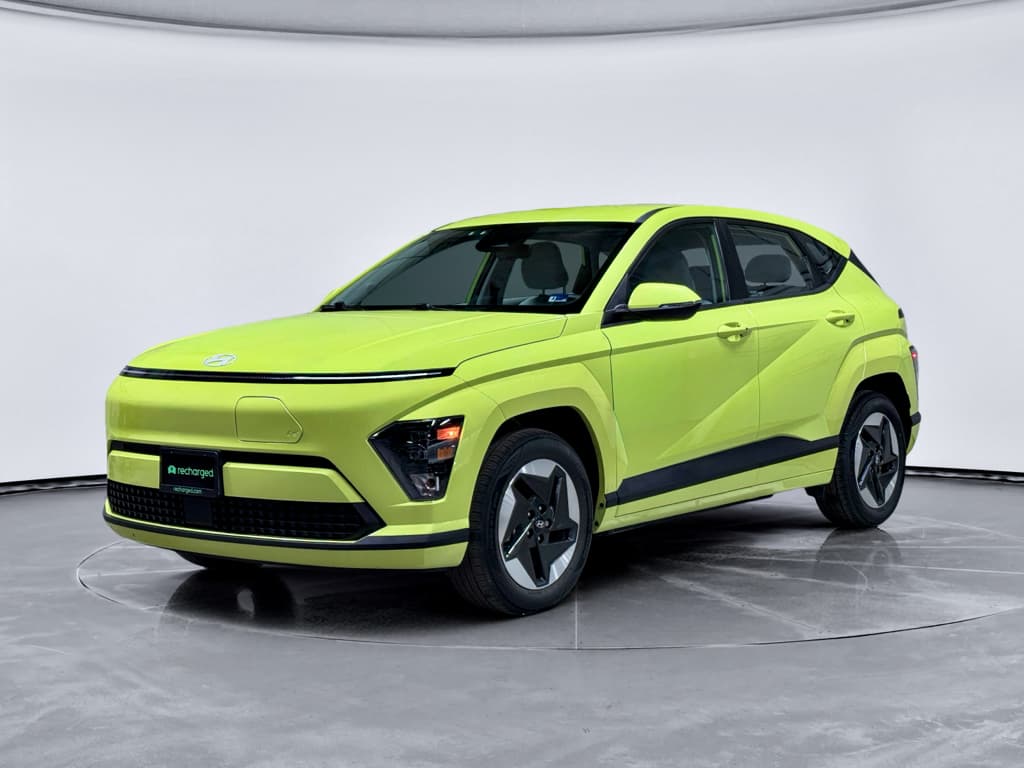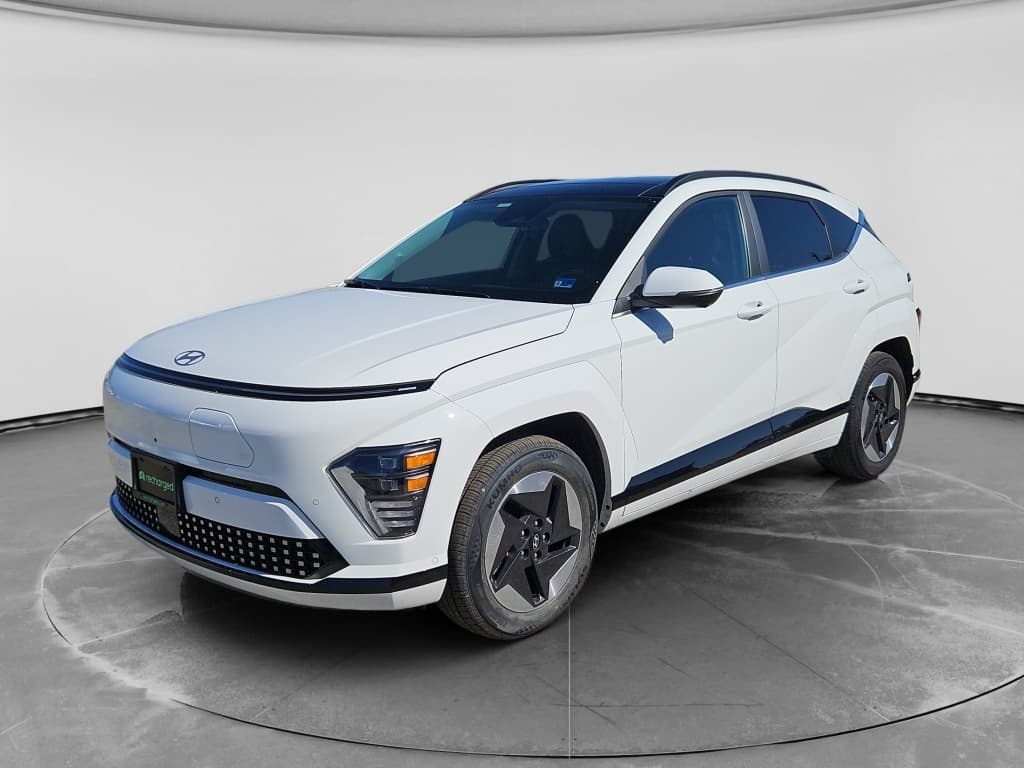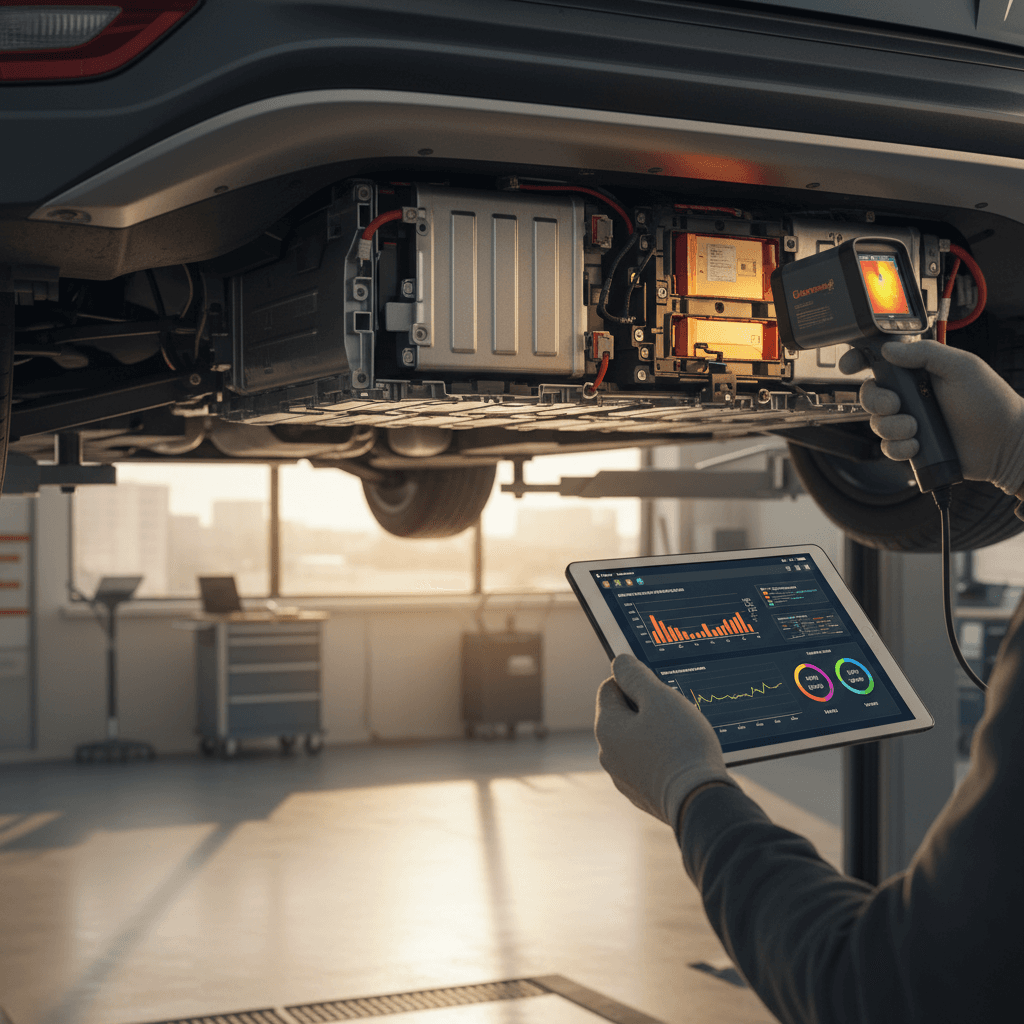
If you’re eyeing a Hyundai Kona Electric, especially a used one, the real question behind all the glossy range numbers is simple: how long does the battery actually last? Battery lifespan isn’t just trivia; it’s the single biggest factor in how long this little crossover stays cheap to run, confidence-inspiring, and worth real money on the used market.
Quick answer
Hyundai Kona Electric battery lifespan at a glance
Hyundai Kona Electric battery lifespan snapshot
How long does a Hyundai Kona Electric battery actually last?
There are really two answers: the warranty answer and the real-world answer.
- On paper, Hyundai designs the Kona Electric battery for at least 10 years or 100,000 miles of service in the U.S., with a minimum capacity threshold typically around 70%.
- In practice, real owners are seeing far slower degradation than early EV horror stories would have you believe, often on the order of 2% capacity loss per year or less.
- Given modern lithium-ion chemistry and Hyundai’s conservative tuning, it’s realistic to expect 15 years and 150,000–200,000 miles of useful daily-driving range for a well-cared-for Kona Electric battery.
Keep in mind: “end of life” for an EV battery doesn’t mean the car stops moving. It simply means the pack’s usable capacity has fallen enough, usually around 70% of original, that range becomes inconvenient for you, or it finally meets the threshold for warranty replacement.
Think in range, not years
Warranty coverage and what it really promises
Hyundai leans heavily on its reputation for generous warranties, and the Kona Electric is no exception. In the U.S., most model years come with 10‑year/100,000‑mile coverage on the high‑voltage battery for the original owner. In many other markets, it’s 8 years/160,000 km for Kona Electric. Both are designed around the same principle: the battery shouldn’t fall below roughly 70% of its original usable capacity before that time and mileage limit.
Hyundai Kona Electric battery warranty overview
How Hyundai backs the Kona Electric battery in different regions.
| Region / Market | Typical Warranty Term | Mileage / KM Limit | Capacity Threshold | Transferable to Second Owner? |
|---|---|---|---|---|
| U.S. (most model years) | 10 years | 100,000 miles | ≈70% capacity (defect-based) | Often yes, but confirm fine print |
| Europe (Kona Electric) | 8 years | 160,000 km | ≈70% capacity | Generally yes |
| Other markets (example: select Asia) | 8–10 years | Up to 200,000 km | ≈70% capacity | Varies by country |
Always confirm details for your specific model year and region, as terms and transferability can vary.
What the warranty doesn’t do
If you’re buying used, it’s crucial to check how many years and miles are left on the battery warranty and whether it fully transfers. This is one place where a little title-work and paperwork reading saves a lot of anxiety later.
Real-world degradation: what Kona Electric owners are seeing
Warranty language is one thing; lived experience is another. Fortunately for Kona Electric shoppers, the real-world picture is reassuringly boring.
Owner-reported Kona Electric battery health
What high‑mileage and early‑adopter drivers are actually seeing on the road.
Around 50,000 miles
Owners reporting detailed battery health scans around 50,000 miles commonly see roughly 5–10% capacity loss, depending on climate and charging habits.
Around 80,000 miles
Plenty of 2019–2021 Kona Electrics with 70,000–90,000 miles still show mid‑90s state of health, essentially a 10% hit to original range, often less.
150,000+ mile examples
High‑mileage drivers posting data north of 150,000 miles still report usable range and single‑digit or low‑double‑digit degradation, especially when most charging has been on Level 2.
Why Kona Electric degrades slowly
You will also find edge cases, cars that needed early battery replacements, often related to specific recall campaigns or genuine defects. Those are the exceptions that prove the rule: when something really is off, Hyundai has historically stepped in with warranty repairs or pack replacements rather than leaving owners stranded.
What shortens, or extends, Kona Electric battery life
Battery lifespan is not destiny; it’s lifestyle. How you use and charge your Kona Electric has a measurable impact on how much range you’ll have left a decade from now.
Things that shorten battery life
- Frequent DC fast charging (especially back‑to‑back sessions on road trips) that heat the pack repeatedly.
- Living in extreme heat and parking the car in full sun, fully charged, day after day.
- Chronic 0–100% cycles where you regularly run the battery very low then charge to full.
- Ignoring software updates that refine how the battery is managed and cooled.
Habits that extend battery life
- Using Level 2 charging overnight and saving DC fast charging for road trips.
- Keeping daily charge in the 20–80% window when you don’t need full range.
- Parking in shade or a garage, especially in hot climates.
- Letting the car manage thermal conditioning instead of rushing charges on a hot pack.
The Kona’s built‑in safety net
How to check Hyundai Kona Electric battery health
If you already own a Kona Electric, or you’re test‑driving a used one, there are smarter ways to gauge battery health than guessing from the dash range estimate.
Practical ways to read Kona Electric battery health
1. Compare indicated range at a known state of charge
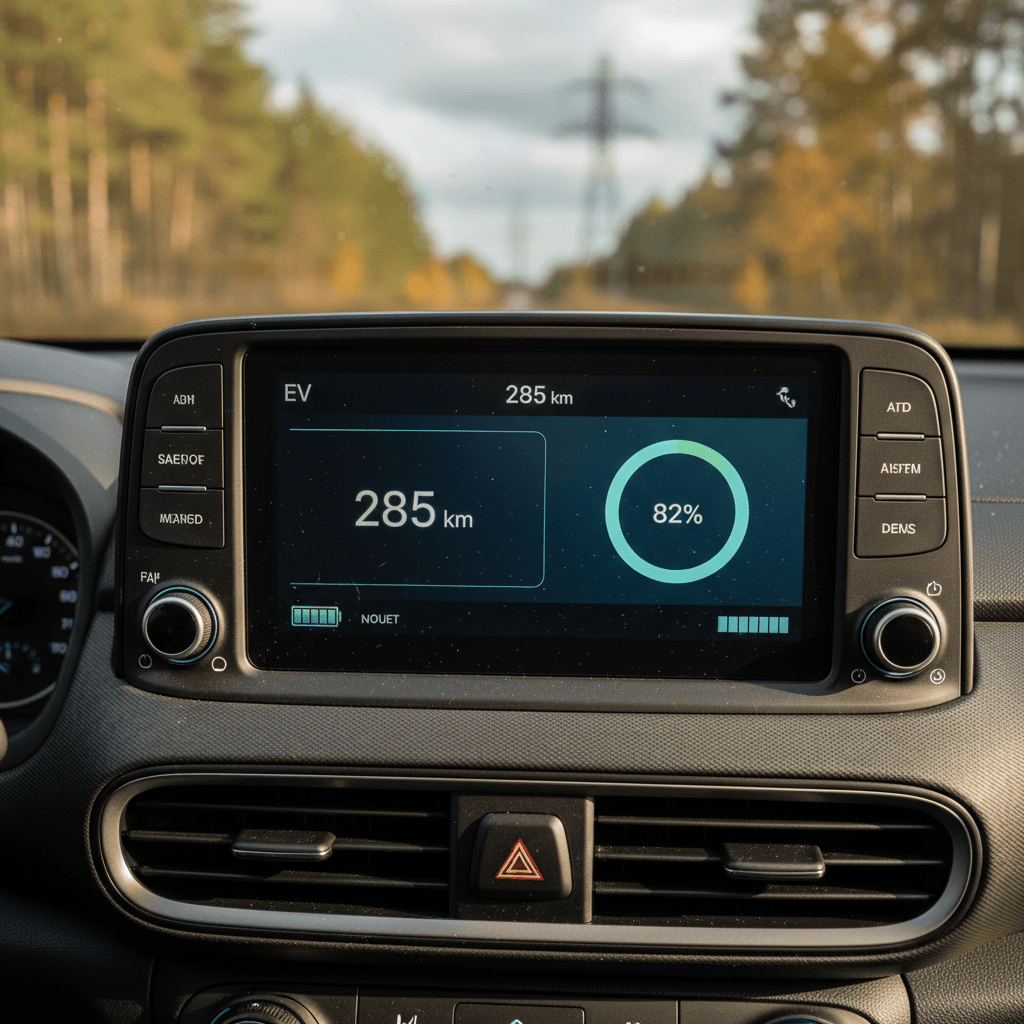
Charge the car to a true 100% and compare the displayed range to the original EPA figure (often around 250–260 miles, depending on year and wheel size). A healthy car that now shows ~220–230 miles has lost only a modest slice of capacity.
2. Look at long-term efficiency data
Dig into the trip computer’s lifetime kWh/100 miles or mi/kWh. If the car’s efficiency lines up with owner reports but range is low, that suggests battery degradation. If efficiency is poor, the driver or tires might be the problem, not the pack.
3. Ask for an official dealer battery report
Hyundai dealers can run high‑voltage battery diagnostics that report approximate state of health. If you’re buying used from a private party, this is worth the modest service fee.
4. Use a third‑party EV scan tool
Some owners use OBD‑II dongles and apps capable of reading deeper battery metrics. If you’re not a tinkerer, let an EV‑savvy shop or a platform like <strong>Recharged</strong> do this for you.
5. Test a real‑world commute
On a test drive, reset a trip meter and drive a known distance at normal speeds. Compare miles driven to percentage of battery used. If 50 miles eats 30% of the battery, that’s roughly a 165‑mile effective range and may indicate noticeable degradation.
Battery replacement costs and when it might happen
Complete high‑voltage battery failures on the Kona Electric are rare, but they do happen, and when they do, the numbers can look intimidating. Out of warranty, a full battery replacement can easily climb into the high four or low five figures once you count the pack, labor, taxes, and shop fees.
- For most owners who stay within the 10‑year/100,000‑mile warranty window, a true defect or premature degradation should be handled by Hyundai, often with a new or remanufactured pack.
- After the warranty window, outright pack failures are still uncommon. What’s more likely is that range slowly shrinks until the car no longer fits your life, at which point you might sell or trade it rather than pay for a brand‑new pack.
- As used EV markets mature, expect more refurbished and recycled pack options, along with module‑level repairs, which could trim costs significantly versus a brand‑new pack from the dealer.
Don’t fixate on worst‑case quotes
Buying a used Kona Electric? Battery lifespan checklist
Used EV shoppers don’t just buy a vehicle; they’re buying someone else’s charging habits. The Kona Electric is fundamentally robust, but you still want to separate the well‑cared‑for commuter from the fast‑charged ride‑share workhorse.
Used Hyundai Kona Electric battery checklist
1. Confirm remaining battery warranty
Check the in‑service date and odometer. How many years and miles are left on the high‑voltage battery warranty, and does it transfer to you? This can be worth thousands on a 2019–2022 car.
2. Ask about charging patterns
Has the car mostly lived on a home Level 2 charger, or has it been fast‑charged every day? Frequent DC fast charging isn’t a dealbreaker, but a steady diet of it in a hot climate can accelerate wear.
3. Look at climate and storage
A Kona Electric that spent its life garaged in Oregon is living an easier life than one street‑parked in Phoenix, fully charged in mid‑summer. Climate is a meaningful input into battery lifespan.
4. Get a battery health report
Ask the seller for a recent dealer printout or independent EV health report. At <strong>Recharged</strong>, every Kona Electric listing includes a <strong>Recharged Score Report</strong> with verified battery diagnostics, so you’re not guessing.
5. Cross‑check real‑world range
On your test drive, pay attention to how quickly the state of charge drops. A car that chews through 30–40% battery on a short highway loop may have more degradation than the seller suggests.
6. Check for open recalls or software updates
Hyundai has issued battery‑related recalls and software updates on some EVs over the years. Make sure your prospective Kona is up to date; these can improve both safety and long‑term battery behavior.
Why Kona Electric makes sense as a used EV
How Recharged evaluates Kona Electric batteries
Battery lifespan questions get a lot less scary when someone’s already done the homework. That’s the idea behind Recharged’s approach to used EVs in general, and the Hyundai Kona Electric in particular.
What you get with a Kona Electric from Recharged
Battery health isn’t a mystery, it’s a line item.
Recharged Score battery diagnostics
Every Kona Electric we list gets a Recharged Score Report, including battery health data pulled from the car and interpreted by EV specialists. You see how the pack is aging before you ever sign anything.
Fair market pricing
Battery condition feeds directly into pricing. A Kona Electric with healthier‑than‑average state of health is valued accordingly; one with more degradation is priced realistically, or doesn’t make the cut.
Support, financing & delivery
From financing and trade‑ins to nationwide delivery and EV‑savvy support, Recharged is built for people who want the upside of electric ownership without playing roulette on battery life.
Ready to find your next EV?
Browse VehiclesIf you’d rather drive than decode scan‑tool screenshots, shopping a vetted Kona Electric through Recharged, and, if you’re near Virginia, visiting the Recharged Experience Center in Richmond, can take a lot of guesswork out of the equation.
FAQ: Hyundai Kona Electric battery lifespan
Frequently asked questions about Kona Electric battery life
Bottom line: is Kona Electric battery life a dealbreaker?
If you’re worried the Hyundai Kona Electric battery will suddenly fall off a cliff after a few years, relax. The evidence so far paints a picture of slow, predictable aging, a long warranty tail, and a pack that, treated decently, should outlast the average new‑car loan by a wide margin.
As with any EV, the trick is matching the car’s future range to your future life. Ask hard questions about how a used Kona Electric was driven and charged, insist on real battery health data, and bake that into the price. Do that, and lean on tools like the Recharged Score Report and EV‑savvy support, and Kona Electric battery lifespan stops being a boogeyman and becomes what it actually is: one of the model’s quiet strengths.